

TL;DR:
- Cycling ergonomics directly influences performance, injury prevention, and ride duration through proper gear fit and adjustment.
- Measuring body dimensions and seeking professional fitting ensures optimal saddle, handlebar, and footwear alignment, enhancing efficiency and safety.
- Prioritizing ergonomic considerations over appearances or padding leads to better speed, comfort, and long-term cycling health.
Most cyclists spend hours researching frame geometry and components, then grab the first saddle or jersey that looks good. That’s a costly mistake. Understanding why cycling gear ergonomics matter goes far beyond chasing comfort. The role of ergonomics in cycling gear directly shapes your power output, injury risk, and how long you can ride before your body starts fighting back. This guide covers the real science and practical choices behind ergonomic design, so you can make smarter decisions about every piece of gear you put on your body or your bike.
Table of Contents
- Key Takeaways
- Why cycling gear ergonomics matter
- The gear that shapes your ride
- How ergonomics drives performance and safety
- Common mistakes in gear ergonomics
- Choosing and adjusting your ergonomic gear
- My take: ergonomics isn’t a luxury feature
- Gear built with your body in mind
- FAQ
Key Takeaways
| Point | Details |
|---|---|
| Ergonomics affects performance | Proper gear fit and design directly increase power output and reduce energy waste on every ride. |
| Saddle fit is non-negotiable | Matching saddle width to your sit-bone measurement prevents nerve compression and long-term discomfort. |
| Cockpit ergonomics reduce injury | Handlebar and lever adjustments protect your hands, wrists, and shoulders over long distances. |
| More padding isn’t always better | Excess padding can increase pressure on soft tissue. Correct fit outperforms foam thickness every time. |
| Professional fitting pays off | A single bike fit session can increase anaerobic power and reduce contact-point pain measurably. |
Why cycling gear ergonomics matter
Cycling ergonomics is the science of designing and fitting gear so it works with your body rather than against it. It accounts for your anatomy, your riding position, and how force moves through your body during the pedal stroke. The goal is not just comfort. It’s efficiency and protection from the kind of repetitive strain that quietly builds into real injury.
Three core principles define cycling ergonomics: fit, pressure distribution, and adjustability.
- Fit means your gear matches the actual dimensions of your body. Your sit bones, hand size, foot width, and head circumference are all measurable. Gear that fits those measurements reduces compensatory movement and wasted energy.
- Pressure distribution refers to how your weight and force are spread across contact points. A narrow saddle concentrates load on a small area. An ergonomically shaped saddle spreads that load across bone rather than soft tissue.
- Adjustability acknowledges that anatomy changes, riding styles evolve, and one fixed position rarely works forever. Gear with meaningful adjustability lets you dial in fit precisely instead of compromising.
Your body connects to the bike at only three points: your hands, your feet, and your seat. Every ergonomic decision you make concentrates on those three zones. Ignore any one of them and the others pay the price. Wrist pain often traces back to saddle height. Knee strain frequently starts at the foot-to-pedal interface. The body compensates in ways that aren’t obvious until they hurt.
Pro Tip: Before buying any new gear, measure your sit-bone width, hand circumference, and foot width at the widest point. These three numbers guide most ergonomic decisions and cost nothing to take.
The gear that shapes your ride
Understanding the role of ergonomic design in cycling gear gets real when you look at each contact point in detail.
Saddles
Saddles support 60% of your total body weight while you ride. The sit-bone width ranges from 80mm to over 150mm across different riders. Putting a 130mm-wide saddle under someone with 95mm sit bones doesn’t just feel bad. It creates direct compression on the perineal area, restricts blood flow, and causes numbness that cyclists often dismiss as normal. It isn’t. Personalized saddle systems with adjustable width and independent half shells now let riders adapt the saddle to their anatomy rather than the other way around.
Handlebars and levers
The cockpit is where control happens. Large, rounded brake levers with textured rubber surfaces measurably improve grip and reduce hand fatigue, especially on rough terrain. But the industry hasn’t fully solved this yet. Hard plastic edges on modern drop-bar brake levers create pressure points that even professional riders work around. Tadej Pogačar resorted to foam padding over cobbled race stages, which tells you everything about where mainstream lever design still falls short.
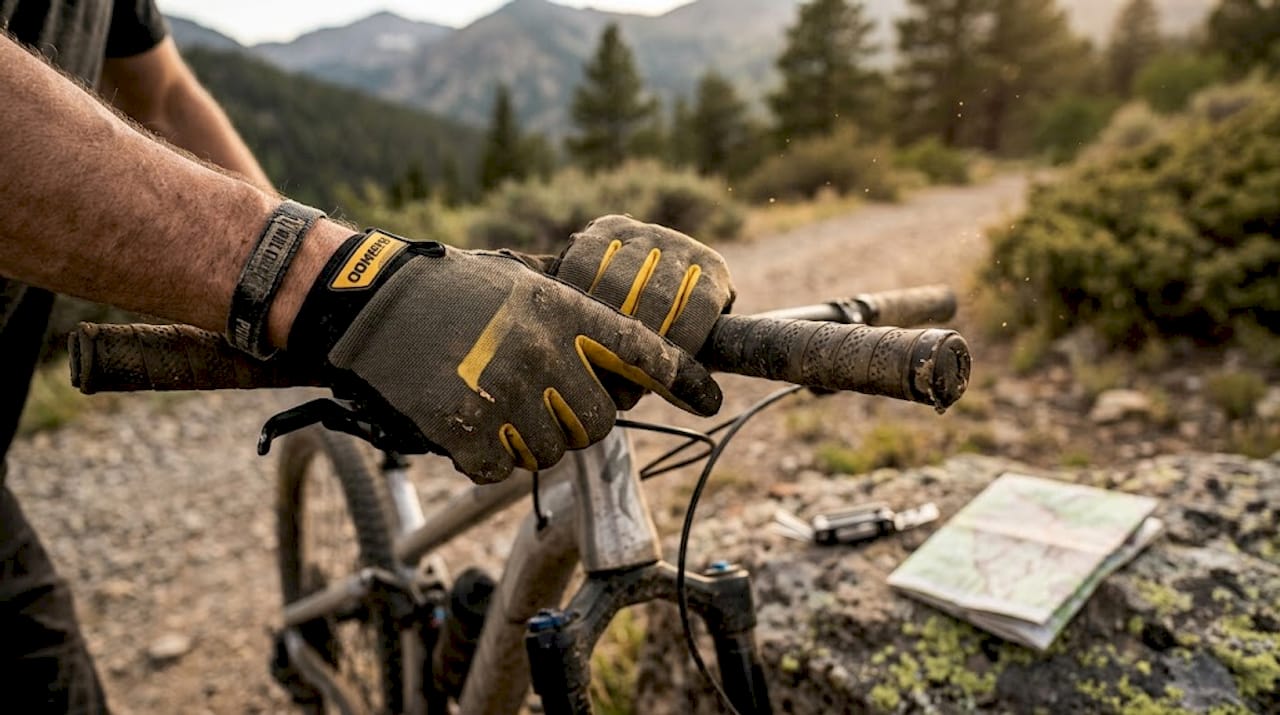
Handlebar tape matters more than most people realize. Ergon experts recommend tape with adequate restoring force that won’t collapse under pressure. Collapsed tape eliminates the cushioning effect entirely and leaves your palms absorbing every road vibration directly.
Footwear and pedals
Cycling shoes are not just stiff soled. They transfer every watt of power your legs generate. Misaligned cleats, inadequate arch support, and shoes too narrow for your foot all create hot spots and knee tracking problems. The principles behind ergonomic footwear design apply directly here. A properly fitted cycling shoe holds the foot stable without constricting it, allowing natural movement at the ankle while maximizing power transmission through the pedal.
Helmets and clothing
Helmet fit is safety-critical and ergonomic at once. A helmet sitting too far back exposes the forehead. Too far forward restricts vision. Too loose and it rotates on impact instead of protecting. You can explore the full detail on helmet fit fundamentals to understand how retention systems and sizing interact with real anatomy.
On the clothing side, fit directly affects aerodynamics. Well-fitted aero jerseys can save 5 to 15 watts compared to baggy alternatives at 40 km/h. Modern jersey design validated by 3D digital pressure mapping places pockets precisely so they stay stable under load without creating distraction or drag.
| Gear component | Key ergonomic factor | Primary benefit |
|---|---|---|
| Saddle | Sit-bone width match | Prevents nerve compression and numbness |
| Handlebars | Width and drop depth | Reduces shoulder and wrist strain |
| Brake levers | Reach adjustment and grip texture | Improves control and reduces hand fatigue |
| Cycling shoes | Cleat alignment and foot width | Maximizes power transfer, prevents knee pain |
| Helmet | Retention system and size fit | Protects correctly on impact, improves comfort |
| Jersey | 3D-cut fit and seam placement | Reduces aerodynamic drag and skin irritation |
Pro Tip: When testing brake lever ergonomics in a shop, hold the levers for three minutes without releasing. Discomfort that appears within that window will be amplified massively over a four-hour ride.
How ergonomics drives performance and safety
The cycling ergonomics benefits aren’t theoretical. Bike fitting substantially improves anaerobic power output and reduces pain at contact points including the back and pelvis. A study on 12 amateur riders showed increased average pedal torque and lower perceived exertion after a professional fitting session. You get more power from the same effort.
That efficiency gain compounds over distance. When your position and gear stop creating friction against your body, you stop fighting fatigue that wasn’t necessary. Longer rides become possible. Recovery improves. And the risk of overuse injuries drops sharply because you’re no longer compensating for a poorly fitted setup.
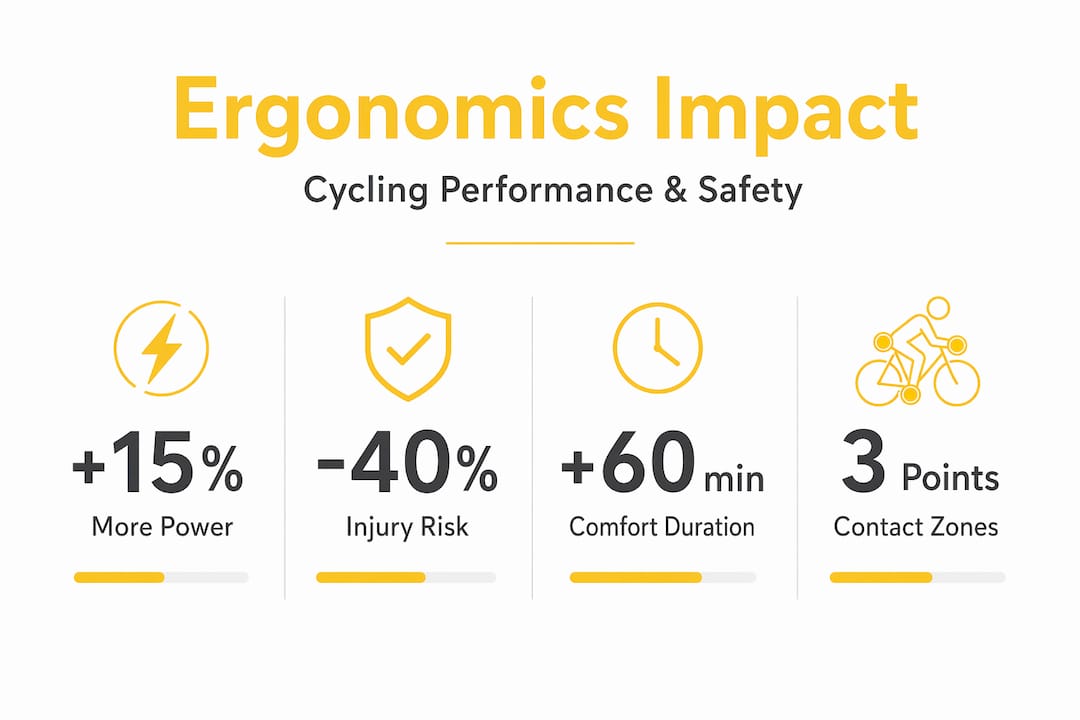
The safety dimension of cycling ergonomics is less obvious but equally real. Poor handlebar height creates a forward lean that loads the cervical spine. Wrong saddle height shifts stress to the patellar tendon with every revolution. Multiply those micro-stresses by 5,000 pedal strokes per hour and you get the kind of injury that sends riders off the bike for months.
Consider these specific ergonomic safety risks that get overlooked:
- Numbness in hands or feet during rides is not just discomfort. It signals compromised blood flow or nerve compression that leads to chronic conditions if left unaddressed.
- Saddle tilt even a degree or two beyond neutral dramatically increases perineal pressure and lower back loading.
- Ill-fitting helmets that rotate on impact offer far less protection than correctly fitted ones, regardless of the helmet’s own safety rating.
- Knee tracking problems caused by poor cleat alignment can progress to patellar or IT band injuries within a single training cycle.
The relationship between how gear affects cycling performance and how it protects you is not separate. They are the same mechanism. Ergonomic gear reduces energy waste, which reduces fatigue, which reduces the errors in judgment and bike handling that cause accidents.
Common mistakes in gear ergonomics
The biggest misconception about cycling comfort is that more padding equals more comfort. It doesn’t. The cycling industry has been shifting away from this thinking for years, recognizing that excessive foam compresses under body weight and actually increases pressure on soft tissue rather than reducing it. A firm saddle that fits your sit-bone width correctly outperforms a heavily padded saddle that doesn’t every single time.
Other common errors:
- Assuming gear fits because it’s labeled your size. Sizing varies significantly between brands and product lines. Always measure and try before committing.
- Ignoring cockpit ergonomics entirely. Many cyclists who experience wrist or shoulder pain never connect it to handlebar width or lever reach. The cockpit is often the last thing adjusted and the first thing that creates problems.
- Buying gear based on pro riders’ setups. Professional riders often run extreme positions that their body has adapted to over years. Replicating that position without the same conditioning history is a direct route to injury.
- Skipping gloves on shorter rides. Hand fatigue and ulnar nerve compression build cumulatively. The 45-minute commute that feels fine becomes a problem after three months of daily riding without proper grip support.
Pro Tip: If you experience hand numbness, try raising your handlebars by 10mm before spending money on new gloves or bar tape. Weight distribution on the hands is usually the root cause, not padding thickness.
Choosing and adjusting your ergonomic gear
Getting ergonomics right is a process, not a purchase. Here’s how to approach it systematically:
- Measure your sit-bone width. Sit on a piece of corrugated cardboard on a hard surface for 60 seconds. The indentations left show your sit-bone spread. Add 20 to 30mm for road riding or 30 to 40mm for mountain riding to find your ideal saddle width range.
- Set saddle height before anything else. A reliable starting point is 109% of your inseam length measured from the center of the bottom bracket to the top of the saddle. Adjust incrementally in 3mm steps.
- Adjust handlebar reach and drop. Your elbows should have a slight bend at the hoods. A straight locked arm signals the bar is too far away and shifts weight forward aggressively.
- Align your cleats. Stand naturally and observe whether your feet point inward, outward, or straight. Replicate that angle with your cleats. Misaligned cleats are the leading cause of cycling-related knee pain.
- Try gear before extended use. Wear a jersey on a two-hour ride before a century. Test saddle comfort on a 90-minute ride before a multi-day trip. Problems that don’t appear in 20 minutes appear clearly at two hours.
- Consider a professional bike fit. Even one session generates a detailed profile of your position and gear adjustments. The gains in power and reduction in pain justify the cost quickly. Look for fitters who use motion capture and pressure mapping rather than visual assessment alone.
- Replace worn ergonomic components on schedule. Handlebar tape loses its cushioning. Saddles deform. Shoe insoles compress. Riding on degraded ergonomic gear gives you the problems without the benefits.
My take: ergonomics isn’t a luxury feature
I’ve spent years watching cyclists invest serious money in carbon frames and electronic groupsets while tolerating a saddle that leaves them unable to sit comfortably for two days after a long ride. The resistance to thinking about ergonomics seriously comes from a culture that treats discomfort as toughness. It isn’t. It’s inefficiency.
What I’ve learned is that high-performance designs frequently prioritize aesthetics and weight over rider comfort, leaving real performance gains on the table. The riders who get this right don’t just feel better. They train more consistently, recover faster, and stay on the bike longer over the years.
You don’t need to spend a fortune to get ergonomics right. Measuring your sit-bone width costs nothing. Adjusting cleat alignment takes ten minutes. Getting a professional fit once is cheaper than treating a six-month overuse injury. The gap between what most cyclists do and what actually works is mostly information, not money.
If you want to know where to start, read about safety-first gear selection. Safety and ergonomics are inseparable once you understand the mechanics.
— Sophie
Gear built with your body in mind
Ergonomics sits at the core of everything Thebeamofficial designs. The VIRGO integral helmet with MIPS technology isn’t just engineered for impact protection. Its retention system and internal padding are shaped around real head anatomy, so the helmet stays correctly positioned during a ride and performs as intended during an impact. Fit and safety are the same thing here.

Beyond helmets, the full Thebeamofficial accessories range includes rear-view mirrors, high-visibility reflectors, and connected safety products designed to integrate naturally into your riding setup without creating new ergonomic problems. When a mirror forces you into an awkward head position or a reflector catches on your kit, that’s an ergonomic failure. Every Thebeamofficial product is tested for real-world usability.
Browse the adults’ helmets collection and the complete accessories lineup to find gear that works with your body from the first ride.
FAQ
What is cycling ergonomics?
Cycling ergonomics is the science of fitting gear and body position to work with your anatomy. It covers saddle fit, handlebar setup, footwear, and clothing to reduce injury risk and improve efficiency.
Why does saddle fit matter so much?
Saddles support roughly 60% of your body weight. A saddle that doesn’t match your sit-bone width compresses nerves and soft tissue, causing numbness and long-term discomfort that no amount of ride time corrects on its own.
Can ergonomic gear actually improve my power output?
Yes. A proper bike fit has been shown to increase pedal torque and lower perceived exertion in amateur riders. Correct position and gear alignment remove energy leaks so more of your effort reaches the pedals.
Is expensive gear necessary for good ergonomics?
No. Most ergonomic gains come from correct measurement and adjustment, not price. Measuring sit-bone width, aligning cleats, and adjusting saddle height are free. A professional bike fit is a one-time cost with lasting returns.
How do I know if my helmet fits ergonomically?
A correctly fitted helmet sits level on your head, two finger-widths above your eyebrows, with the retention system snug but not tight. It should not rock forward, backward, or side to side when you push it with your hand.


