

Finding the right safety gear can feel overwhelming for committed e-bike commuters in France and Germany, especially when new helmet technologies and visibility accessories promise greater protection. The reality is that many urban riders still misunderstand what makes gear truly effective, whether it is a well-fitted helmet or advanced lighting systems. This guide clears up common misconceptions and highlights how the latest high-end helmets and connected accessories create a bold layer of urban cycling protection you can trust.
Table of Contents
- Cycling Safety Gear Basics And Misconceptions
- Types Of High-End Helmets And Accessories
- Helmet Certifications And Advanced Protection Features
- Visibility Gear And Connected Tech For Urban Riders
- Legal Standards For Cycling Safety In France And Germany
- Common Urban Risks And Mistakes To Avoid
Key Takeaways
| Point | Details |
|---|---|
| Proper Helmet Use | Investing in a well-fitted helmet is essential for urban cyclists, and it should be replaced every five years or after an impact. |
| Safety Gear Misconceptions | Cyclists should understand that safety gear is crucial and not merely optional; regular maintenance is necessary for effective protection. |
| Visibility Enhancements | Utilizing advanced visibility gear, such as reflective clothing and smart technology, significantly improves rider safety and awareness on the road. |
| Legal Compliance | Familiarizing oneself with local cycling regulations and safety standards is vital, as they often vary by region and can impact overall safety. |
Cycling safety gear basics and misconceptions
Urban cyclists often misunderstand fundamental safety gear principles, which can significantly impact their protection on city streets. Bicycle safety research reveals critical misconceptions that riders must address to enhance their personal security.
Safety gear is not merely about wearing equipment, but understanding its strategic purpose. Key misconceptions include:
- Believing helmets are optional
- Assuming expensive gear guarantees complete protection
- Thinking high-visibility clothing is unnecessary
- Neglecting regular equipment maintenance
A properly fitted helmet remains the single most important safety investment for urban cyclists. Modern helmets incorporate advanced technologies like MIPS protection, which reduces rotational forces during potential impacts. Unlike outdated beliefs, contemporary safety gear integrates lightweight design with superior protection mechanisms.
Effective cycling protection extends beyond individual equipment. Comprehensive safety approaches emphasize understanding traffic dynamics, maintaining situational awareness, and selecting gear appropriate for specific urban riding conditions.
Pro tip: Invest in high-quality, well-fitted safety gear and replace your helmet every five years or after any significant impact.
Types of high-end helmets and accessories
Urban cyclists have a wide array of sophisticated safety equipment designed to maximize protection and performance. Advanced helmet technologies now offer unprecedented levels of safety across different riding environments.
High-end helmets can be categorized into several key types:
- Road Helmets: Lightweight and aerodynamic designs
- Commuter Helmets: Enhanced urban protection with integrated features
- Mountain Bike Helmets: Rugged construction with extended rear coverage
- Aero Helmets: Specialized designs for competitive cyclists
MIPS technology represents a significant breakthrough in helmet safety. These systems incorporate a special low-friction layer that allows the helmet’s outer shell to rotate slightly during an impact, reducing rotational forces transmitted to the brain. Scientific helmet ratings demonstrate that MIPS-equipped helmets can significantly mitigate potential brain injury risks.
Beyond helmets, urban cyclists should consider complementary safety accessories:
- Reflective vest
- Integrated LED lighting systems
- Rear-view helmet mirrors
- High-visibility riding gloves
- Bluetooth-enabled communication devices
Modern cycling accessories are not just about protection—they’re about creating a comprehensive safety ecosystem that enhances rider awareness and interaction with urban environments.
Pro tip: Invest in a helmet that fits perfectly and replace it every five years, regardless of visible damage.
Helmet certifications and advanced protection features
Understanding international safety standards is crucial for urban cyclists seeking maximum protection. Bicycle helmet safety certifications represent a complex landscape of rigorous testing and protective technologies.
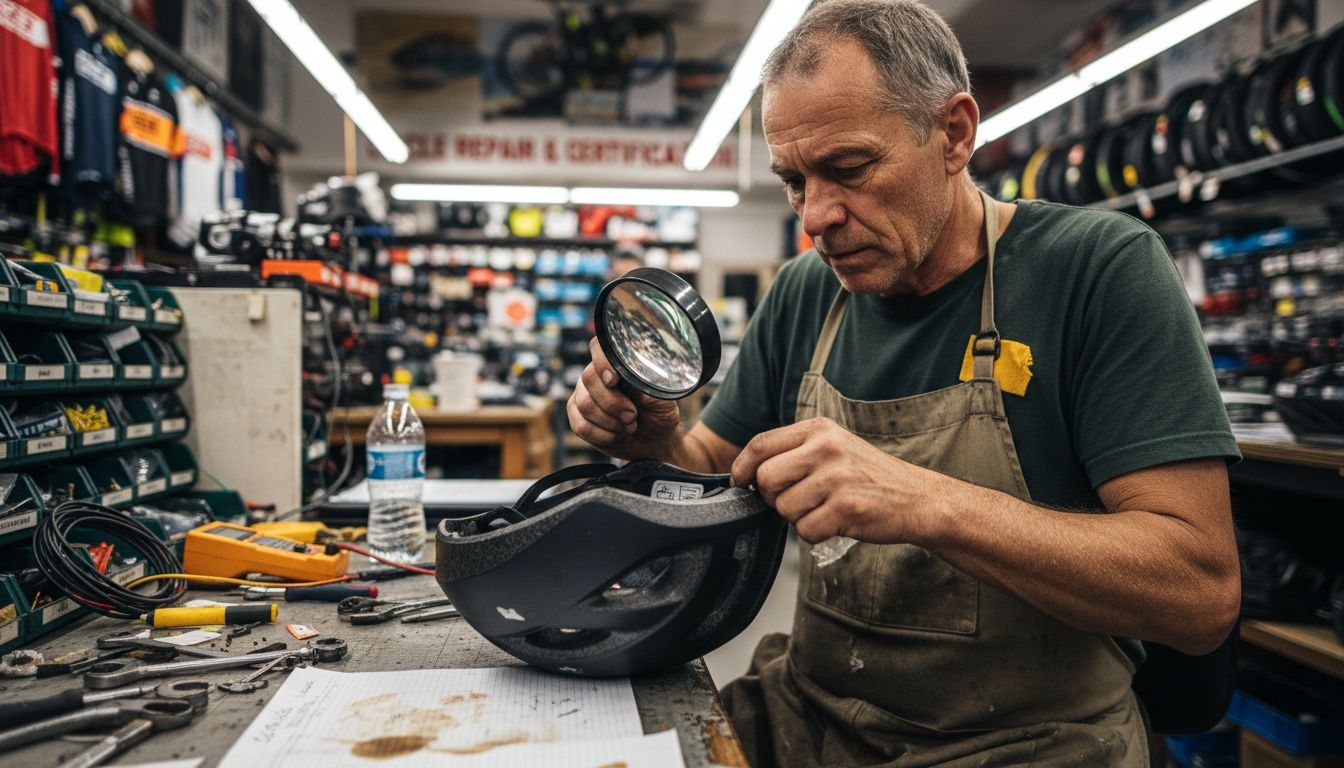
Key international helmet certification standards include:
Here’s a quick reference to major helmet certifications and their coverage focus:
| Certification Standard | Geographic Area | Key Protection Focus |
|---|---|---|
| CPSC | Vereinigte Staaten | Impact absorption, retention |
| EN 1078 | Europe | Penetration resistance, coverage |
| AS/NZS 2063 | Australia/New Zealand | Extended rear protection |
| Snell | International (voluntary) | Advanced shock absorption, rigorous testing |
- CPSC: United States Consumer Product Safety Commission standard
- EN 1078: European safety certification
- AS/NZS 2063: Australian and New Zealand safety requirements
- Snell: Voluntary advanced safety standard
Each certification involves comprehensive testing protocols that evaluate critical protection parameters. These assessments measure impact absorption, penetration resistance, retention system effectiveness, and coverage area to ensure cyclists receive reliable head protection.
Advanced protection features go beyond basic certifications. Helmet safety technologies now incorporate sophisticated systems like rotational impact protection, which dramatically reduce the risk of traumatic brain injuries during accidents.
Modern helmet technologies represent a significant leap in cyclist safety, combining multiple protective elements:
- Multi-density foam layers
- Integrated MIPS rotational protection
- Enhanced ventilation systems
- Lightweight carbon fiber construction
- Advanced shock absorption mechanisms
Pro tip: Always verify your helmet’s current safety certification and replace it immediately after any significant impact or every five years.
Visibility gear and connected tech for urban riders
Urban cyclists are increasingly leveraging advanced technologies to enhance their safety and visibility on complex city streets. Smart cycling innovations are transforming how riders interact with their urban environment.
Cutting-edge visibility gear now encompasses multiple technological dimensions:
Compare visibility gear technologies and their primary safety benefits:
| Gear Type | Technology Highlight | Safety Benefit |
|---|---|---|
| Smart Helmet | Integrated sensors | Real-time hazard alerts |
| Reflective Clothing | Retroreflective fabric | Increased night visibility |
| LED Wearable Devices | Dynamic lighting | Enhanced rider awareness |
| Bike-Mounted Sensors | Environmental tracking | Early warning of hazards |
- Smart Helmets: Integrated sensors and communication systems
- Reflective Clothing: Advanced retroreflective materials
- LED Wearable Devices: Dynamic lighting technologies
- Bike-Mounted Sensors: Real-time environmental tracking
- Smartphone Connectivity: Navigation and safety alerts
Connected technologies represent a significant leap in urban cycling protection. Intelligent transport systems now enable cyclists to become active participants in smart city infrastructure, with devices that communicate location, speed, and potential hazard information.
The most sophisticated visibility solutions combine multiple protective elements:
- Automatic brake light activation
- GPS tracking and emergency contact alerts
- Noise-canceling communication systems
- Environmental condition monitoring
- Adaptive lighting based on ambient conditions
These technological innovations are not just about individual safety—they’re creating a more interconnected and responsive urban cycling ecosystem that prioritizes rider protection and awareness.
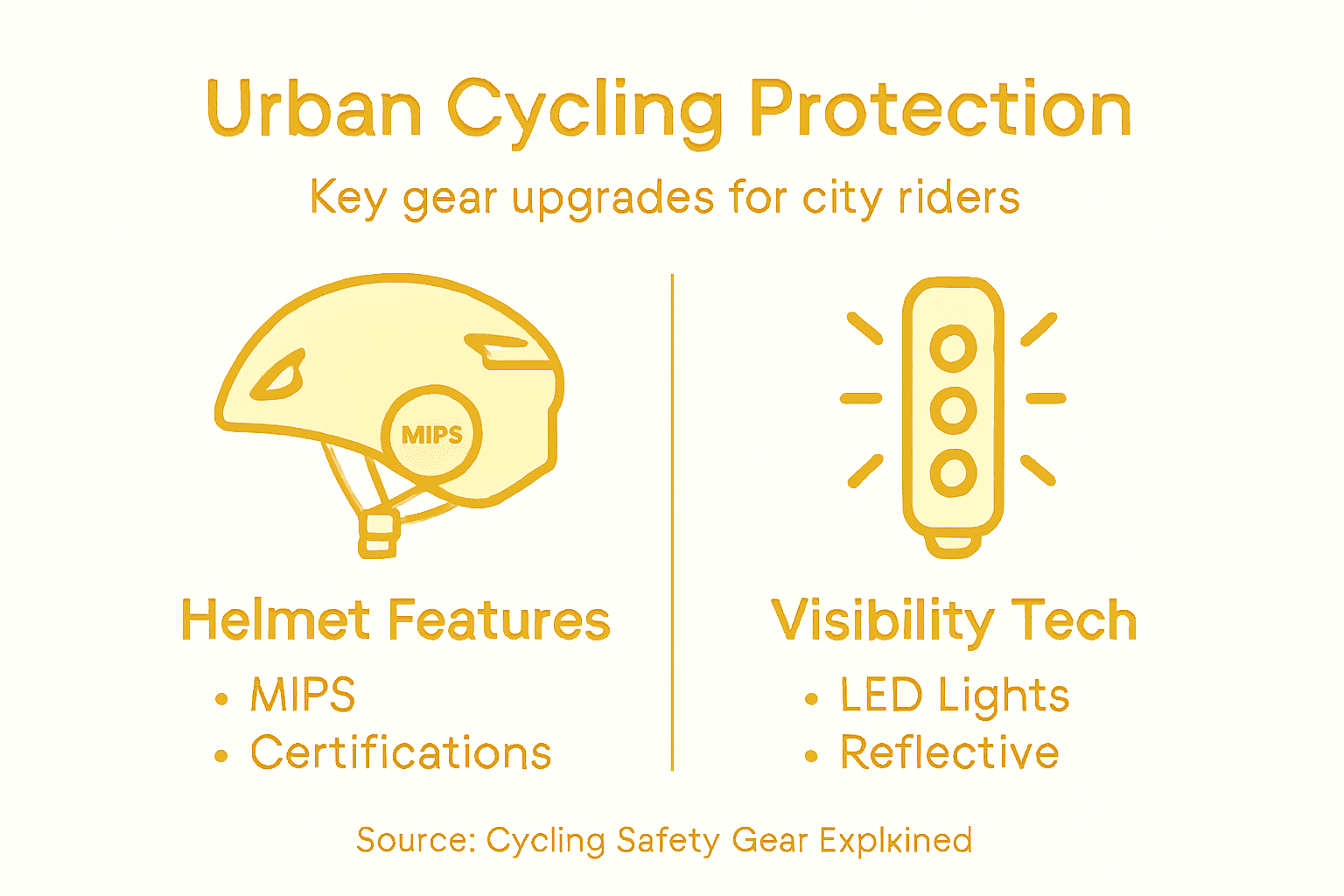
Pro tip: Invest in multi-functional visibility gear that integrates communication, tracking, and lighting technologies for comprehensive urban protection.
Legal standards for cycling safety in France and Germany
Cycling safety regulations in France and Germany demonstrate a proactive approach to protecting urban riders through comprehensive legal frameworks. French cycling laws have established clear mandatory requirements for cyclist safety equipment and behavior.
Key legal standards in both countries include:
- Mandatory helmet use for children under 12
- Reflective clothing requirements in low-visibility areas
- Specific regulations for bike lighting systems
- Prohibitions on mobile phone and headphone use while cycling
- Mandatory brake and signaling equipment standards
Cycling infrastructure regulations play a critical role in safety standards. Germany’s National Cycling Plan outlines comprehensive strategies for improving urban cycling safety through infrastructure development and legal frameworks.
Significant differences exist between French and German approaches:
- France emphasizes personal equipment regulations
- Germany focuses on infrastructure and systemic safety improvements
- Both countries mandate specific safety gear for different age groups
- Fines are imposed for non-compliance with safety regulations
- Local municipalities can implement additional specific rules
These legal standards reflect a broader commitment to creating safer cycling environments by combining regulatory requirements with infrastructure investments and cultural awareness.
Pro tip: Always check local municipal cycling regulations, as they can vary significantly between regions and cities.
Common urban risks and mistakes to avoid
Urban cycling presents a complex landscape of potential hazards that require strategic awareness and proactive safety measures. Cyclist safety research reveals multiple critical risks that riders must navigate carefully.
Common urban cycling mistakes include:
- Riding in vehicle blind spots
- Ignoring traffic signals and lane markings
- Wearing dark clothing during low-visibility conditions
- Failing to use hand signals for turns and stops
- Not maintaining situational awareness
- Riding without proper protective equipment
Risk perception plays a crucial role in urban cycling safety. Academic studies demonstrate that cyclists who underestimate traffic complexity are significantly more likely to experience accidents.
Critical urban cycling risks encompass multiple dimensions:
- Unexpected vehicle movements
- Road surface irregularities
- Pedestrian unpredictability
- Construction zone hazards
- Intersection complexity
- Weather-related challenges
Successful urban cyclists develop comprehensive situational awareness, continuously scanning their environment and anticipating potential interaction points with other road users.
Pro tip: Practice defensive cycling techniques and always assume vehicles cannot see you, maintaining maximum visibility and predictable movement.
Upgrade Your Urban Cycling Safety with THE BEAM
Cycling in busy city streets can feel risky without the right protection. As the article highlights, well-fitted helmets with advanced technologies like MIPS and smart visibility accessories are essential for reducing injury and staying seen by drivers. Urban riders often face challenges such as unpredictable traffic and low visibility that demand gear designed for real-world use and comfort.
THE BEAM offers a perfect solution for those seeking top-tier cycling safety equipment. Our innovative helmets, including the flagship VIRGO integral helmet with MIPS technology, provide cutting-edge protection tailored specifically for urban and everyday cyclists. Complement your ride with high-visibility options and safety accessories like rear-view mirrors and reflective gear found in our REFLECTORS – The Beam collection.
Protect yourself and experience confidence on every urban ride. Explore our full range of high-end helmets and safety accessories today at THE BEAM. For young riders, check out our reliable options in Kids’ Helmets – The Beam. Gear up now and embrace safer cycling with gear designed to keep you visible and protected in any city environment.
Frequently Asked Questions
What are the essential cycling safety gear pieces for urban cyclists?
Essential cycling safety gear includes a properly fitted helmet, high-visibility clothing, reflective accessories, and regular maintenance equipment. Additionally, investing in lights and mirrors can enhance visibility and awareness on the road.
How often should I replace my cycling helmet?
You should replace your cycling helmet every five years or immediately after any significant impact to ensure optimal protection performance.
What is MIPS technology in helmets, and why is it important?
MIPS (Multi-directional Impact Protection System) technology reduces rotational forces during an impact, significantly minimizing the risk of brain injuries. Helmets equipped with MIPS provide advanced protection compared to traditional designs.
Are expensive safety gear and accessories guaranteed to provide better protection?
While high-end safety gear may incorporate advanced technologies and materials, price does not guarantee complete protection. Always ensure that gear meets safety certification standards and fits properly for effective protection.


