

TL;DR:
- Choosing a helmet requires prioritizing safety standards, proper fit, and features suited to your riding style.
- Urban helmets offer coverage and practicality for short city trips, while road helmets excel in lightweight ventilation for longer distances.
Choosing a helmet for your daily commute is not as simple as grabbing the first one on the shelf. You need helmet styles for commuters that work hard every single day — handling stop-and-go traffic, unpredictable weather, and the fact that you probably care about arriving at the office looking like yourself. The wrong choice leaves you sweaty, uncomfortable, or worse, unprotected. The right one becomes invisible. This guide walks you through exactly what to look for, which styles suit which riders, and how to make a call you won’t second-guess.
Table of Contents
- Key takeaways
- 1. Understand the core criteria before choosing a style
- 2. Urban and city-specific helmet styles
- 3. Road-style helmets adapted for commuting
- 4. MIPS-equipped helmets for better brain protection
- 5. Lightweight and minimalist helmets for short urban trips
- 6. Integral and full-coverage helmets for e-bike commuters
- 7. Helmet styles with ponytail and accessory compatibility
- 8. Style-by-style comparison for commuters
- 9. Situational recommendations by commuter profile
- My honest take on helmet selection in 2026
- Gear up smarter with Thebeamofficial
- FAQ
Key takeaways
| Point | Details |
|---|---|
| Safety standards matter | All U.S. helmets must meet CPSC certification; e-bike riders should seek NTA 8776 for higher speed protection. |
| Fit beats price every time | A $50 helmet that fits perfectly protects better than a $300 model that wobbles on your head. |
| Style shapes compliance | Riders who like how their helmet looks wear it consistently, making aesthetics a genuine safety factor. |
| MIPS adds real protection | Rotational impact technology reduces brain injury risk from the angled falls most common in urban crashes. |
| Match style to your route | Short city trips, long commutes, and e-bike rides each have a distinct helmet profile that performs best. |
1. Understand the core criteria before choosing a style
Before you browse commuter helmet options, you need a clear framework. Otherwise, you end up making decisions based on looks alone, which is a fast track to regret.
Safety certifications come first. All U.S. bike helmets must comply with CPSC 16 CFR Part 1203, which mandates impact testing at 6.2 m/s flat and 4.8 m/s curved impacts, with peak acceleration capped at 300g. If you ride an e-bike, the standard to look for is NTA 8776, which tests impacts up to 45 km/h to account for higher riding speeds.
Fit comes right after. A properly fitted helmet sits level, roughly one finger-width above your eyebrows. The retention dial should be snug with the chin strap adjusted to allow only one to two finger widths of clearance. The helmet should not shift more than one inch when pushed in any direction.
Beyond those two pillars, commuter-specific priorities include:
- Ventilation: Urban riding is stop-and-go, which means less airflow than sustained road cycling. More vents help, but too many vents reduce structural coverage.
- Weight: Lightweight commuting helmets reduce neck fatigue on longer routes. Look for anything under 300 grams for daily comfort.
- Visibility: Reflective elements and bright colors increase your safety in urban traffic conditions, especially at dawn and dusk.
- Weather resistance: Some helmets handle rain better than others. Look for sealed foam and water-resistant liner materials if your city sees regular rain.
Pro Tip: Never buy a helmet without trying it on first. Head shapes vary significantly by brand, so the model your friend swears by may create pressure points on your temples after 20 minutes of riding.
2. Urban and city-specific helmet styles
The most recognizable of all urban cycling helmet styles is the classic urban or city helmet. These are characterized by a round, low-profile shell that wraps farther around the head than a road helmet, fewer vents, and a clean aesthetic that works with street clothes.
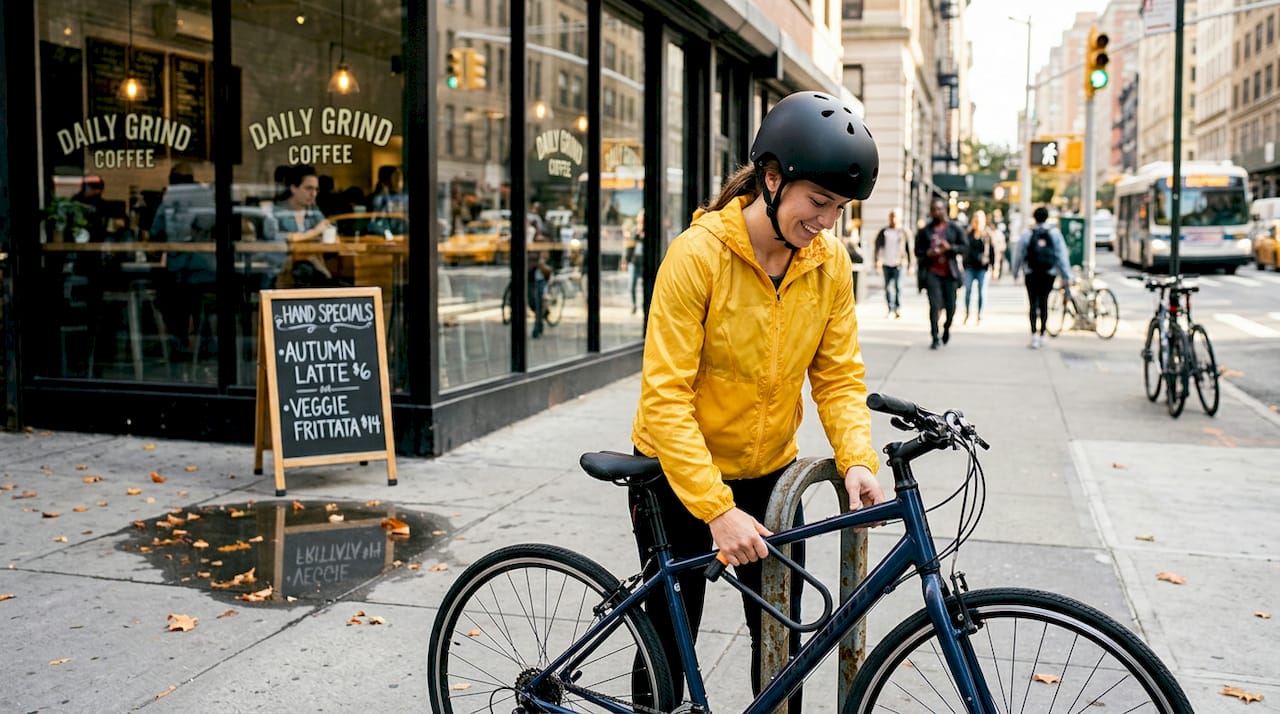
Who they suit: riders doing shorter daily trips, casual commuters, and anyone prioritizing looks alongside function. The reduced ventilation trades some airflow for better coverage and a tidier silhouette. Many include built-in visors and integrated LED mount points, making them highly practical for city use.
The trade-off is weight. Urban shells are often slightly heavier than road-style helmets because more foam covers more surface area. For a 20-minute commute, that’s irrelevant. For a 45-minute ride, it becomes noticeable.
3. Road-style helmets adapted for commuting
Road helmets were designed to go fast. They are light, aerodynamic, and packed with ventilation channels. What makes them interesting for commuters is exactly that weight advantage. If your commute involves serious distance or you get warm easily, a road-adapted helmet keeps you cooler and less fatigued.
The drawbacks are real, though. Road helmets typically cover less of the head than urban styles. Their aggressive ventilation channels also mean less impact coverage compared to a city helmet’s fuller shell. And aesthetically, showing up to a business meeting in a bright aero lid is not always ideal.
A growing number of manufacturers have found middle ground: road-geometry helmets with muted colorways, integrated rear lights, and removable visors. These are among the best helmets for biking in urban environments if you prioritize performance without sacrificing too much practicality.
4. MIPS-equipped helmets for better brain protection
MIPS stands for Multi-directional Impact Protection System, and it addresses something that standard foam helmets cannot. Most real-world cycling falls involve an angled impact, not a perfectly vertical one. Oblique impacts generate rotational forces inside the skull that standard CPSC testing does not fully measure.
MIPS systems reduce rotational acceleration by 12 to 73 percent compared to conventional foam helmets. That is a meaningful range, and it reflects how different impact angles and speeds interact with the technology. At Thebeamofficial, the VIRGO integral helmet is built with MIPS technology precisely because urban commuting involves exactly the kinds of angled, unpredictable falls that rotational protection addresses.
MIPS helmets used to carry a noticeable price premium. That gap has narrowed considerably, and in 2026, you can find solid MIPS options at most price points. Given the brain injury data, it is hard to argue against choosing MIPS when budget allows.
5. Lightweight and minimalist helmets for short urban trips
Minimalist helmets prioritize low profile and low weight above everything else. Some resemble skate helmets. Others look like nothing at all, just a barely-there shell that satisfies the legal requirement without adding bulk.
For short city trips under 15 minutes, these can make perfect sense. They slip into a bag without issue, they work with any outfit, and they remove the excuse of “my helmet won’t fit in my desk drawer.” That last point matters more than people admit. Helmets only protect you when you wear them.
The limitation is coverage. Minimalist shells often have fewer vents and less padding, which affects both comfort on longer rides and the quality of the fit system. Check that even a compact model includes a retention dial and not just sizing pads alone.
6. Integral and full-coverage helmets for e-bike commuters
E-bike commuters ride faster than traditional cyclists. Speeds of 25 to 45 km/h are common, and the NTA 8776 certification specifically tests helmets for impacts at those velocities. Standard CPSC-certified helmets are not designed for that kind of energy.
Integral or full-face helmets offer the highest level of coverage for fast urban riding. The VIRGO helmet from Thebeamofficial was designed with this in mind: MIPS-equipped, full-coverage construction that meets the demands of e-bike commuting without being the kind of motorcycle helmet that turns heads for the wrong reasons.
The weight is higher than a traditional road or urban helmet, but modern materials keep it manageable. For anyone riding an e-bike in urban traffic, the coverage upgrade is worth every gram.
7. Helmet styles with ponytail and accessory compatibility
This is one of the most overlooked criteria when comparing stylish helmets for cyclists, yet it is one of the most immediately practical. Helmets with rear ponytail channels solve a problem that affects a significant portion of riders: a standard retention cradle forces long hair into an uncomfortable position that either pushes the helmet forward or creates a painful pressure point.
Ponytail-compatible designs drop the rear retention cradle lower on the neck, freeing up space for hair worn up. Some also feature adjustable visor mounts or side openings for headphones. If these features match your daily setup, they move from “nice to have” to genuinely affecting whether the helmet sits correctly on your head.
8. Style-by-style comparison for commuters
Here is a side-by-side look at the main helmet styles evaluated against the criteria most relevant to commuters.
| Style | Safety rating | Ventilation | Weight | Price range | Style appeal |
|---|---|---|---|---|---|
| Urban/city helmet | CPSC standard | Moderate | Medium | $40–$150 | High for everyday wear |
| Road-adapted helmet | CPSC standard | High | Low | $60–$300 | Moderate, sporty look |
| MIPS-equipped helmet | CPSC + MIPS | Moderate to high | Low to medium | $80–$350 | Varies by model |
| Minimalist/compact | CPSC standard | Low to moderate | Very low | $30–$100 | High, discreet |
| E-bike integral helmet | NTA 8776 + MIPS | Moderate | Medium to high | $150–$400+ | Bold, high coverage |
| Ponytail-compatible | CPSC standard | Moderate | Medium | $50–$180 | Practical and varied |
The table makes one trade-off especially clear: the helmets with the highest safety ratings and best impact protection tend to sit at the higher end of the price range. That said, helmets from $40 to $400 all meet the mandatory CPSC standard equally. The price difference buys you weight, fit quality, aesthetics, and additional protection technologies like MIPS. It does not buy you more baseline safety.
9. Situational recommendations by commuter profile
Knowing how to choose a commuter helmet comes down to matching the style to your actual riding life. Here is how different commuter profiles should approach the decision.
Short city trips (under 20 minutes): A lightweight urban helmet or a compact minimalist style works well. Prioritize packability, reflective detailing, and a fit system you can adjust quickly. You probably do not need MIPS at lower city speeds, but it never hurts.
Longer commutes (30 minutes or more): Weight and ventilation become your top concerns. A road-adapted helmet or a well-vented MIPS model keeps you comfortable across the full ride. Look for moisture-wicking liner pads and consider helmets with integrated visibility features if you ride in low light.
E-bike riders: NTA 8776 certification is the baseline, not an optional upgrade. An integral helmet with MIPS protection is the right call. Do not compromise on this.
Fashion-conscious commuters: The trendy bike headgear category has expanded dramatically. Urban-style helmets from quality brands now come in matte finishes, neutral tones, and designs that look at home with both athletic and professional outfits. You do not have to choose between looking good and being protected.
Budget-focused riders: Affordable bike helmets that meet CPSC standards and include a proper retention dial can be found under $60. Focus on fit quality and a retention system that adjusts easily. Skip the cheapest option if it lacks a dial-fit rear system entirely.
Pro Tip: Replace your helmet after any significant impact, even if the shell looks undamaged. Safety testing confirms that foam energy absorption is permanently compromised after a crash, meaning the helmet will not perform the same way in a second impact.
My honest take on helmet selection in 2026
I’ve spent years looking at how people actually choose helmets versus how they should choose them, and the gap is wider than most brands admit.
The most common mistake I see is treating price as a proxy for protection. I’ve seen riders in $300 road helmets with three fingers of clearance under the chin strap, and riders in $60 city helmets wearing them perfectly. Fit is the primary determinant of how a helmet performs when it counts. A loose helmet rotates on impact and transfers far less energy to the foam. All the advanced materials in the world won’t help if the helmet moves when it shouldn’t.
The second thing I’ve learned is that the helmet you actually wear every day is always better than the “objectively superior” one sitting on your shelf. Style genuinely matters as a safety factor. Riders who feel good in their helmet wear it more consistently. That is not a marketing talking point. It’s a behavioral reality.
In 2026, the commuter helmet market has matured enough that you genuinely do not have to compromise. You can get MIPS protection, real visibility features, and a design you’re proud of in a single product, at a price that won’t derail your budget. The job now is just knowing what to look for.
— Sophie
Gear up smarter with Thebeamofficial
If this guide clarified what you need in a commuter helmet, the next step is finding gear that actually delivers on all of it. Thebeamofficial builds helmets and safety accessories specifically for riders who take both protection and design seriously.
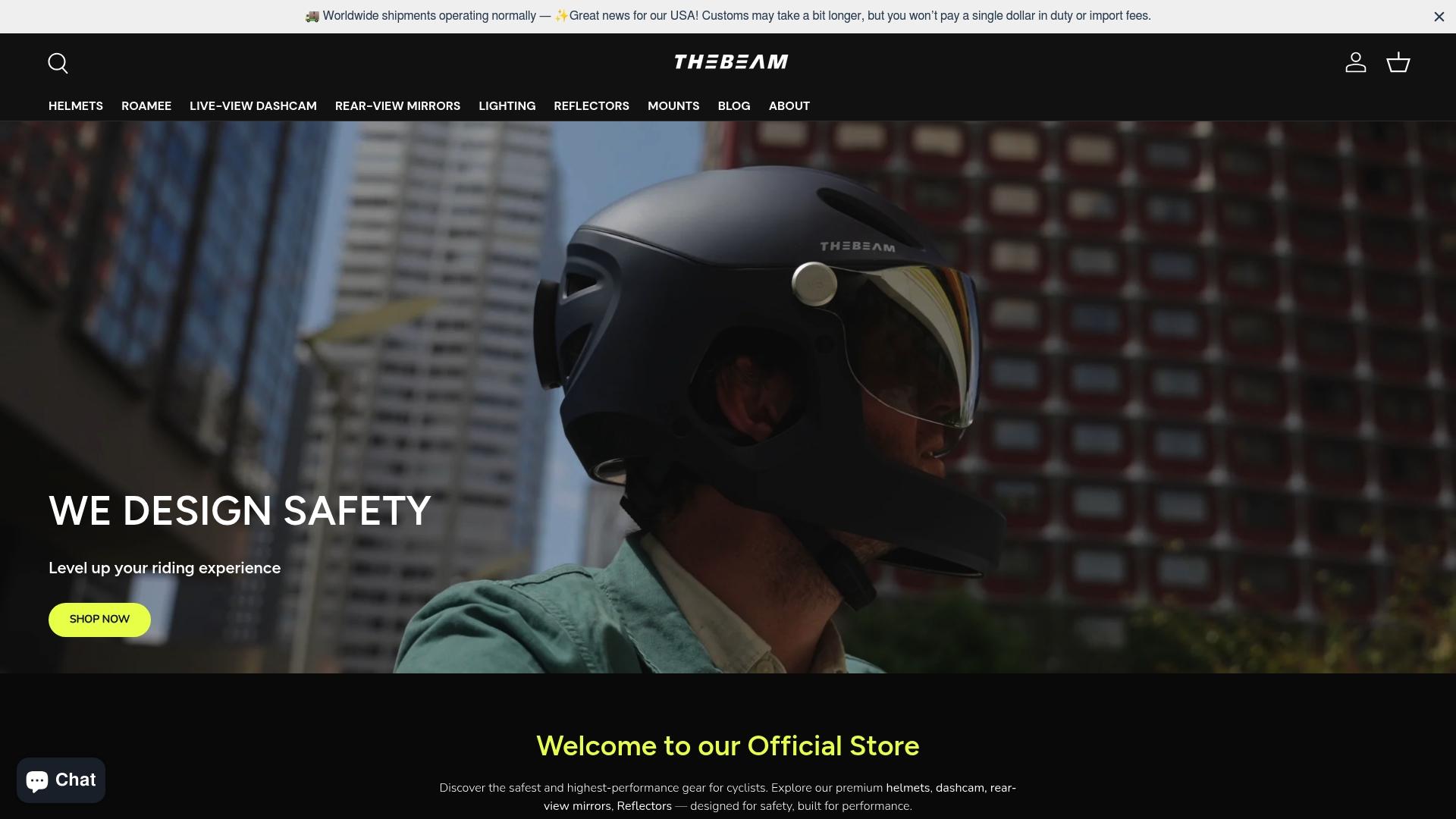
The VIRGO integral helmet combines MIPS technology with full-coverage construction built to NTA 8776 standards, making it one of the strongest commuter helmet options on the market for e-bike riders and performance-focused urban cyclists. Beyond helmets, the Frame Flash reflectors and connected safety accessories are built to keep you visible in the kind of urban traffic where helmets alone are not enough. Browse the full product collection to find the setup that fits your commute.
FAQ
What helmet style is best for a daily urban commute?
An urban or city-style helmet with a retention dial, moderate ventilation, and reflective detailing covers most commuter needs. If you ride an e-bike or travel at higher speeds, look for an integral helmet certified to NTA 8776.
Do all helmets offer the same level of safety?
All helmets sold in the U.S. must meet the CPSC standard, which sets a consistent baseline for impact protection. However, MIPS-equipped helmets reduce rotational forces by 12 to 73 percent compared to standard foam, offering meaningful additional protection for angled impacts.
How often should I replace my commuter helmet?
Replace any helmet immediately after a significant impact, even without visible damage. Beyond crash replacement, most manufacturers and safety organizations recommend replacing helmets every three to five years due to liner degradation.
Does a more expensive helmet protect better?
Not necessarily at the baseline level. All CPSC-certified helmets meet the same mandatory standard regardless of price. Higher cost typically reflects lighter weight, better ventilation, improved fit systems, and added technologies like MIPS, not superior fundamental protection.
What should e-bike commuters look for in a helmet?
E-bike riders should prioritize helmets certified to NTA 8776, which tests for impacts at speeds up to 45 km/h. Adding MIPS protection and full-coverage construction significantly improves safety outcomes at the higher speeds typical of e-bike commuting.


