

Riding through busy city streets in France or Germany comes with unique safety challenges that go far beyond skill and speed. For committed urban cyclists who invest in premium protection, understanding the latest advances in cycling safety technology and infrastructure is more than a precaution, it is a necessity. This overview highlights how superior gear, smart devices, and thoughtful route choices can help you ride with greater confidence and reduce your exposure to everyday risks.
Table of Contents
- Defining Road Cycling Safety Principles
- Types Of Protective Gear For Cyclists
- Essential Safety Features And Technologies
- Laws Governing Cyclist Safety In Europe
- Risks And Common Road Safety Mistakes
- Enhancing Urban Cyclist Visibility And Security
Key Takeaways
| Point | Details |
|---|---|
| Infrastructure Design is Crucial | Dedicated cycle paths with clear markings significantly reduce collision risks for urban cyclists. |
| Visibility and Protection are Essential | Wearing reflective clothing and high-quality protective gear enhances cyclist visibility and safety on the road. |
| Advanced Technologies Improve Safety | Utilization of smart technologies, like sensor-based warning systems and GPS tracking, proactively enhances cyclist security. |
| Situational Awareness is Key | Cyclists should maintain awareness of their surroundings and adopt defensive riding techniques to minimize accidents. |
Defining Road Cycling Safety Principles
Road cycling safety is a comprehensive approach that integrates infrastructure design, technological innovations, and rider behavior to minimize risks in urban environments. Smart cycling safety technologies have revolutionized how cyclists can protect themselves by providing advanced warning systems and collision prevention mechanisms.
The core principles of road cycling safety encompass several critical elements that work together to create a holistic protection strategy:
- Infrastructure Design: Creating dedicated cycle paths with clear markings
- Technological Integration: Utilizing sensors and communication systems
- Personal Protection: Wearing appropriate safety gear
- Situational Awareness: Understanding urban traffic dynamics
Effective cycling safety demands a multifaceted approach. Cycle path infrastructure analysis reveals that obstacle-free pavements and comprehensive guidance markings significantly reduce collision risks. Urban cyclists must prioritize predictable movement patterns and maintain high visibility to motorists.
Technological innovations play a crucial role in modern cycling safety. Advanced sensor systems can detect potential hazards, providing real-time warnings to cyclists about surrounding traffic conditions. These smart technologies transform traditional safety strategies by offering proactive protection mechanisms.
Pro tip: Always assume drivers cannot see you and position yourself strategically in traffic lanes to maximize visibility and minimize potential collision risks.
Types Of Protective Gear For Cyclists
Cycling in urban environments requires comprehensive protective gear that goes beyond simple safety accessories. Essential cycling protection strategies encompass multiple layers of equipment designed to minimize injury risks and enhance rider visibility.
The fundamental types of protective gear for urban cyclists include:
- Helmets: Primary head protection against potential impacts
- Gloves: Hand protection and improved handlebar grip
- Reflective Clothing: Enhanced visibility during low-light conditions
- Protective Eyewear: Shield against debris and UV radiation
- Padded Cycling Shorts: Impact absorption and comfort
Helmets represent the most critical safety component for cyclists. Modern helmets integrate advanced technologies like MIPS (Multi-directional Impact Protection System) to reduce rotational forces during potential collisions. Protective gear selection emphasizes choosing equipment that meets rigorous safety certifications and fits correctly.
Beyond physical protection, urban cyclists must prioritize visibility. Reflective clothing, bright color selections, and integrated lighting systems dramatically improve detection by motorists. Advanced gear now incorporates smart technologies that enhance rider safety through improved situational awareness and environmental interaction.
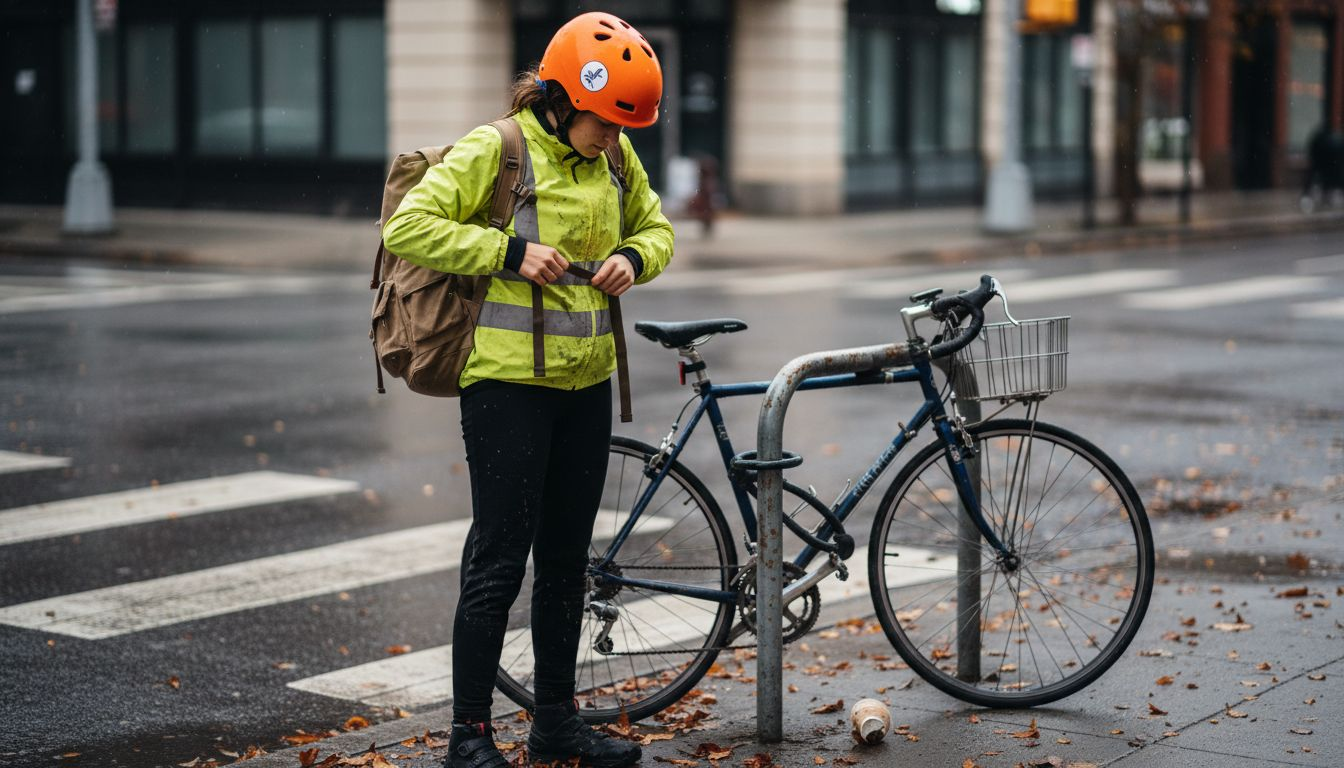
Pro tip: Invest in high-quality, well-fitted protective gear and replace helmets every five years or immediately after any significant impact.
Essential Safety Features And Technologies
Urban cycling safety requires advanced technologies and infrastructure solutions that go beyond traditional protective equipment. Smart bicycle safety technologies represent a cutting-edge approach to reducing cyclist vulnerability in complex urban environments.
Key safety technologies and features include:
- Sensor-Based Warning Systems: Real-time hazard detection
- Wireless Communication Interfaces: Enhanced situational awareness
- Advanced Impact Absorption Technologies: Minimizing injury potential
- Smart Lighting Systems: Improved visibility and detection
- GPS-Enabled Tracking: Route safety monitoring
Modern cycling safety integrates multiple technological approaches. Advanced sensor systems utilizing accelerometers, gyroscopes, and LIDAR can predict potential collision risks before they become critical. Cycling infrastructure design plays a crucial role in creating safe urban cycling environments, emphasizing obstacle-free pavements and clear guidance markings.
Wireless communication technologies enable cyclists to interact dynamically with their environment. Smart helmets now incorporate collision detection algorithms, emergency contact systems, and real-time navigation assistance. These innovations transform cycling from a potentially risky activity into a more predictable and manageable transportation method.
Pro tip: Regularly update your safety technologies and inspect their functionality to ensure optimal protection during urban rides.
Here’s a quick reference comparing innovative cycling technologies and their safety benefits:
| Technology | Main Function | Safety Benefit |
|---|---|---|
| Smart helmet | Collision detection | Immediate emergency alerts |
| Sensor warning system | Hazard identification | Real-time rider notification |
| Intelligent lights | Dynamic brightness | Enhanced night visibility |
| GPS tracking | Route monitoring | Quicker location in emergencies |
| Wireless communication | Environment interaction | Timely traffic updates |
Laws Governing Cyclist Safety In Europe
European cycling safety regulations represent a complex framework of legal protections designed to safeguard urban cyclists across different national contexts. These regulations aim to create standardized safety protocols while accommodating regional variations in infrastructure and transportation culture.
Key legislative aspects of cyclist safety in Europe include:
- Equipment Mandates: Compulsory bike features like functional brakes
- Visibility Requirements: Reflective gear and lighting standards
- Helmet Legislation: Variable national helmet laws
- Infrastructure Standards: Dedicated cycling lane regulations
- Vehicle Design Rules: Protective specifications for automotive interactions
National differences play a significant role in cyclist protection strategies. Cycling safety strategies demonstrate that while core safety principles remain consistent, specific implementation varies dramatically between countries. Some nations mandate comprehensive protective gear, while others focus more on infrastructure development and driver education.
The European Union continues to push for harmonization of cyclist safety standards, recognizing the growing importance of cycling as a sustainable urban transportation method. This involves coordinating efforts across member states to develop comprehensive legal frameworks that balance cyclist protection with mobility freedom.
Pro tip: Always research local cycling regulations before riding in a new European country, as safety requirements can differ significantly between jurisdictions.
Risks And Common Road Safety Mistakes
Cyclist crash risks involve complex interactions between infrastructure, cyclist behavior, and motorist awareness. Understanding these risks is critical for developing comprehensive urban cycling safety strategies that protect riders in diverse traffic environments.
Common road safety mistakes for urban cyclists include:
- Visibility Failures: Inadequate lighting and reflective gear
- Lane Positioning Errors: Improper road placement
- Traffic Signal Violations: Ignoring intersection rules
- Distraction Risks: Using electronic devices while riding
- Predictability Problems: Sudden, unpredictable movements
Safe system approaches reveal that most cycling accidents result from interactions between multiple risk factors. Single-bicycle crashes and collisions with motor vehicles represent the most significant threats, often stemming from poor infrastructure design or rider inexperience.
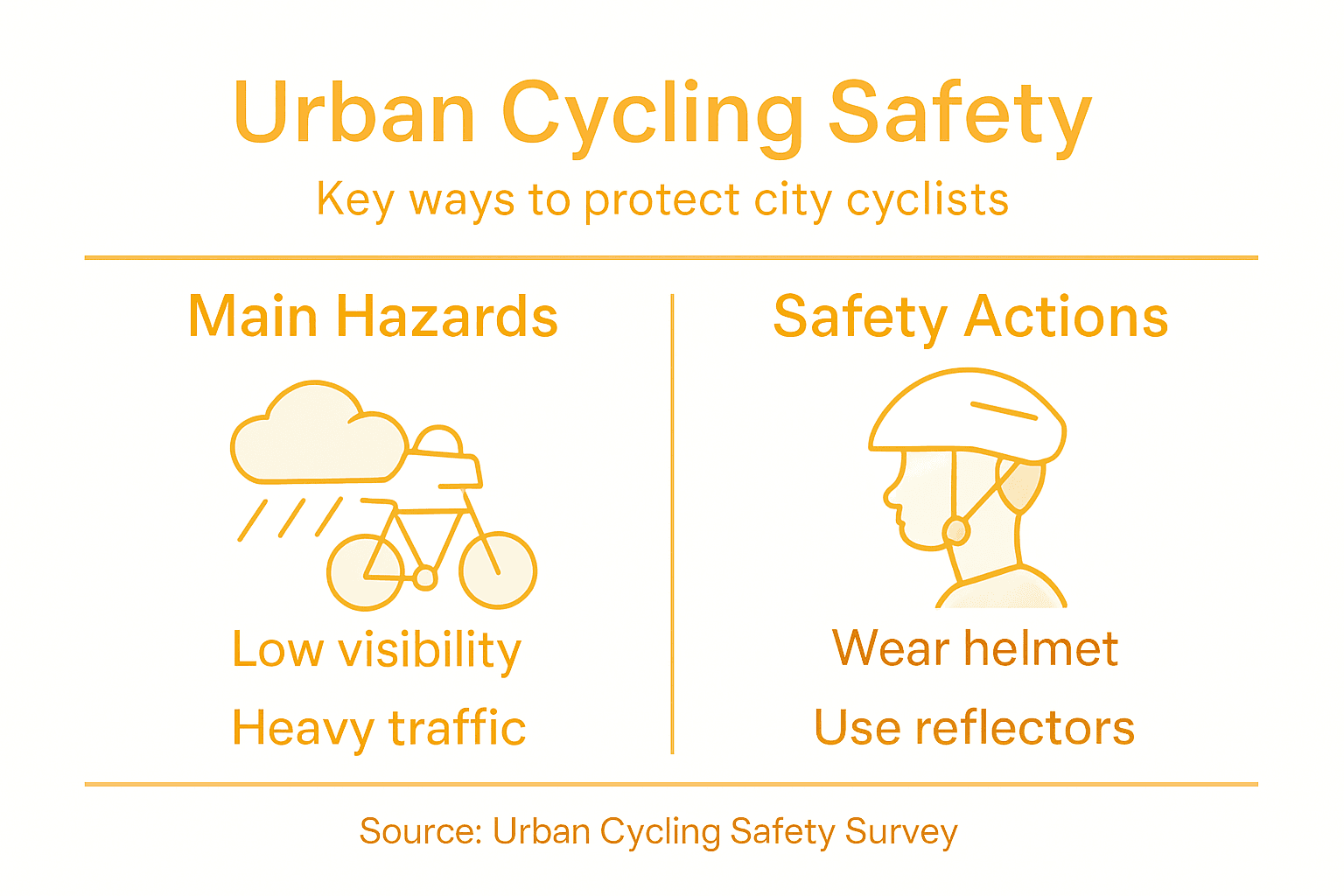
Mitigating these risks requires a holistic approach integrating education, infrastructure improvements, and personal awareness. Cyclists must develop situational awareness, understand traffic dynamics, and consistently implement defensive riding techniques to minimize potential hazards.
The following table summarizes how typical cyclist mistakes impact risk in urban environments:
| Mistake Type | Risk Created | Prevention Strategy |
|---|---|---|
| Poor visibility | Increased chance of collisions | Use reflective clothing and lighting |
| Distraction | Delayed reaction to hazards | Focus on road, avoid devices |
| Improper lane position | Vulnerable to passing vehicles | Maintain a safe road position |
| Ignoring signals | Increased intersection danger | Stop and signal intentions clearly |
| Sudden movements | Surprises drivers | Ride predictably and steadily |
Pro tip: Practice defensive cycling by maintaining high visibility, anticipating driver behavior, and always assuming you are not seen by other road users.
Enhancing Urban Cyclist Visibility And Security
Road safety interventions demand comprehensive strategies that integrate technology, infrastructure, and personal safety practices to protect urban cyclists effectively.
Key strategies for enhancing visibility and security include:
- Reflective Clothing: High-visibility gear with strategic reflective elements
- Intelligent Lighting Systems: Dynamic front and rear bicycle lights
- Smart Accessories: Connected safety devices with tracking capabilities
- Positioning Techniques: Strategic road placement for maximum detection
- Personal Awareness: Proactive traffic navigation skills
High-visibility gear effectiveness demonstrates that specialized clothing with retroreflective components dramatically improves cyclist detection, particularly during low-light urban conditions. Movement-activated reflective elements on ankles, shoulders, and helmets create dynamic visual signals that capture driver attention.
Technological innovations are transforming cyclist security. Advanced sensor systems, GPS tracking, and emergency communication tools now provide real-time safety monitoring, allowing cyclists to navigate urban environments with increased confidence and protection.
Pro tip: Layer reflective clothing with integrated lighting systems and always assume drivers might not see you initially.
Enhance Your Urban Cycling Safety with THE BEAM
Navigating city streets demands more than just skill and awareness. The article highlights critical challenges such as maintaining high visibility, using innovative protective gear, and adopting advanced safety technologies to reduce collision risks. At THE BEAM, we understand these pain points and are committed to elevating urban rider protection through thoughtfully designed equipment that focuses on real-world usability and cutting-edge safety features.
Discover our range of smart Reflectores and lighting solutions crafted to maximize your visibility in any urban environment. Our flagship VIRGO helmet with MIPS technology delivers integral protection, ensuring the utmost security for your head in critical situations.

Experience the confidence that comes from riding with premium, internationally trusted gear. Visit THE BEAM today and take the first step toward safer, smarter urban cycling. Don’t wait until an accident happens to prioritize your protection. Explore our innovative safety equipment and accessories now.
Frequently Asked Questions
What are the key principles of road cycling safety?
The key principles of road cycling safety include infrastructure design for dedicated cycle paths, technological integration for hazard detection, personal protection through gear, and situational awareness while riding in urban traffic.
What type of protective gear should urban cyclists wear?
Urban cyclists should wear helmets for head protection, gloves for grip, reflective clothing for visibility, protective eyewear against debris, and padded cycling shorts for comfort.
How do smart cycling technologies enhance safety for urban riders?
Smart cycling technologies enhance safety by providing sensor-based warning systems for real-time hazard detection, wireless communication for situational awareness, and advanced impact absorption features to minimize injury potential.
What are common road safety mistakes that cyclists should avoid?
Common road safety mistakes include failing to be visible with proper lighting, mispositioning on the road, ignoring traffic signals, getting distracted by devices, and making sudden movements that can surprise drivers.
Recommended
- Why Cycling Safety Matters for Urban Riders – The Beam
- Why Cycling Safety Matters for Urban Riders – The Beam
- 7 Essential Types of Cycling Helmets for Urban Safety – The Beam
- 7 Essential Types of Cycling Helmets for Urban Safety – The Beam
- What Is Seasonal Sports Gear and Why It Matters – More Sports


