

Many cyclists hesitate to try integral helmets, assuming they’re bulky and stifling. Modern integral helmets challenge this outdated view with lightweight designs and effective ventilation systems. This guide breaks down integral helmet construction, safety features, certifications, and real world usability. You’ll discover how to select high-end integral helmets that deliver both protection and comfort for safer cycling and e-bike commuting.
Table of Contents
- What Is An Integral Helmet? Defining Full-Face Protection
- Why Integral Helmets Offer Superior Protection
- Advanced Safety Features In Integral Helmets: MIPS And Beyond
- Certification Standards And Their Importance For High-Speed Cycling
- Balancing Safety And Usability: Weight And Ventilation
- Common Misconceptions About Integral Helmets
- Comparing Integral Helmets To Other Helmet Types
- Care And Maintenance Guidelines For Integral Helmets
- Explore High-End Integral Helmets For Urban Safety
- Frequently Asked Questions About Integral Helmets
Key Takeaways
| Point | Details |
|---|---|
| Full-face coverage reduces head injuries significantly | Integral helmets lower traumatic brain injury risk by up to 45% compared to half-shell designs |
| MIPS technology mitigates rotational forces | The low-friction layer inside integral helmets reduces rotational brain injury during angled impacts |
| NTA-8776 certification ensures high-speed protection | This standard validates helmet performance at e-bike speeds up to 45 km/h with multi-impact testing |
| Modern designs balance safety with comfort | Today’s integral helmets weigh around 600 grams and feature strategic ventilation for all-day wearability |
| Common myths about weight and usability are outdated | Advances in materials and ergonomics make integral helmets practical for daily urban commuting |
What is an Integral Helmet? Defining Full-Face Protection
Integral helmets cover your entire head and face, including the chin area. In cycling and motorcycling communities, they’re commonly called full-face helmets. This comprehensive design prevents both facial and cranial injuries far better than traditional cycling helmets that leave your face exposed.
Contrast this with half-shell or open helmets that protect only the top and sides of your head. An integral helmet includes an integrated chin bar and often a visor, creating a protective shell around vulnerable facial bones and your jaw. Research shows that integral helmets provide full-face protection covering the entire head including the chin and face, significantly reducing facial injuries compared to half or open helmets.
Key features distinguish integral helmets:
- Complete coverage from crown to chin with no gaps
- Integrated chin bar that absorbs impact forces
- Fixed visor or face shield protecting eyes and face
- Continuous shell construction for structural integrity
- Enhanced aerodynamics reducing wind resistance
The design philosophy centers on eliminating vulnerable exposure points. When you understand full-face helmet safety benefits, the engineering rationale becomes clear. Every surface area receives protection, making integral helmets the most comprehensive option for cyclists prioritizing maximum safety.
Why Integral Helmets Offer Superior Protection
Integral helmets deliver measurably better protection than other helmet types. Their full-face coverage shields you from facial injuries that commonly occur in cycling accidents. Studies indicate that full-face helmets reduce head injury risk more effectively than open or half helmets, lowering traumatic brain injury incidence by up to 45% in urban collisions.
Integral helmets reduce traumatic brain injuries by 45% compared to half-shell designs in urban cycling accidents.
Rotational forces cause many serious brain injuries during crashes. When your head strikes pavement at an angle, your brain can twist inside your skull. Integral helmets address this through both structural design and advanced technologies. The chin bar prevents your face from hitting the ground, while the extended coverage distributes impact forces across a larger surface area.
Protection advantages include:
- Full facial bone and jaw protection preventing fractures
- Reduced risk of dental injuries and soft tissue damage
- Better impact distribution across entire helmet structure
- Protection from road debris and environmental hazards
- Enhanced structural rigidity maintaining shape during crashes
Your vulnerable facial bones receive critical shielding. The mandible, maxilla, and zygomatic bones all face exposure in standard helmets. Integral designs transform your helmet into a protective cage. When comparing helmet safety across types, the data consistently favors full-face coverage for injury prevention.

Advanced Safety Features in Integral Helmets: MIPS and Beyond
MIPS technology represents a breakthrough in rotational impact protection. The Multi-directional Impact Protection System consists of a low-friction layer inside the helmet. During angled impacts, this layer allows the helmet to rotate slightly relative to your head, reducing the rotational forces transmitted to your brain.
Modern integral helmets combine multiple protective technologies. According to reviews, the MIPS system reduces rotational forces during angular impact while integral helmets combine ABS shells and EPS liners for impact absorption suitable for e-bike speeds up to 45 km/h. These materials work together: the hard ABS outer shell distributes impact forces, while the EPS foam liner compresses to absorb energy.
Safety innovations in integral helmets:
- MIPS low-friction layer mitigating rotational brain injuries
- Multi-density EPS foam zones absorbing varying impact levels
- Reinforced chin bar structures tested for high-speed collisions
- ABS polycarbonate shells providing puncture resistance
- Energy-absorbing zones strategically placed for common impact angles
Pro Tip: When selecting an integral helmet, verify that MIPS technology is specifically mentioned. Some manufacturers use similar rotational protection systems under different names, but MIPS remains the most extensively tested and validated technology for reducing rotational brain injuries.
These safety features target e-bike speeds where traditional helmet standards fall short. At 45 km/h, impact forces multiply dramatically. Understanding MIPS technology benefits helps you appreciate why this innovation matters for high-speed cycling. The Beam VIRGO helmet exemplifies how manufacturers integrate these technologies into practical, wearable designs.
Certification Standards and Their Importance for High-Speed Cycling
Certification standards validate whether helmets actually protect you at relevant speeds. The NTA-8776 certification specifically targets e-bikes and S-Pedelecs traveling up to 45 km/h. Testing protocols include multi-impact scenarios reflecting real urban riding hazards. According to technical reviews, NTA-8776 certification is designed specifically for e-bikes traveling up to 45 km/h, requiring more rigorous testing than standard EN1078.
Standard EN1078 suits conventional cycling helmets at lower speeds. This creates a gap for e-bike riders whose speeds exceed traditional cycling but don’t reach motorcycle levels. NTA-8776 fills this gap with testing that matches your actual riding conditions.
Key certification differences:
- NTA-8776 tests impact absorption at higher velocities
- Multi-impact testing simulates successive crashes or hard falls
- Chin bar strength testing ensures facial protection integrity
- Retention system testing at forces matching e-bike collisions
- Environmental conditioning tests for temperature and moisture effects
When shopping for integral helmets, prioritize NTA-8776 or equivalent certifications. These standards confirm the helmet performs under conditions you’ll actually face. Understanding cycling helmet certifications prevents purchasing inadequate protection. Certification marks on helmets aren’t just bureaucratic labels. They represent thousands of impact tests validating that the helmet protects you when it matters most.
Balancing Safety and Usability: Weight and Ventilation
Weight concerns often deter cyclists from considering integral helmets. Modern engineering changes this equation dramatically. Testing shows that modern integral helmets including The Beam VIRGO weigh around 600 grams and maintain airflow through strategically placed ventilation ports. This weight matches many high-end open helmets, eliminating the heaviness myth.
Ventilation engineering prevents overheating during long rides. Strategic port placement creates airflow channels that pull cool air in and exhaust heat out. The chin bar area, traditionally problematic for ventilation, now incorporates intake vents directing air across your face. This design ensures comfort during summer commutes and high-intensity rides.
Comfort features in modern integral helmets:
- Lightweight carbon fiber or advanced polycarbonate shells
- Moisture-wicking padding with antimicrobial treatments
- Adjustable retention systems for personalized fit
- Removable, washable interior liners maintaining hygiene
- Strategic vent placement optimizing airflow without compromising structure
Pro Tip: Test ventilation during a 15-minute stationary session before purchasing. Wear the helmet indoors at room temperature. If you feel excessive heat buildup while stationary, the ventilation will prove inadequate during actual rides when metabolic heat increases.
Ergonomic fit systems distribute weight evenly across your head. Poor weight distribution causes pressure points and neck strain. Quality integral helmets use dial adjustments and padding configurations that balance the helmet. Comfort ensures you’ll actually wear the helmet consistently, which matters more than any technical specification. Exploring integrated helmet design for comfort reveals how manufacturers optimize wearability without sacrificing protection.
Common Misconceptions About Integral Helmets
Myth one: Integral helmets are too heavy for daily use. Modern designs weigh 600 to 800 grams, comparable to many standard helmets with accessories. Advanced materials and engineering eliminate the weight penalty that plagued earlier integral helmets.
Myth two: They cause overheating. Ventilation systems in current models solve this completely. Testing confirms that modern integral helmets have ventilation that prevents common myths about heaviness and overheating. Multiple intake and exhaust ports maintain comfortable temperatures even during intense rides.
Myth three: Integral helmets severely restrict hearing and peripheral vision. Design advances maintain situational awareness. Side ports preserve sound transmission for traffic awareness. The chin bar sits low enough to avoid blocking downward vision for handlebar and road monitoring.
Additional misconceptions:
- Myth: Only extreme sports riders need integral helmets
- Reality: Urban and e-bike commuters benefit most from full-face protection
- Myth: Integral helmets look too aggressive for casual riding
- Reality: Contemporary designs offer sleek, minimalist aesthetics
- Myth: They’re impractical for wearing glasses
- Reality: Interior space accommodates eyewear comfortably
The perception gap stems from outdated experience with early integral helmet designs. Manufacturing improvements over the past five years transformed these helmets from niche products into practical daily options. Understanding common helmet misconceptions helps you evaluate integral helmets based on current capabilities rather than outdated assumptions. Reading recent reviews like those debunking helmet myths provides evidence of real world performance.
Comparing Integral Helmets to Other Helmet Types
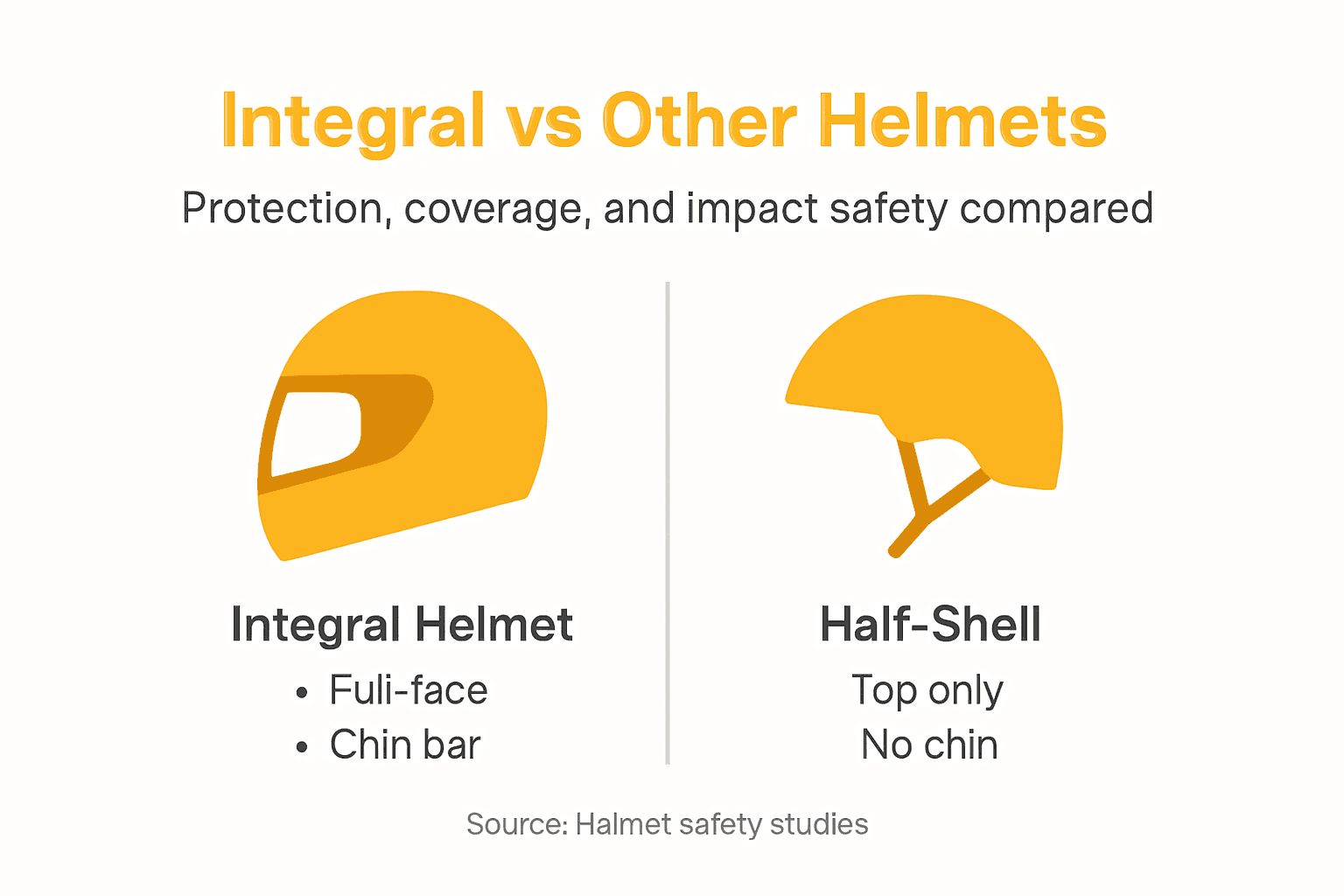
Integral helmets cover your face fully while half-shells protect only the top and sides of your head. Modular helmets feature a flip-up chin bar offering versatility between full-face and open configurations. However, research indicates that integral helmets offer more coverage and better protection than half-shell and modular helmets, while providing aerodynamic and noise insulation advantages.
Modular helmets sacrifice some protection for convenience. The hinge mechanism creates a potential weak point during impacts. While modulars suit riders who frequently remove their helmets, integral designs maintain superior structural integrity. For commuting where you wear the helmet continuously, this trade-off favors integral construction.
| Feature | Integral Helmet | Modular Helmet | Half-Shell Helmet |
|---|---|---|---|
| Face Coverage | Complete | Partial when closed | None |
| Protection Level | Highest | Medium to high | Basic |
| Weight | 600 to 800g | 700 to 900g | 250 to 400g |
| Ventilation | Good with ports | Variable | Excelente |
| Usability | Fixed protection | Flip-up convenience | Maximum airflow |
Integral helmets provide better wind and noise protection, improving rider focus. Reduced wind buffeting means less fatigue on long commutes. The aerodynamic shell cuts through air more efficiently than open designs. Half-shell helmets offer minimal facial protection, leaving you vulnerable to road debris, insects, and impact injuries.
Choosing between types depends on your riding priorities. For maximum protection during high-speed e-bike commuting, integral helmets lead. For recreational riding at moderate speeds, half-shells may suffice. Reviewing comprehensive helmet type comparison guides clarifies which design matches your needs. The integral vs modular comparison details trade-offs between protection and convenience.
Care and Maintenance Guidelines for Integral Helmets
Helmets degrade over time even without visible impacts. Material breakdown from UV exposure, temperature cycles, and normal wear compromises protection. Experts recommend replacing helmets approximately every five years. According to safety guidelines, integral helmets must be replaced after any significant impact and have a recommended lifespan of about 5 years due to material degradation.
Replace your helmet immediately after any substantial crash, even if no visible damage appears. Internal foam compression and micro-cracks reduce future impact absorption. The helmet sacrificed its integrity protecting you once; don’t gamble on whether it can do so again.
Maintenance practices extending helmet life:
- Clean the shell with mild soap and water, avoiding harsh chemicals
- Remove and wash interior padding monthly to prevent odor and bacteria
- Store in a cool, dry place away from direct sunlight
- Inspect regularly for cracks, delamination, or loose retention systems
- Never modify the helmet structure or drill additional ventilation holes
Proper fit and securely fastened straps remain essential for effectiveness. A loose helmet shifts during impact, reducing protection and potentially causing injury. Adjust retention systems until the helmet sits level on your head without rocking. The chin strap should allow one finger width between strap and chin when fastened.
Following helmet replacement guidelines preserves the safety performance you bought the helmet for. Regular inspection catches degradation before it compromises protection. Treating your helmet as a consumable safety device rather than a permanent accessory ensures you maintain maximum protection throughout your cycling life.
Explore High-End Integral Helmets for Urban Safety
The Beam specializes in advanced integral helmets engineered for urban and e-bike riders. Our VIRGO model meets NTA-8776 certification and integrates MIPS technology, delivering the protection this guide describes. We’ve designed these helmets balancing safety with the comfort and style you need for daily commuting.

Explore our complete helmets collection to find models matching your riding style. Our cycling safety gear guide helps you build comprehensive protection systems. For riders focused on maximum safety, our article on road cycling protection methods offers additional strategies. Upgrade your cycling protection with integral helmets that don’t compromise on usability or aesthetics.
Frequently Asked Questions About Integral Helmets
Are integral helmets suitable for everyday urban commuting?
Yes, modern integral helmets work excellently for daily urban rides including e-bike commuting. Reviews confirm that modern integral helmets are lightweight and well-ventilated for everyday urban and e-bike commuting. Ventilation systems and ergonomic fit designs minimize discomfort, making them practical for regular use. The enhanced protection justifies any minor adjustment period as you adapt to the full-face coverage.
How does MIPS technology improve safety in integral helmets?
MIPS creates a low-friction layer allowing slight rotational movement between your head and the helmet during angled impacts. Research shows that MIPS allows a sliding motion to reduce rotational brain injury risks on impact. This technology specifically addresses rotational forces, a leading cause of traumatic brain injuries that standard foam alone cannot mitigate. Many high-end integral helmets now include MIPS as standard equipment.
How often should integral helmets be replaced?
Replace your integral helmet every five years under normal use without impacts. Safety experts state that integral helmets have a recommended replacement cycle of about 5 years and must be replaced after any significant impact. Replace immediately after any crash involving head contact, regardless of visible damage. Material degradation from UV exposure, temperature fluctuations, and normal wear compromises protection over time.
Do integral helmets restrict peripheral vision or hearing?
Modern integral helmets maintain good peripheral vision and sound awareness through thoughtful design. Testing reveals that integral helmets include design features preserving peripheral vision and hearing to ensure safety during urban cycling. Side ventilation ports allow sound transmission for traffic awareness. The chin bar positions low enough to preserve downward sight lines for monitoring road conditions and handlebar instruments.


