

Winter road cycling in the US demands more than just extra layers. Your essential kit breaks down like this:
- Base layer: Moisture-wicking synthetic or merino wool, worn snug against the skin
- Mid-layer: Thermal jersey or fleece that adds insulation without bulk
- Outer shell: Windproof front, breathable back, waterproof when rain is in the forecast
- Gloves: Thermal or neoprene, matched to temperature and ride intensity
- Shoe covers: Membrane or neoprene over thermal socks, never plastic bags
- Headwear: Cycling cap or helmet liner under your helmet, balaclava for sub-freezing days
- Helmet: Full-face or well-vented road helmet with integrated safety tech
- Lights and reflectors: Front and rear, charged before every ride
- Bike adaptations: Winter tires, lowered tire pressure, wet-condition chain lube, mudguards
Get these right and winter riding stops being a survival exercise.
Table of Contents
- What to wear on a winter road ride
- How to adapt your road bike for winter conditions
- Mistakes that cost you comfort and safety in winter
- Thebeamofficial’s winter safety gear recommendations for road cyclists
- Thebeamofficial: premium safety gear built for winter road cycling
- Key Takeaways
What to wear on a winter road ride
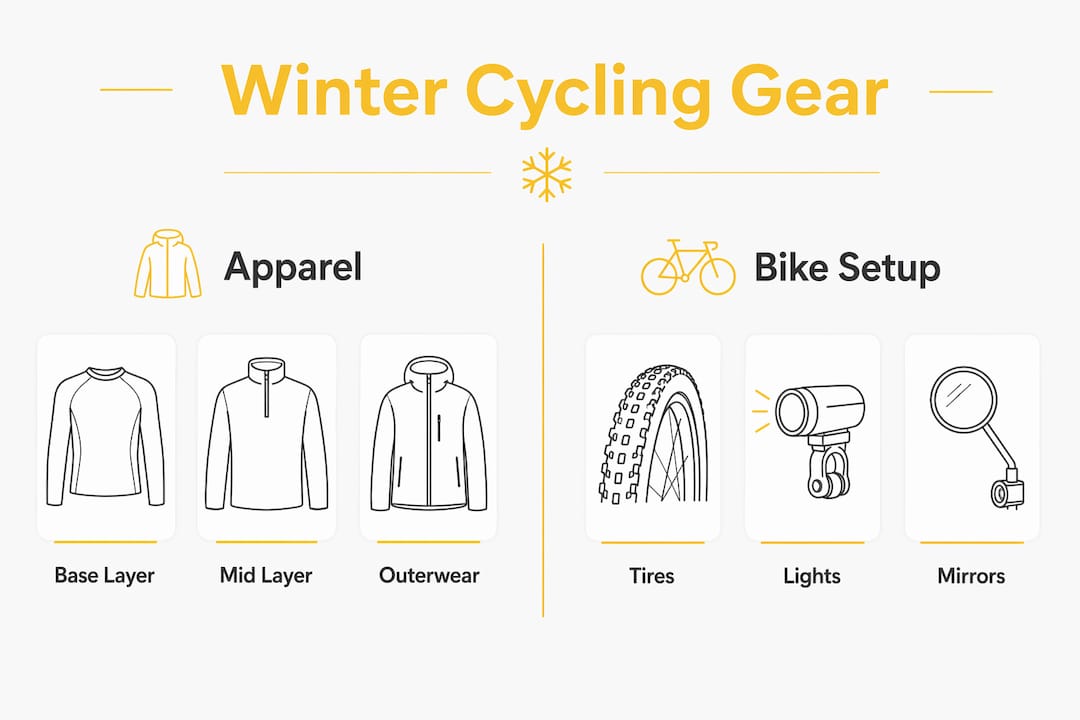
The three-layer system is the backbone of cold-weather cycling apparel: move moisture off your skin, add adjustable insulation, then block wind and rain without trapping sweat. Each layer has a specific job, and swapping one out changes the whole equation.
Base layer sits directly against your skin. Thin, snug synthetics wick fastest during hard efforts. Merino wool works well for longer, steadier rides because it insulates even when damp and resists odor. Avoid anything bulky here — a thick base layer holds moisture and chills you the moment your pace drops.
Mid-layer is where you regulate warmth. A thermal jersey with a full-length zipper lets you vent on climbs and seal up on descents. For temperatures below freezing, stack a fleece mid-layer over a warm base. For intense intervals, skip the mid-layer entirely and rely on a breathable outer shell.
Outer shell does the heavy lifting against wind and rain. Softshell jackets with windproof front panels and breathable backs handle most dry winter days. In steady rain, switch to a hardshell, but vent aggressively — a sealed hardshell turns into a sauna at any real effort level.
Beyond the torso, a few accessories make or break a winter ride:
- Thermal gloves: Cold hands reduce braking and shifting control; keep two pairs at different weights for varying conditions
- Shoe covers: Thermal socks paired with membrane covers outperform improvised solutions; plastic barriers trap moisture and make feet colder, not warmer
- Face protection: A balaclava with a movable face panel handles the coldest mornings; cycling glasses with foam brow seals cut windchill noticeably
- High-visibility reflectors: Short winter days mean more riding in low light; reflective elements on clothing and the bike multiply your presence on the road
Pro Tip: Dress to feel slightly cool at the start. Body heat from effort will bring you to comfort within 10–20 minutes. If you feel warm at rollout, you will overheat and end up soaked — which chills you far more than the cold air ever would.
How to adapt your road bike for winter conditions
Clothing handles your comfort. The bike handles your survival. These are the adaptations that actually matter when roads turn wet, gritty, or icy.
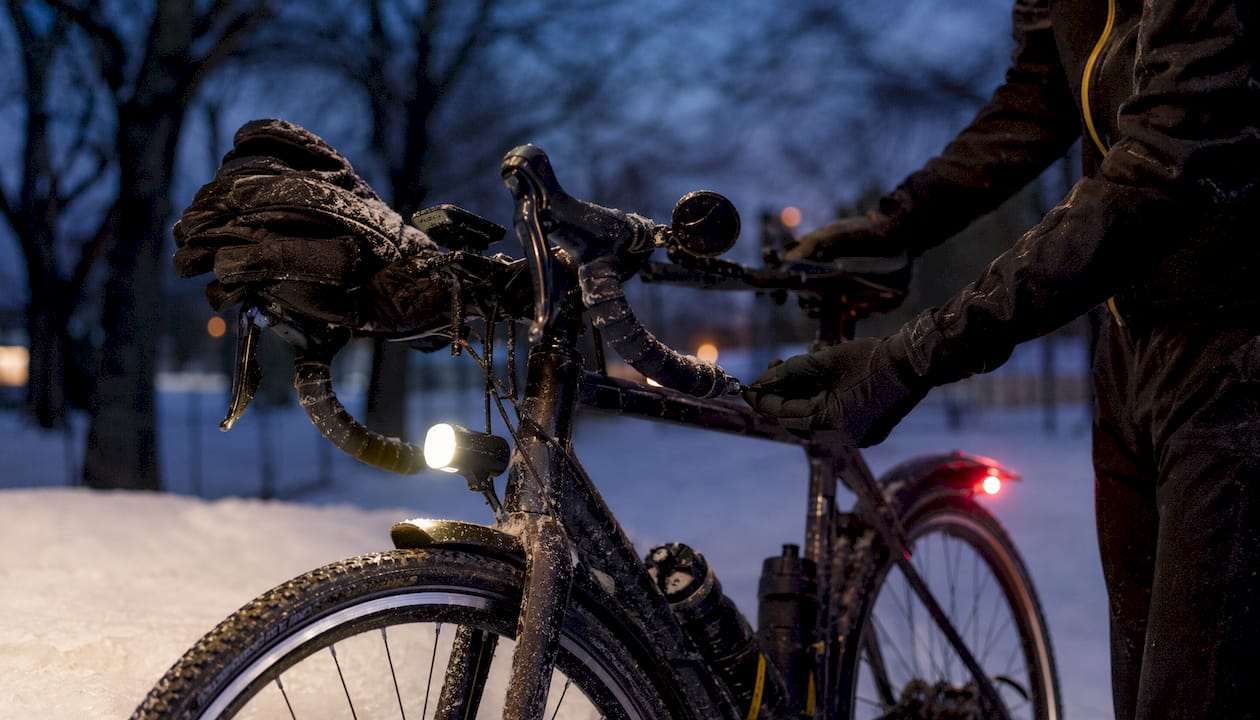
Tires are the single biggest safety upgrade. Winter-specific tires with reinforced casings resist the sharp debris that wet roads wash onto the pavement. Studded tires are worth it if you ride early mornings when overnight water freezes into invisible patches. Tubeless setups add another layer of flat protection.
Tire pressure drops in cold air — check before every ride. Running slightly lower pressure than summer also increases the contact patch, which improves grip on wet leaves and slick pavement.
- Lights: High-output front and rear lights are non-negotiable for winter visibility; short days mean you will start or finish in the dark more often than not
- Mudguards: Full-coverage guards protect the drivetrain from road spray and keep cold, gritty water off your legs and feet; riders behind you will appreciate them too
- Chain lube: Wet-condition lubricants resist washout from rain and road spray; standard dry lube disappears within a few miles in winter wet, accelerating chain wear
- Brake pads: Rim brake pads wear faster in wet grit; inspect and replace them before winter, and clean the braking surfaces more frequently
Pro Tip: Check your lights before every winter ride, not just occasionally. A dead rear light in low-light conditions is a serious safety gap. Keep a charging cable in your kit bag as a reminder.
Mistakes that cost you comfort and safety in winter
Most winter cycling problems trace back to a handful of repeatable errors. Knowing them in advance saves you from learning the hard way.
Overdressing is the most common mistake. Excessive layers restrict movement, trap sweat, and leave you colder mid-ride than a lighter kit would. The goal is warmth that breathes, not insulation that seals. One well-chosen thermal jersey plus a windproof shell beats three mediocre layers every time.
Ignoring specific hazards is the second error. Cold air and black ice are completely different threats. Cold air calls for breathable insulation. Black ice calls for studded tires and reduced speed in shaded corners, regardless of what you are wearing. Gear selection has to match the actual condition, not just the temperature reading.
- Neglecting hand and foot protection: Numb fingers cannot brake or shift reliably; numb feet affect pedaling efficiency and balance — both are safety issues, not just comfort ones
- Skipping wet-weather bike maintenance: A chain stripped of lube after one wet ride wears faster and shifts poorly; proper maintenance with wet lubricants and regular cleaning prevents drivetrain corrosion across the whole season
- Layering socks: Stacked socks compress blood flow and make feet colder, not warmer; one pair of thermal cycling socks inside a quality shoe cover is the correct approach
The single most underestimated winter cycling risk is losing fine motor control in the hands and feet. Cold-induced numbness degrades braking response and gear shifting before most riders notice it happening. Protecting extremities is not optional comfort — it is a direct safety requirement.
Thebeamofficial’s winter safety gear recommendations for road cyclists
Apparel and bike prep get you through winter. The right safety equipment keeps you protected when conditions are at their worst.
The BEAM VIRGO integral helmet with MIPS technology is the centerpiece of a serious winter safety setup. Full-face coverage protects against wind, cold air, and road debris in a way that open-face helmets simply cannot match. MIPS (Multi-directional Impact Protection System) adds rotational impact protection, which matters on slippery winter roads where falls tend to involve sliding rather than direct impacts. The VIRGO is built for real-world usability, not just lab ratings, with a design that works across road, gravel, and urban riding. Browse the full range of adult helmets from Thebeamofficial.
Rear-view mirrors from Thebeamofficial mount to handlebars or sunglasses and give you situational awareness without turning your head on slick roads. In winter, when reaction times to hazards need to be faster, knowing what is behind you before you move is a genuine safety advantage.
High-visibility reflectors from Thebeamofficial work alongside your lights to keep you visible from multiple angles. Reflectors catch headlights from cars approaching from the side, a gap that active lights alone do not always cover. Installing them correctly matters — Thebeamofficial’s guide to reflector installation walks through placement for maximum effect.
Connected safety products in the Thebeamofficial lineup extend protection further, with AI-powered rear-view dashcams and Bluetooth helmet kits that add awareness layers no amount of clothing can replicate. For low-light winter riding, these tools close the visibility gap that shorter days create.
| Safety Product | Winter Benefit |
|---|---|
| VIRGO helmet with MIPS | Full-face protection and rotational impact defense on slippery roads |
| Rear-view mirrors | Situational awareness without head-turning on icy surfaces |
| High-visibility reflectors | Multi-angle visibility, catches side-approach headlights |
| Connected dashcam accessories | Rear-view monitoring and incident recording in low-light conditions |
Pro Tip: Pair active lights with passive reflectors on every winter ride. Lights project your position; reflectors confirm it from angles your lights do not reach. Together, they cover the full visibility picture that winter’s shorter days create.
Thebeamofficial: premium safety gear built for winter road cycling
Winter riding exposes every weakness in your safety setup. Thebeamofficial addresses the ones that matter most: head protection, rear visibility, and low-light presence.

The VIRGO integral helmet with MIPS technology gives road cyclists full-face coverage and advanced impact protection in a design that fits real riding, not just controlled conditions. The safety accessories — rear-view mirrors, high-visibility reflectors, and connected dashcam products — fill the gaps that apparel alone cannot. Every product ships directly through Thebeamofficial’s e-commerce platform to riders across the US. If winter road cycling is on your calendar, check the full lineup and add the protection your kit is currently missing.
Key Takeaways
Winter road cycling safety depends on layered apparel, targeted bike adaptations, and high-end protective gear working together — no single item covers all the risks.
| Point | Details |
|---|---|
| Layer strategically | Use a moisture-wicking base, insulating mid-layer, and windproof outer shell matched to ride intensity. |
| Protect extremities first | Numb hands and feet degrade braking and shifting control, making gloves and shoe covers a safety priority. |
| Adapt the bike, not just the clothing | Winter tires, wet-condition lube, mudguards, and charged lights are non-negotiable bike modifications. |
| Dress slightly cool at the start | Body heat from effort reaches comfort within 10–20 minutes; overdressing leads to sweat accumulation and chills. |
| Thebeamofficial for head and visibility protection | The VIRGO MIPS helmet, rear-view mirrors, and high-visibility reflectors address the safety gaps winter conditions create. |


