

TL;DR:
- Proper helmet storage involves keeping it in a cool, dry indoor space away from direct sunlight and chemicals. Regular cleaning, careful mounting, and avoiding pressure or stacking prevent gradual damage that compromises safety. Consistent habits extend helmet lifespan, maintain protection, and ensure reliable performance on every ride.
Your helmet takes a beating on every ride. Knowing how to store your helmet properly is just as critical as choosing the right one in the first place. Most cyclists never think twice about tossing their helmet on a shelf, hanging it from handlebars, or leaving it in a hot car. Each of those habits quietly degrades the very protection you depend on. This guide walks you through the exact steps to store your helmet correctly, covering everything from environment and cleaning to mounting options and common mistakes that are costing riders their safety.
Table of Contents
- Key takeaways
- How to store your helmet: prerequisites and environment
- Step by step helmet storage: mounting and shelving methods
- Common helmet storage mistakes to avoid
- What proper storage actually does for your helmet
- My honest take on why cyclists overlook helmet storage
- Protect your ride with the right gear
- FAQ
Key takeaways
| Point | Details |
|---|---|
| Clean before storing | Always wash and fully dry your helmet before putting it away to prevent mold and material breakdown. |
| Choose the right environment | Store in a cool, dry, shaded indoor space away from chemicals, heat, and direct sunlight. |
| Use proper mounting | Padded wall mounts or dedicated racks protect structural integrity far better than handlebars or hooks. |
| Avoid compression damage | Never stack items on top of a stored helmet or place it face-down on hard surfaces. |
| Build a consistent habit | Storing your helmet in the same spot every time reduces the chance of forgetting it and reinforces safer riding routines. |
How to store your helmet: prerequisites and environment
Before you mount anything or buy a storage rack, the environment where your helmet lives matters more than the hardware you use. Get this part wrong and even the best wall mount won’t save your helmet from slow, invisible damage.
Start with the right location. Choose a cool, dry, and well-ventilated indoor space. A bedroom closet, a dedicated gear shelf, or a utility room all work well. What does not work: a garage with paint cans and fuel containers nearby. Chemical fumes from fuels and cleaners degrade the helmet shell over time, weakening the plastic or composite material even without any visible change on the outside.
Sunlight is another silent killer. Prolonged direct sunlight exposure breaks down the helmet shell and foam, reducing protection capabilities even when the helmet looks fine. A windowsill that catches afternoon sun may feel like a convenient spot, but the UV radiation is doing real structural damage over weeks and months.
Here is a quick reference for what your storage environment should and should not include:
| Factor | Acceptable | Avoid |
|---|---|---|
| Temperature | Cool to room temperature | Hot cars, attics, sunny windowsills |
| Humidity | Low to moderate with ventilation | Damp basements, bathrooms |
| Light exposure | Dim or indirect lighting | Direct sunlight, UV-heavy areas |
| Air quality | Fresh, circulated air | Near fuels, solvents, paints |
| Surface | Padded rack or soft bag | Concrete floors, workbenches |
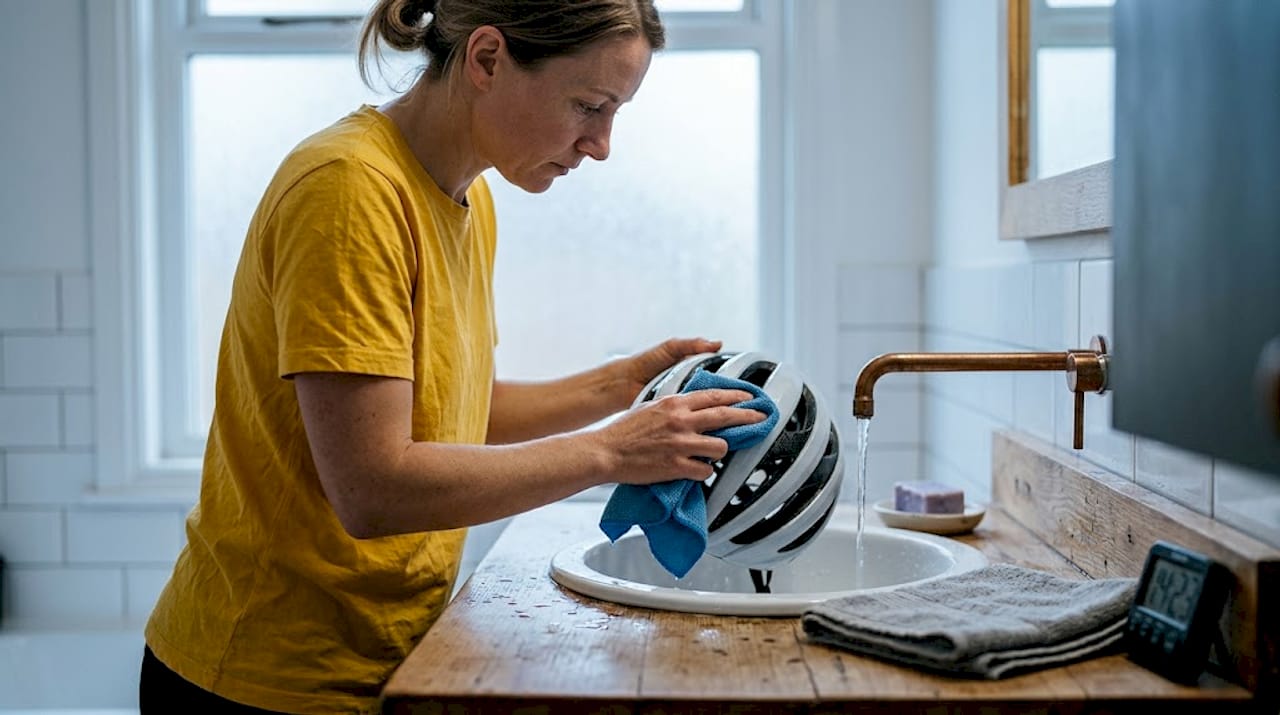
Clean your helmet before every storage period. Cleaning with mild detergents removes sweat, oils, and grime without damaging materials. Rinse it thoroughly and let it air dry completely before putting it away. Storing a damp helmet is one of the fastest ways to develop mold inside the liner and create persistent odor that no amount of airing out will fully fix.
Pro Tip: Leave the visor or vents slightly open after your ride to allow airflow through the interior. This small habit prevents odor buildup and keeps the inner lining in better shape over time.
For longer storage periods, consider a small dehumidifier in the storage space or a moisture-absorbing packet inside the helmet bag. Proper helmet maintenance explained goes hand in hand with storage, since both habits work together to preserve your gear.
Step by step helmet storage: mounting and shelving methods
Now that your environment is set and your helmet is clean, here is exactly how to set up proper storage. These steps work whether you have a dedicated gear room, a small apartment, or a shared cycling space.
-
Choose your storage method. Your two main options are wall-mounted racks or pegs, and shelf or bag storage. Wall mounts save floor space and keep helmets visible and accessible. Bag or shelf storage works better if you travel frequently or rotate between helmets.
-
Install wall pegs at the right height. Wall mount pegs should be placed 54 to 60 inches from the floor, rated for at least 10 lbs, with at least 6 inches of projection to avoid the helmet resting against the wall surface. This ergonomic height means you can grab your helmet without bending down or reaching up awkwardly.
-
Pad every contact point. Bare metal hooks will dent and eventually crack the inner EPS foam if the helmet rests on them repeatedly. Wrap hooks with foam padding, cork tape, or buy hooks that come with rubber coating. Padded or cushioned storage is the standard recommendation for protecting helmet interiors from accidental compression.
-
Use a helmet bag for travel or secondary storage. A soft helmet bag keeps dust off the exterior, protects the visor from scratches, and adds a layer of impact protection if the helmet gets knocked off a shelf. Place it on a shelf at eye level, never on the floor where it can be stepped on.
-
If renting or avoiding wall holes, use freestanding racks. A small gear rack near your front door or in a closet works just as well as a wall mount. Hooks that clip over door frames or sit on shelf edges are renter-friendly and require no tools.
-
Secure your helmet if it is stored in a shared or public space. Cable locks or dedicated helmet locks are safer than looping straps around a bike frame. A cable lock threaded through the chin strap and secured to a fixed point keeps the helmet from walking away without damaging the straps in the process.
-
Store helmets off the floor on dedicated racks or shelves. Helmets kept off the floor on racks stay cleaner and maintain structural integrity far better than those tossed on workbenches or buried under gear.
Pro Tip: Label your storage spot if you share a home with other cyclists. Storing your helmet in the same consistent location builds safer routines and significantly reduces the chance of leaving it behind on a ride.
For more ideas on creative mounting solutions, helmet storage ideas for cyclists covers DIY options and space-saving setups worth exploring.
Common helmet storage mistakes to avoid
Most helmet damage from storage is preventable. The problem is that the damage usually happens slowly and invisibly, so riders do not realize anything is wrong until they actually need the protection the helmet no longer provides.
Here are the most damaging habits to cut immediately:
-
Hanging on handlebars or mirrors. This is the most common and most damaging mistake. The concentrated pressure from a narrow handlebar or mirror post creates permanent deformation in the EPS liner. Hanging on bike handlebars compresses the inner foam and reduces shock absorption at exactly the spot where it is being loaded.
-
Stacking other gear on top. Even light items stacked repeatedly on a helmet compress the EPS liner over time. Helmets are designed to absorb a single large impact, not dozens of small, repeated ones.
-
Leaving it in a hot car. Temperatures inside parked cars can exceed 130°F in summer. That heat softens the EPS foam and deforms the outer shell, changing the geometry of the fit and reducing impact performance.
-
Storing near chemicals. Garages are convenient but dangerous for helmets. Storing near fuels, paints, and solvents exposes the helmet to fumes that chemically attack the shell material over time. You will not see it coming until the helmet literally cracks under normal handling.
-
Skipping regular inspections. Even a well-stored helmet needs a quick check every few months. Look for cracks in the outer shell, compressed or separated foam around the liner, and degraded strap hardware.
A helmet that has been stored incorrectly for six months may look completely normal on the outside but have compromised foam that will not protect you in a real crash. The rule of thumb: if you are not sure about the condition, replace it. Your head is worth more than the cost of a new helmet.
For a deeper look at how storage directly affects helmet lifespan and durability, it is worth understanding the full picture of what degrades a helmet over time.
What proper storage actually does for your helmet
Knowing the benefits in concrete terms is the fastest way to actually change your storage habits. Here is what you gain when you follow proper helmet storage methods consistently.
| Outcome | Improper storage | Proper storage |
|---|---|---|
| EPS foam integrity | Compressed or deformed over time | Maintains full shock absorption capacity |
| Helmet lifespan | 1 to 2 years with degraded performance | Full manufacturer-recommended lifespan (typically 3 to 5 years) |
| Fit and comfort | Altered by foam deformation and heat damage | Consistent, precise fit every ride |
| Hygiene | Mold, odor, and bacterial buildup in liner | Clean, fresh interior that resists odor |
| Safety readiness | Unknown performance in a crash | Reliable, tested protection on every ride |
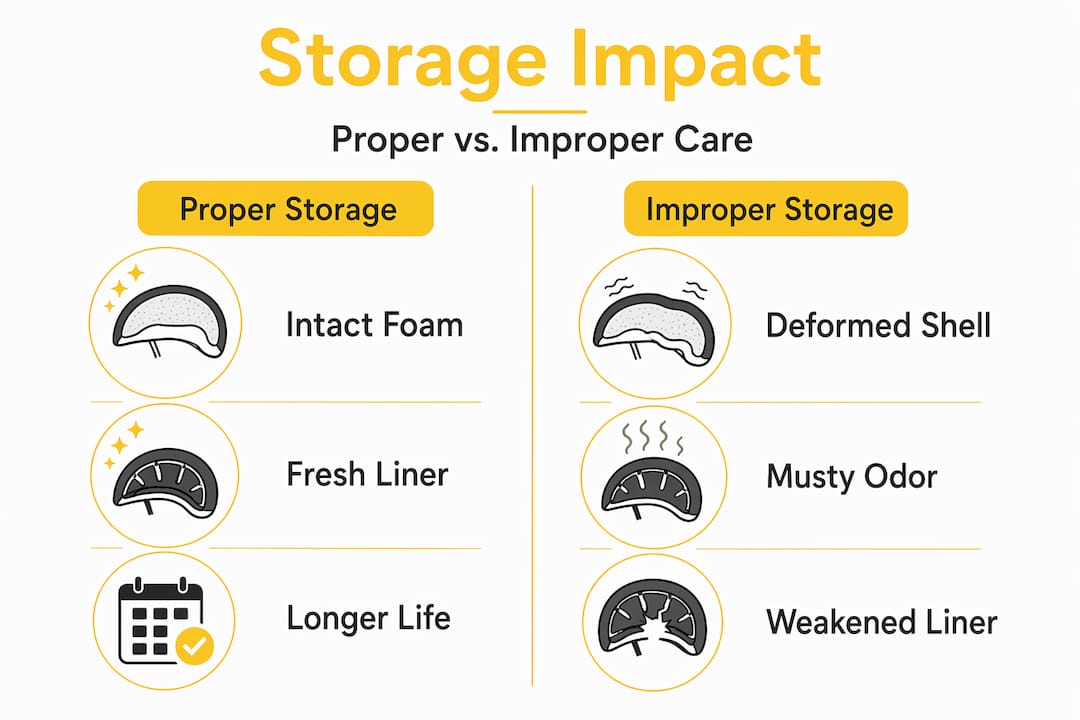
The safety case for proper storage goes beyond just protecting your investment. Consistent storage habits help riders build reliable routines so they never leave for a ride without their helmet. That behavioral benefit is underrated. The best helmet in the world does nothing for you if it is sitting on the wrong shelf when you head out.
Ventilated storage units specifically prevent moisture buildup, mold, and odor while preserving the inner lining over time. That translates directly to a helmet that fits the same on ride 500 as it did on ride one.
My honest take on why cyclists overlook helmet storage
I have talked to a lot of cyclists about helmet care over the years, and the storage conversation almost never comes up. People will spend significant money on a quality helmet, read every review, and then toss it on a garage shelf next to a can of chain degreaser without a second thought.
What I have found through personal experience is that the damage is cumulative and invisible until it really matters. I once stored a perfectly good helmet on a hook near my workbench for about eight months. When I finally picked it up to ride, it looked completely fine. But the EPS liner had a subtle deformation on the right side from the hook pressure, and there was a faint chemical smell I could not identify. I replaced it rather than risk it. That was an expensive lesson from a habit that cost me nothing to change.
The misconception I hear most often is that helmets are tough, so storage does not matter. They are tough at impact, not at sustained pressure or chemical exposure. The materials that make a helmet protect you in a crash are exactly the ones most vulnerable to slow environmental damage.
My advice: treat your helmet like you treat your most sensitive cycling gear. A little attention at the end of every ride adds years to its life and guarantees you the protection you paid for.
— Sophie
Protect your ride with the right gear

You’ve put the work into learning proper helmet care. Now make sure the helmet itself is worth protecting. At Thebeamofficial, every helmet in our collection is designed to hold up under real cycling conditions, with materials and construction that respond well to consistent care and proper storage. Whether you are a daily commuter, a road cyclist, or a gravel rider, you will find a helmet built for how you actually ride.
Browse our full range of adult cycling helmets designed with durability and safety at their core. If you are gearing up younger riders, our kids’ helmet collection brings the same level of protection with a fit tailored for growing cyclists. And for accessories that complement your storage setup, explore the full accessories catalog at Thebeamofficial.
FAQ
How should you store a helmet when not in use?
Store your helmet in a cool, dry, and shaded indoor location on a padded wall mount or a dedicated shelf. Keep it away from direct sunlight, chemical fumes, and heat sources to preserve the shell and foam integrity.
Can you hang a helmet on bike handlebars for storage?
No. Hanging a helmet on handlebars or mirrors creates concentrated pressure on the EPS liner, causing permanent deformation that reduces shock absorption and compromises crash protection.
How long does a properly stored helmet last?
A helmet stored correctly in a stable, ventilated environment away from heat and chemicals typically lasts the full manufacturer-recommended lifespan of three to five years, compared to significantly less with poor storage habits.
Does sunlight damage a stored helmet?
Yes. Prolonged UV exposure breaks down the outer shell and internal foam, weakening the helmet’s protective capacity even when no visible damage is apparent.
Should you clean a helmet before storing it?
Always. Cleaning with mild detergent, rinsing thoroughly, and letting the helmet air dry completely before storage prevents mold, odor, and material degradation caused by trapped sweat and oils.


