

TL;DR:
- A cyclist’s visibility checklist combines active lights, passive reflectors, and reflective clothing to ensure detection from all angles. Regular pre-ride checks of batteries, gear placement, and reflectors significantly improve safety in different lighting conditions. Adapting gear for urban, rural, or daytime riding and leveraging biomotion enhances driver awareness and reduces crash risk.
A visibility checklist for cyclists is defined as a structured set of equipment checks and gear standards that confirm you are detectable by drivers, pedestrians, and other road users before every ride. Most cycling crashes involving motor vehicles happen because the driver did not see the rider in time. The fix is not luck or defensive instinct alone. It is a repeatable system built around lights, reflectors, reflective clothing, and placement strategy that you verify before you clip in.
1. What belongs on every cyclist’s visibility checklist
The foundation of any road cyclist protection checklist is a layered system combining active light sources with passive reflective elements. Neither works as well alone. A layered visibility setup for night riding includes a front white light rated between 400 and 800 lumens, a rear red light rated between 50 and 100 lumens, and reflective gear positioned at multiple angles. That combination means you are visible from the front, rear, and sides simultaneously, which no single product achieves on its own.
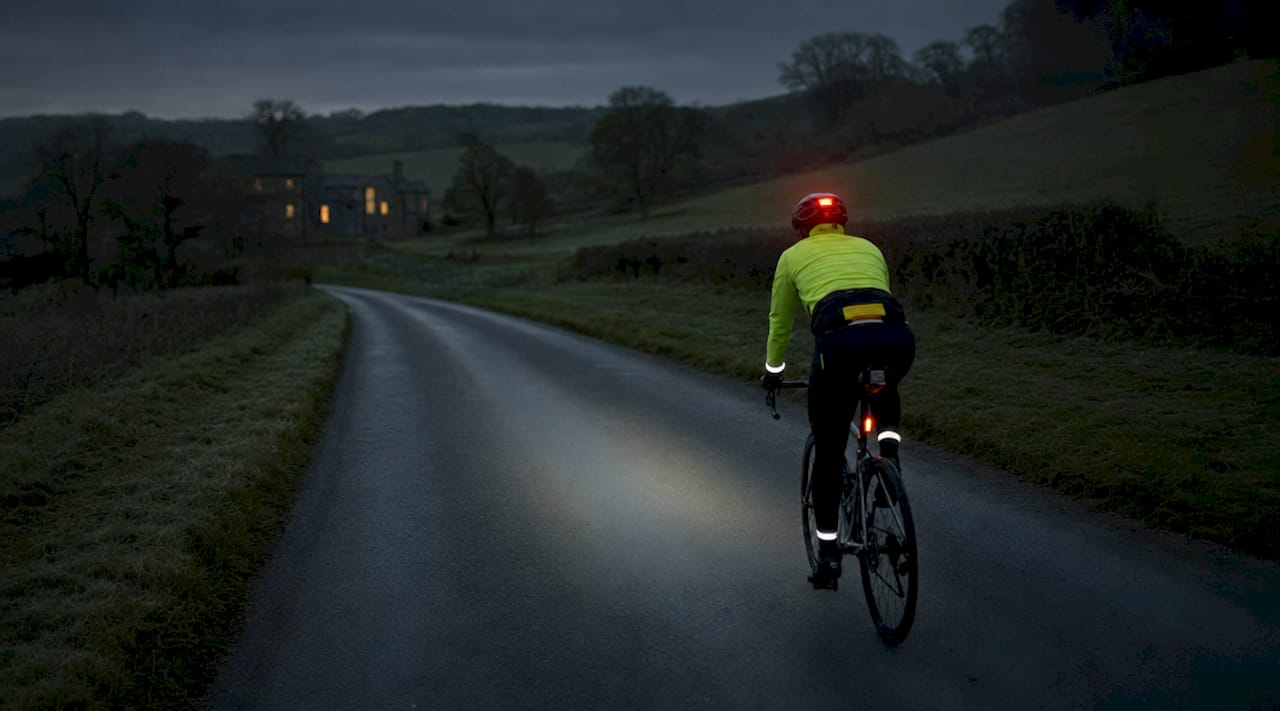
Front light. Mount a white light on your handlebars aimed slightly downward so it illuminates the road ahead without blinding oncoming traffic. For urban riding, 400 lumens is sufficient. For unlit rural roads, push toward 800 lumens or higher.
Rear light. A red rear light at seat-post height is the legal minimum in most U.S. states, where rear devices must be visible from at least 300 feet. Add a second rear light at helmet or pack height to reach driver eye level, which dramatically improves rear detection.
Reflectors. Federal regulations require front, rear, side, and pedal reflectors on bicycles sold in the U.S. These remain visible even when your battery dies, making them a non-negotiable baseline on every bike.
Reflective clothing and accessories. Reflective ankle and wrist bands exploit biomotion. Moving limbs catch driver attention faster than stationary reflectors because the human eye is wired to track motion. A reflective vest adds broad torso coverage, but the bands on your ankles are doing more work than most cyclists realize.
Pro Tip: Add a helmet-mounted rear LED to your setup. It positions a light exactly at driver eye level and moves with your head, making it visible even when you turn to check traffic.
2. How to run a daily pre-ride visibility check
Treating your visibility gear like your brakes is the single most underrated habit in cycling safety. Checking functionality before every ride improves real-road safety more than buying expensive gear that you never verify is working. A five-minute pre-ride check catches dead batteries, loose mounts, and dirty reflectors before they become problems in traffic.
Follow this sequence before every ride:
- Turn on your front light. Confirm it powers on, check the brightness mode, and verify the beam angle points at the road, not the sky.
- Turn on your rear light. Check that it is flashing or steady as intended and that the battery indicator shows sufficient charge.
- Check battery levels. Most modern lights show a charge indicator. If you are below 25%, recharge before riding. A pre-ride checklist should always include confirming battery status.
- Inspect all reflectors. Wipe them clean with a dry cloth. Mud and road grime cut reflector effectiveness significantly. Check that each one is securely mounted and undamaged.
- Assess your clothing. If you are riding at dusk, dawn, or in overcast conditions, switch to a high-visibility jersey or add a reflective vest. Gray and dark blue clothing disappears in low light.
- Check helmet fit and accessories. If you run a helmet-mounted light or reflective strips on your helmet, confirm they are secure and functional.
Pro Tip: Keep a small microfiber cloth in your saddlebag specifically for wiping reflectors. Clean reflectors can double their effective range compared to dirty ones.
3. How to adapt your setup for different riding conditions
Bike visibility tips that work on a sunny afternoon commute will not protect you on a wet November evening. The right cycling safety checklist adapts to the environment, not just the clock.
Urban riding
City streets have ambient light from streetlamps and storefronts, which reduces how far your lights project. The bigger threat in urban settings is side visibility at intersections and in door zones. Side reflectors and ankle bands are especially critical here because cross-traffic approaches from 90 degrees where your front and rear lights offer no coverage. Use a steady front light at 400 lumens and a flashing rear light to maximize attention from drivers pulling out of side streets.
Rural and unlit roads
On roads without streetlights, your front light is also your navigation tool. Push output to 600 to 800 lumens and use a steady beam rather than flashing mode so you can read the road surface. A second rear light at helmet height improves your rear detection profile significantly when there are no ambient light sources to help.
Daytime riding
Daytime visibility is underestimated. A flashing rear light in daylight increases driver detection distance considerably. Many cyclists skip rear lights entirely in daylight, which is a mistake on fast rural roads where drivers approach at speed with limited reaction time.
The table below summarizes recommended setups by condition:
| Condition | Front light | Rear light | Key additions |
|---|---|---|---|
| Urban night | 400 lumens, steady | 50 lumens, flashing | Ankle bands, reflective vest |
| Rural night | 600–800 lumens, steady | 100 lumens, steady + flashing | Helmet rear LED, side reflectors |
| Daytime | 200–400 lumens, flashing | 50 lumens, flashing | Reflective jersey |
| Overcast/rain | 400 lumens, steady | 100 lumens, flashing | High-vis vest, waterproof covers |
For sport and road cyclists who ride across varied terrain, the complete ride guide from SoCal Cycling covers how visibility gear integrates with event-specific preparation. Positioning also matters. Riding too close to the curb makes you invisible to drivers at intersections. Taking a more central lane position forces drivers to acknowledge your presence rather than squeeze past.
4. Common visibility mistakes cyclists make
Most visibility failures come from incorrect placement or skipped maintenance, not from a lack of equipment. These mistakes lower driver detection and increase crash risk in ways that better gear alone cannot fix.
Wearing dark or non-reflective clothing. Black cycling kits look sharp in photos. On a gray morning commute, they make you nearly invisible. Reflective gear for cyclists does not require sacrificing style. Many performance jerseys now include reflective panels without looking like safety vests.
Placing lights incorrectly. A rear light mounted at seat-post height can be obscured by a rear rack, panniers, or even a saddle bag. If your light is blocked, it is not working. Check the line of sight from behind your bike before every ride.
Using only flashing mode. Flashing lights attract attention effectively at distance, but at close range they make it harder for drivers to judge your speed and position. Use a steady rear light as your primary and a flashing light as a secondary layer, not as a replacement.
Neglecting side visibility. Most cyclists think front-to-rear when they think about visibility. Drivers at intersections approach from the side. Spoke reflectors, ankle bands, and frame-mounted reflectors like the FRAME FLASH reflectors from Thebeamofficial address this gap directly.
Skipping pre-ride checks. A light that worked last Tuesday may have a dead battery today. Visibility gear that is not checked is visibility gear you cannot rely on.
Key takeaways
A complete visibility checklist for cyclists requires layered lighting, passive reflectors, and a daily pre-ride check to function reliably in real traffic.
| Point | Details |
|---|---|
| Layer active and passive gear | Combine front and rear lights with reflectors and reflective clothing for multi-angle coverage. |
| Check gear before every ride | Confirm battery charge, light function, and reflector cleanliness before clipping in. |
| Adapt to conditions | Adjust lumen output and gear selection based on time of day, weather, and road type. |
| Prioritize side visibility | Ankle bands and frame reflectors protect you at intersections where front and rear lights offer no coverage. |
| Fix placement, not just equipment | A misplaced or blocked light is as dangerous as no light at all. |
What I’ve learned from years of riding with and without a system
I spent years riding with whatever lights I grabbed off the shelf, assuming that having something was enough. The shift came when I started paying attention to driver behavior rather than just my own gear. Drivers who saw me early gave me space. Drivers who spotted me late swerved or braked hard. The difference was almost never about how bright my lights were. It was about where they were mounted and whether I had checked them that morning.
The biomotion principle changed how I think about reflective gear for cyclists. I used to wear a reflective vest and consider the job done. Once I added ankle bands, I noticed drivers at intersections responding to me earlier, even in daylight. The movement of your legs is a signal that a static reflector on your frame simply cannot replicate.
The other thing I would tell any cyclist is this: the checklist is not a burden. It takes four minutes. I run through it while my coffee brews. The commuter cycling safety guide from Thebeamofficial frames this well. Visibility is not a one-time purchase. It is a daily practice. The riders I know who have had close calls almost always trace it back to a skipped check or a dead battery they knew about and ignored.
Helmet-mounted lights are the single upgrade I recommend most. They move with your head, which means they illuminate exactly where you are looking. At a junction, when you turn to check cross-traffic, your helmet light sweeps across that driver’s field of view. That is not an accident. That is physics working in your favor.
— Sophie
Gear built for your visibility checklist
Thebeamofficial designs helmets and accessories specifically for cyclists who take visibility seriously. The VIRGO integral helmet with MIPS technology integrates protection and design without compromising on safety features, and the helmet add-ons collection includes rear LEDs and signaling lights that position visibility exactly where it matters most: at driver eye level.
For reflectors, the FRAME FLASH series from Thebeamofficial delivers high-visibility passive protection that works even when your battery is dead. The full accessories range covers every item on this checklist, from frame reflectors to connected safety products. If you are building or upgrading your setup, the adults’ helmets collection is the place to start.
FAQ
What lights do I need for night cycling?
A front white light rated at 400 to 800 lumens and a rear red light rated at 50 to 100 lumens are the recommended minimum for night riding. Adding a helmet-mounted rear LED at driver eye level significantly improves rear detection.
Are reflectors enough without lights?
Reflectors are a legal baseline and remain visible when batteries fail, but they require an external light source to work. Lights are active and generate their own visibility, making the combination of both far more effective than either alone.
How often should I check my visibility gear?
Check your visibility gear before every ride. Confirm that lights power on, batteries are charged, and reflectors are clean and securely mounted. This takes under five minutes and prevents failures in real traffic.
What is biomotion and why does it matter for cyclists?
Biomotion refers to the way the human visual system is wired to detect moving limbs. Reflective ankle and wrist bands exploit this by creating movement-based signals that catch driver attention faster than stationary reflectors on your frame or bike.
Do I need visibility gear for daytime riding?
A flashing rear light in daylight increases your detection distance for drivers approaching from behind, especially on fast rural roads. Reflective clothing also helps in overcast or rainy conditions where ambient light is reduced even during the day.


