

Every time you clip in and roll into traffic, you’re making a calculated bet. The roads are unpredictable, drivers are distracted, and conditions change fast. But here’s the thing: most cycling crashes aren’t random bad luck. They’re the result of skipped preparation, poor visibility, or unpredictable riding. A properly fitted helmet can reduce head injury risk by up to 85%, and that’s just the start. This guide walks you through every practical step, from gear selection to riding habits, so you can commute with real confidence.
Table of Contents
- What you need before your ride
- Step-by-step guide to safer commuting
- Visibility and communication: making yourself seen
- Special conditions: weather, night riding, and more
- Common mistakes and troubleshooting
- Gear up with advanced cycling safety solutions
- Frequently asked questions
Key Takeaways
| Point | Details |
|---|---|
| Helmet is essential | Wearing a certified helmet greatly reduces your head injury risk while cycling. |
| Visibility saves lives | Bright colors and reflective gear ensure drivers see you in all conditions. |
| Follow step-by-step safety | A simple process—gearing up, checking your bike, planning your route, and riding defensively—improves daily commute safety. |
| Adapt for conditions | Changing weather or low light needs special preparation like waterproof layers and extra lights. |
| Avoid common pitfalls | Stay predictable and visible, maintain your bike, and don’t ride on sidewalks to minimize risk. |
What you need before your ride
Showing up to your commute without the right gear is like going to work without your laptop. You can try, but something’s going to go wrong. The good news is that building a solid safety kit doesn’t require a huge investment, just the right priorities.
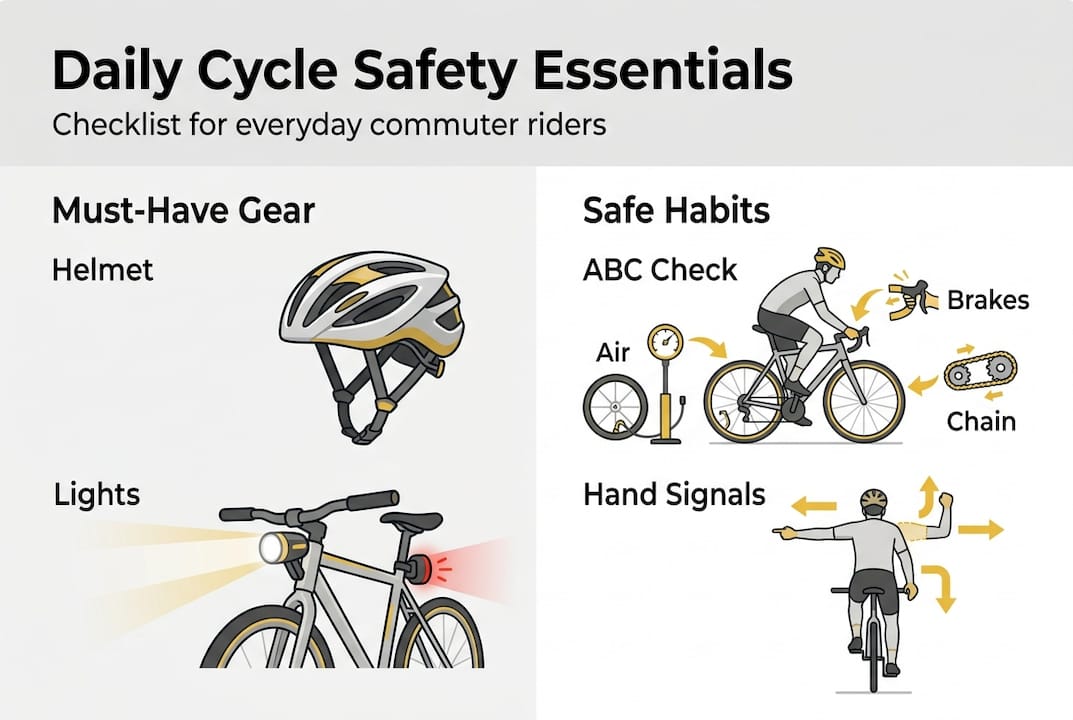
Your essential gear checklist:
- Helmet: Wear a properly fitted helmet as your single most important piece of protective gear. It should sit level, two finger-widths above your eyebrows, with a snug chin strap.
- Lights: A white front light and a red rear light are non-negotiable, even during the day.
- Clothing: Bright or reflective layers depending on conditions. More on this below.
- Gloves: Protect your hands in a fall and improve grip in cold or wet weather.
- Lock: Not safety gear in the traditional sense, but losing your bike mid-commute is its own kind of disaster.
Before every ride, run through the ABC check: Air (tire pressure), Brakes (squeeze both levers firmly), Chain (lubricated and seated). This takes under two minutes and catches most mechanical problems before they strand you.
| Condition | Best clothing choice | Why it works |
|---|---|---|
| Daytime, clear | Neon yellow or orange jersey | Maximum contrast against road backgrounds |
| Daytime, overcast | Bright red or high-vis vest | Stands out in flat light |
| Night or low light | Reflective vest or jacket | Reflects headlights back to drivers |
| Rain | Waterproof jacket with reflective strips | Visibility plus weather protection |
Pro Tip: Don’t rely on a single high visibility gear item. Layer your visibility. A neon jersey plus a reflective vest plus lights gives you redundancy that a single item can’t match.
For a broader look at what to carry, the guide on essential cycling accessories covers everything from mirrors to emergency tools worth keeping in your bag.
Step-by-step guide to safer commuting
Once you’re equipped, it’s time to follow this step-by-step process every commute. Consistency is what separates riders who stay safe from those who get lucky.
- Gear up completely. Helmet on and buckled, lights switched on (front and rear), reflective or bright clothing in place. Don’t skip this because you’re running late.
- Run your bike check. Squeeze both brakes, spin each wheel to check for wobble, press down on the tires to feel pressure. If something feels off, fix it or take another route.
- Plan your route before you leave. Prioritize roads with dedicated bike lanes or lower speed limits. Apps like Google Maps and Komoot both offer cycling-specific routing. A slightly longer route on safer roads beats a shortcut through heavy traffic.
- Stay visible and predictable. Hold your line, signal turns, obey traffic laws, and take the lane when you need to be seen. Weaving unpredictably is one of the fastest ways to cause a crash.
- Anticipate driver behavior. Assume drivers haven’t seen you at intersections. Make eye contact when possible. Give extra space to parked cars to avoid getting doored.
| Riding habit | Low-risk approach | High-risk approach |
|---|---|---|
| Intersections | Slow down, make eye contact, wait for clear signal | Roll through assuming drivers see you |
| Parked cars | Ride 3 to 4 feet from car doors | Hug the curb tightly |
| Lane position | Take the lane when needed for visibility | Always ride at the very edge |
| Signaling | Signal early and clearly before turning | Turn without warning |
For a complete pre-ride walkthrough, the urban cycling safety checklist covers each step in detail. And if you want to go deeper on urban-specific habits, the guide on improving cycling security is worth bookmarking.
Pro Tip: Set a two-minute buffer into your morning routine specifically for your bike check and gear-up. When you’re not rushing, you make better safety decisions.
Visibility and communication: making yourself seen
Visibility and clear communication with other road users are your next safe-riding priorities. You can ride perfectly and still get hit if a driver simply doesn’t see you. This is where smart gear choices and riding habits work together.
Daytime visibility:
- Wear bright, high-contrast or neon colors like yellow, orange, or red. These colors pop against gray asphalt and urban backgrounds.
- Use a flashing front light even in daylight. Studies show flashing lights increase detection distance significantly.
- Avoid dark clothing in overcast conditions, even if it’s technically daytime.
Nighttime visibility:
- Switch your front light to steady mode at 200 to 500 lumens for road illumination. Use flashing mode for front white light in addition to steady if your light supports dual modes.
- Add reflective tape to your frame, fork, and helmet. Reflective gear works passively, meaning it doesn’t need batteries.
- A reflective vest over your jacket is one of the cheapest and most effective upgrades you can make.
The lane position rule: Don’t hug the very edge of the road. Riding too far left (in right-hand traffic countries) makes you invisible to drivers pulling out of side streets and driveways. Claim enough space that drivers must acknowledge you.
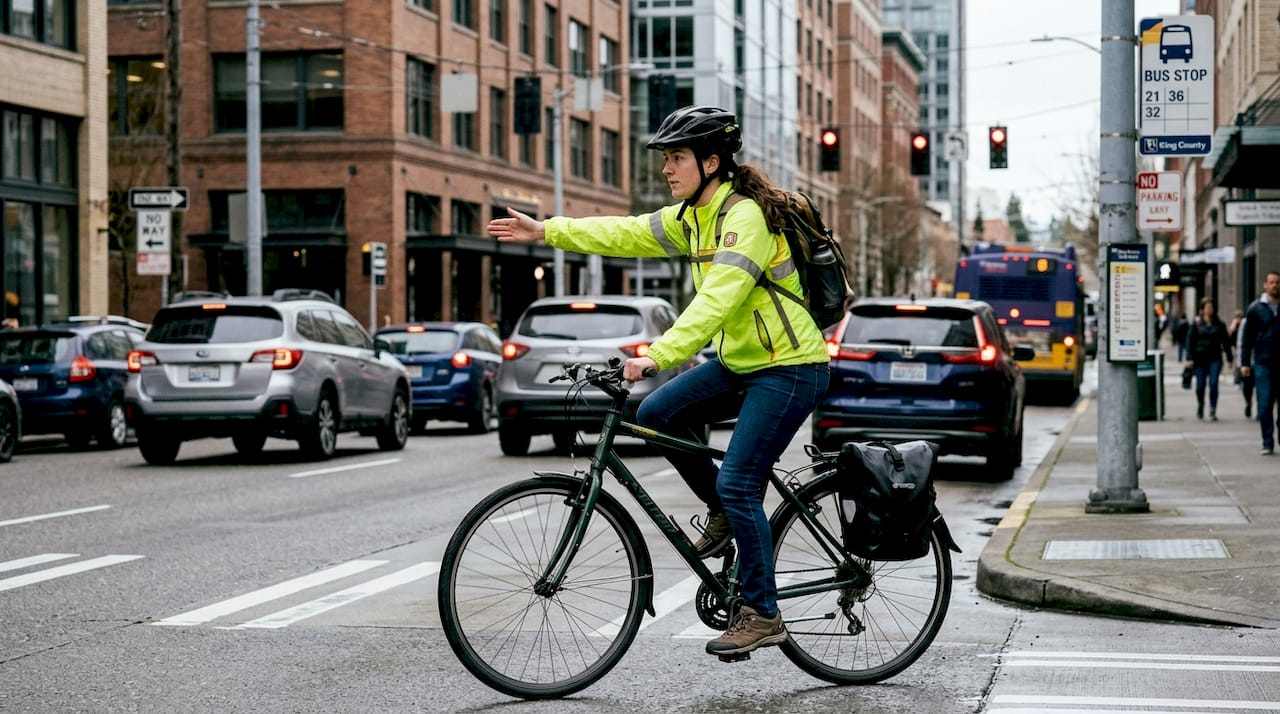
Hand signals matter more than most riders realize. A clear left-arm extension before a turn gives drivers a full second or two to react. That’s the difference between a close call and a collision. Practice signaling early, at least three seconds before you turn or change lanes.
For a deeper look at reflective gear options and how to layer them effectively, and for the broader picture of road cycling safety concepts that apply to urban commuting, both resources are worth your time.
Special conditions: weather, night riding, and more
Even with great habits, some days challenge you with tough conditions. Rain, fog, cold snaps, and early darkness all require specific adjustments. Ignoring them is where otherwise careful riders get into trouble.
Riding in rain:
- Use wider tires, fenders, and waterproof gear to stay in control and dry. Fenders are underrated. They keep road spray off your face and out of your brakes.
- Lower your tire pressure slightly (5 to 10 PSI below your normal level) for better grip on wet pavement.
- Brake earlier than usual. Wet rims and disc rotors both take longer to bite.
- Slow down on painted road markings, metal grates, and tram tracks. These surfaces become extremely slippery when wet.
Riding in darkness or fog:
- Add a secondary rear light or a reflective ankle band. Moving parts catch the eye faster than static reflectors.
- Reduce your speed to match your sight distance. If your light only illuminates 10 meters ahead, don’t ride faster than you can stop in that distance.
- Wear a helmet with a rear light built in, or attach one directly to your helmet for a higher, more visible position.
Cold weather surprises:
- Layer with merino wool base layers. Wool regulates temperature better than synthetics and stays warm even when damp.
- Cover your extremities first. Cold hands reduce brake response time. Cold feet make you distracted and uncomfortable.
Pro Tip: Keep a compact rain jacket rolled up in your bag year-round. Weather apps are useful but not perfect, and a sudden downpour without waterproofs turns a pleasant commute into a miserable one fast. Pairing it with the right cycling safety accessories means you’re covered for almost any scenario.
Common mistakes and troubleshooting
Mistakes can happen to anyone. Knowing them in advance helps you avoid or fix them quickly, often before they become dangerous.
- Riding against traffic. It feels safer because you can see cars coming, but it’s not. Drivers don’t expect you there, and closing speeds are much higher. Avoid riding on sidewalks and obey all traffic laws, including riding with the flow of traffic.
- Skipping the pre-ride check. A flat tire at a busy intersection is dangerous. A brake failure is worse. Two minutes of checking saves real problems.
- Neglecting visibility in changing conditions. You leave home in sunshine and arrive in fog. Keep a reflective vest in your bag so you can adapt on the fly.
- Riding with headphones in both ears. You lose critical audio cues from traffic. Use one earbud at most, or use open-ear bone conduction headphones.
- After a minor crash: Stop. Move to the sidewalk. Check yourself for injuries before checking your bike. Even a low-speed fall can cause adrenaline to mask pain. Check your helmet for cracks. A cracked helmet must be replaced immediately, even if it looks fine on the outside.
For more on avoiding urban-specific hazards, the resources on road safety concepts and cycling security tips cover the scenarios most commuters face regularly.
Gear up with advanced cycling safety solutions
You’ve now got the knowledge. The next step is making sure your gear matches your standards. THE BEAM designs safety equipment specifically for riders who take their commute seriously, from high-end helmets with MIPS technology to visibility accessories built for real urban conditions.
Our men’s helmets are engineered for protection and comfort across daily use. Pair them with our cycling safety accessories including rear-view mirrors and connected visibility tools to build a complete commuter setup. If you want a quick, high-impact upgrade, our minimalist bike reflectors add serious visibility without cluttering your bike. Every product is designed to solve a real problem you’ll face on the road.
Frequently asked questions
How effective are bike helmets for preventing injuries?
A properly fitted helmet can reduce head injury risk by up to 85%. Fit matters as much as the helmet itself, so always check the two-finger rule and chin strap snugness.
What lights do I need for legal and safe nighttime commuting?
Use a white front light with at least 200 to 500 lumens and a red rear taillight. Both are required by law in most U.S. states and European countries for nighttime riding.
What should I wear for high visibility during day and night?
Daytime calls for neon yellow, orange, or red clothing. At night, add reflective tape, a reflective vest, or a jacket with built-in reflective panels.
How do I ride more predictably and defensively?
Hold a steady line, signal early, follow all traffic laws, and take the lane when you need drivers to acknowledge your presence.
What should I do to stay safe when cycling in the rain?
Fit wider tires and fenders, wear waterproof clothing, and reduce your speed. Brake earlier than usual and avoid slippery surfaces like painted lines and metal grates.


