

TL;DR:
- Choosing the right saddle that fits your riding posture reduces pressure, numbness, and discomfort during long rides. Handlebar adjustments, grips, and padding minimize hand numbness by improving fit and reducing nerve compression. Prioritizing saddle fit, handlebar position, and safety accessories ensures a comfortable and safe cycling experience.
An ergonomic cycling accessories list is a curated set of gear designed to reduce physical strain, improve body alignment, and sustain comfort across any ride distance or style. The right accessories do not just make riding more pleasant. They prevent the chronic hand numbness, saddle soreness, and back pain that force riders off the bike entirely. Sources like Cycling Weekly, Bicycling, and Canyon consistently show that comfort gear and bike fit work as a system, not as separate fixes. This guide covers the full list, from saddles to safety gear, with enough detail to help you choose what your setup actually needs.
1. What are the best ergonomic saddles for your riding posture?
The saddle is the single most impactful contact point on the bike. Saddle shape must match your riding posture: wider and more curved saddles suit upright riders, while narrower and flatter profiles work better for aggressive, forward-leaning positions. Getting this wrong causes pressure on soft tissue, which leads to numbness and long-term discomfort.
Cut-outs and relief channels are not marketing features. They actively reduce pressure on the perineal area, which matters most on rides longer than 45 minutes. Specialized saddles with shorter noses, like the Specialized Power or the Fizik Adaptive, cater to specific disciplines and reduce soft tissue loading effectively. Rail material also affects ride quality: titanium and carbon rails absorb road vibration better than steel, though they cost more.
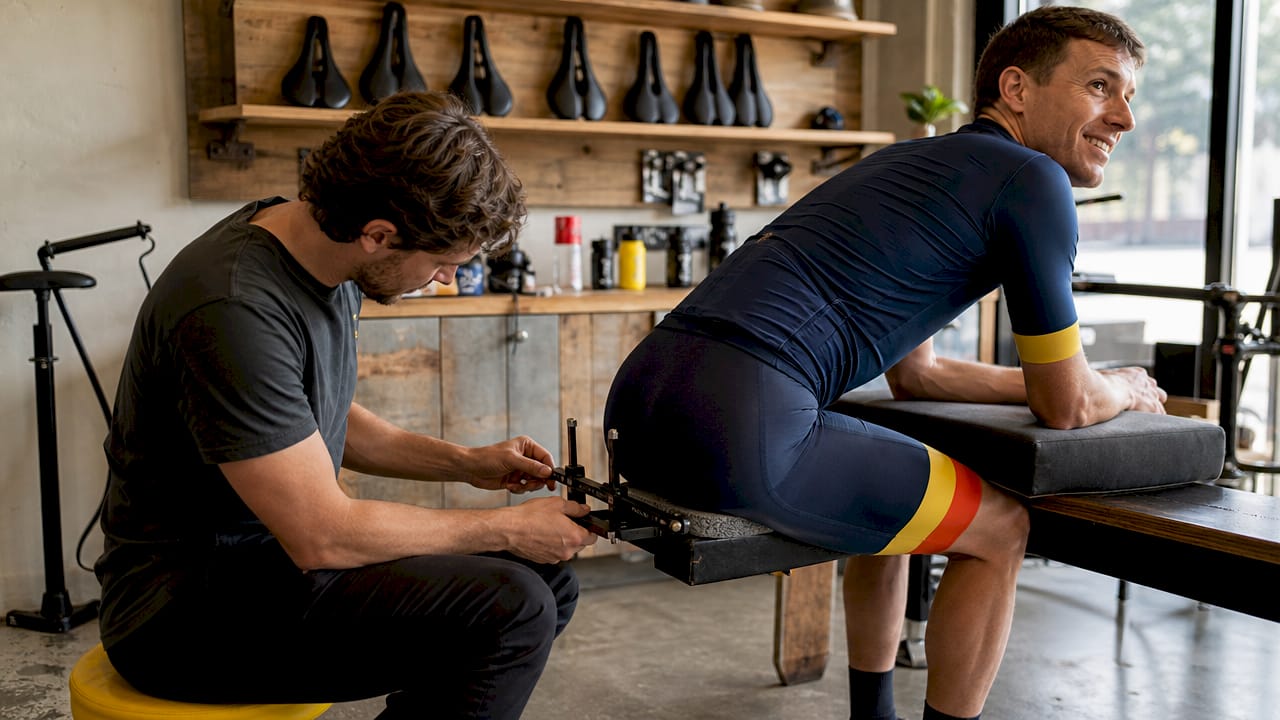
Measuring your sit bones is the starting point for saddle selection. Most bike shops offer a foam pad test that gives you a measurement in millimeters. That number guides saddle width. Pair the saddle with properly fitting cycling shorts, because padding thickness and seam placement interact directly with saddle surface to determine friction and comfort.
Pro Tip: Treat your saddle and cycling shorts as one unit. A thick-padded saddle combined with heavily padded shorts often creates more friction, not less. Choose one source of cushioning and let the other stay minimal.
Saddle comparison by riding style
| Saddle type | Best for | Key feature |
|---|---|---|
| Wide, curved saddle | Upright commuters and casual riders | Supports sit bones in relaxed position |
| Narrow, flat saddle | Road racers and aggressive riders | Reduces inner thigh chafing on fast pedaling |
| Cut-out saddle | Long-distance and endurance cyclists | Relieves soft tissue pressure on extended rides |
| Short-nose saddle | Triathlon and time trial riders | Shifts weight forward without pelvic tilt issues |
2. How handlebar and grip ergonomics prevent hand numbness
Handlebar reach and height directly affect how much weight lands on your hands. Saddle fore/aft position and handlebar reach both influence hand symptoms. When your reach is too long, your elbows lock out and your wrists deviate, compressing the ulnar nerve. That compression is what causes the familiar tingling in the ring and pinky fingers.
Handlebar angle is a precise but often overlooked adjustment. Rotating the bars slightly upward reduces wrist extension and takes pressure off the nerve. This costs nothing and takes two minutes with an Allen key. Ergonomic grips and bar tape add cushioning, but they do not correct the underlying fit issue. Fix the fit first, then add grip padding as a secondary layer of comfort.
Here are the key handlebar ergonomics upgrades to consider:
- Ergonomic grips: Grips with a wider diameter and gel core reduce vibration transfer on gravel and urban roads.
- Padded bar tape: Double-wrapping bar tape on road bikes adds cushioning without changing handlebar geometry.
- Shorter stem: Reducing stem length by 10–20mm is a low-cost fix that shortens reach and reduces weight on the hands.
- Riser bars: Switching to riser handlebars raises hand position and shifts weight back toward the saddle.
- Cycling gloves: Gloves with gel padding in the palm protect the ulnar nerve but work best after fit adjustments are made.
Pro Tip: Change your grip position every 10–15 minutes on long rides. Moving between the hoods, drops, and tops interrupts sustained nerve compression and keeps blood flowing to the hands.
3. Must-have cycling accessories that support comfort beyond contact points
Ergonomic comfort extends beyond where your body touches the bike. Safety lights, repair kits, and weather gear reduce the stress and awkward positioning that come from unsafe or unprepared riding conditions. A rider who feels confident and prepared rides more relaxed, which directly reduces muscle tension and fatigue.
The following accessories belong on every cyclist’s comfort-focused gear list:
- Front and rear lights: Visibility gear reduces anxiety in low-light conditions. Riding tense because cars cannot see you creates neck and shoulder strain over time.
- High-visibility reflectors: Passive reflectors like frame-mounted options add a layer of safety without battery management. Thebeamofficial’s FRAME FLASH reflectors are designed for this purpose.
- Saddle bag: A compact saddle bag keeps repair tools accessible without requiring a backpack. Backpacks shift your center of gravity and increase spinal load.
- Multi-tool and tire levers: Carrying a multi-tool means mechanical issues get fixed quickly. Less time crouched over a bike on the roadside means less postural strain.
- Mini pump or CO2 inflator: Flat tires force you into uncomfortable positions for extended periods. A reliable inflator shortens that time significantly.
- Weatherproof cycling jacket: Cold muscles are tight muscles. A packable rain jacket keeps your core warm and your pedaling motion fluid.
- Helmet with proper fit: A well-fitted helmet sits level on the head and does not pull the neck forward. Poor helmet fit contributes to neck fatigue on longer rides.
4. Budget vs. midrange vs. premium ergonomic cycling gear
Price tiers in ergonomic cycling gear reflect real differences in materials, construction, and long-term comfort. Knowing where to spend and where to save is the most practical skill a cyclist can develop.
| Price tier | Saddle options | Handlebar/grip options | Best for |
|---|---|---|---|
| Budget (under $50) | Basic foam saddles with steel rails | Standard rubber grips, single-wrap bar tape | New riders testing fit preferences |
| Midrange ($50–$150) | Gel or foam saddles with titanium rails | Ergonomic grips, double-wrap tape, padded gloves | Regular riders wanting real comfort gains |
| Premium ($150+) | Carbon-railed saddles with cut-outs | Carbon bars, specialized ergonomic grips | Serious riders prioritizing weight and precision |
The midrange tier delivers the best value for most cyclists. A saddle with titanium rails and a cut-out channel costs around $80–$120 and provides measurable comfort improvement over a basic foam saddle. Budget upgrades like shorter stem adjustments and double bar tape offer real hand comfort gains at minimal cost.
Premium gear makes sense when you ride more than four hours per week or compete. Carbon rails reduce vibration transmission and save weight, but the comfort difference over titanium is marginal for casual riders. Prioritize saddle and grip upgrades first. Wheels and drivetrain can wait.
Key priorities when working with a limited budget:
- Replace the stock saddle before any other contact point upgrade.
- Add padded cycling shorts before spending on a more expensive saddle.
- Double-wrap bar tape before buying ergonomic grips.
- Adjust stem length before purchasing a new handlebar.
5. How to personalize your ergonomic cycling accessories list
Your riding style determines which accessories deliver the most return. A commuter riding 30 minutes daily has different ergonomic needs than a gravel rider covering 100 miles on weekends. Matching accessories to your actual riding pattern prevents wasted spending and solves the right problems.
For upright riders and commuters, the priority list looks like this:
- Wide, cushioned saddle with a cut-out for daily comfort.
- Ergonomic grips with a wider diameter to reduce wrist deviation.
- Riser handlebars to keep the torso upright and reduce neck strain.
- Padded cycling shorts for rides over 30 minutes.
- Rear-view mirror to reduce the need for constant head-turning, which strains the neck.
For aggressive road and gravel riders, the priorities shift:
- Narrow, flat saddle with a short nose and relief channel.
- Carbon or titanium-railed saddle for vibration absorption on long climbs.
- Suspension seatpost for gravel riding, which absorbs trail chatter and reduces spinal fatigue.
- Cycling-specific bib shorts with a high-quality chamois pad.
- Drop handlebars with multiple grip positions to vary hand placement throughout a ride.
Regular fit checks matter as much as the accessories themselves. Ergonomic benefit requires coordinated fit adjustments and accessory choices working together. A professional bike fit every 12–18 months, or after any significant change in flexibility or riding volume, keeps your setup aligned with your body.
Pro Tip: If you ride year-round, reassess your ergonomic setup each spring. Winter inactivity changes flexibility and posture. What fit perfectly in October may cause discomfort by April.
For endurance cyclists and ultracyclists, the safety and comfort checklist from Thebeamofficial covers how ergonomic gear integrates with safety preparation for long-distance events.
Key takeaways
The most effective ergonomic cycling accessories list combines saddle fit, handlebar adjustments, and safety gear as a coordinated system, not a collection of isolated upgrades.
| Point | Details |
|---|---|
| Saddle fit is foundational | Match saddle width and shape to your riding posture and measure sit bones before buying. |
| Accessories do not replace fit | Fix handlebar reach and saddle position first; grips and tape are secondary comfort layers. |
| Shorts and saddle work together | Treat cycling shorts and saddle as one system to reduce friction and pressure. |
| Budget upgrades deliver real gains | A shorter stem and double bar tape improve hand comfort at minimal cost. |
| Personalize by riding style | Commuters and road racers need different accessories; match your list to your actual ride pattern. |
What I’ve learned after years of watching cyclists get this wrong
Most cyclists buy ergonomic accessories in the wrong order. They spend $200 on a premium saddle while still riding with a handlebar reach that is two centimeters too long. The saddle helps, but the hand numbness persists. They blame the saddle.
The real lesson is sequencing. Fix the fit first. A professional bike fit costs $100–$200 and solves problems that $500 in accessories cannot. After the fit, the accessories amplify the gains. Before the fit, they mask symptoms without addressing causes.
The second mistake I see constantly is ignoring cycling shorts. Riders will invest in a carbon-railed saddle and then wear casual shorts for a two-hour ride. The chamois pad in quality bib shorts does more for saddle comfort than any saddle upgrade. It is the least glamorous purchase on the list and consistently the most impactful one.
Grip position changes during rides are also underused. Shifting your hands every 10–15 minutes on long rides is free, takes two seconds, and genuinely prevents numbness. Most riders know this and still do not do it consistently. Build it into your ride rhythm the same way you build in hydration stops.
Start with one upgrade at a time. Change the saddle, ride it for three weeks, then assess. Adding five new accessories simultaneously makes it impossible to know what actually helped. Incremental changes give you real feedback and prevent the frustration of spending money without seeing results.
— Sophie
Thebeamofficial’s gear for ergonomic and safe riding
Ergonomic comfort and rider safety belong together. Thebeamofficial designs helmets and cycling accessories built for real-world use across road, gravel, urban, and e-bike riding.

The adults’ helmet collection includes options with MIPS technology for both protection and ergonomic fit, so the helmet stays stable without pulling your neck forward. The full accessories range covers visibility gear including rear-view mirrors and high-visibility reflectors that reduce riding stress and improve confidence on every route. Every product ships internationally through the Thebeamofficial e-commerce platform, with customer support available for fit and product questions.
FAQ
What is the most important ergonomic cycling accessory?
The saddle is the most critical ergonomic accessory because it supports the majority of your body weight. Saddle shape and fit must match your riding posture to prevent soft tissue pressure and discomfort.
Do ergonomic grips actually stop hand numbness?
Ergonomic grips reduce vibration and cushion the palm, but they do not fix the underlying cause. Bar tape and grip padding manage symptoms; handlebar reach and angle adjustments fix the root problem.
How often should I update my ergonomic cycling setup?
A professional bike fit every 12–18 months keeps your setup aligned with changes in flexibility and riding volume. Reassess contact points any time you experience new discomfort or change your riding style significantly.
Are cycling shorts worth the investment for ergonomic comfort?
Yes. Quality bib shorts with a well-designed chamois pad directly reduce friction and pressure at the saddle contact point. Shorts and saddle function as a system, and skipping quality shorts undermines even an expensive saddle upgrade.
What is the cheapest ergonomic upgrade with real impact?
Adjusting stem length and double-wrapping bar tape are low-cost fixes that measurably improve hand comfort. Both cost under $30 and can be done at home with basic tools.


