

TL;DR:
- Proper helmet care extends safety and lifespan more than strict age rules.
- Cleaning with mild soap, avoiding harsh chemicals or heat, and storing in cool, shaded places are essential.
- Replace helmets after crashes or visible damage, but well-maintained helmets can last over 20 years.
Your helmet might be doing less than you think. Swap it out too soon and you’ve wasted money. Keep it past its useful life or clean it the wrong way, and you may be riding with compromised protection you can’t see. Thousands of cyclists unknowingly shorten their helmet’s lifespan every season by rinsing it under hot water, tossing it on a hook in a sunny garage, or assuming a five-year rule means they need a new one regardless of condition. Proper helmet care isn’t complicated, but it does require knowing what actually damages protective foam and what doesn’t. This guide cuts through the myths and gives you the evidence-backed steps to keep your helmet performing exactly as designed.
Table of Contents
- Why helmet care matters: Safety, value, and longevity
- Cleaning your helmet: What to do (and what to avoid)
- Smart storage and handling to preserve helmet integrity
- Special considerations: Shared, rental, and long-term helmets
- When to replace your helmet: Signs, tests, and myths
- What most riders get wrong about helmet life and care
- Upgrade your ride with advanced helmet solutions
- Frequently asked questions
Key Takeaways
| Point | Details |
|---|---|
| Proper care extends helmet life | Regular cleaning and smart handling can keep your helmet safe for decades if not crashed. |
| Avoid damaging cleaning methods | Dishwashers, washing machines, and high heat severely weaken helmet safety features. |
| Replace only when necessary | Helmet replacement should be based on damage or fit, not an arbitrary expiration date. |
| Hygiene is key for shared helmets | Shared or rental helmets require extra steps like vacuuming and quarantining to prevent lice. |
Why helmet care matters: Safety, value, and longevity
A cycling helmet isn’t just a piece of gear. It’s engineered protection that depends on its internal foam structure, shell integrity, strap system, and fit retention to work correctly during an impact. When any of those components degrades, the helmet can fail to absorb energy the way it was designed to, even if it looks completely fine from the outside.
Here’s the part that surprises most riders: strict “replace every 3 to 5 years” rules aren’t as firmly grounded in science as manufacturers suggest. Uncrashed EPS foam retains performance for 20+ years based on empirical testing by labs like MEA Forensic, which means a well-maintained helmet that’s never been in a crash may still be fully protective well beyond the window the industry typically recommends. That doesn’t mean you should keep helmets forever, but it does mean how you care for your helmet matters far more than strictly counting calendar years.
Poor care accelerates real degradation. UV exposure breaks down the outer shell. Harsh chemicals attack adhesives bonding the foam liner. High heat distorts EPS (expanded polystyrene) foam, reducing its ability to crush correctly under impact. These aren’t hypothetical risks. They’re measurable changes that can compromise your cycling helmet safety benefits before any visible cracks appear.
The financial case is equally strong. A quality helmet is an investment. Replacing it prematurely because of cleaning damage or improper storage adds up fast, especially for riders who upgrade regularly or buy premium models.
Key reasons proper care matters:
- Maintains foam density and crush performance over time
- Preserves adhesive bonds between shell layers and foam liner
- Keeps straps and retention systems functioning correctly
- Prevents bacterial buildup that degrades padding faster
- Extends useful helmet life without compromising safety
“The helmet that’s been sitting clean in a cool closet for seven years may be safer than the one stored in a hot car and wiped down with bleach for two.”
Care and storage are what separate a helmet that protects you for a decade from one that quietly fails after three.
Cleaning your helmet: What to do (and what to avoid)
Sweat, road grime, and sunscreen are relentless. After a hard ride, they soak into your padding, work into crevices, and start breaking down materials if you don’t address them. The good news: cleaning a helmet properly is simple. The damage comes from doing it the wrong way.
Follow these steps after every few rides or whenever the helmet smells or looks dirty:
- Remove all pads and straps if they’re detachable. These need individual attention.
- Mix a small amount of mild soap (think baby shampoo or gentle dish soap) with lukewarm water.
- Use a soft cloth or sponge to gently wipe down the shell, foam liner, and all interior surfaces.
- Rinse with cool, clean water, making sure no soap residue remains in the vents or padding channels.
- Hand-wash removable pads separately in the same mild soapy water, then rinse thoroughly.
- Air-dry everything completely in a shaded, ventilated space before reassembling and storing.
Dishwashers, washing machines, and dryers damage foam, adhesives, and materials and should never be used on any part of a helmet. The heat cycles, pressure, and agitation from these appliances can weaken the protective foam structure even if the helmet still looks intact afterward. This is one of the most common mistakes riders make without realizing the consequences.
Pro Tip: Wipe down your padding with a damp cloth after every ride, not just when you notice an odor. Preventive cleaning keeps bacteria from breaking down the foam backing and extends pad life significantly.
What to strictly avoid:
- Bleach, acetone, or solvent-based cleaners
- Stiff brushes that scratch the shell
- Compressed air directed into vents at close range
- Leaving a wet helmet in a sealed bag
- Drying near a radiator, in direct sunlight, or with a hair dryer
Applying sunscreen or bug spray and then touching your helmet transfers chemicals that slowly break down polycarbonate shells. This matters more for helmet injury prevention than most riders realize, since shell degradation can reduce impact resistance. These same chemical considerations apply across road cycling protection methods, where riders face both UV and chemical exposure on long rides.
Smart storage and handling to preserve helmet integrity
You spend five minutes cleaning your helmet, then hang it from your handlebar in a sunny garage. That’s where most of the damage actually happens. Storage and handling account for a huge portion of premature helmet wear, and the fixes are almost effortless once you know what to watch for.
Temperature is the biggest threat in storage. EPS foam and adhesive systems are sensitive to prolonged heat. A car trunk on a summer day can reach temperatures well above what any helmet is rated to handle. This is not just comfort talk. Heat distorts foam at a molecular level, reducing its ability to absorb impact energy correctly. Keep your helmet in a cool, dry, stable environment.
UV exposure is a close second. Direct sunlight slowly degrades the outer polycarbonate shell, making it brittle over time. A crack that would normally be cosmetic can become structurally relevant if the shell has been UV-damaged. Store your helmet away from windows and out of direct light.
Best storage habits to build:
- Place helmet on a flat, stable surface or a dedicated helmet mount
- Never store under heavy gear, in packed bags, or compressed against other objects
- Keep away from paint thinner, gasoline, motor oil, and cleaning chemicals
- Avoid hanging helmets from handlebars, which creates pressure points on the rim
- Use a breathable bag for travel, never an airtight plastic bag on a damp helmet
Pro Tip: After every ride, do a quick 30-second check of your retention system, chin strap, and buckles. Small issues like a fraying strap or a loose adjuster are easy to fix early and expensive to ignore. This pairs well with a broader cycling safety gear guide approach to maintaining all your riding equipment.
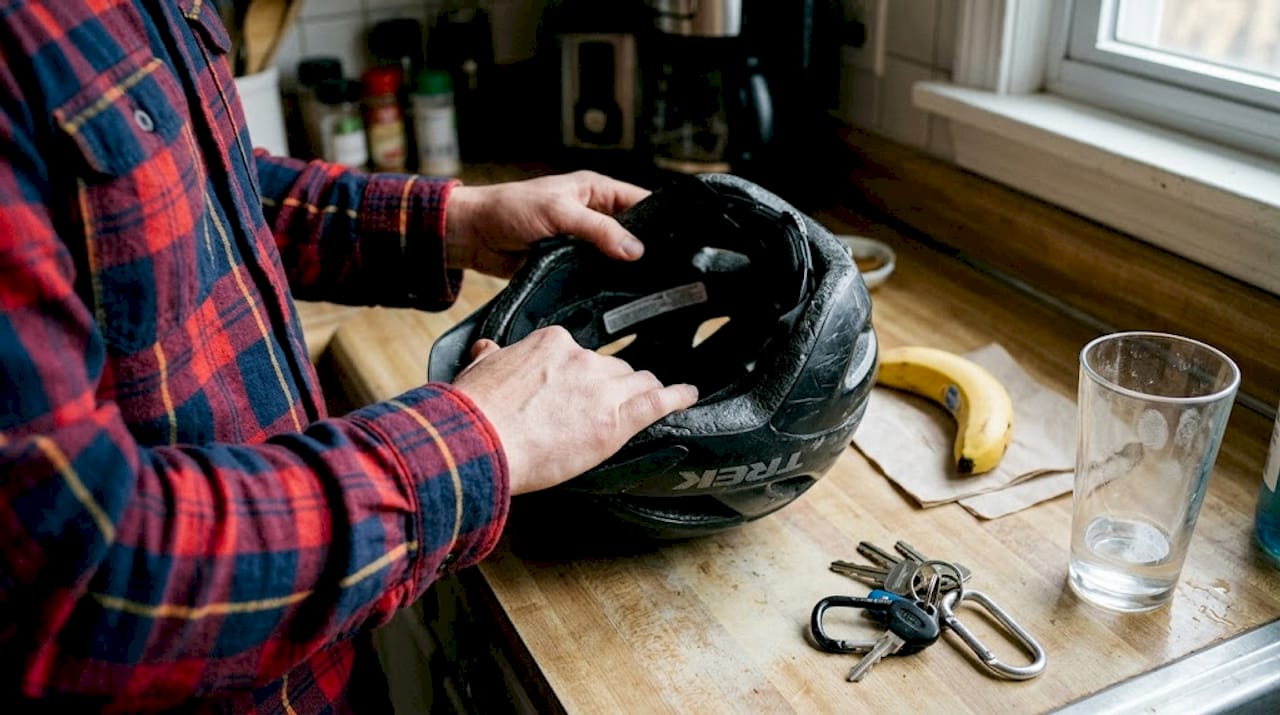
Check the inside of the helmet periodically for foam compression or delamination, which is when the inner liner separates from the shell. Heat cycles from improper storage damage adhesives and foam over time, so catching delamination early lets you replace the helmet before it becomes a safety risk rather than after.
Special considerations: Shared, rental, and long-term helmets
Most helmet care advice assumes a single owner with consistent habits. Shared and rental helmets operate under very different conditions, and standard cleaning isn’t enough.
The hygiene challenge with shared helmets isn’t just sweat or smell. For shared or rental helmets, vacuum, wipe, or bag for 2 weeks to eliminate lice nits that can survive up to 10 days on helmet padding. This is an often-overlooked edge case, but it’s a real public health consideration for any helmet that rotates between multiple users, whether in a rental shop, a family, or a cycling club.
For disinfection beyond standard cleaning:
- Use a diluted isopropyl alcohol wipe on hard surfaces (not foam)
- Remove and wash all fabric pads after every individual use
- Bag the helmet in a sealed plastic bag for at least two weeks if lice exposure is suspected
- Replace padding between users whenever possible
Replacement decisions also shift with shared use. Uncrashed EPS foam can retain performance for 20+ years, but shared helmets accumulate wear faster due to variable storage, more frequent cleaning, and higher handling turnover.
| Helmet type | Recommended inspection | Replacement trigger |
|---|---|---|
| Personal, well-maintained | Every 6 months | Crash, visible damage, poor fit |
| Personal, heavy use | Every 3 months | Crash, UV damage, worn pads |
| Shared or rental | After every user | Any damage, hygiene concern |
| Long-term stored | Before each season | Delamination, brittle shell |
For urban riders and commuters, the urban cycling protection guide also covers how to factor daily wear into your replacement and maintenance decisions.
When to replace your helmet: Signs, tests, and myths
The most persistent myth in helmet care is that age alone dictates when a helmet is unsafe. It doesn’t. The actual replacement trigger is condition, not a calendar date.
Well-maintained, uncrashed EPS foam retains impact performance for 20+ years under lab conditions, which directly challenges the “replace every 5 years” rule pushed by many manufacturers. That rule has financial incentives behind it. It does not reflect the science of foam degradation under controlled conditions.
That said, there are real, non-negotiable replacement signals:
- Any crash involving head contact, even a low-speed tip-over
- Visible cracks in the outer shell or inner foam
- Compressed or crushed foam that doesn’t spring back
- Broken, fraying, or non-adjustable straps
- Delamination between the shell and liner
- A fit that can no longer be dialed in correctly
| Replacement trigger | Action required |
|---|---|
| Crash with head impact | Replace immediately |
| Visible crack or crushed foam | Replace immediately |
| Strap or buckle failure | Replace or repair before next ride |
| Age alone (no damage) | Inspect carefully, may not need replacement |
| UV or chemical surface damage | Evaluate depth, replace if shell is brittle |
| Helmet upgrade desire | Personal choice, not a safety necessity |
For riders considering a helmet upgrade timing decision, this table helps separate genuine safety needs from preference-driven upgrades. Both are valid reasons to buy a new helmet, but knowing the difference saves money and reduces unnecessary waste.
What most riders get wrong about helmet life and care
Here’s the uncomfortable reality: a large part of the “replace every 3 to 5 years” rule exists because it sells helmets, not because the science demands it. We’ve reviewed the lab data from institutions like MEA Forensic, and the conclusion is clear. An uncrashed, well-stored, properly cleaned helmet can remain structurally sound far beyond what most brands recommend.
What actually shortens helmet life isn’t time. It’s UV exposure, heat, harsh chemicals, and physical damage. Riders who store helmets in hot cars and clean them with household solvents genuinely need to replace them sooner. Riders who follow careful maintenance protocols with expert cycling gear advice may be riding safely on a seven or eight year old helmet that has never seen a crash.
The smarter framework isn’t a timeline. It’s a condition-based inspection habit. Clean regularly, inspect thoroughly, store correctly, and replace on evidence rather than on a manufacturer’s suggested schedule. That approach protects you better and respects your investment.
Upgrade your ride with advanced helmet solutions
Knowing how to care for your helmet is only half the equation. The other half is starting with gear designed for durability, easy maintenance, and real protection.

At THE BEAM, our helmets are engineered with materials and construction methods that hold up to regular cleaning and real-world riding conditions. From urban commutes to technical road rides, our helmets collection is built to last when cared for correctly. Pair your helmet with purpose-built helmet add-ons designed to fit seamlessly and maintain their performance over time. If your current helmet shows any of the warning signs covered in this guide, now is a smart time to explore what’s next.
Frequently asked questions
Can I wash my helmet in the dishwasher or washing machine?
No. Dishwashers, washing machines, and dryers damage foam and adhesives, compromising the helmet’s protective structure even when no visible harm is apparent.
How often should I replace my bike helmet?
Replace after any crash, visible damage, or fit failure. Uncrashed EPS foam retains impact performance for 20 or more years, so age alone isn’t a reliable replacement trigger.
How do I disinfect a shared or rental helmet?
Vacuum and wipe all surfaces, wash removable pads, and if lice exposure is a concern, bag the helmet for 2 weeks since nits can survive up to 10 days on padding.
What are the signs that my helmet needs to be replaced?
Replace any helmet showing visible cracks, crushed or delaminated foam, broken straps, or a retention system that no longer secures a proper fit.


