

The five highest-impact gear upgrades for solo riders are: a helmet with rotation-mitigation technology (MIPS or equivalent), a high-output front light matched to your route, a powerful rear light paired with a backup reflector system, a rear-awareness tool (mirror or dashcam), and frame reflectors or high-vis clothing. Together, these upgrades address the two leading causes of serious cycling injury: head trauma from rotational forces and being struck from behind by inattentive drivers.
Quick priorities if budget is tight: buy the helmet first, always. Then add a rear light and reflector system. Everything else follows.
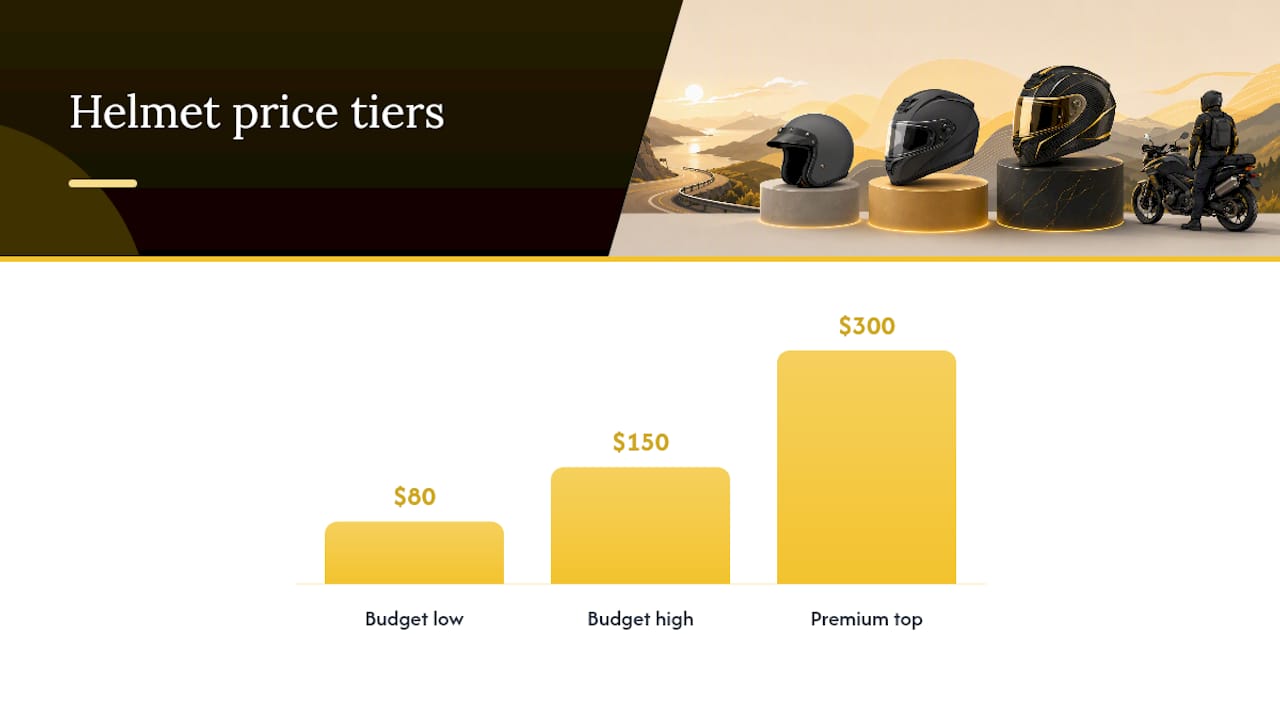
- Helmet with MIPS or rotation-mitigation liner: Reduces rotational brain-injury risk by 53.8% versus conventional helmets. Cost: $80–$300. Install time: immediate.
- High-output front light (500–1,000+ lumens): Lets you see the road and be seen by oncoming traffic. Cost: $30–$120. Install time: under 5 minutes.
- Rear light + backup reflector: Conspicuity from behind is your biggest solo-rider vulnerability. Cost: $20–$80. Install time: under 5 minutes.
- Rear-awareness tool (mirror or dashcam): Keeps your head forward while monitoring traffic. Cost: $15–$150. Install time: 5–15 minutes.
- Frame reflectors or high-vis clothing: Passive, always-on conspicuity that works even when batteries die. Cost: $10–$40. Install time: under 5 minutes.
Key Takeaways
| Point | Details |
|---|---|
| Helmet first, always | Choose a MIPS or equivalent rotation-mitigation helmet; replace after any crash, even with no visible damage. |
| MIPS lab evidence | MIPS reduced PRV by 19%, PRA by 27.6%, and overall injury risk by 33.8% versus conventional helmets. |
| Lights by ride type | Match lumens to your route: 400–600 for commuters, 1,000+ for e-bike speeds; always carry a backup charge. |
| Rear awareness | Combine a mirror or dashcam with deliberate head-checks; mirrors reduce line-wobble but cannot eliminate blind spots. |
| Thebeamofficial kit | The VIRGO, FRAME FLASH, rear-view mirror, and dashcam cover all five upgrade categories with U.S. shipping and crash-replacement support. |
Table of Contents
- Why these gear upgrades matter for solo riders
- How to choose a helmet that actually reduces brain-injury risk
- What lighting specs actually matter for solo riding
- How mirrors and dashcams improve rear awareness for solo riders
- Mounting, battery management, and crash-replacement basics
- What to buy based on how you ride
- A seven-question checklist before you buy
- Why you can trust these recommendations
- An editorial perspective on solo rider safety
- The Thebeamofficial solo rider safety kit
- Sources
Why these gear upgrades matter for solo riders
Riding alone removes the safety buffer a group provides. No one signals a car drifting into your lane. No one calls for help if you go down. That reality makes the evidence behind each upgrade worth understanding.
The rotational-force case for a better helmet is the strongest in cycling safety research. A 2024 Annals of Biomedical Engineering analysis tested 30 popular helmets and found MIPS-equipped models reduced peak rotational velocity (PRV) by 19%, peak rotational acceleration (PRA) by 27.6%, and overall injury risk by 33.8% compared with conventional helmets. Those are lab metrics, not marketing claims.
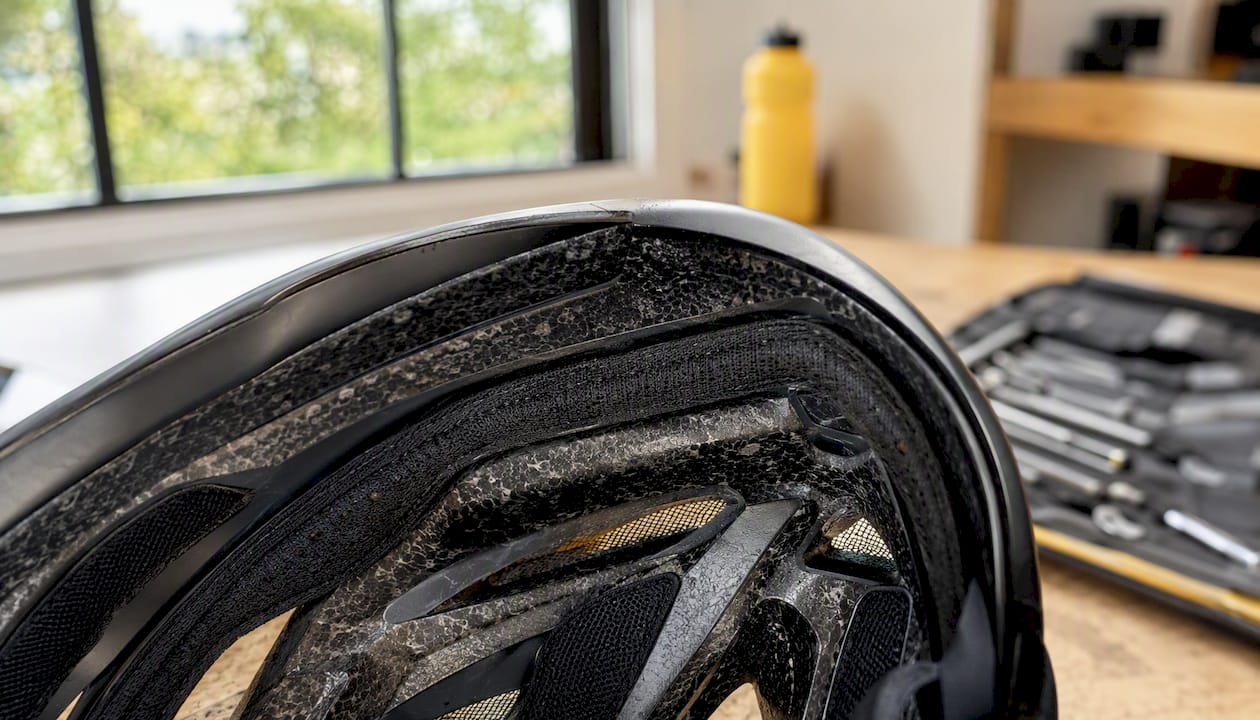
The CPSC standard for bicycle helmets sets a baseline for linear impact protection. It does not test rotational forces, which is exactly why metrics like PRA, PRV, and GAMBIT matter: most real-world crashes involve an oblique impact that spins the head, not a straight-down drop. A helmet that passes CPSC but lacks rotation mitigation leaves that risk unaddressed.
Visibility follows the same logic. Solo riders have no wingman. A rear light and reflector system running continuously is the closest thing to a safety net you can bolt onto a bike in under ten minutes.
How to choose a helmet that actually reduces brain-injury risk
Start with one non-negotiable: the helmet must include rotation-mitigation technology. Fit and certification come next.
El 2021 Frontiers in Bioengineering and Biotechnology review found that MIPS, WaveCel, SPIN, and Hovding all reduced PLA, PRA, and GAMBIT scores in lab drop tests versus conventional liners. WaveCel and Hovding showed particularly strong reductions at low impact velocities, which is the speed range most commuter crashes fall into. The practical takeaway: any certified rotation-mitigation system is better than none. For a deeper breakdown of liner materials, The Beam’s helmet liner guide covers EPS, EPP, WaveCel, and Koroyd trade-offs.
One underappreciated finding from the Annals study: higher helmet mass can increase linear risk metrics. Lighter is not always safer on paper, but a heavy helmet you take off because it’s uncomfortable protects nobody. Balance mass against wearability.
Fit checklist:
- Measure head circumference just above the eyebrows.
- The helmet should sit two finger-widths above your brow, level front to back.
- Side straps form a “V” just below each ear.
- Chin strap fits one finger between strap and chin.
- Shake your head firmly. The helmet moves with your skull, not independently.
Practical notes:
- Discard any helmet after a crash, even with no visible damage. The liner compresses irreversibly on impact and will not protect you again.
- Budget range: $80–$150 covers solid MIPS options; $150–$300 adds aerodynamics, integrated lights, and impact sensors.
- Look for integrated mount points if you plan to add a Bluetooth kit or camera.
The Thebeamofficial VIRGO is a full-face helmet built around MIPS technology, with an integrated mount system for Bluetooth kits and rear-view accessories. It’s designed for road, gravel, urban, and e-bike use, and ships to U.S. customers with a crash-replacement policy. For more on MIPS effectiveness and how it compares to conventional liners, The Beam’s technical blog post goes deeper.
Pro Tip: If your helmet is more than five years old, replace it regardless of visible condition. Foam liners degrade with UV exposure and sweat over time, reducing protection even without a crash.
What lighting specs actually matter for solo riding
Front light serves two jobs: seeing the road ahead and being seen by oncoming traffic. Rear light does one: making you impossible to miss from behind. Neither job has a single universal spec, because the right lumen count depends entirely on where and when you ride.
By ride type:
- Commuter (urban, mixed light): 400–600 lumens front with a wide beam; 50–100 lumens rear with a flash mode. Runtime of 4–6 hours covers most commutes with margin.
- Road (open roads, dawn/dusk): 600–800 lumens front with a focused beam; 100+ lumens rear. Flash modes increase conspicuity in daylight.
- Gravel (off-road, low light): 800–1,000 lumens front with a wide flood beam; 100+ lumens rear. Prioritize durability and weather resistance over raw brightness.
- E-bike (higher speeds, mixed terrain): 1,000+ lumens front; extra-bright rear beacon. Faster speeds mean longer stopping distances for drivers, so you need more reaction time built in.
Steady mode is better for seeing the road; flash mode is better for being seen. Use both if your light supports it. Commuter accessory guides consistently recommend high-output lights for regular dark commuting, with budget options starting around $30 for basic visibility.
Frame reflectors and conspicuity: Lights fail when batteries die. Reflectors don’t. The Thebeamofficial FRAME FLASH reflectors mount directly to the frame and provide passive, always-on visibility from multiple angles. Place reflectors on the seat stays, fork, and chainstays for 360-degree coverage. Pair with a reflective vest or jacket for maximum effect, especially on unlit roads.
Pro Tip: Carry a USB charging cable in your bag and charge your lights at your desk. A light that’s always charged is a light that actually gets used.
How mirrors and dashcams improve rear awareness for solo riders
The core problem with checking traffic behind you is that turning your head moves your whole body, which moves the bike. Bike mirrors reduce this line-wobble by letting you monitor rear traffic while keeping your head and torso pointed forward.
Helmet and glasses-mounted mirrors offer roughly a 120-degree field of view and handle rough pavement better than handlebar mirrors, which vibrate on gravel and cobblestones. Handlebar mirrors give a larger, more stable image on smooth roads and require no head movement at all. Neither eliminates blind spots. Both require deliberate head-checks before lane changes or turns.
A mirror is a monitoring tool, not a substitute for a head-check. Use it to track approaching traffic continuously, then confirm with a quick look before any major maneuver.
Rear dashcams add a layer mirrors can’t: recorded evidence. If a driver clips you and leaves, footage matters. Dashcams also give a wider, undistorted field of view than most mirrors. The trade-off is power management and mount stability, especially on rough terrain.
Installation tips:
- Helmet mirrors: clip to the left vent or brim; adjust until you see the lane behind you without moving your head.
- Glasses mirrors: attach to the left temple; fine-tune angle before each ride.
- Handlebar mirrors: mount at bar ends; tighten fully to prevent vibration drift.
- Dashcams: use a two-point mount when possible for stability at speed.
The Thebeamofficial rear-view mirror and rear-view dashcam are designed specifically for solo riders, with stable mounts and wide-angle optics. In most U.S. states, recording from a bicycle on public roads is legal, but check your state’s one-party consent rules if audio is captured.
Pro Tip: Align your mirror on a stationary bike before your first ride. Adjust until you can see the lane behind you with your eyes in their natural forward position, not looking down or sideways.
Mounting, battery management, and crash-replacement basics
Upgrades that fall off or run out of power mid-ride are worse than no upgrade at all. A few practical habits prevent both.
Daily checklist:
- Check light charge before every ride (30 seconds, saves the ride).
- Confirm mirror alignment hasn’t shifted from vibration.
- Inspect mount screws on lights and dashcams weekly.
Battery management: Charge lights after every ride if you commute daily. For longer trips, carry a compact USB power bank. Most quality rear lights run 6–10 hours on flash mode; front lights vary widely by lumen setting. Drop to a lower mode when you have enough ambient light to extend runtime.
Crash-replacement: Replace your helmet immediately after any impact, visible damage or not. Many brands, including Thebeamofficial, offer crash-replacement programs. Keep your purchase receipt.
Pro Tip: Use two attachment points for any light or mirror on rough terrain. A single bolt mount can loosen over miles of vibration. A secondary retention strap costs almost nothing and prevents losing a $100 light on a gravel descent.
Theft deterrent basics: Use a secondary retention strap or locking mount for lights in urban areas. Quick-release mounts are convenient but invite theft. Take lights inside when locking up.
What to buy based on how you ride
Commuter kit
Top priority: long-runtime front light (600 lumens, 6+ hour runtime) and The Beam FRAME FLASH reflectors. Add a handlebar or helmet mirror for traffic monitoring. Secondary: rear dashcam for evidence on busy corridors.
Road rider kit
Priority: aerodynamic MIPS helmet (VIRGO fits here), 600–800 lumen front light with beam control, lightweight bar-end mirror. Secondary: frame reflectors, Bluetooth helmet kit for navigation audio.
Gravel rider kit
Priority: MIPS helmet with durable shell, 1,000-lumen front light with wide flood beam, helmet-mounted mirror for rough sections. Secondary: ruggedized dashcam with two-point mount, high-vis vest.
E-bike rider kit
Priority: 1,000+ lumen front light, extra-bright rear beacon, stable mounts rated for higher speeds. Secondary: MIPS helmet with integrated mount, rear dashcam, FRAME FLASH reflectors.
For e-bike-specific helmet features and smart safety tech, The Beam’s e-bike helmet guide covers what actually matters at higher speeds.
A seven-question checklist before you buy
Start here: buy a rotation-mitigation helmet first, then one visibility upgrade. Everything else is secondary.
- Will you ride before dawn or after dusk? (Yes = prioritize high-lumen front + rear lights.)
- Is rotational protection present on the helmet you’re considering? (No MIPS/equivalent = walk away.)
- What runtime do you need? (Match to your longest likely ride, plus 30% margin.)
- Do you need theft-resistant mounts? (Urban commuters: yes, always.)
- Is weight a top priority? (Road racers: yes; commuters: comfort matters more.)
- Do you want onboard recording? (Yes = dashcam; No = mirror is simpler.)
- What’s your replacement budget? (Factor crash-replacement cost into the helmet decision.)
Red flags to avoid:
- No rotational-mitigation claim on the helmet (CPSC alone is not enough).
- Runtime under 2 hours for a light marketed as a commuter product.
- No crash-replacement policy from the helmet brand.
- Single-point mounts on rough-terrain accessories.
Scoring: If you answered yes to questions 1 and 2, helmet and lights are your immediate purchase. Three or more yes answers pointing to the same category means that category is your bottleneck.
Why you can trust these recommendations
The recommendations here rest on peer-reviewed lab testing, surgeon expertise, and published safety standards, not manufacturer claims.
Core sources:
- Annals of Biomedical Engineering (2024): 30-helmet drop-test study; supports MIPS effectiveness statistics used throughout.
- Frontiers in Bioengineering and Biotechnology (2021): Multi-technology review; supports WaveCel and alternative liner comparisons.
- Dr. Damián Palafox via Triathlete: Craniofacial trauma surgeon endorsement of MIPS and helmet-first priority.
Limitations: Lab drop tests approximate real crashes but cannot replicate every impact angle, speed, or rider anatomy. Consumer models vary by production batch. Real-world outcome data linking specific helmet models to reduced ER visits remains limited. These recommendations reflect the best available lab evidence, not guaranteed outcomes.
Lab tests are the closest proxy we have for real-world protection. They are not perfect, but a helmet that reduces rotational risk by 33.8% in controlled conditions is meaningfully better than one that does not.
For deeper technical background, The Beam’s helmet safety upgrade guide and MIPS technology explainer are worth reading before you buy.
An editorial perspective on solo rider safety
Solo riding strips away every safety buffer a group provides. No one drafts you away from a close pass. No one calls emergency services. That reality is why the five upgrades in this article are not optional extras for a solo rider. They are the baseline.
What most gear guides miss is the compounding effect of combining a rotation-mitigation helmet with rear awareness. A MIPS helmet protects you if you crash. A mirror or dashcam helps you avoid the crash in the first place. Neither works as well without the other, and neither works at all if the helmet is five years old or the light battery is dead.
Thebeamofficial built the VIRGO, FRAME FLASH, and rear-view dashcam around exactly this logic: integrated protection that works together, not as a collection of unrelated parts. The crash-replacement policy matters too. A helmet you can afford to replace after a crash is a helmet you’ll actually wear every ride.
The single most common mistake solo riders make is buying lights and skipping the helmet upgrade. Lights make you visible. A good helmet is what keeps you alive when visibility isn’t enough.
The Thebeamofficial solo rider safety kit
For solo riders who want to cover all five upgrade categories at once, Thebeamofficial’s lineup maps directly to the priorities in this article.
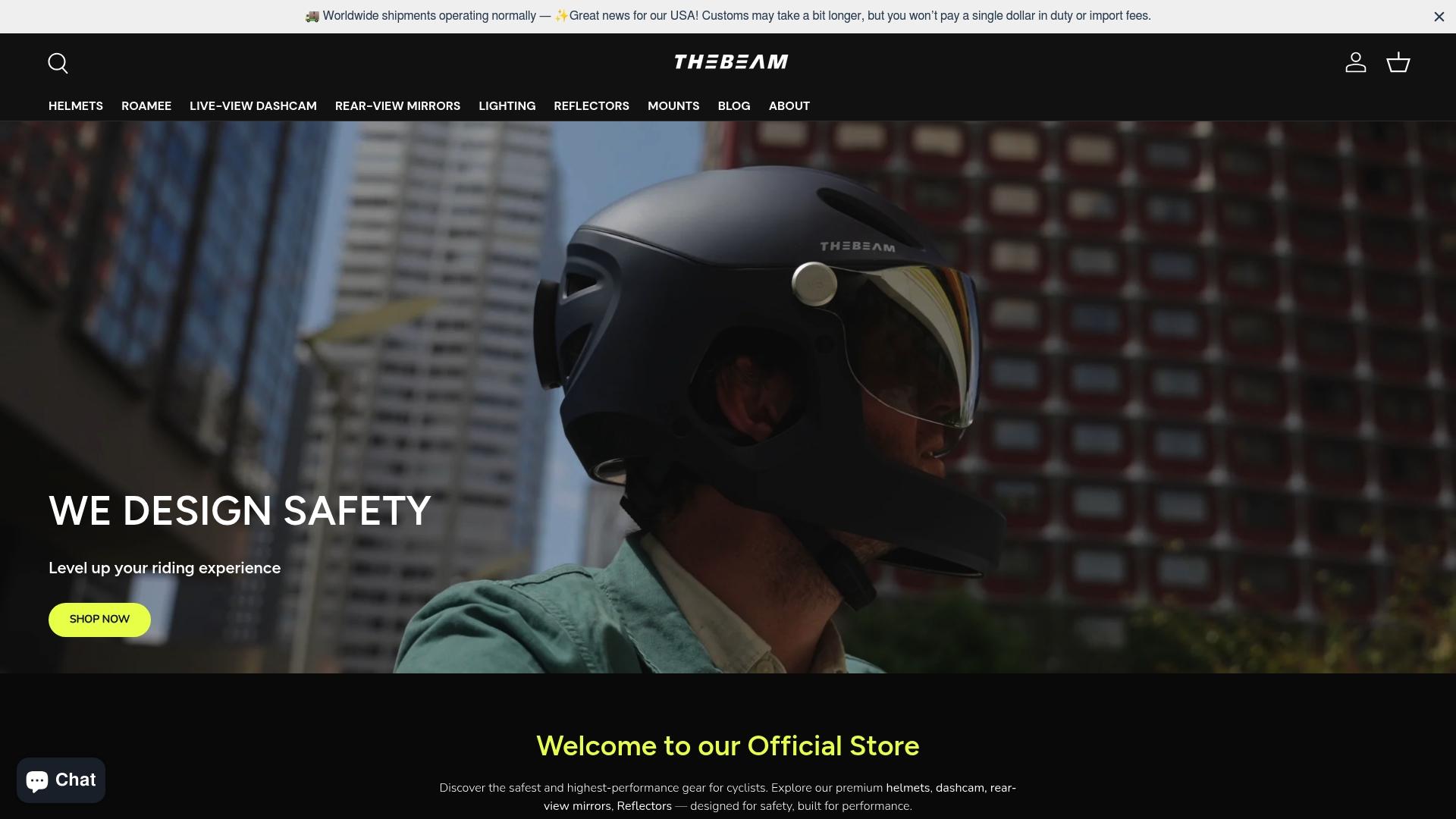
The core kit includes the VIRGO MIPS helmet, FRAME FLASH frame reflectors, the rear-view mirror, a Bluetooth helmet kit, and the rear-view dashcam. Each product ships to U.S. customers. The VIRGO carries a crash-replacement policy and integrates directly with the Bluetooth kit and mount system, so you’re not mixing incompatible hardware.
Browse the full adult helmet collection and safety accessories on The Beam’s site. If you’re starting with one item, the VIRGO is the right call. If you already have a solid helmet, the FRAME FLASH reflectors are the fastest conspicuity upgrade you can install in under five minutes.
Sources
- According to a 2024 Annals of Biomedical Engineering analysis, MIPS-equipped helmets significantly reduce the risk of brain injury during impacts
- Frontiers in Bioengineering and Biotechnology (2021) review of helmet mitigation technologies
- How well do popular bicycle helmets protect from different types of head injury? | Annals of Biomedical Engineering
- Is MIPS worth it? A craniofacial trauma surgeon weighs in on bike helmets – Triathlete
Limitation note: Lab drop tests are the best available proxy for real-world crash protection, but they cannot replicate every impact scenario. Use these findings as a guide, not a guarantee.


