

TL;DR:
- Urban cycling safety emphasizes visibility, positioning, and situational awareness to prevent accidents in city environments. Using daytime running lights, wearing reflective gear, and maintaining a primary riding position improve safety, especially at intersections and door zones. Practicing consistent habits like shoulder checks, route planning, and correct helmet fitting reduces injury risk and builds confidence for city riders.
Urban cycling safety is the practice of using proven techniques, gear, and positioning strategies to navigate city environments while minimizing collision risk. With urban cycling growing across cities like Paris, New York, and Berlin, understanding the core principles of city bike safety has never been more relevant. Research shows that simple changes, like switching to a daytime running light, can cut collision risk by up to 33%. This guide covers urban cycling safety explained through the lens of 2026 research, giving commuters and recreational riders a clear, practical framework for every ride.
What is urban cycling safety and why does it matter?
Urban cycling safety is defined by three pillars: visibility, positioning, and situational awareness. Miss any one of them, and your risk profile climbs fast. City environments are uniquely hostile compared to rural roads. You face car door zones, blind intersections, unpredictable pedestrians, and surface hazards like wet paint and metal drain covers, often all within a single block.
The good news is that most urban cycling accidents are preventable. Urban cycling accidents cluster at intersections and high-friction points, which means route awareness and pre-emptive behavior changes can eliminate a large share of your exposure. Knowing where danger concentrates lets you ride proactively, not reactively. That shift in mindset is what separates confident urban cyclists from anxious ones.
For beginners, the learning curve feels steep. But cycling safety for beginners does not require advanced skills. It requires consistent habits applied from day one. The sections below break those habits down into clear, repeatable actions.
How can urban cyclists improve visibility and prevent collisions?
Visibility is your first line of defense. Drivers cannot avoid what they cannot see, and in dense city traffic, you have a fraction of a second to register in a driver’s peripheral vision.
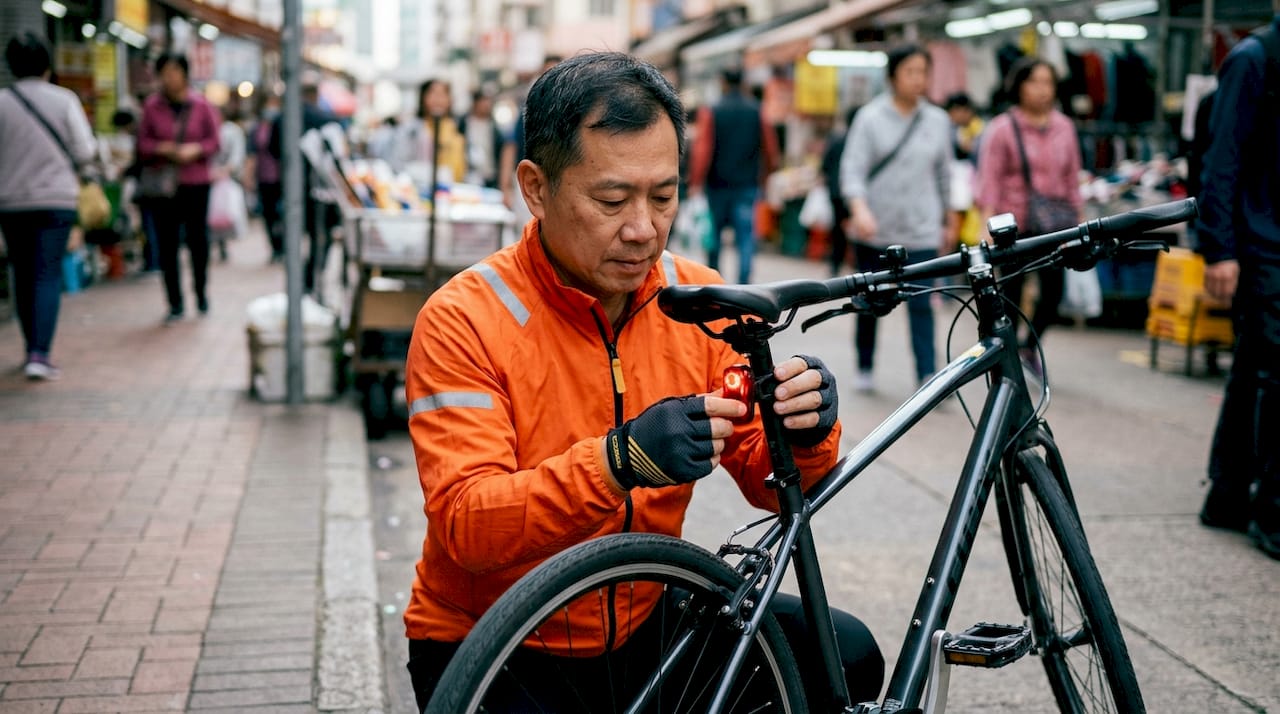
Use lights beyond just nighttime riding
Daytime running lights reduce collision risk by up to 33%, according to Danish research. That number applies in broad daylight, not just at dusk. A flashing rear light in bright conditions makes you dramatically more conspicuous to drivers approaching from behind. Run your front light on a steady beam and your rear light on a flash pattern during the day.
Wear reflective gear that moves
Reflective ankle bands are one of the most underrated visibility tools available. Because they move with your pedaling motion, they create a dynamic visual signal that catches attention far more effectively than static reflective tape on your frame. Pair ankle bands with a bright jersey or jacket for all-day visibility.
Here is a quick visibility checklist for every urban ride:
- Front light: steady beam, minimum 200 lumens for daytime use
- Rear light: flashing mode, even in full daylight
- Reflective ankle bands: worn on both ankles
- Bright outer layer: yellow, orange, or neon green outperforms dark colors
- Helmet reflectors or add-on lights: increase your visible profile from multiple angles
- Frame reflectors: passive visibility when lights are off or batteries die
Pro Tip: Mount your rear light on your seatpost rather than your bag. Bags shift and block the beam. A fixed seatpost mount keeps the light aimed directly at following traffic.
Ride assertively, not timidly
Hugging the curb feels polite but creates real danger. Riding 1 meter from the curb keeps you out of the door zone, away from road debris, and visible to drivers. Gutter riding encourages drivers to squeeze past you without changing lanes. Riding assertively in the primary position forces proper overtaking behavior and reduces sideswipe risk. For a deeper look at urban bike safety guidelines and gear recommendations, Thebeamofficial has a full 2026 breakdown worth bookmarking.
What are the best road positions and riding habits for city cycling?
Positioning is the most underrated skill in urban cycling. Where you place your bike on the road determines what hazards you face, how visible you are, and how much reaction time drivers have.
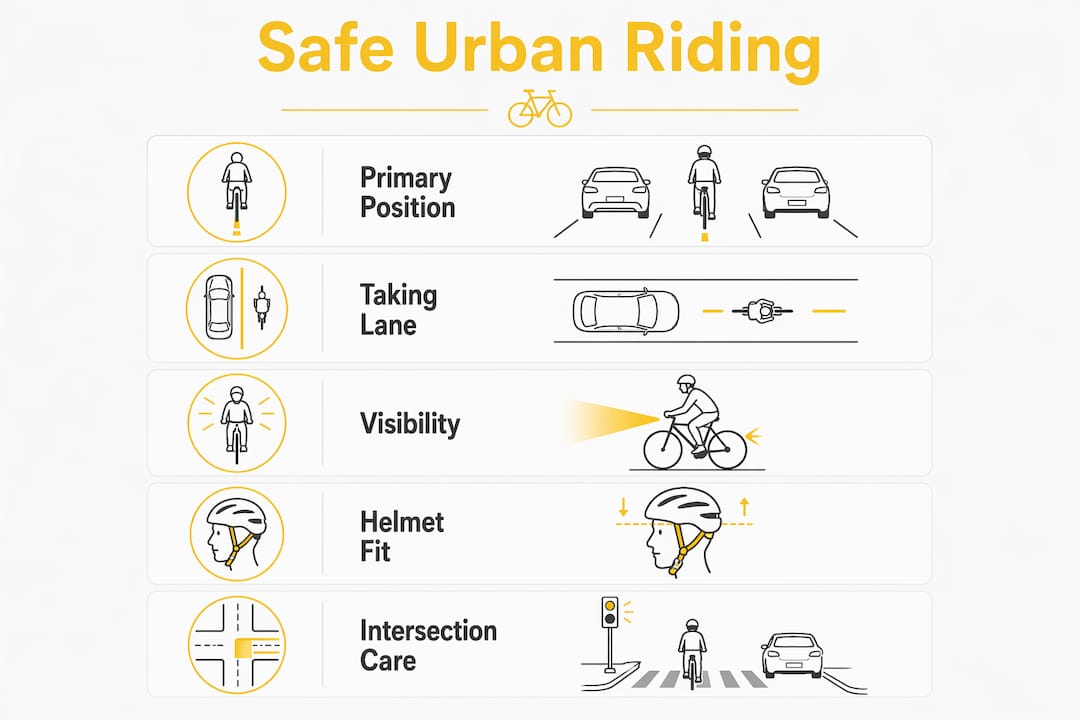
The primary riding position
The primary position places you roughly 1 meter from the curb. This position prevents sideswipes and dooring more effectively than any other single habit. It also signals to drivers that you are a legitimate road user, not an obstacle to squeeze past. Riding too close to the curb is unsafe because it invites dangerous overtaking and puts you directly in the door zone of parked cars.
Taking the lane when it counts
At narrow junctions, roundabouts, and pinch points, move to the center of the lane. This is called “taking the lane,” and it is a recognized best practice for city cycling. It prevents drivers from attempting to pass you in spaces that are too tight. You hold the lane until it is safe to move left again.
Here are the core riding habits that reduce incidents in city traffic:
- Shoulder check every 5–10 seconds. Constant situational awareness behind you prevents being caught off guard by fast-moving vehicles.
- Signal early, at least 50 meters before turning. Drivers need time to react. Late signals create confusion and increase rear-end risk.
- Ride in straight, predictable lines. Weaving between parked cars is a leading cause of city crashes because it makes your path unpredictable to drivers.
- Never ride against traffic. Riding against traffic flow increases collision risk at every intersection because drivers are not looking for you in that direction.
- Maintain consistent speed through junctions. Sudden braking or acceleration confuses other road users and breaks the predictability that keeps you safe.
Pro Tip: Before any turn, do a two-stage shoulder check: one glance at 100 meters out to assess traffic speed, and a second glance at 50 meters to confirm your gap before signaling.
How do you properly fit and maintain your helmet and safety gear?
A helmet only works if it fits correctly. The 2V1 method is the expert-endorsed fitting standard: two fingers from eyebrow to helmet, V-straps sitting just below each ear, and one finger of space between the chin strap and your jaw. If any of those three checks fail, the helmet will not perform as designed in a crash. Fit matters as much as the helmet’s certification rating.
Wearing a helmet regardless of age is the single most effective injury prevention measure available to cyclists. No other piece of gear comes close to its protective value in a collision.
Beyond the helmet, your bike itself needs regular attention. The ABC check covers the three most common mechanical failure points:
- Air: Check tire pressure before every ride. Under-inflated tires reduce braking efficiency and increase puncture risk.
- Brakes: Squeeze both levers firmly. Each brake should engage before the lever reaches the handlebar.
- Chain: The chain should move smoothly and sit cleanly on the gears. A dry or stiff chain increases the chance of mechanical failure mid-ride.
The ABC bike check takes under two minutes and prevents the kind of mechanical failures that cause accidents at the worst possible moments. Add reflective tape to your frame and fork as passive backup visibility, and check that your bell or horn is functional before every commute.
What are the key hazards at intersections and door zones?
Intersections and door zones account for the majority of serious urban cycling incidents. Understanding each hazard type lets you build specific responses rather than relying on general caution.
Door zone dangers
Parked car doors are one of the highest urban cycling risks. Treat every parked car as if the door is about to open. Maintain 1–1.5 meters of clearance from parked vehicles at all times. If road width forces you closer, reduce your speed so you have time to react. The Dutch Reach is a technique where drivers open their door with the far hand, forcing them to turn and check for cyclists. Knowing it exists helps you anticipate which drivers are less likely to door you.
Intersection tactics
Reduce speed before every junction and make eye contact with drivers before proceeding. Never assume a turning vehicle has seen you. Position yourself where you are visible to the driver, not in their blind spot. Avoid lingering beside large vehicles like trucks or buses at junctions. Their turning radius is wide and their blind spots are large.
Here is a breakdown of the most common urban hazards and how to handle them:
| Hazard | Risk level | Best response |
|---|---|---|
| Car door zone | High | Maintain 1–1.5 m clearance from parked cars |
| Intersections | High | Reduce speed, make eye contact, take primary position |
| Wet paint and metal covers | Medium | Avoid braking or turning sharply on these surfaces |
| Rush hour traffic | Medium | Time rides outside peak hours when possible |
| Narrow pinch points | Medium | Take the lane to prevent unsafe overtaking |
Timing your rides outside peak rush hours reduces your exposure to the most chaotic traffic conditions. Even a 20-minute shift in departure time can move you from gridlock to a manageable flow. Route selection matters equally. Choosing streets with dedicated bike lanes or lower speed limits cuts your contact with fast-moving vehicles significantly.
Key takeaways
Urban cycling safety comes down to three non-negotiable habits: maintaining the primary riding position, running lights in all conditions, and fitting your helmet correctly before every ride.
| Point | Details |
|---|---|
| Visibility drives safety | Daytime running lights cut collision risk by up to 33%; use them on every ride, not just at night. |
| Primary position protects you | Riding 1 meter from the curb prevents dooring and sideswipes better than any other single habit. |
| Helmet fit is non-negotiable | Use the 2V1 method to confirm correct fit; a poorly fitted helmet fails in a crash. |
| Door zones demand constant attention | Treat every parked car as a potential hazard and maintain 1–1.5 m clearance at all times. |
| Timing and routing reduce exposure | Shifting departure times and choosing calmer streets cuts contact with dangerous traffic conditions. |
Why assertive riding changed how I think about city cycling
I used to believe that staying small on the road was the polite, safe choice. Hug the curb, leave space for cars, stay out of the way. It took one close call with a car door to understand that this instinct is exactly backwards.
The riders I see moving most confidently through city traffic are not the fastest or the most experienced. They are the most predictable. They hold their line. They signal early. They take the lane at junctions without hesitation. Drivers respond to that predictability because it fits the mental model they already use for other vehicles.
The shoulder check habit is the one I see beginners skip most often. Checking behind you every 5–10 seconds is not paranoia. It is the same situational awareness a driver uses when checking mirrors. Once it becomes automatic, your confidence on the road changes completely. You stop reacting and start anticipating.
The other thing most articles understate is route selection. Choosing calmer streets is not timid cycling. It is smart cycling. A route that adds three minutes but removes two dangerous intersections is a better route. Urban cycling safety is not just about surviving the road you are on. It is about choosing the road that gives you the best odds before you even clip in.
— Sophie
Gear up for safer city rides with Thebeamofficial
Thebeamofficial designs helmets and safety accessories built specifically for the demands of urban cycling. The VIRGO integral helmet with MIPS technology delivers certified protection without compromising on fit or comfort for daily commutes. Every helmet in the range is engineered to meet the real-world conditions city cyclists face, from wet morning commutes to high-traffic intersections.
Beyond helmets, Thebeamofficial offers a full range of cycling safety accessories including rear-view mirrors, high-visibility reflectors, and connected visibility products. For riders ready to invest in proper protection, the adults’ helmet collection covers road, urban, and e-bike use cases. Gear that fits correctly and performs under pressure is not optional. It is the foundation every safe city ride is built on.
FAQ
What is the safest riding position in city traffic?
The primary position, roughly 1 meter from the curb, is the safest for urban cycling. It keeps you out of the door zone, increases your visibility to drivers, and prevents unsafe overtaking in tight spaces.
Do I need lights during the day for urban cycling?
Yes. Daytime running lights, especially a flashing rear light, reduce collision risk by up to 33%. Run your front light on steady and your rear light on flash mode during every ride, regardless of conditions.
How should a cycling helmet fit correctly?
Use the 2V1 method: two fingers between your eyebrow and the helmet rim, V-straps sitting just below each ear, and one finger of space between the chin strap and your jaw. All three checks must pass for the helmet to protect you properly.
How do I stay safe near parked cars?
Maintain 1–1.5 meters of clearance from all parked vehicles at all times. Treat every car as if its door is about to open. If road width forces you closer, reduce your speed to give yourself reaction time.
What is the best time to cycle in the city to avoid dangerous traffic?
Timing rides outside peak rush hours significantly reduces exposure to high-risk traffic conditions. Even a 20-minute shift in departure time can move you from gridlock to manageable flow, cutting both stress and collision risk.


