

TL;DR:
- Safety-focused cyclists should prioritize CPSC certification and independent rotational-impact testing when choosing high-end helmets. Brands like THE BEAM, Giro, Bell, and POC offer verified safety features and US shipping options, with accessories enhancing visibility and communication. Proper fit and verified ratings are more important than brand marketing or minor weight savings for effective protection.
For safety-conscious cyclists shopping for high-end helmets and accessories in the United States, the strongest alternatives fall into three routes: specialist safety-first direct brands like THE BEAM, premium helmet manufacturers (Giro, Bell, POC) sold through established US retailers, and accessory specialists covering lights, radar, and Bluetooth kits (Garmin Varia, Sena).
Two decision anchors cut through the noise fast:
- CPSC certification (16 C.F.R. part 1203) is the legal baseline for every helmet sold in the US. No label, no buy.
- Independent rotational-impact testing (Virginia Tech STAR) tells you more than any brand’s marketing copy. Helmets with rotational-impact systems like MIPS consistently score better in STAR evaluations than the same shells without them.
Your immediate next step: check the liner for the CPSC label, confirm rotational-impact tech on the spec sheet, and verify US shipping and returns before checkout.
Table of Contents
- How do these alternative buying routes compare?
- How do you choose the right alternative for your needs?
- Where and how do you buy safely in the United States?
- Why THE BEAM VIRGO is a strong safety-first option
- Which brands and retailers ship to the United States?
- When should you replace your helmet?
- How do customer reviews and ratings compare across these options?
- What is the background and reputation of these brands?
- How do you find the right helmet fit before buying online?
- What accessories are compatible with these helmets?
- How do safety certifications beyond CPSC compare?
- Key Takeaways
- Why safety features should drive your helmet purchase, not weight or marketing
- Sources and further reading
- THE BEAM: safety-first helmets and accessories for US cyclists
How do these alternative buying routes compare?
| Category | What they sell | Rotational-impact tech | CPSC / US availability | Best use | Typical price range | Warranty / crash replacement | US shipping & returns | Notable accessories |
|---|---|---|---|---|---|---|---|---|
| Direct safety-first brands | Full-face helmets + visibility accessories | MIPS (e.g., THE BEAM VIRGO) | Yes | Road, urban, e-bike, gravel | — | Crash-replacement policies vary; check before buying | International ship to US; confirm duties | Rear-view mirrors, reflectors, connected products |
| Premium helmet manufacturers via US retailers | Helmets across road/MTB/urban | MIPS, WaveCel, KinetiCore, SPIN | Yes | Road, MTB, commute, full-face | — | Most offer crash-replacement programs | Domestic warehouse; fast returns | Limited; some integrate lights or mounts |
| Accessory specialists | Lights, radar, Bluetooth kits | N/A | US-available | All riding types | — | Manufacturer warranty | Domestic; straightforward returns | Garmin Varia radar/lights, Sena Bluetooth kits |
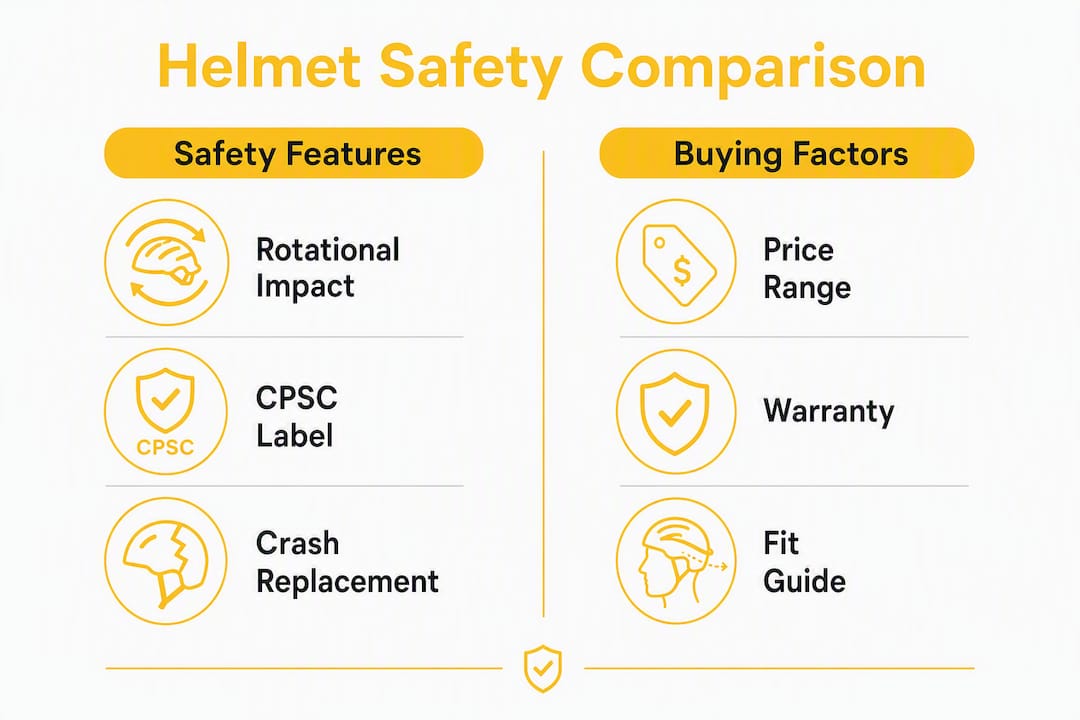
Safety-conscious buyers should treat the rotational-impact column as a filter, not a bonus. Consumer Reports identifies multiple rotational systems (MIPS, WaveCel, SPIN, KinetiCore) across price ranges, so you are not locked into a single brand to get the protection. Premium helmets do offer better ventilation and lighter weight (top-tier road helmets run roughly 180–220g versus 280–340g for budget options), but that weight difference does not translate into meaningfully better linear-impact protection. Spend the weight-savings budget on rotational tech instead.
Pro Tip: To verify a rotational-impact system beyond the marketing claim, look for the Virginia Tech STAR rating on the manufacturer’s product page or the Virginia Tech helmet ratings database directly. A branded name like “MIPS” or “WaveCel” on the box is a starting point, not a guarantee of performance. The STAR score is the number that actually matters.
How do you choose the right alternative for your needs?
Start here: fit first, CPSC label second, rotational-impact tech third. A perfectly certified helmet that fits badly protects you less than a well-fitted one.
Ordered selection checklist:
- Head shape and fit testing. Le site CDC recommends the helmet sits one to two finger widths above the eyebrows, with the chin strap snug enough that only one or two fingers fit between strap and chin. Use a brand’s online sizing guide before ordering.
- CPSC label — Check the liner and packaging. No label means the helmet is not legally certified for US sale.
- Rotational-impact tech and independent test performance. Prioritize models with a published Virginia Tech STAR rating. MIPS or equivalent adds roughly $15–$30 to the price and materially improves rotational test results.
- Accessory compatibility. Urban and e-bike riders benefit most from helmets with integrated lights or mounts for rear cameras and Bluetooth kits. Commuter helmets that combine rotational protection with built-in visibility features offer a practical safety edge over bare-shell options.
Quick answers to common questions:
Is MIPS required? No, but helmets with MIPS or an equivalent rotational system consistently outperform bare-shell helmets in independent testing. Treat it as a strong recommendation, not a mandate.
How much extra should I expect to pay for rotational tech? Roughly $15–$30 more than the equivalent non-MIPS version of the same helmet.
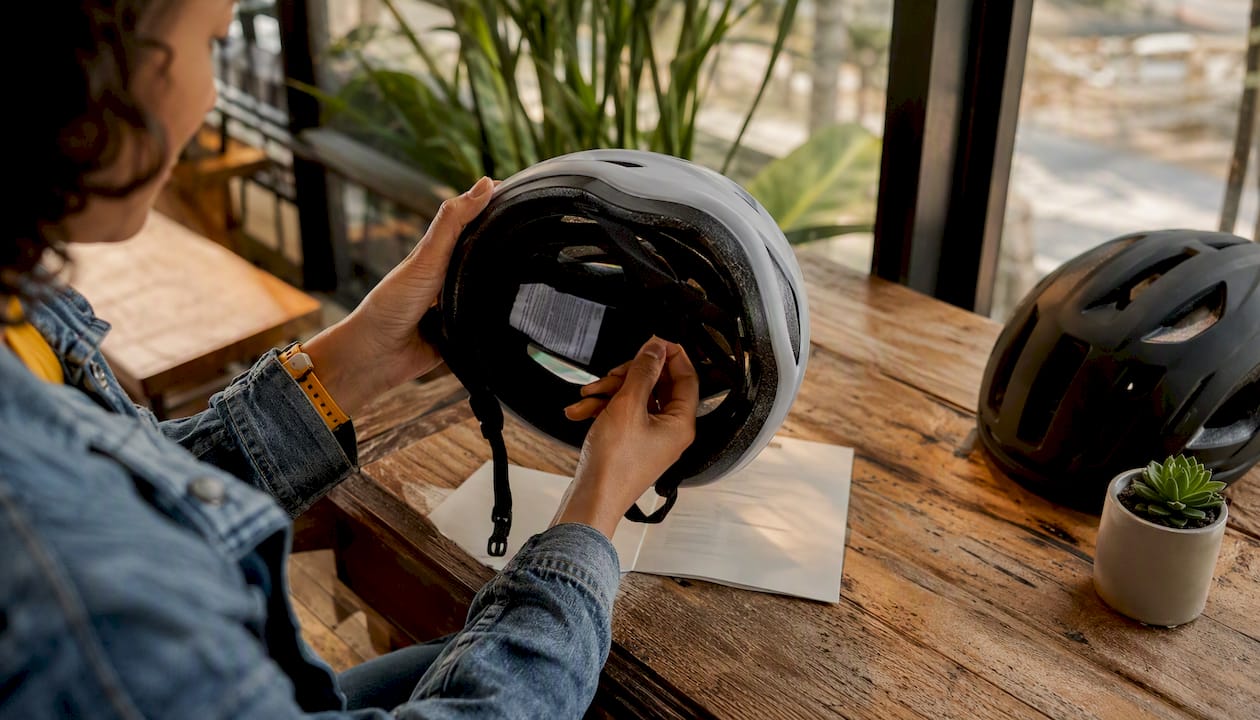
When should I choose a full-face or gravel helmet? Full-face for e-bike, urban commuting, or any situation where a fall could involve chin or jaw contact. Gravel for mixed-surface riding where ventilation and coverage balance matters more than aerodynamics.
Always confirm the warranty and crash-replacement policy before buying, and check that US returns are straightforward (no restocking fees, clear timelines).
Where and how do you buy safely in the United States?
Buy from channels that show a clear CPSC label image on the product page, a published crash-replacement policy, and explicit US shipping and returns terms. Those three things together are a reliable authenticity signal.
To verify a helmet is genuine, look for the CPSC certification label inside the liner and on the outer packaging. The CPSC brochure instructs buyers to check for the manufacture date on the label, which is useful for both recall tracing and replacement timing. If a product page shows no label image and no manufacture date, ask the seller directly before purchasing.
On shipping: domestic US warehouses mean faster delivery and simpler returns. International shipments can add duties and longer windows. Ask whether the seller ships from a US location and what the restocking fee policy is on returns.
Pro Tip: Before accepting a delivery, open the box and check the liner for the CPSC label and manufacture date. A helmet that arrives without visible certification markings should be returned immediately, regardless of what the product page claimed.
Cycling helmet certifications explained covers what each label means and how to read them, which is worth reviewing before you finalize any purchase.
Why THE BEAM VIRGO is a strong safety-first option
THE BEAM’s VIRGO is a full-face integral helmet built around MIPS technology, designed for road, urban, e-bike, and gravel riders who want protection that goes beyond the CPSC baseline. It ships internationally, including to US addresses.
Key trust signals to check on the product page:
- Manufacture date and CPSC labeling: — confirm both on the product listing before ordering
Pro Tip: Use THE BEAM’s online sizing guide and contact their customer service before checkout if you are between sizes. A full-face helmet fit is less forgiving than an open-face road helmet, so confirming head circumference and shape against the brand’s size chart is worth the extra five minutes.
Which brands and retailers ship to the United States?
Several well-established brands ship directly to US addresses or are stocked by major US retailers:
Giro and Bell are two of the most widely distributed helmet brands in the US, available through REI, Competitive Cyclist, and direct brand sites. Both offer MIPS-equipped road, MTB, and urban models across a broad price range.
POC focuses on premium protection with its own proprietary liner systems. POC helmets are available through US specialty retailers and the brand’s own site, with strong representation in road and gravel categories.
Thousand targets urban commuters with a distinctive aesthetic and MIPS options. US-based with domestic shipping and straightforward returns.
Sena is the go-to for Bluetooth helmet communication kits. Their systems integrate with many existing helmets and ship directly to US buyers.
Garmin Varia covers radar and rear-view cameras. The Varia RTL515 radar tail light and RCT715 radar camera are available through Garmin’s US site and major retailers, with full domestic warranty support.
When should you replace your helmet?
Replace every five years at minimum, or immediately after any significant impact, even when no visible damage is present. Experts note that internal foam structures can be compromised without any visible cracking, which is why the five-year rule exists regardless of how the helmet looks.
The manufacture date on the CPSC label is your starting point for the replacement clock. A practical replacement guide can help you track when each helmet in your household is due.
After a crash, do not wait for visible damage. The EPS foam liner absorbs impact energy by compressing microscopically. That compression is permanent and invisible. Ride with a compromised liner and the next impact gets less protection than the first.
How do customer reviews and ratings compare across these options?
Reviews for Giro, Bell, and POC consistently highlight fit consistency and MIPS performance as top positives. Urban riders frequently call out integrated light compatibility and strap comfort as deciding factors. Full-face options get strong marks for chin protection but mixed feedback on ventilation in warm weather.
For accessory specialists like Garmin Varia and Sena, reviews focus on reliability and connectivity. The Varia radar gets high marks for real-world alert accuracy. Sena’s Bluetooth kits draw praise for audio quality but occasional criticism for pairing complexity on first setup.
THE BEAM’s VIRGO draws attention for its full-face protection geometry and MIPS integration, with buyers noting the combination of road-ready design and urban safety coverage as a differentiator.
What is the background and reputation of these brands?
Giro has been producing helmets since 1985 and helped establish MIPS adoption in the US market. Bell, founded in 1954, has deep roots in motorsport and cycling protection. POC launched in 2005 with a focus on ski and cycling safety research. All three are well-established with long track records of CPSC-compliant products.
Garmin’s Varia line brought radar detection to cycling in 2015, a category it still leads. Sena entered cycling from the motorcycle communication market, bringing proven Bluetooth hardware to helmet kits.
THE BEAM is a French brand with a direct-to-consumer model, operating in both Europe and the United States. Its focus on integrated safety (MIPS helmets plus visibility accessories) positions it as a specialist rather than a volume manufacturer.
How do you find the right helmet fit before buying online?
Every major brand publishes a sizing guide based on head circumference. Measure around the widest part of your head (just above the eyebrows) with a soft tape measure. Most brands use small/medium/large sizing mapped to centimeter ranges.
Giro, Bell, and POC all publish detailed fit guides on their product pages. THE BEAM offers an online sizing tool and customer service support for pre-purchase fit questions. Thousand provides a simple circumference chart with clear size breakdowns.
For full-face helmets, head shape matters more than for open-face road helmets. Round and oval head shapes fit differently in the same shell. If a brand offers a virtual fitting tool or a no-cost return policy, use both as a safety net.
What accessories are compatible with these helmets?
Accessory compatibility varies significantly by helmet category. Open-face road and commuter helmets from Giro, Bell, and Thousand typically accept aftermarket mounts for lights, cameras, and Garmin Varia units. Full-face helmets like the VIRGO are designed with integrated visibility in mind, pairing with THE BEAM’s rear-view mirrors and reflector accessories.
Sena Bluetooth kits are compatible with most open-face helmets through clip-on or adhesive mounting systems. Garmin Varia radar and camera units mount to the seat post rather than the helmet, making them universally compatible regardless of helmet brand.
Commuter and e-bike riders gain the most from helmets that combine rotational-impact protection with integrated visibility. If your riding involves traffic, prioritize a helmet with accessory-ready mounts or built-in lights over one that forces you to add a separate clip-on system.
How do safety certifications beyond CPSC compare?
CPSC 16 C.F.R. part 1203 is the US legal floor. ASTM F1447 covers recreational cycling and is often cited alongside CPSC. ASTM F1952 applies to downhill mountain bike racing. Snell B-95 and N-94 are voluntary standards with stricter impact thresholds than CPSC, and helmets carrying Snell certification have passed additional independent testing.
In Europe, EN 1078 is the equivalent mandatory standard. NTA 8776 covers speed pedelec and e-bike helmets in the Netherlands and is increasingly referenced for high-speed urban riding across Europe.
Virginia Tech STAR is not a certification but a published independent rating system. It scores helmets on a combination of linear and rotational impact performance across multiple speeds and angles. A helmet can be CPSC-compliant and still score poorly on STAR if it lacks rotational-impact protection. For safety-focused buyers, checking the STAR database alongside the CPSC label gives a much fuller picture than the label alone.
Key Takeaways
The single most important decision in this purchase is fit plus rotational-impact protection, verified against the CPSC label and an independent STAR rating, before you consider price, weight, or brand.
| Point | Details |
|---|---|
| CPSC label is non-negotiable | Every legally sold US helmet must carry the CPSC 16 C.F.R. part 1203 label inside the liner. |
| Rotational-impact tech matters | MIPS or equivalent adds a moderate additional cost but consistently improves independent Virginia Tech STAR scores. |
| Replace on schedule | Swap your helmet every five years or immediately after any significant impact, even with no visible damage. |
| Confirm US returns and crash replacement | Check shipping origin, return policy, and crash-replacement terms before checkout, not after. |
| THE BEAM VIRGO | A MIPS-equipped full-face helmet shipping to US addresses, with a visibility accessory range for urban and e-bike riders. |
Why safety features should drive your helmet purchase, not weight or marketing
The cycling industry has a weight obsession that does not map onto real-world crash physics. Shaving 40 grams off a helmet does not reduce your risk of a rotational brain injury. What does reduce it is a properly fitted helmet with a validated rotational-impact liner, confirmed by an independent test score rather than a brand’s own marketing language.
The Virginia Tech STAR system exists precisely because marketing claims outpaced real performance for years. A helmet labeled “advanced protection” with no published test data is a marketing exercise. One with a STAR score is a verifiable claim. The gap between those two things is where most buying mistakes happen. Fit, CPSC compliance, and a published rotational-impact rating are the three things that actually correlate with protection. Everything else is preference.
Sources and further reading
Authoritative references used in this article, organized by what each covers:
- CPSC Helmet Brochure — The primary US source for CPSC 16 C.F.R. part 1203 compliance, label placement, and manufacture date guidance. Check this before accepting any helmet delivery.
- CDC Bike Helmet Fact Sheet — Official fit instructions and replacement guidance. Use for the one-to-two finger width fit check.
- Virginia Tech STAR Ratings via Roadman Cycling — Explains STAR methodology and why rotational-impact systems improve scores. Best for independent test verification.
- Consumer Reports Helmet Testing — Comparative reviews across road, MTB, and urban helmets with rotational-impact system identification. Best for comparative shortlisting.
- THE BEAM Cycling Helmet Certifications Guide — Explains CPSC and secondary certification labels in plain language.
- THE BEAM Helmet Replacement Guide — Practical timeline and crash-replacement guidance for tracking when to replace.
Before accepting any helmet delivery, open the box and verify the CPSC label and manufacture date on the liner. If either is missing, return the helmet.
THE BEAM: safety-first helmets and accessories for US cyclists
If you want a helmet that combines full-face MIPS protection with a visibility accessory ecosystem designed for real-world riding, THE BEAM is built for exactly that. The VIRGO integral helmet ships to US addresses, pairs with THE BEAM’s rear-view mirrors and reflectors, and is designed for road, urban, gravel, and e-bike cyclists who treat safety as the purchase criterion, not an afterthought.
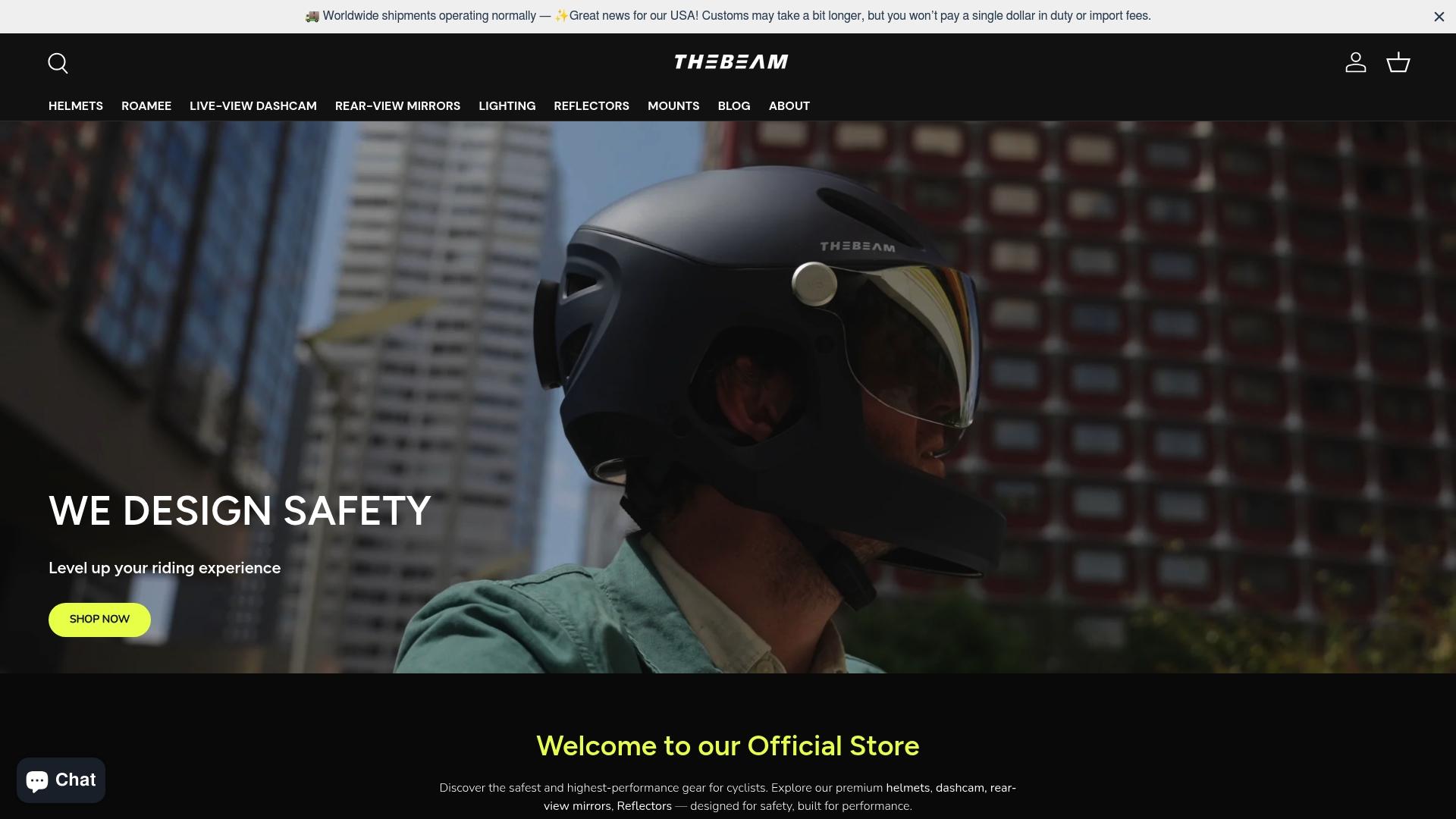
The brands covered in this article each do something well. What THE BEAM does differently is combine the helmet and the visibility layer into a single product ecosystem, so you are not sourcing a Garmin mount, a Sena kit, and a separate helmet from three different retailers. Visit thebeamofficial.com to check the VIRGO’s sizing guide, confirm US availability, and review the crash-replacement policy before you buy.


