

The most impactful examples of urban cycling tech in 2026 fall into four categories: advanced helmets with MIPS protection, Vehicle-to-Everything (V2X) communication systems, AI-powered rear cameras, and smart visibility accessories. Together, these technologies address the single biggest gap in urban mobility: cyclists are increasingly at risk while cars keep getting safer. Here is what actually matters for your commute.
Key categories shaping urban cycling safety right now:
- Helmets with MIPS technology that reduce rotational brain injury risk
- V2X-connected e-bikes that communicate with vehicles and infrastructure
- AI rear-view cameras that detect and alert riders to approaching traffic
- Integrated lighting with adaptive brightness for variable city conditions
- Smart GPS locks that deter theft and enable real-time bike recovery
- Wearable turn-signal gear like illuminated gloves for better visibility
- Sensor platforms tracking both traffic proximity and air quality simultaneously
Industry research from the SPINOVATE project in Dublin shows how connected cycling data can transform rider behavior into priority insights for proactive infrastructure planning, as demonstrated by the Barnagh Greenway Hub project. Thebeamofficial contributes to this space with high-end protective equipment designed specifically for urban and commuter cyclists.
Table of Contents
- 1. Advanced helmets with MIPS: your first line of defense
- 2. V2X communication: e-bikes that talk to cars
- 3. AI rear-view cameras that watch your back
- 4. Sensor platforms tracking traffic and air quality together
- 5. Integrated lighting with adaptive brightness
- 6. Smart GPS locks for theft prevention
- 7. Wearable turn-signal gear for hand visibility
- How to build a tiered urban cycling gear setup
- Thebeamofficial has the protective gear your commute needs
- Key Takeaways
1. Advanced helmets with MIPS: your first line of defense
A quality helmet is not optional gear. It is the foundation of every other safety decision you make on a bike.
MIPS technology works by allowing the helmet shell to rotate independently from your head during an angled impact, reducing the rotational forces that cause the most serious brain injuries. Standard helmets absorb direct impact well but do little against the twisting motion that occurs in most real-world crashes. MIPS closes that gap.
Thebeamofficial’s VIRGO is a full-face integral helmet built around MIPS, combining that rotational protection with an ergonomic fit designed for daily urban use. It is not a race helmet repurposed for commuting. The design accounts for the stop-and-go reality of city riding.
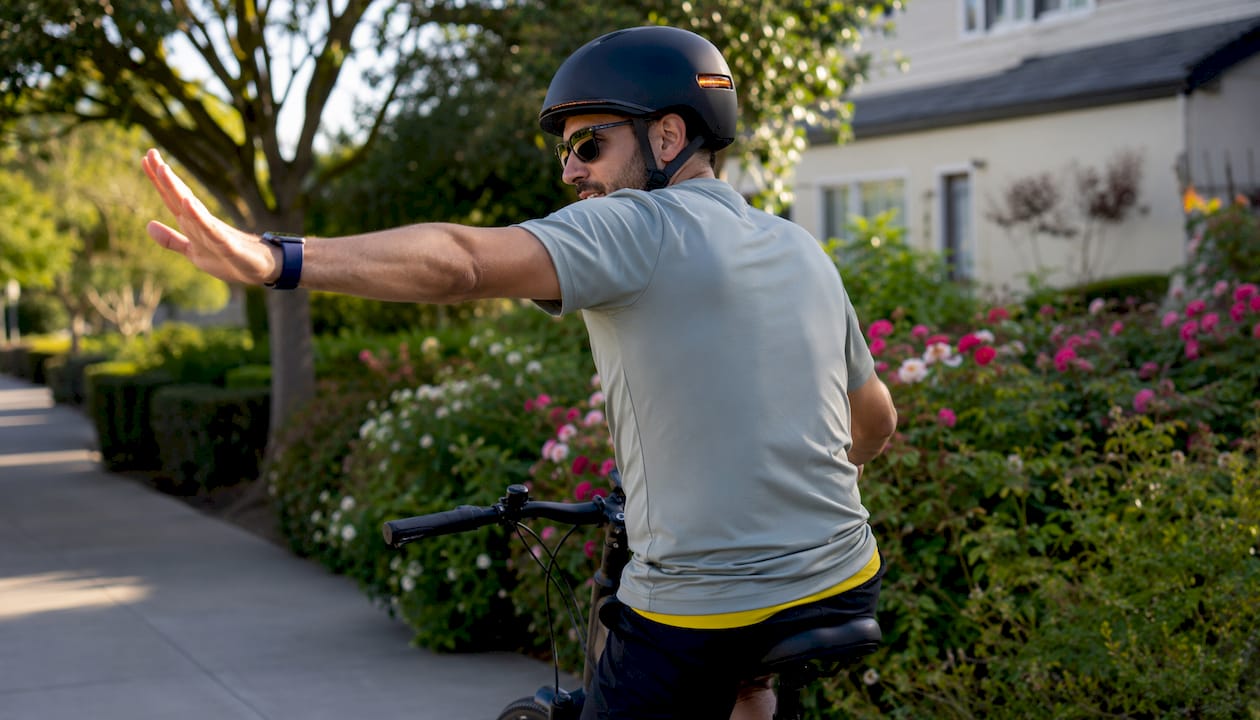
Beyond MIPS, connected helmets now incorporate sensors, integrated lighting, and even turn-signal systems. Some models pair with smartphone apps to log impact data or send emergency alerts after a crash.
Pro Tip: Before spending on GPS trackers or smart cameras, lock in your helmet choice. Every other piece of tech becomes secondary if your head protection is inadequate.
2. V2X communication: e-bikes that talk to cars
Vehicle-to-Everything technology lets a bicycle broadcast its position, speed, and direction to nearby vehicles and infrastructure in real time, without relying on a camera’s line of sight.
Canyon’s Roadlite:ON V2X is the first production-ready V2X bicycle, offering a 360-degree communication range reaching up to 300 meters ahead and 150 meters behind. When a V2X-equipped vehicle approaches a blind corner, the right or left handlebar grip vibrates instantly, keeping your eyes on the road. Alerts can also route to a paired smartphone, smartwatch, or bike computer.
The technology works around corners and through buildings, unlike cameras that need direct line of sight. V2X could potentially prevent up to 80% of non-impaired vehicle crashes in the U.S. alone. Canyon developed the Roadlite:ON V2X in cooperation with Volkswagen, and testing confirmed that connected vehicles and bicycles can successfully detect each other and exchange live safety data.
The honest limitation: V2X only delivers full value when a critical mass of vehicles and infrastructure uses compatible systems. Right now, very few cars are equipped. Canyon is positioning this bike as an industry statement, not just a product, pushing automakers and other bike brands to adopt the standard together.
“We want to inspire other brands to implement V2X. The more bicycle and car manufacturers incorporate the technology, the safer our roads can become.” — Dr. Casas Melo, Canyon
3. AI rear-view cameras that watch your back
The Luna Oculus mounts like a standard rear light (it outputs 90 lumens) but houses a 1080p camera running AI models that identify cars, trucks, buses, and other bikes approaching from behind. The live feed goes to your phone on the handlebar. When a vehicle gets too close, the system escalates alerts based on risk level, with visual cues, audio pings, or both.
All AI processing happens on the device itself, with no cloud dependency, so there is no latency when a truck is closing fast. The system automatically records close passes within 1.5 meters, geotags them, and builds a danger map of your route. If you opt in to data sharing, that information aggregates across riders to identify cycling blackspots and inform city safety planning.
Privacy matters here. AI incident mapping requires user opt-in for route and incident data sharing, balancing personal privacy against the collective benefit of crowdsourced safety intelligence.
4. Sensor platforms tracking traffic and air quality together
The SenseBike system, developed as an open-source research platform, combines automated vehicle overtaking detection with real-time air quality monitoring. Ultrasonic sensors detect approaching vehicles and trigger distance measurements automatically, no manual button press required. Simultaneously, the system records particulate matter, temperature, humidity, and GPS coordinates.
Test rides in urban environments showed elevated particulate matter concentrations during close vehicle passes and at traffic lights, precisely the moments of highest safety risk. That correlation between traffic behavior and pollution exposure gives cyclists and city planners a much fuller picture of where routes are genuinely dangerous.
5. Integrated lighting with adaptive brightness
Modern bike lighting has moved well past a simple on/off switch. Adaptive systems now read ambient light conditions and automatically adjust output, so you are never blinding oncoming cyclists on a dark path or running dim on a gray afternoon.
Smart lights paired with urban cycling safety gear create a visibility system rather than just a single point of light. Front and rear units that communicate with each other can activate brake-light modes when deceleration is detected, giving drivers behind you a clear warning.
6. Smart GPS locks for theft prevention
GPS trackers built into bike locks or hidden inside handlebars and seatposts give you real-time location data via 4G LTE if your bike is stolen. The best units are compact enough to be invisible to a thief. Paired mobile apps let you set movement alerts so you know the moment your bike leaves where you parked it.
Pro Tip: Hide a secondary GPS tracker inside the seatpost in addition to any lock-integrated unit. Thieves who find one tracker rarely check for a second.
7. Wearable turn-signal gear for hand visibility
Turn-signal gloves with LED arrows, like the Zackees Turn Signal Gloves 2.0, make your hand signals visible to drivers at night and in low-visibility conditions. The illuminated arrows activate by snapping contact pads together, so you do not need to fumble with a button mid-turn. For urban commuters who signal constantly through intersections, this is a straightforward upgrade that drivers actually notice.
How to build a tiered urban cycling gear setup
Start with protection, then layer in connectivity. A tiered gear approach prioritizes high-quality helmets first, then connected tech like smart navigation and safety warnings, followed by convenience accessories.
- Tier 1 (Safety essentials): MIPS helmet, front and rear lights, basic lock
- Tier 2 (Connected safety): AI rear camera or radar, GPS tracker, smart lock
- Tier 3 (Awareness and convenience): Turn-signal gloves, adaptive lighting, V2X e-bike if budget allows
Advanced cycling tech often requires paired devices for full functionality. Managing battery life, connectivity, and secure mounting across multiple devices adds real operational overhead for daily commuters. Build your setup around the specific hazards of your actual route, not a generic wish list.
Pro Tip: Identify the two or three moments on your commute where you feel most exposed, then buy the tech that addresses exactly those situations. A cyclist on a fast arterial road needs a rear radar. A cyclist in a poorly lit neighborhood needs adaptive lighting first.
Thebeamofficial has the protective gear your commute needs
Upgrading your urban cycling setup starts with one decision that outweighs every other: your helmet. Thebeamofficial builds high-end protective equipment specifically for urban and commuter cyclists who want real protection without compromising on design or daily wearability.
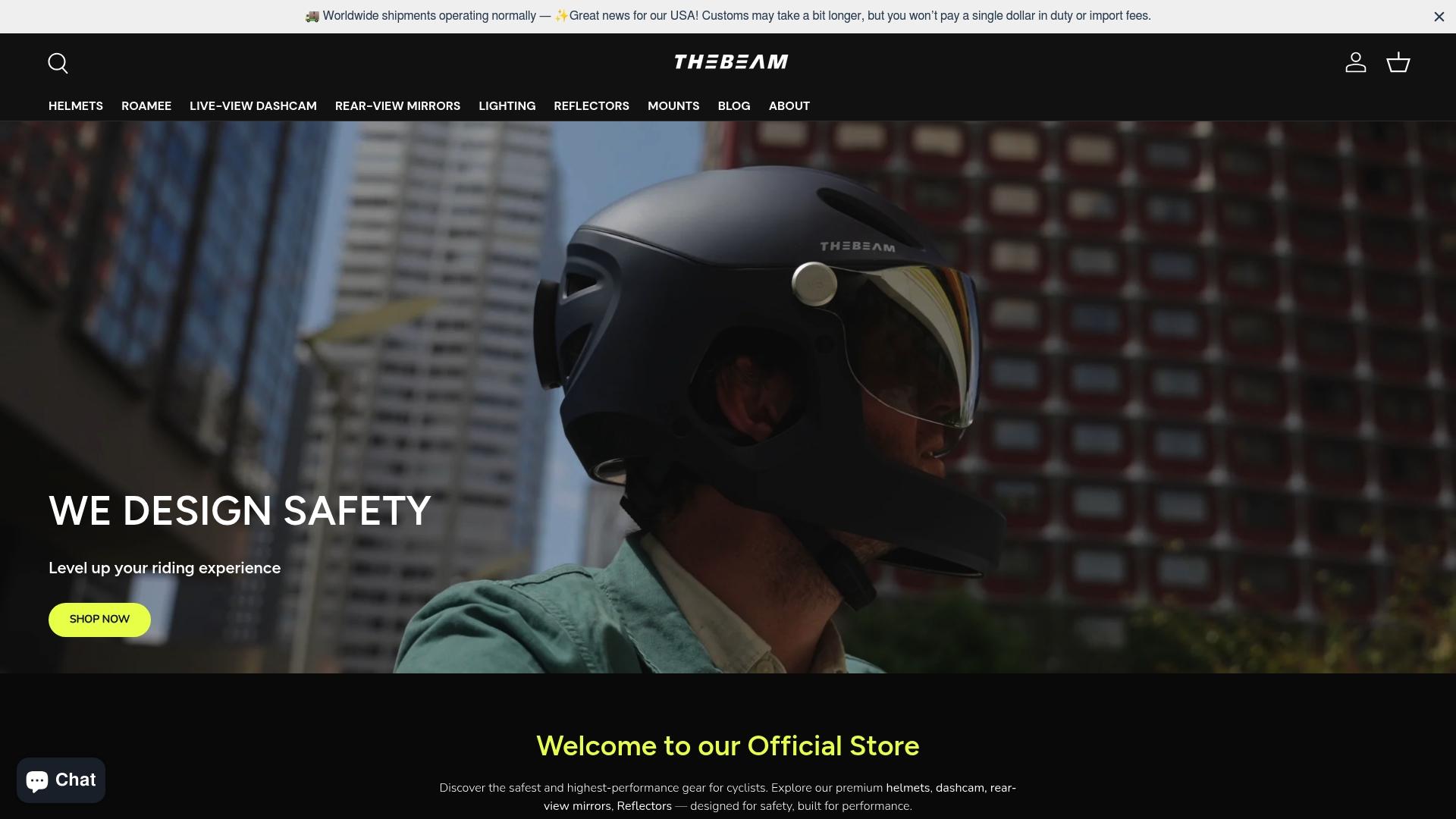
The VIRGO integral helmet with MIPS technology is Thebeamofficial’s flagship, combining rotational impact protection with an ergonomic fit built for city riding. Beyond helmets, Thebeamofficial offers safety accessories including high-visibility reflectors, rear-view mirrors, and connected visibility products that work together as a system. Browse the full helmet collection and find the protection level your commute actually demands.
Key Takeaways
Urban cycling tech in 2026 delivers the most safety value when you start with a MIPS helmet and build outward toward connected systems matched to your specific route.
| Point | Details |
|---|---|
| MIPS helmets come first | Rotational impact protection is the single highest-value safety upgrade for any urban cyclist. |
| V2X range reaches 300 meters | Canyon’s Roadlite:ON V2X communicates up to 300 meters ahead and 150 meters behind, alerting riders via handlebar vibration. |
| AI cameras record close passes | The Luna Oculus flags vehicles that approach closely, geotags incidents, and builds a personal danger map of your route. |
| Tier your gear by risk | Start with safety essentials, then add connected tech targeting the specific hazards on your commute. |
| Thebeamofficial for urban protection | The VIRGO helmet with MIPS and Thebeamofficial’s accessory range give commuters a complete, design-led safety system. |


