

Riding through crowded city streets in Germany or the United States means sharing space with impatient drivers, unpredictable traffic patterns, and tight cycling lanes. For urban cyclists focused on staying safe, a reliable bicycle rear-view mirror is much more than a simple accessory—it is a tool that boosts confidence and situational awareness. Modern rear-view mirrors offer enhanced visibility and reduced neck strain without sacrificing style or adding clutter, helping riders anticipate changes behind them and make smarter, safer decisions on every commute.
Table of Contents
- Bike Rear-View Mirrors Explained And Debunked
- Types Of Bike Rear-View Mirrors Compared
- Key Features For Urban Cycling Safety
- Legal Requirements In Germany And The U.S.
- Choosing, Mounting, And Common Mistakes
Key Takeaways
| Point | Details |
|---|---|
| Mirror Types Matter | Different mirror types, such as bar end, handlebar-mounted, and helmet-mounted, offer unique advantages for urban and recreational cycling. Choose based on your riding style and safety needs. |
| Safety Features are Crucial | Key features like adjustability, durability, and field of view enhance safety for urban cyclists, enabling better traffic awareness. |
| Legal Compliance Varies | Bicycle mirror regulations differ significantly between Germany and the U.S., with Germany having stricter national standards. Always check local laws before installation. |
| Proper Installation is Essential | Avoid common mistakes during mirror installation to ensure secure mounting and optimal visibility, improving your overall cycling safety. |
Bike rear-view mirrors explained and debunked
Safety on urban roads requires strategic visibility, and bicycle rear-view mirrors have emerged as critical tools for cyclists navigating complex traffic environments. Modern cycling mirrors represent an intelligent solution for riders seeking enhanced awareness without compromising road focus.
Bicycle rear-view mirrors come in several distinct configurations, each designed to address different rider preferences and cycling contexts:
- Bar end mirrors: Compact units that integrate directly into handlebar extremities
- Handlebar-mounted mirrors: Versatile options providing adjustable viewing angles
- Helmet-mounted mirrors: Lightweight alternatives offering direct line-of-sight tracking
Contrary to popular misconceptions, these mirrors are not cumbersome accessories but sophisticated safety technologies. They enable cyclists to monitor surrounding traffic dynamics without dangerous head turns, reducing potential collision risks in busy urban settings.
Understanding mirror selection requires evaluating key performance factors:
- Mounting compatibility with your specific bicycle type
- Mirror field of view and adjustability
- Weight and aerodynamic profile
- Durability under various riding conditions
Pro tip: Always test mirror positioning before long rides to ensure optimal visibility and minimal interference with your cycling technique.
Types of bike rear-view mirrors compared
Cyclists have multiple rear-view mirror options designed to enhance safety and visibility across different riding environments. Bike mirror configurations vary significantly, offering unique advantages for urban and recreational riders seeking strategic traffic monitoring.
The primary categories of bicycle rear-view mirrors include:
- Bar end mirrors: Compact design integrating directly into handlebar ends
- Handlebar-mounted mirrors: Positioned near grip areas for easy adjustment
- Helmet-mounted mirrors: Lightweight options tracking head movement
- Eyeglass-integrated mirrors: Discreet alternatives providing minimalist visibility
Each mirror type presents distinct performance characteristics that cyclists must carefully evaluate. Handlebar-mounted mirrors typically offer the most stable and straightforward viewing experience, providing clear lines of sight without requiring significant rider adaptation.
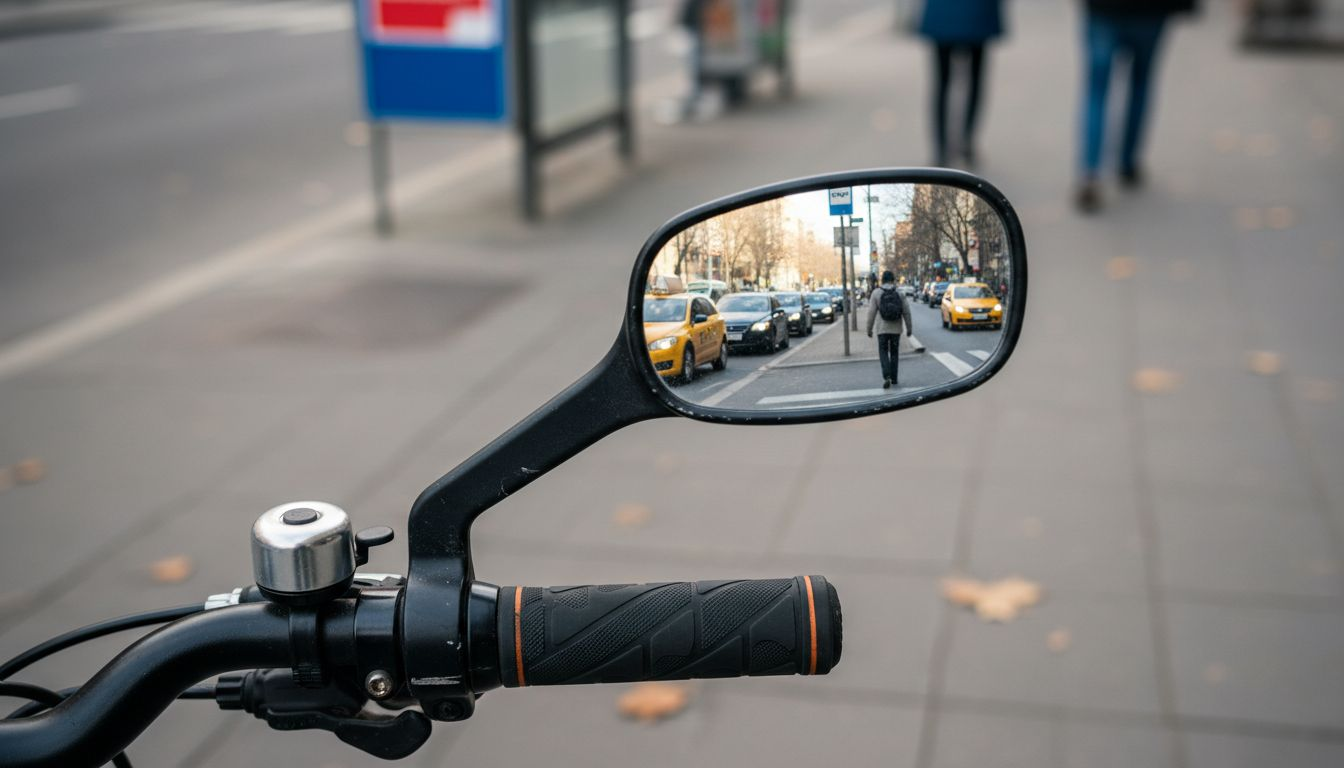
Here’s a comparison of the main bike rear-view mirror types and their ideal usage environments:
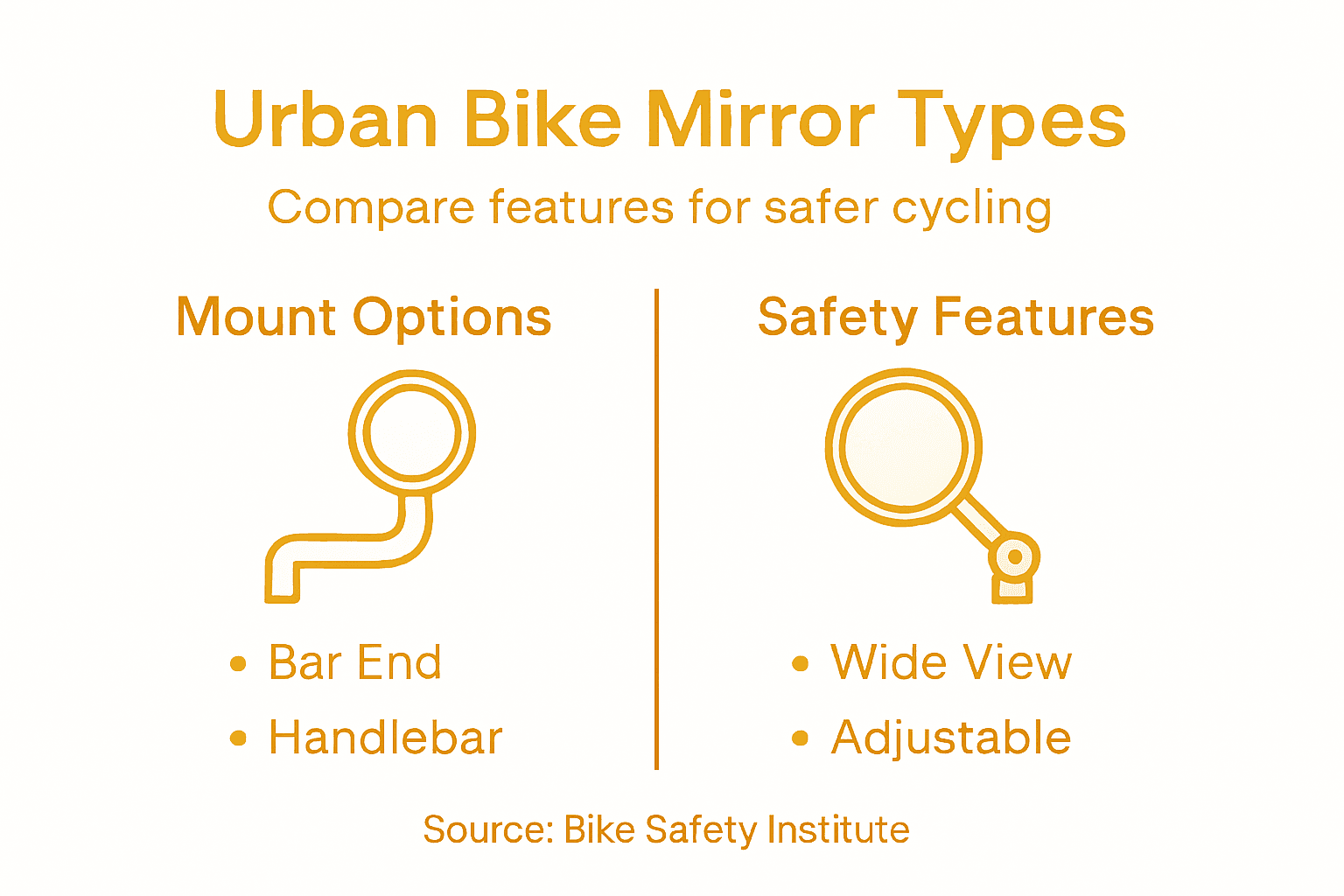
| Mirror Type | Urban Commuting Suitability | Recreational Riding Suitability | Key Strength |
|---|---|---|---|
| Bar end | Moderate | High | Aerodynamic design |
| Handlebar-mounted | High | Moderate | Stability and clarity |
| Helmet-mounted | High | Low | Tracks head movement |
| Eyeglass-integrated | Moderate | Moderate | Minimalist, discreet look |
Comparing mirror types requires understanding their specific strengths and limitations:
- Stability of mounting position
- Range of adjustability
- Weight and aerodynamic impact
- Compatibility with different bicycle configurations
- Ease of installation and maintenance
Selecting the right rear-view mirror depends more on individual riding style than universal recommendations.
Pro tip: Test multiple mirror configurations during short rides to determine which design best matches your personal comfort and safety requirements.
Key features for urban cycling safety
Urban cyclists face complex navigation challenges that demand sophisticated safety solutions. Rearview mirror features play a critical role in mitigating potential risks and enhancing rider awareness during city commutes.
Key safety considerations for urban cycling rear-view mirrors include:
- Adjustability: Enabling precise viewing angle optimization
- Durability: Withstanding harsh urban riding conditions
- Mounting compatibility: Flexible attachment options for different bicycle types
- Field of view: Comprehensive peripheral monitoring capabilities
- Lightweight design: Minimal impact on bicycle aerodynamics
The primary objective of these mirrors extends beyond simple traffic observation. They serve as crucial navigation tools that reduce neck strain, minimize blind spots, and provide cyclists with continuous environmental awareness.
Critical performance metrics for urban cycling mirrors involve:
- Vibration resistance during city street riding
- Quick-release adjustment mechanisms
- Impact-resistant construction
- Compatibility with various protective gear
- Weather-resistant materials
Urban cycling safety is not about absolute protection, but strategic awareness and proactive monitoring.
Pro tip: Invest in a mirror with multiple adjustment points to ensure optimal visibility across different riding postures and urban environments.
Legal requirements in Germany and the U.S.
Navigation of legal bicycle mirror regulations reveals significant variations between European and American jurisdictions. Mirror legal standards demonstrate complex requirements that cyclists must carefully understand to ensure compliance and safety.
Key legal considerations for bicycle mirrors in Germany include:
- Certification: Required compliance with ECE standards
- Mounting: Secure attachment preventing vibration
- Visibility: Clear rear traffic monitoring capabilities
- Construction: Impact-resistant materials
- Positioning: Specific angle and placement regulations
In the United States, mirror regulations demonstrate substantial state-by-state variability, creating a more complex legal landscape for cyclists. Each state maintains unique requirements regarding mirror specifications, positioning, and mandatory usage.
Critical legal distinctions between German and American bicycle mirror regulations:
This table summarizes important differences in legal mirror standards between Germany and the U.S.:
| Requirement Area | Germany (National) | United States (By State) |
|---|---|---|
| Certification | ECE standards mandatory | No national standard |
| Mounting | Secure, must not vibrate | Functional attachment only |
| Regulation Approach | Detailed technical specs | Functional outcome focused |
| Enforcement | Strict national oversight | Local authority, varies widely |
- Germany mandates stricter national certification standards
- U.S. regulations vary significantly by state
- German laws specify precise technical mirror requirements
- American regulations focus more on functional visibility
- Enforcement approaches differ between jurisdictions
Legal compliance is not just about following rules, but ensuring personal safety.
Pro tip: Always research local state regulations before purchasing or installing bicycle mirrors to ensure full legal compliance.
Choosing, mounting, and common mistakes
Selecting and installing a bicycle rear-view mirror demands precision and strategic understanding. Mounting bike mirrors requires careful attention to multiple technical and ergonomic factors that directly impact rider safety.
Key considerations when choosing a bicycle mirror include:
- Compatibility: Matching mirror design to bicycle handlebar specifications
- Material durability: Resistance to vibration and environmental conditions
- Weight: Minimizing additional bicycle load
- Adjustability: Range of viewing angle modifications
- Mounting mechanism: Secure and scratch-free attachment options
Successful mirror installation involves a systematic approach that prevents common pitfalls. Cyclists must carefully evaluate handlebar space, ensure proper clamp positioning, and maintain flexible adjustment capabilities without compromising structural integrity.
Common mounting mistakes to avoid:
- Overtightening mirror clamps
- Blocking brake or shift lever functionality
- Selecting incorrectly sized mirror attachments
- Failing to periodically re-adjust mirror position
- Ignoring potential handlebar surface damage
Precision in mirror selection and installation transforms safety from an option to a guarantee.
Pro tip: Test mirror stability by gently applying pressure after installation to ensure secure mounting without excessive movement.
Enhance Your Urban Cycling Safety with THE BEAM
Navigating busy streets demands more than just skill. The article highlights key challenges like selecting the right rear-view mirror that offers adjustability, durability, and optimal field of view to reduce blind spots and minimize collision risks. If you seek to elevate your urban safety with high-quality equipment designed to meet these crucial requirements, explore our REAR-VIEW MIRRORS – The Beam category. Our solutions integrate innovative designs that ensure stable mounting and clear visibility suited for city commutes.

Don’t compromise your safety or comfort during rides. Visit THE BEAM now to discover our full range of advanced safety accessories including rear-view mirrors and reflectors crafted for real-world usability. Equip yourself with gear proven to boost situational awareness and legal compliance across Europe and the United States. Start protecting your ride today and experience the difference that precision and innovation bring to urban cycling.
Frequently Asked Questions
What are the different types of bike rear-view mirrors?
Bicycle rear-view mirrors come in several types, including bar end mirrors, handlebar-mounted mirrors, helmet-mounted mirrors, and eyeglass-integrated mirrors. Each type offers unique advantages suited for different riding preferences and conditions.
How do bicycle rear-view mirrors improve safety for urban cyclists?
Bicycle rear-view mirrors enhance safety by allowing cyclists to monitor surrounding traffic without needing to turn their heads, reducing blind spots and the risk of collisions in busy urban environments.
What factors should I consider when choosing a bike rear-view mirror?
Key factors to consider include mounting compatibility with your bicycle, the field of view and adjustability of the mirror, its weight and aerodynamic profile, and durability for different riding conditions.
What are common mistakes to avoid when mounting a bike mirror?
Common mistakes include overtightening the mirror clamps, blocking brake or shift lever functionality, selecting incorrectly sized attachments, failing to periodically adjust the mirror position, and ignoring potential handlebar surface damage.


