

For a speed pedelec capable of 45 km/h, the helmet that belongs on your head is one certified to NTA 8776, the standard built specifically for this vehicle class. In some countries the law goes further and requires a motorcycle-rated helmet meeting ECE 22.05 or ECE 22.06 instead. Either way, an ordinary bicycle helmet rated only to EN 1078 will not cut it. THE BEAM’s VIRGO integral helmet is built to satisfy the relevant requirements for speed pedelec helmets.
TL;DR:
- Helmets certified to NTA 8776, ECE 22.05, or 22.06 are legally required for speed pedelecs capable of 45 km/h, as ordinary bicycle helmets do not meet safety standards.
- The impact and safety standards differ: NTA 8776 tests higher-energy crashes typical at 45 km/h, while ECE standards include motorcycle-grade protection features.
- Features like extended rear and temple coverage, rotational impact systems, and snug retention are critical for rider protection at higher speeds.
- Verifying helmet certification requires checking for specific labels, and the price premium reflects the added testing and integrated safety features.
- THE BEAM’s VIRGO helmet is designed specifically to meet these higher standards, with built-in impact protection, coverage, and accessories suitable for speed pedelec riders.
Table of Contents
- What is a speed pedelec, and why does it change the helmet rules?
- NTA 8776, EN 1078, or ECE: which standard actually applies?
- What helmet features actually matter at 45 km/h?
- How do you verify certification and budget for a compliant helmet?
- What THE BEAM’s approach to speed-pedelec helmet design gets right
- Why the VIRGO fits the speed pedelec checklist, and how to order one
- Sources
What is a speed pedelec, and why does it change the helmet rules?
A speed pedelec is an electrically assisted bicycle that keeps pedal assistance running at higher speeds than a standard e-bike, which typically assists up to 25 km/h. That extra assistance window is the whole reason the helmet conversation changes. Once a bike can sustain speeds close to urban moped traffic, regulators in many EU countries stop treating it like a bicycle and start treating it like a light moped.
That reclassification carries real consequences:
- Registration, insurance, and a specific license category may apply, depending on the country.
- Helmet requirements shift from “recommended” to legally mandated in most jurisdictions.
- Road position rules can change: some speed pedelecs are barred from bike paths and pushed into vehicle lanes.
- The certification standard expected of the helmet itself moves up a tier, away from EN 1078 and toward NTA 8776 or a motorcycle standard.
Vehicle categories at the EU level are defined in EU regulatory texts covering two- and three-wheel vehicles, and France’s own classification sits in Legifrance’s vehicle code. Because enforcement details vary by country, check your own jurisdiction’s road authority before assuming EU-wide rules apply the same way everywhere.
NTA 8776, EN 1078, or ECE: which standard actually applies?
Three certification systems compete for space on a speed pedelec rider’s head, and they were not designed to do the same job. NTA 8776 is the standard developed specifically for speed pedelec helmets, and it demands higher-energy impact testing than a regular bicycle helmet because it assumes crash speeds closer to 45 km/h rather than the 20 km/h impacts EN 1078 is built around.
EN 1078, the familiar bicycle helmet standard, tests for lower-speed falls typical of everyday cycling. Wearing an EN 1078 helmet on a speed pedelec is a common mistake, and riders frequently misidentify their speed pedelec as a normal e-bike, which leaves them both underprotected and potentially noncompliant with local law.
Where NTA 8776 stops short: some jurisdictions require a motorcycle-rated helmet instead. Certain countries treat speed pedelecs as mopeds under law and mandate ECE 22.05 or the newer ECE 22.06 motorcycle standard rather than accepting NTA 8776 at all. ECE testing pushes further into full-face impact protection, chin bar strength, and visor security, categories NTA 8776 addresses less rigorously.
What each standard actually checks:
- EN 1078: low-speed impact absorption, basic retention, minimal coverage. Adequate for a standard commuter bike, not a speed pedelec.
- NTA 8776: higher-energy impact testing, extended rear and temple coverage, stronger retention systems built for higher-speed falls.
- ECE 22.05 / 22.06: full motorcycle-grade testing including chin bar integrity and visor performance, required outright in some moped-classified jurisdictions.
Certification markings usually appear stitched inside the helmet or printed on the box. If you cannot find one, request documentation directly from the seller before buying. Our own comparison of NTA 8776 versus EN 1078 walks through the label differences in more detail if you want to go deeper.
What helmet features actually matter at 45 km/h?
Speed changes everything about how a helmet needs to behave in a crash. At double the speed of casual cycling, impact energy does not just double, it compounds, which is why a handful of features stop being optional the moment you’re riding a speed pedelec.
- Extended rear and temple coverage. A fall at 45 km/h is far more likely to involve a rotational slide or a rearward impact than a slow-speed tip-over, so the shell needs to protect more of the skull than a standard road helmet does.
- MIPS or an equivalent rotational-impact system. Most serious brain injuries come from angled impacts that cause the brain to twist inside the skull, not straight-on hits. Standards differ in what they actually test, and rotational mitigation is one of the biggest gaps between EN 1078 and higher-speed designs, so prioritize it over almost anything else on the spec sheet.
- A visor that protects without choking airflow. Eye protection matters more at speed, since debris and wind hit harder, but a poorly designed visor traps heat and cuts ventilation. Look for one that lifts or detaches easily.
- Integrated lighting or reflective panels. Speed pedelecs share more road space with vehicle traffic, so rear visibility carries more weight than it does on a bike path.
- A retention system that stays snug under vibration. At sustained higher speeds, straps that loosen gradually become a real problem; look for a dial-adjust fit system rather than simple foam padding.
Pro Tip: Do the shake test before you buy: with the strap fastened, shake your head side to side and front to back. If the helmet shifts more than a few millimeters, size down or adjust the retention dial before you ever get on the bike.
Ventilation versus insulation is a genuine trade-off worth thinking through seasonally. A helmet built for winter commuting with denser padding will run hot in summer traffic, and our breakdown of helmet ventilation and comfort covers how to balance both without sacrificing protection.
How do you verify certification and budget for a compliant helmet?
Checking a helmet’s certification takes two minutes and saves you from a fine or, worse, a helmet that fails when it matters. Look for the NTA 8776 label stitched inside the shell or printed on the retail packaging, and cross-check it against the product page description before you buy. If a listing doesn’t mention a standard at all, treat that as a red flag and ask the seller directly.
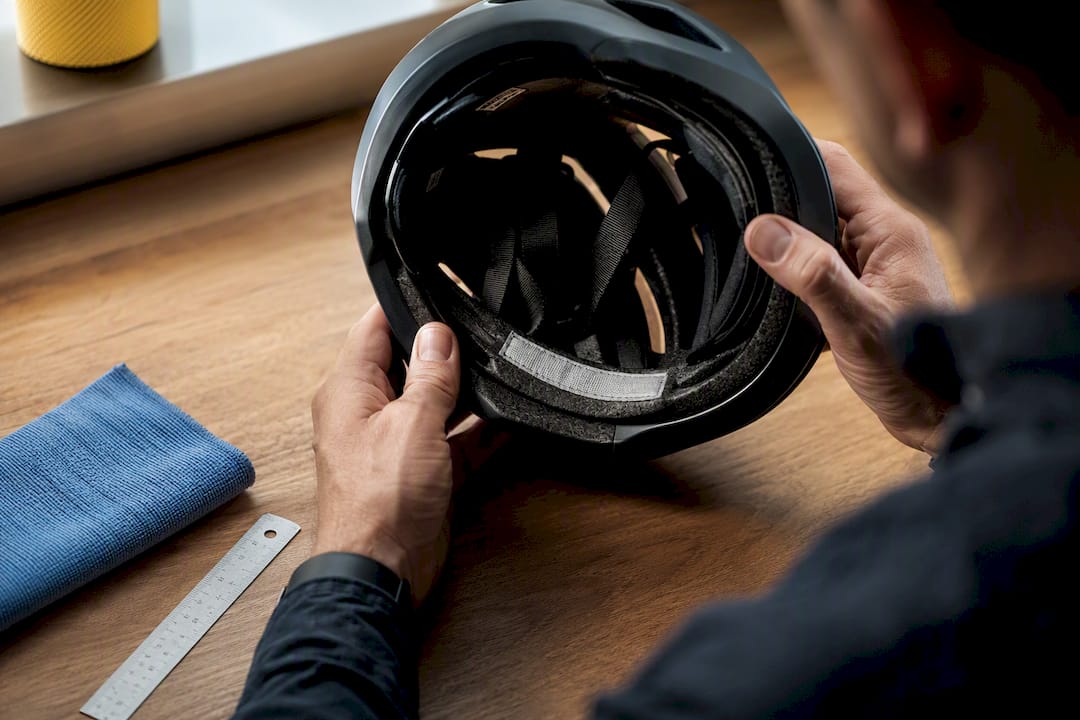
Because vehicle classification determines which standard you legally need, it’s worth confirming your speed pedelec’s registered category through your national vehicle authority. In France, that means checking Service-public’s guidance on vehicle categories or confirming registration status through the ANTS immatriculation portal.
On price: certified speed-pedelec helmets typically cost more than standard bicycle helmets, and that premium tracks directly to the extra testing and integrated features like MIPS, built-in visors, and reinforced shells. Expect the gap to widen further for full-face designs.
A few maintenance basics extend that investment:
- Replace any helmet after a hard impact, even without visible cracking. The foam liner compresses permanently and won’t protect you the same way twice.
- Most manufacturers recommend replacement every three to five years regardless of impact history, since UV exposure and sweat degrade the foam over time.
- Wipe the visor with a microfiber cloth and mild soap, never abrasive cleaners that can scratch the coating.
- Check strap stitching and buckle tension every few months if you ride daily.
What THE BEAM’s approach to speed-pedelec helmet design gets right
The standards discussion above isn’t academic for us. THE BEAM designs cycling safety equipment specifically for riders who move faster than a typical commuter, and speed pedelec riders sit at the center of that priority list. Every design decision on our VIRGO integral helmet traces back to the same gaps this guide walks through: rotational impact protection, coverage that matches real-world crash data, and retention systems that hold up under sustained speed rather than casual weekend riding.
That focus shows up in how we approach MIPS integration and full-shell protection rather than treating it as a marketing add-on. If a feature doesn’t earn its place in a genuine higher-speed impact scenario, it doesn’t make it onto the helmet.
— Sophie
Why the VIRGO fits the speed pedelec checklist, and how to order one
Everything this guide flags as necessary, extended rear coverage, MIPS rotational protection, a secure retention dial, and visor compatibility, is built into THE BEAM’s VIRGO integral helmet rather than bolted on as an afterthought. Where a lot of e-bike helmets treat higher-speed protection as an upsell, VIRGO starts from that baseline.
VIRGO pairs with THE BEAM’s broader accessory lineup, including rear lights and mirror attachments built for speed pedelec riders who need better rear visibility in mixed traffic. Browse the helmet add-ons collection if you’re outfitting a new setup from scratch, or check the full product range to compare VIRGO against other configurations. Orders ship with standard return windows, so if the fit isn’t right once it arrives, you’re not stuck with it.
If you’re riding 45 km/h on a regular basis, don’t wait for a close call to upgrade. Head to the product collection and check VIRGO’s sizing chart against your own measurements before you check out.
Sources
- Best e-bike helmets 2026 | Cyclingnews
- EUR-Lex — regulatory content
- Legifrance — legal code reference
- Service-public — road rules and vehicle categories


