

For daily commuters who need early warning about traffic, a rear radar is the more useful tool. For riders who want legal proof after an incident, a dashcam is the essential piece of gear. Most serious road riders, especially those logging miles on busy routes, end up wanting both: radar to see trouble coming, camera to prove what happened when it does.
TL;DR:
- Bicycle radars provide early warnings of approaching vehicles from behind within a range of about 120 to 160 meters, suitable for urban commuting.
- Dashcams continuously record footage that becomes valuable evidence after incidents, with some units also deterring dangerous driver behavior through visibility.
- Combined radar and camera units offer convenience but suffer from higher power consumption and cost, making them less ideal for extended rides.
- Battery life for devices with both radar detection and continuous recording typically ranges from 4 to 6 hours, requiring power banks for longer trips.
- For riders prioritizing proof over warnings, a Live-View dashcam is the most effective, especially when mounted properly and used with compatible storage and power solutions.
Table of Contents
- Dashcam Vélo vs Radar: What Each Device Actually Does
- Radar vs Dashcam: Weighing the Pros and Cons
- How Do You Choose Between Radar and a Dashcam?
- Getting the Most Out of Your Setup on the Road
- What Field Testing Tells You About Camera-Based Safety Gear
- Is a Bike Dashcam Legal, and Will Police Accept the Footage?
- Final Verdict: Which Should You Buy First?
- Why Real-World Testing Beats Spec Sheets
- Ready to Add Documented Evidence to Your Rides?
- Sources
- FAQ
Dashcam Vélo vs Radar: What Each Device Actually Does
The two tools solve different problems, and confusing them is the most common mistake new buyers make. A radar is a warning system. A dashcam is a record-keeping system. Neither replaces the other, and understanding the mechanics of each makes the “dashcam vs radar vélo” decision much easier.
A bike radar, like Garmin’s Varia line, uses Doppler radar to detect approaching vehicles from behind. Most units give a useful detection range of about 120 to 160 meters on open roads, which is enough time to register a car before you hear it. The radar sends an alert to a paired bike computer or phone, usually as a visual icon that shows how close the vehicle is and sometimes its closing speed. That’s the entire job: spot the car, tell you it’s coming, let you react.
A dashcam does something completely different. It records continuously in a loop, overwriting old footage as it goes, until you trigger an “event save” that locks a clip in place, usually by pressing a button or through an automatic impact sensor. Some units record front-facing, some rear-facing, and a growing number offer both angles at once. That footage becomes your evidence if a car cuts you off, clips your handlebars, or causes a crash and drives away.
There’s a side benefit to the camera that has nothing to do with recording: visible cameras change driver behavior. Drivers who spot a camera mounted on a bike tend to give more lateral clearance when passing, producing a modest but real preventative effect. The camera doesn’t just document a close call after the fact. It can help prevent one.
The everyday trade-offs matter just as much as the core function:
- Radar units are light, often under 75 grams, and sip battery because they’re not processing video.
- Dashcams draw far more power continuously and require you to manage storage, either by swapping memory cards or offloading footage regularly.
- Combined radar+camera units solve the “one device” convenience problem but inherit the battery drain of a camera, and cost more upfront.
- Dual-channel systems covering both front and rear give the most complete picture, but that’s more weight and more to charge before every ride, as most buyer guides for bike cameras point out.
Radar vs Dashcam: Weighing the Pros and Cons
Here’s how the three main options stack up when you’re deciding what to actually buy.
- Radar-only. You get early warning on every ride, lightweight hardware, and battery life that easily covers multi-hour rides since there’s no video to process. The downside: no footage if something goes wrong, and detection is limited to what’s behind you. A close pass from a car turning right at an intersection won’t register.
- Dashcam-only. You get recorded proof for police reports or insurance claims, a deterrent effect on driver behavior, and the option to choose front, rear, or both. The downside: constant battery drain, the need to actively manage storage, and zero advance warning that a car is approaching.
- Combined radar+camera units. You get the convenience of one mount and one device doing both jobs, which appeals to commuters who don’t want to install two separate gadgets. The downside is a steeper price tag and a battery budget that has to cover radar detection and continuous recording at the same time, which is the single biggest complaint riders have about dual-purpose units like the Varia RCT715.
How Do You Choose Between Radar and a Dashcam?
Start with your riding profile, not the spec sheet. A daily commuter riding predictable streets at moderate speed benefits most from radar alone, or a combined unit if budget allows, because most urban risk comes from vehicles approaching from behind at intersections and driveways. A frequent solo road rider on faster, open roads should lean toward radar paired with a front-facing camera, since higher speeds mean less reaction time and higher stakes if a passing car misjudges distance. Long-distance and ultracycling riders should prioritize battery life above every other spec, because a dead device forty miles from home protects no one.
Before you buy anything, run through this checklist:
- Does the mount fit your handlebar or seatpost without blocking your existing lights or computer?
- Is the radar compatible with your bike computer over ANT+ or Bluetooth, or does it require a specific app?
- What’s the realistic battery life in the mode you’ll actually use, camera-on versus radar-only?
- Do you need front coverage, or is rear detection and rear recording enough for your routes?
Watch for two red flags: vague battery specs that only list “camera off” runtime, and unclear integration language that doesn’t confirm your specific bike computer model is supported.
Pro Tip: Test the alert display on your own bike computer before a long ride. Compteurs vary widely in how they show radar warnings, and some riders don’t realize their alerts are too subtle to notice until a car has already passed.
Getting the Most Out of Your Setup on the Road
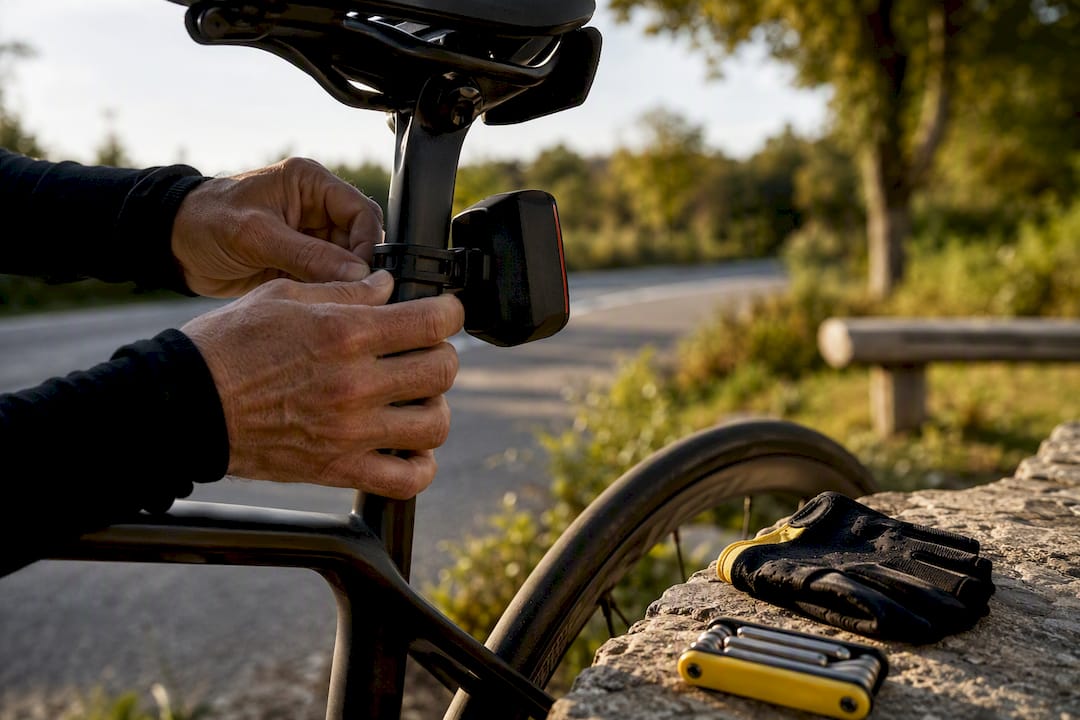
Where you mount a device changes what it actually captures. A seatpost mount gives a stable rear view ideal for both radar detection and rear-facing camera footage, since it sits low and steady with minimal handlebar vibration. A helmet or handlebar mount captures the front point of view, which matters if you need to document a car cutting across your path rather than approaching from behind. If you can only afford one angle, match it to where your actual risk comes from, whether that’s the front or rear camera position for your typical routes.
Battery reality check: manuals for combined radar+camera devices consistently show that continuous recording plus active radar detection cuts practical runtime well below the advertised radar-only figure. For rides longer than a few hours, plan on a power bank or, on an e-bike, tapping the main battery.
A few habits make a real difference on every ride:
- Keep loop recording running by default; only trigger an event save when something actually happens, so you’re not hunting through hours of footage later.
- Make sure your camera timestamps and GPS-tags footage automatically. A clip with no timestamp is far weaker evidence.
- Route radar alerts through your bike computer rather than a phone app when possible. Phone notifications get buried under lock screens and background restrictions.
- Check that your rear light and radar aren’t competing for the same mount space if you’re already running a rear radar setup.
What Field Testing Tells You About Camera-Based Safety Gear
Thebeamofficial builds cycling safety equipment around a simple premise: gear only works if riders actually use it, which means battery life and mounting comfort matter as much as detection range. Real-world tests on comparable combined units show roughly 4 to 6 hours of autonomy with radar and continuous recording running together, a number that should shape how you plan longer rides.
Plate legibility on any dashcam footage drops noticeably after dark, so riders relying on documentation for evidence should expect stronger daytime clips and treat night footage as a supplement, not a guarantee.
The riders who get the most value from a camera aren’t the ones with the highest resolution. They’re the ones who can actually find and save the ten seconds that matter, and who know their footage is timestamped and legible before they ever need it.
A Live-View dashcam is built for the documentation-focused rider profile described throughout this comparison, designed to reliably capture necessary evidence. It’s one tool matched to one job: proof.
Is a Bike Dashcam Legal, and Will Police Accept the Footage?
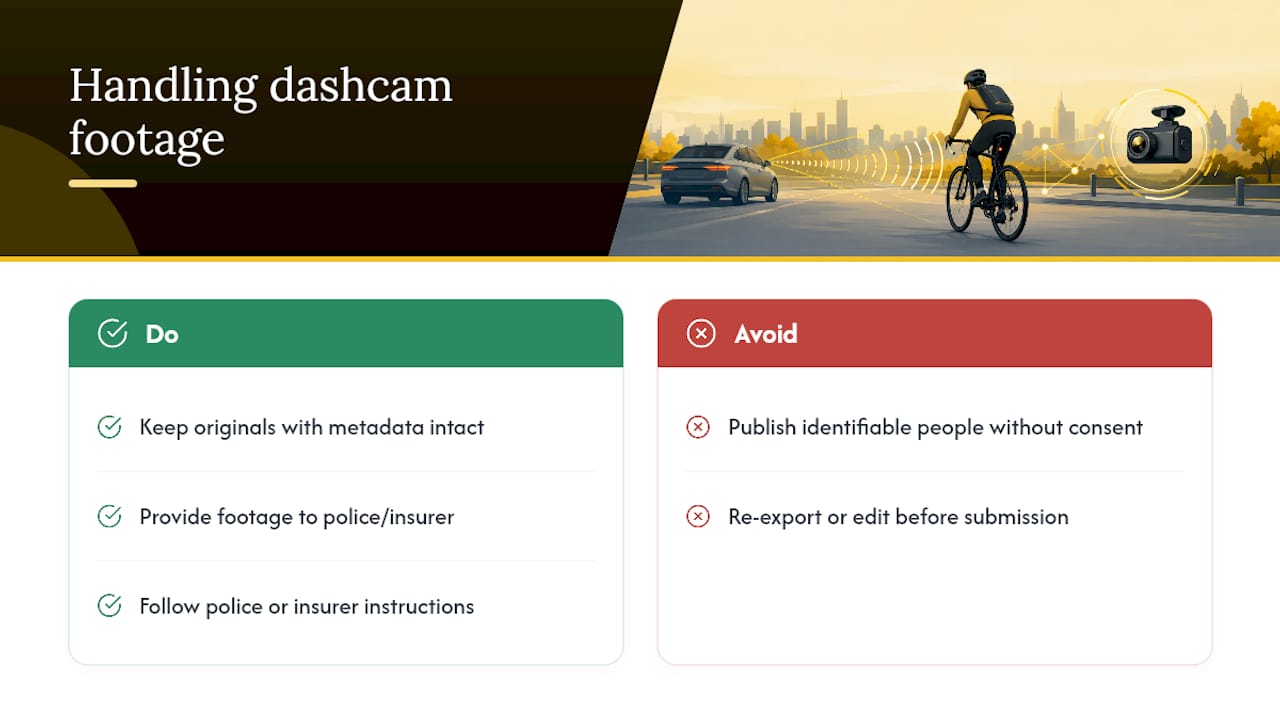
Footage from a public road is generally accepted as evidence when police or an insurer request it after an incident. What’s restricted is publishing identifiable images of other people without their consent, which matters if you plan to share a clip online rather than hand it to authorities.
Keep original files with their metadata intact rather than re-exporting or editing them, and follow whatever instructions police or your insurer give for submitting footage. Footage handling and privacy limits are worth understanding before you’re in a situation where you need to use a clip.
Final Verdict: Which Should You Buy First?
Commuters riding predictable city routes should start with radar. Road riders on faster or unfamiliar roads should add a front camera. Anyone who has already had a close call, or who rides where hit-and-run risk is real, should prioritize a dashcam first and treat radar as the upgrade. If documentation is your priority, the next step is simple: check compatibility, then move to the Live-View dashcam in the section below.
Why Real-World Testing Beats Spec Sheets
Sophie: Spec sheets promise battery life that field conditions rarely match. Before you commit to any setup, test alerts and recording in low-stakes rides first, not during your commute’s worst intersection.
— Sophie
Ready to Add Documented Evidence to Your Rides?
If you’ve read this far and landed on “I need proof, not just a warning,” a Live-View dashcam is built for exactly that job. It’s the option for commuters navigating unpredictable traffic and road riders who want a clear, timestamped record without adding a second gadget to manage.
Solo riders on fast routes and anyone who’s had a close pass benefit most, since front-facing footage captures the moments radar alone can’t explain later. Check mount compatibility with your handlebar setup, confirm your storage and battery needs match your typical ride length, then head to the Live-View Dashcam page to see current pricing and specs. Pair it with a rear-visibility accessory if you’re building a full setup, or browse CORKY and other safety accessories to round things out.
Sources
- Test du Garmin Varia RCT715 : L’ange gardien qui filme enfin vos arrières
- Choisir le radar vélo idéal : guide pratique et astuces
- Meilleures caméras de vélo pour cyclistes | Guide Pro 2026
- Des yeux derrière la tête : radar ou caméra pour éviter les collisions vélo-voiture ?
FAQ
Can You File a Police Report in France Using Dashcam Footage?
Yes. Footage from a public road is generally usable as evidence when requested by police or an insurer after an incident. Keep the original file and its metadata intact, and avoid posting footage publicly if it identifies other people without their consent.
What’s the Best Detector for Spotting Cars Behind Your Bike?
Rear radar units remain the most reliable early-warning tool, with effective units offering a detection range around 120 to 160 meters on typical roads. For riders who also want proof of close passes, a combined radar and camera unit adds documentation to that warning.
Is It Legal to Ride With a Dashcam?
Riding with a dashcam recording public roads is legal; the restriction applies to sharing footage that identifies bystanders without their consent. Keeping footage for personal records or providing it to police or insurers when asked falls within normal, accepted use.
Which Bike Radar Should You Actually Buy?
The right radar depends on your riding profile more than any single spec. Commuters on predictable routes do fine with radar-only, while road riders on faster routes benefit from pairing radar with a front camera, and Thebeamofficial’s Live-View dashcam suits riders who prioritize recorded evidence over standalone alerts.


