

Air-filled helmets can reduce linear brain injury risk by 44% compared to the best EPS foam designs. That single number should make every e-bike rider stop and think. Not all helmets are built the same, and at the speeds e-bikes reach, the difference between a standard foam helmet and one built with modern impact technology could be the difference between a minor incident and a serious injury. This guide breaks down the key technologies shaping e-bike helmet safety in 2026, explains what the smart features actually do, and gives you a clear framework for choosing the right helmet for your rides.
Table of Contents
- Why e-bike helmet technology matters
- The core technologies: MIPS, WaveCel, SPIN, Koroyd, and air-filled
- Smart helmet features: beyond protection
- What to look for in an e-bike helmet
- Top-rated e-bike helmets: 2026 update
- Enhance your ride with the latest in helmet tech
- Frequently asked questions
Key Takeaways
| Point | Details |
|---|---|
| E-bike speeds need advanced tech | Higher speeds mean standard helmets may not offer enough rotational or linear protection for e-bike riders. |
| MIPS and WaveCel top safety ratings | Both technologies are independently tested and shown to reduce injury risk in real-world crashes. |
| Smart features add convenience | Bluetooth, visibility lights, and sensors improve the ride but cannot replace core helmet safety design. |
| Fit and certification are essential | A helmet is only as safe as its fit and compliance with recognized safety standards like NTA 8776. |
Why e-bike helmet technology matters
E-bikes change the physics of cycling. A typical pedal-assist e-bike can reach 20 to 28 mph without much effort, and that extra speed dramatically increases the force of any crash. At those speeds, the type of impact shifts too. You’re more likely to experience rotational forces, where your head twists on impact, rather than a simple straight-line hit. Standard bike helmets were largely designed around linear impacts and older testing standards that don’t reflect these real-world crash dynamics.
E-bike helmet tech now includes advanced systems like MIPS, WaveCel, SPIN, and Koroyd, all designed to address both linear and rotational forces. These aren’t marketing buzzwords. They represent genuine engineering advances that reduce the energy transferred to your brain during a crash. Understanding them helps you make a smarter purchase.
Here’s what to keep in mind before you even look at a specific model:
- Speed matters: E-bikes above 20 mph require helmets rated for higher-impact scenarios.
- Rotational injury is real: Concussions and diffuse axonal injuries often result from rotational forces, not just direct hits.
- Certifications count: Look for NTA 8776 certification if you ride above 20 mph.
- Replace after any crash: Even if a helmet looks fine, internal foam can be compromised.
- Fit is non-negotiable: A loose helmet, no matter how advanced, won’t protect you properly.
“The helmet that saves your life isn’t the most expensive one. It’s the one that fits correctly and meets the right standard for your riding speed.”
Pro Tip: If you’re curious about how connected helmet technology is evolving alongside impact protection, it’s worth exploring both together when shopping.
Now that you know why there’s a real difference, let’s explore how e-bike helmet technologies actually work.
The core technologies: MIPS, WaveCel, SPIN, Koroyd, and air-filled
Each of these systems tackles the same core problem from a different angle. Here’s how they work.
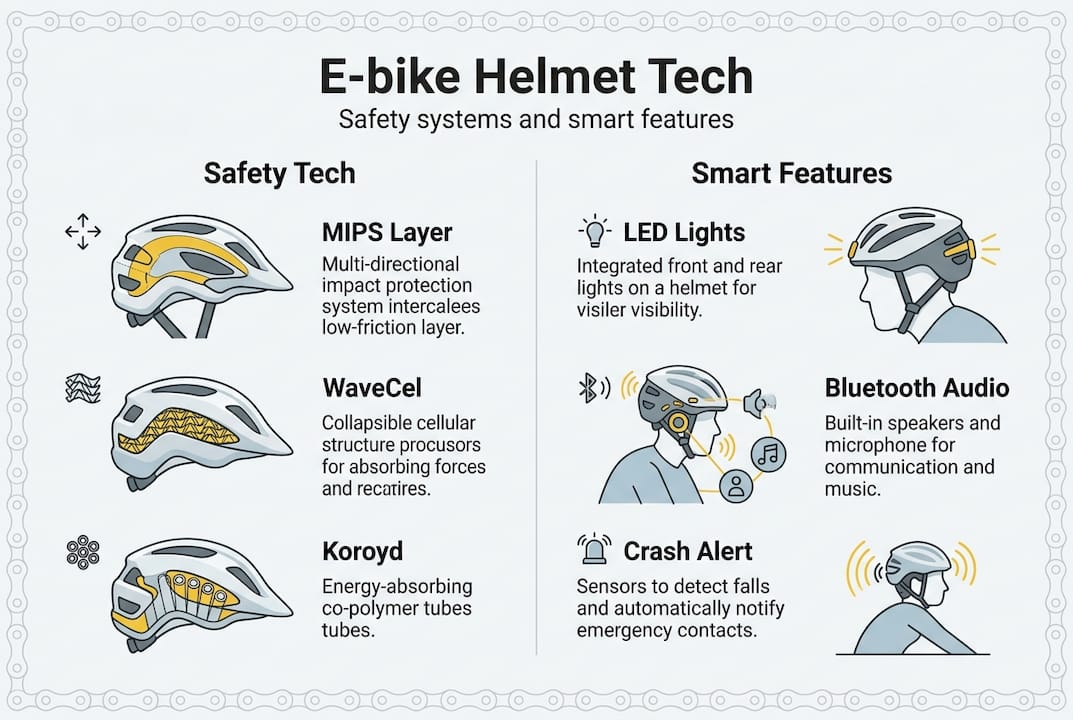
MIPS (Multi-directional Impact Protection System) uses a thin, low-friction slip-plane layer inside the helmet. When your head hits a surface at an angle, the liner rotates slightly, absorbing rotational energy before it reaches your brain. MIPS reduces rotational acceleration by up to 40%, and Virginia Tech testing consistently ranks MIPS helmets above non-MIPS models for concussion risk reduction. Learn more about MIPS for helmet safety and how it applies to real-world cycling.
WaveCel is a collapsible cellular structure bonded to the inside of the helmet shell. It flexes, crumples, and glides to absorb both linear and rotational energy. Independent studies show WaveCel is up to 5x more effective in reducing rotational acceleration compared to standard EPS foam.
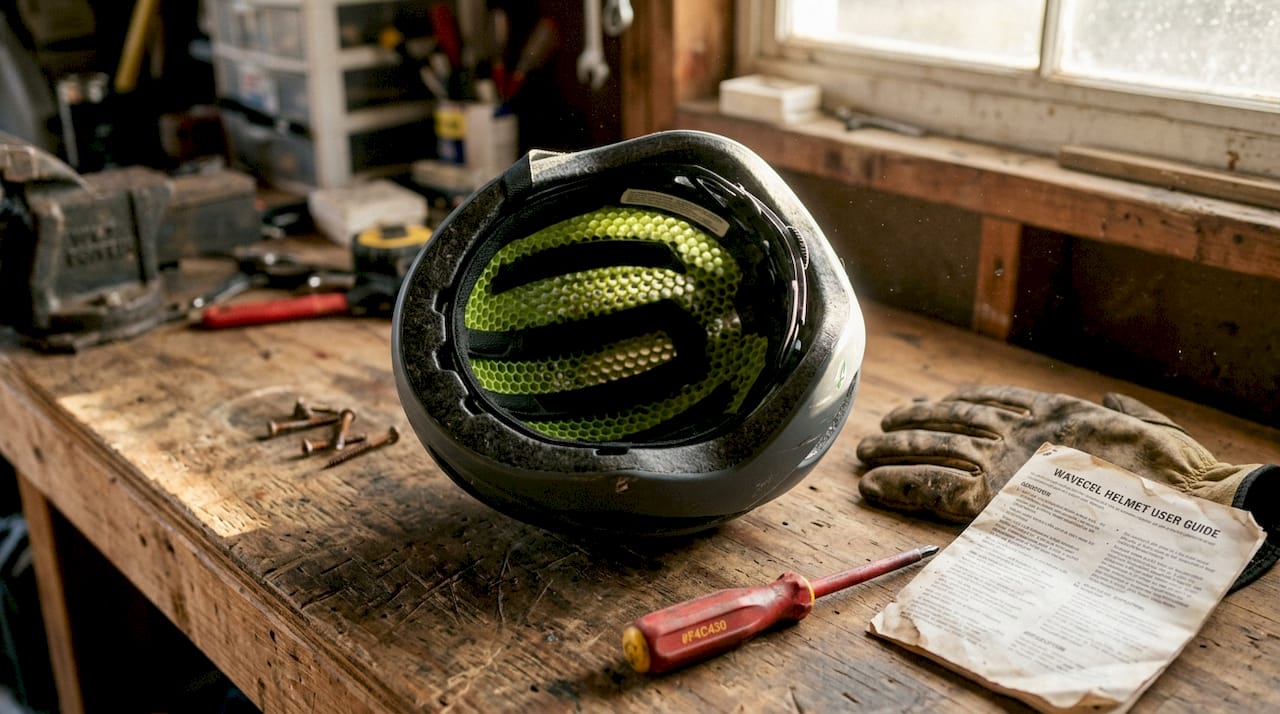
SPIN (Shearing Pads INside) uses silicone pads that shear under angled impact, similar in concept to MIPS but integrated differently into the padding system.
Koroyd is a welded co-polymer tube structure that crumples on impact, absorbing energy more efficiently than traditional foam while also improving ventilation.
Air-filled helmets use pressurized air chambers instead of foam. They extend the duration of impact, which reduces peak force. As noted, air-filled designs show 44% lower linear brain injury risk compared to the best EPS foam helmets.
| Technology | Primary protection | Rotational coverage | Linear coverage | Best for |
|---|---|---|---|---|
| MIPS | Rotational | Excellent | Moderate | Angled crashes |
| WaveCel | Both | Excellent | Excellent | Urban/e-bike |
| SPIN | Rotational | Good | Moderate | Road/commute |
| Koroyd | Linear + ventilation | Moderate | Good | Ventilated rides |
| Air-filled | Linear | Variable | Excellent | High-speed linear |
When choosing between them:
- Choose MIPS if you want proven, widely available rotational protection at a range of price points. Explore the MIPS definition and safety breakdown for more detail.
- Choose WaveCel if you want a single system addressing both impact types with strong independent test results.
- Choose air-filled if linear impact protection is your top priority, such as for high-speed e-bike commuting.
- Choose Koroyd if ventilation is a major factor alongside protection.
Both MIPS and WaveCel consistently earn five-star ratings in independent Virginia Tech testing, making either a strong choice for e-bike riders.
Smart helmet features: beyond protection
Once you’ve confirmed a helmet’s core safety credentials, smart features become genuinely useful additions. Modern e-bike helmets increasingly integrate technology that improves your visibility, awareness, and communication on the road.
Common smart features include:
- Integrated LED lighting: Front and rear lights built into the helmet improve your visibility to drivers, especially at dawn, dusk, or night.
- Crash detection sensors: These alert emergency contacts automatically if a significant impact is detected.
- Hands-free calling and audio: Bluetooth connectivity lets you take calls or listen to navigation without removing your hands from the bars.
- Ride data integration: Some helmets sync with cycling apps to log speed, route, and safety events.
| Smart feature | Best use case | Safety value | Convenience value |
|---|---|---|---|
| Integrated LED lights | Night/commute riding | High | High |
| Crash detection | Solo rides, remote routes | Very high | Moderate |
| Bluetooth audio | Urban commuting | Low | High |
| Ride data sync | Training, tracking | Low | High |
It’s important to be clear about one thing. Smart tech enhances usability through visibility and alerts, but your core protection still comes from the helmet’s materials, structure, and fit. Electronics don’t absorb impact energy. A helmet with five smart features and poor foam is still a poor helmet.
Pro Tip: Before buying a helmet with Bluetooth audio, check whether the system is removable or upgradeable. A dedicated Bluetooth helmet kit can often be added to a helmet you already trust, giving you flexibility without compromising on protection. You can also explore what smart cycling helmets currently offer across the market.
What to look for in an e-bike helmet
Choosing the right helmet doesn’t have to be complicated. Follow these steps and you’ll avoid the most common mistakes.
- Check the certification. There is no mandatory global e-bike helmet standard, but NTA 8776 is the recommended certification for speeds above 20 mph. CPSC covers standard cycling use in the U.S.
- Verify the impact technology. Look for MIPS, WaveCel, SPIN, or Koroyd. Understand why MIPS matters for rotational protection specifically.
- Try it on properly. The helmet should sit level, two finger-widths above your eyebrows, with the chin strap snug but not tight.
- Assess smart features as extras. Lights and crash detection are valuable additions, not replacements for structural safety.
- Plan for replacement. Mark the purchase date inside the helmet. Replace it after any crash, or every 3 to 5 years regardless.
Red flags to avoid:
- No recognized certification on the label
- Foam that feels soft or crumbly when you press it
- Excessive movement when you shake your head with the strap fastened
- No mention of rotational protection technology for e-bike use
Must-have features: NTA 8776 or CPSC certification, MIPS or WaveCel, secure retention system, and proper fit.
Nice-to-have features: integrated lighting, crash detection, Bluetooth audio, and ventilation systems like Koroyd.
Top-rated e-bike helmets: 2026 update
Independent testing continues to be the most reliable guide when comparing helmets. Virginia Tech’s 2026 ratings highlight several standout models for e-bike and urban riders.
Virginia Tech’s top-rated models include the Bern Hudson, which scored 76 out of 100 on the Consumer Reports scale and carries NTA certification, making it one of the strongest options for higher-speed e-bike commuting. Trek’s WaveCel lineup continues to lead for urban and e-bike use, with consistent five-star ratings for rotational protection.
Key features of leading 2026 models:
- Bern Hudson: NTA 8776 certified, strong linear and rotational scores, urban-focused design
- Trek WaveCel models: Five-star Virginia Tech rating, dual linear and rotational protection, good ventilation
- MIPS-equipped options: Broad range of price points, consistently outperform non-MIPS helmets in concussion risk reduction
Both MIPS and WaveCel earn five-star ratings in independent testing, confirming that either technology is a sound choice. Explore top-rated MIPS helmets to see how they compare across categories.
One important note: helmet technology evolves quickly. A model that topped the charts two years ago may have been surpassed. Make it a habit to check updated Virginia Tech ratings before any new purchase.
Enhance your ride with the latest in helmet tech
You now have a solid understanding of what separates a genuinely protective e-bike helmet from one that just looks the part. The next step is putting that knowledge into action.
At The Beam, we design safety equipment specifically for riders who take protection seriously. Our VIRGO integral helmet features MIPS technology and is built for the demands of e-bike and high-speed cycling. If you want to add smart connectivity to your current setup, the Roamee Bluetooth helmet kit integrates hands-free calling and audio without compromising your helmet’s structural integrity. And if you want to experience top-tier cycling safety gear in a real-world setting, check out our Ultracycling event where riders test the latest innovations on the road.
Frequently asked questions
Is there a specific helmet standard for e-bike riders?
Globally, no mandatory standard exists, but NTA 8776 is recommended for e-bikes exceeding 20 mph. Pairing that certification with MIPS or WaveCel gives you the most complete protection.
How often should I replace my e-bike helmet?
Replace your helmet after any crash, even a minor one, and every 3 to 5 years regardless of visible damage. Core safety materials degrade over time, reducing protection even when the helmet looks intact.
Are smart features like lights and Bluetooth as important as helmet safety ratings?
No. Smart features improve visibility and convenience, but protection comes from helmet design and certified materials. Always prioritize safety ratings before evaluating smart add-ons.
What’s the main difference between MIPS and WaveCel technology?
MIPS uses a slip-plane layer to redirect rotational energy, while WaveCel uses a collapsible cellular structure to absorb both rotational and linear forces. Independent Virginia Tech tests show both technologies excel, making either a strong choice for e-bike riders.
Does fit affect e-bike helmet safety?
Absolutely. Even the most advanced helmet technology is ineffective if the helmet moves on your head during impact. Poor fit negates the benefits of MIPS, WaveCel, or any other protection system.


