

Start with the three things that matter most: a certified MIPS helmet like the VIRGO from Thebeamofficial, high-output front and rear lighting, and a solid lock paired with a GPS tracker. Those three categories cover the biggest risks on a French urban commute — head injury, low visibility, and bike theft — before you spend a single euro on anything else.
- Smart helmet (MIPS + EN 1078): The VIRGO meets EN 1078, the European standard required in France, and its MIPS liner redirects rotational energy during an angled impact. No other single purchase reduces injury risk as directly.
- High-visibility lighting and reflectors: French law requires a white front light and red rear light after dark. High-output units and passive minimalist reflectors add a second layer that works even when batteries die.
- Lock + GPS tracker: Bike theft in French cities is persistent. A quality U-lock combined with a small tracker gives you both a physical deterrent and a recovery option.
The rest of this guide covers every other category worth your budget, in order of practical impact.
Key Takeaways
The single most important decision for any urban commuter cyclist is the helmet: EN 1078 certification and MIPS technology together address both linear and rotational impact, the two failure modes that matter most in real crashes.
| Point | Details |
|---|---|
| Helmet first | Choose an EN 1078-certified, MIPS-equipped helmet like the VIRGO before any other purchase. |
| Lighting and reflectors | Run IP67-rated front and rear lights plus passive reflectors for all-condition visibility. |
| Lock and tracker | Pair a Sold Secure Gold U-lock with a GPS tracker for physical deterrence and recovery. |
| Comfort and carry | A waterproof commuter bag, ergonomic grips, and a secure phone mount reduce daily friction. |
| Thebeamofficial starter kit | The VIRGO helmet, FRAME FLASH reflectors, and rear lighting cover protection and visibility in one order. |
Table of Contents
- What are the most innovative accessories for commuters right now?
- Why does your helmet choice define your commute safety?
- How do synchronized lights and intercoms reduce your risk in city traffic?
- What carry and comfort accessories actually improve daily rides?
- How do you keep your devices charged and connected on the move?
- How do you protect your bike from theft in French cities?
- What repair kit should every commuter carry?
- How do you choose the right accessories for your commute?
- How THE BEAM approaches design for real commuter use
- What weather protection gear handles French urban conditions?
- Which ergonomic accessories reduce fatigue on daily rides?
- How do foldable accessories work for multimodal commutes in France?
- What earphones are actually safe for cycling?
- Thebeamofficial’s starter kit for urban commuters
- A field note on urban cycling tech
- Sources
What are the most innovative accessories for commuters right now?
A roundup of smart commuter gadgets confirms what experienced urban riders already know: the best accessories for commuting are multi-function, lightweight, and built around daily reliability rather than weekend performance.
- Smart helmet with MIPS (VIRGO): Integrated rear lighting, EN 1078 certification, and rotational-impact protection in one piece.
- Helmet mesh intercom: Links riders in a group for real-time communication without shouting over traffic.
- Handlebar turn-signal kit: Signals your lane changes to drivers before you move — underused and genuinely useful.
- High-output front/rear lights: Look for 200+ lumens front, IP67 rating minimum for French rain.
- Frame-mounted reflectors: Passive visibility that never needs charging; FRAME FLASH adds side visibility without bulk.
- U-lock + GPS tracker: Hardened shackle plus real-time location tracking.
- Secure phone mount + USB-C power bank: Navigation stays live; a slim 10,000 mAh bank adds under 200g.
- Commuter bag with weather protection: Waterproof roll-top or integrated rain cover, dedicated laptop sleeve, and a chest strap for stability.
- Puncture-prevention kit: Tubeless sealant or a self-sealing tube, CO2 inflator, and tire levers.
- Vibration-damping ergonomic grips: Reduces hand fatigue on cobblestones and rough urban tarmac.
Why does your helmet choice define your commute safety?
Proper fit combined with MIPS technology and EN 1078 compliance is the foundation of commuter protection. EN 1078 is the European standard that governs impact absorption, retention system strength, and field of vision for cycling helmets sold in France. MIPS (Multi-directional Impact Protection System) adds a low-friction layer inside the shell that allows the helmet to rotate slightly on impact, reducing the rotational forces transmitted to the brain during angled crashes — the most common type in urban collisions.
The VIRGO from Thebeamofficial is built around both. Its integrated rear lighting means you are visible even when you forget to clip on a separate light, and its connected helmet features make it a practical daily tool rather than a weekend-only piece of kit. When sizing, use the brand’s retention dial to achieve a snug fit with no side-to-side movement; a helmet that rocks on your head offers significantly less protection regardless of its certification.
Pro Tip: Ventilation and integrated tech weight pull in opposite directions. If your commute is under 30 minutes in warm weather, a slightly heavier helmet with more integrated features is a reasonable trade. For longer summer rides, prioritize ventilation channels and add a separate clip-on light.
Helmet safety by the numbers: The EN 1078 standard requires helmets to withstand a flat-anvil drop test and a kerbstone-anvil drop test. MIPS-equipped helmets have shown reduced rotational acceleration in independent lab testing compared to non-MIPS equivalents — a meaningful difference in the oblique impacts that dominate real-world crashes.
How do synchronized lights and intercoms reduce your risk in city traffic?
Synchronized lighting and turn indicators make your intentions readable to drivers before you act. That half-second of predictability is what prevents the most common urban collision: a car turning across a cyclist’s path because the driver had no signal to read.
For smart helmet intercoms, mesh networks can link multiple riders and relay warnings across a group — useful for commuters who ride with colleagues or family. Range and connection stability drop in dense urban environments with lots of concrete and interference, so test your specific route before relying on it.
- Front lights: 200–600 lumens for daytime running; 800+ for unlit paths.
- Rear lights: Flashing mode extends battery life; look for IP67 or IP68 for French weather.
- Handlebar turn-signal kits: Wireless, thumb-activated; check that the receiver mounts cleanly on your bar diameter.
- Helmet intercoms: Pair via app; test with your actual group size on your actual route before committing.
Pro Tip: Before buying an intercom, download the companion app and check its reviews for your phone model. App stability is the single biggest failure point for helmet comms — the hardware is usually fine.
What carry and comfort accessories actually improve daily rides?
A purpose-built commuter bag and smart mounting solutions cut the friction that turns a good ride into a frustrating one. The Transit Travel Bag from Tekton LA is a well-organized option that handles the bike-to-office transition cleanly, with dedicated compartments and enough structure to protect a laptop without adding unnecessary bulk.
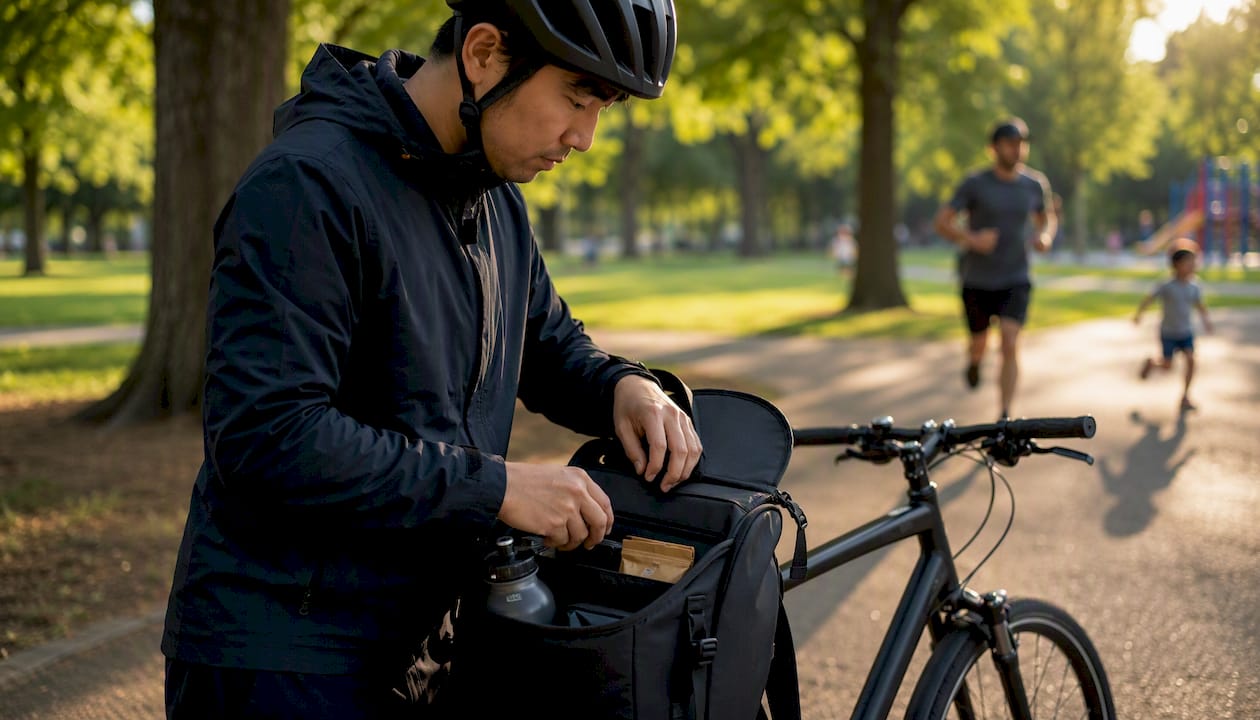
For phone mounts, prioritize a quick-release design with a secondary safety tether. Vibration from urban roads can work a standard mount loose over weeks of daily use. Pair the mount with a slim USB-C power bank — many current models also support Apple Watch or Garmin charging, which matters if you track your commute.
On earbuds: French law does not ban cycling with earphones, but wearing both earbuds at full noise-cancellation is genuinely dangerous in traffic. Choose a model with a dedicated ambient awareness mode that pipes in road sound while still letting you hear navigation prompts. Bone-conduction designs are another option — they leave the ear canal open entirely.
Pro Tip: Run a 60-second pre-ride check: saddle at the right height, bag straps snug and centered, phone mounted and locked, rear light on. Skipping this is how accessories fail mid-commute.
How do you keep your devices charged and connected on the move?
A compact rechargeable power bank paired with a secure mount keeps navigation and safety systems running through a full commute day. Slim power banks in the 10,000–20,000 mAh range weigh 180–250g and fit in a jersey pocket or bag side pocket without bulk. Many commuter-friendly power banks now include Find My network compatibility or dual-output ports for charging a phone and a wearable simultaneously.
- Capacity: 10,000 mAh charges most smartphones twice; 20,000 mAh covers a full day with a GPS device running.
- Charging speed: USB-C PD (Power Delivery) at 18W+ charges a phone to 50% in under 30 minutes.
- Weight: Under 250g for daily carry; anything heavier belongs in a pannier, not a jersey pocket.
- Transport rules: If you combine cycling with rail or air travel, carry power banks in your hand luggage — lithium batteries are not permitted in checked baggage under IATA regulations.
How do you protect your bike from theft in French cities?
Combine a high-quality physical lock with a small GPS tracker. The lock deters opportunistic theft; the tracker gives you a recovery path if someone brings bolt cutters.
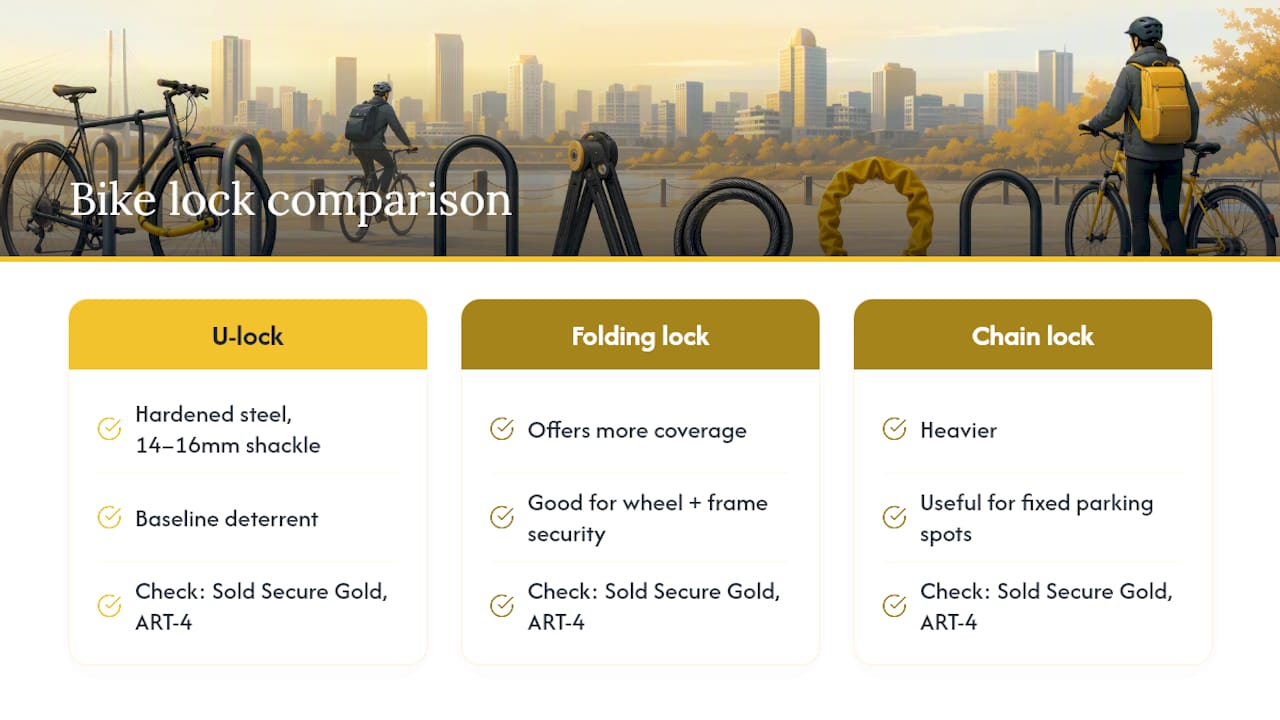
For locks, a hardened steel U-lock with a 14–16mm shackle is the baseline. Folding locks offer more coverage for securing both wheel and frame; chain locks are heavier but useful for fixed parking spots. Check for a Sold Secure Gold or ART-4 rating — these are independently tested standards recognized across Europe.
GPS trackers have shrunk to sizes that hide inside a handlebar, seat post, or under a bottle cage. Look for real-time geolocation (not just Bluetooth proximity), a replaceable or rechargeable battery, and a subscription cost you are comfortable with long-term.
Pro Tip: A compact helmet bag with an integrated cable lock solves the post-ride problem of what to do with your helmet when you lock up. It keeps the helmet secure and weather-protected without a second trip back to the bike.
What repair kit should every commuter carry?
A compact repair kit and routine tire care pay for themselves the first time they save you from a missed meeting. The essentials fit in a small saddle bag:
- Puncture repair patches and tire levers (for clincher tires)
- Tubeless sealant top-up syringe (if running tubeless)
- CO2 inflator with two cartridges, or a mini-pump
- Multi-tool with hex keys, a chain breaker, and a screwdriver
- A spare inner tube in the correct size
Before each ride, squeeze both tires. If they feel soft, inflate to the recommended PSI printed on the sidewall. Check tread depth monthly — urban tires wear faster on rough tarmac and wet roads, and a worn tire is the leading cause of preventable punctures.
How do you choose the right accessories for your commute?
Use this six-point checklist before buying anything:
- Route profile: More than 50% traffic exposure? Prioritize lights and turn signals first.
- Weather exposure: Regular rain? Every electronic accessory needs IP67 minimum; add fenders and a waterproof bag cover.
- Multimodal legs: Combining cycling with the RER, Métro, or TER? Choose foldable accessories and check weight limits for bikes on your specific line.
- Theft risk: High-theft area (Paris, Lyon, Marseille centers)? Budget for a Sold Secure Gold lock and a GPS tracker before spending on comfort upgrades.
- Device compatibility: Check that mounts, charging cables, and app ecosystems match your phone and wearable before buying.
- Budget: Spend most on helmet and lights first; comfort and convenience items can follow.
France-specific notes:
- Children under 12 must wear an approved helmet by law (Article R431-1-2 of the Code de la Route).
- Adults are not legally required to wear a helmet, but EN 1078 certification is the standard to look for when you choose one.
- For public transport, SNCF and RATP allow folded or bagged bikes on most lines; check your specific line’s rules before your first multimodal commute.
How THE BEAM approaches design for real commuter use
THE BEAM designs for commuter realities. The VIRGO helmet and the brand’s accessory range reflect a specific set of priorities: protection first, then usability, then weight.
- EN 1078 certification: Non-negotiable baseline for every helmet in the range.
- MIPS inclusion: Standard on VIRGO; addresses the rotational-impact gap that flat-impact standards alone do not cover.
- IP-rated electronics: Accessories rated for rain and dust exposure, not just dry-weather use.
- Removable electronics: Lighting and connected modules that detach for washing and charging separately.
- Modular design: Accessories that work across bike types and integrate with multimodal carry solutions.
Pro Tip: In the first 100 km of using any new helmet or connected accessory, pay attention to pressure points, strap chafe, and app connection drops. These are the issues that cause riders to stop using gear — catching them early means you can adjust before the habit forms.
What weather protection gear handles French urban conditions?
French urban climates range from Atlantic rain in Nantes and Bordeaux to Mediterranean heat in Marseille, with Paris sitting somewhere in between and reliably wet from October through March. The right weather protection depends on your city and your route.
Fenders (mudguards) are the single highest-return weather accessory for commuters. Full-length clip-on fenders keep road spray off your back and drivetrain without requiring a new bike. For rain gear, a packable waterproof jacket that fits in a jersey pocket is more practical than a full rain suit — you can pull it on at a red light. Waterproof overshoes protect your feet on wet days and add 10–15 minutes of comfortable riding before your shoes soak through.
Weather-shield designs for urban cycling, like the Sepal Shield concept, show that even simple canopy engineering can improve rain comfort for short urban trips — though fixed shields are not practical above low speeds on a bicycle. The more transferable lesson is that targeted protection (hands, feet, core) beats trying to stay completely dry.
Which ergonomic accessories reduce fatigue on daily rides?
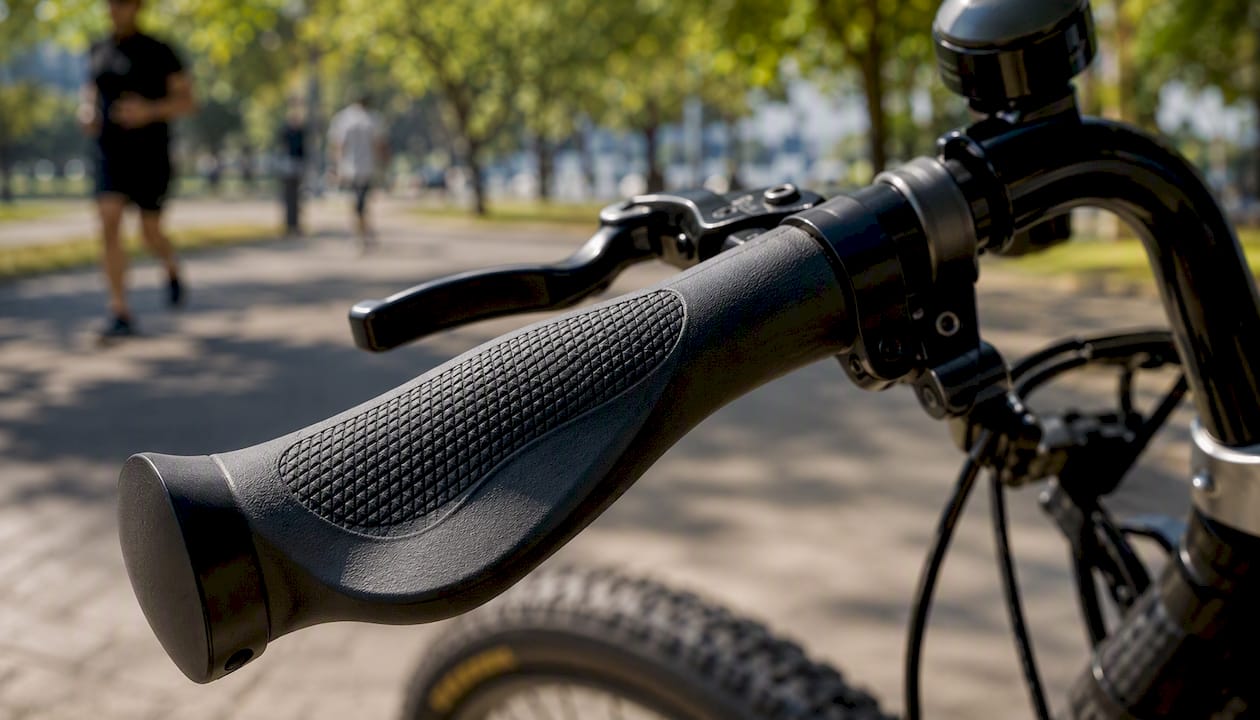
Vibration-damping grips are the most underrated upgrade for urban commuters. Cobblestones, tram tracks, and rough tarmac transmit constant low-frequency vibration through the handlebar to your hands, wrists, and shoulders. Ergonomic grips with a gel or foam core absorb a meaningful share of that energy. Ergon and similar brands make commuter-specific grips with a palm rest that redistributes pressure away from the ulnar nerve — the one that goes numb on long rides.
Saddle choice matters more than most riders realize. A saddle that is too wide causes inner-thigh chafe; too narrow and you lose sit-bone support. Measure your sit-bone width (most bike shops will do this for free) and match it to the saddle’s recommended width range. A 10-minute saddle fit saves months of discomfort.
For riders with lower-back issues, a slightly raised handlebar position reduces the forward lean that strains the lumbar spine. A stem riser or a shorter stem with more rise costs under €30 and takes 10 minutes to install.
How do foldable accessories work for multimodal commutes in France?
Multimodal commuting — cycling to a station, boarding a train, cycling again at the other end — is common across French cities. SmartCommute programs show that the riders who stick with multimodal commuting long-term are the ones who minimize friction at each transition point.
Foldable accessories reduce that friction. A folding lock weighs less than a chain and fits in a bag pocket. A foldable helmet (brands like Closca make them) compresses to roughly half the size of a standard helmet for metro or office storage. Clip-on fenders detach in seconds. A bag with integrated charging ports and tracking means you are not hunting for a power outlet at the station.
The practical rule: anything you have to carry off the bike should fold, compress, or detach in under 30 seconds. If it takes longer, you will leave it at home.
What earphones are actually safe for cycling?
Full noise-cancellation earphones block the ambient sound that keeps you alive in traffic — horns, braking, approaching vehicles. French law does not explicitly ban cycling with earphones, but the Highway Code (Code de la Route) requires cyclists to be able to hear emergency signals. In practice, that means one earbud out or ambient mode on.
The safest options for cycling:
- Bone-conduction headphones: Sit on the cheekbone, leaving ears fully open. Audio quality is lower than in-ear, but situational awareness is uncompromised.
- Open-ear earbuds: Designs like Shokz OpenFit sit at the ear canal entrance without sealing it. You hear music and road noise simultaneously.
- Ambient awareness mode: Available on many premium in-ear earbuds; pipes in microphone audio alongside music. Works well at low-to-medium volume; less reliable at high speeds.
Avoid full noise-cancellation mode in any urban or mixed-traffic environment. Save it for the train leg of your commute.
Thebeamofficial’s starter kit for urban commuters
The sharpest way to start is with protection, visibility, and passive safety covered in one order. Thebeamofficial’s VIRGO helmet gives you EN 1078 certification, MIPS technology, and integrated rear lighting — the three things a commuter helmet must have. Add the FRAME FLASH reflectors for passive side visibility that works even when your lights are off, and browse the full accessories range for rear lighting and mounting solutions that complete the setup.
Every product ships with a warranty and return policy detailed at checkout. If you are unsure which helmet size fits, Thebeamofficial’s sizing guide is on each product page — measure your head circumference and match it to the size chart before ordering. Browse the full range and build your commuter kit at Thebeamofficial.
A field note on urban cycling tech
The accessories that actually change how you ride are not the ones with the longest spec sheets. After testing gear across urban France, the pattern is consistent: riders who invest first in a well-fitted certified helmet and reliable lighting stick with cycling longer and feel safer faster. Everything else — the intercoms, the trackers, the ergonomic grips — adds genuine value, but only once the foundation is solid. Buy certified, buy for your actual route, and test everything in the first week before you depend on it.
Sources
- Lumos Sonorus helmet offers intercom for 15 cyclists
- Best gadgets and accessories for daily commuters: earbuds, eBikes, smart helmets & more — Gadget Flow
- Lokko - Compact Helmet Bag With Built-In Lock
- All-in-One Carry-On Luggage | Includes Phone Charger, Front Pocket & Water Bottle Holder – nobltravel
- Indian startup unveils smart rain shield for motorcycles | Fusion - WeRIndia
- Smart Commute

This article is general information, not a substitute for advice from a qualified lawyer. Consult a qualified legal professional about your own circumstances before acting on anything here.


