

TL;DR:
- Proper helmet storage is crucial to preserving its impact-absorbing ability, requiring a clean, dry helmet placed in a climate-controlled environment. Using cradle-style wall mounts, padded hooks, or ventilated bags prevents liner compression and moisture buildup that accelerate deterioration. Avoid storing helmets in hot cars, hanging by straps, or stacking items on top to maintain long-term safety and performance.
Helmet storage methods are the techniques and setups cyclists use to keep their helmets safe, clean, and ready for every ride. The right storage approach preserves your helmet’s structural integrity, prevents liner degradation, and keeps hygiene in check between uses. Whether you ride daily through city streets or head out on weekend gravel routes, how you store your helmet matters as much as how you wear it. Wall-mounted racks, padded stands, breathable bags, and portable hard cases each serve a different rider profile. This guide breaks down every major option so you can choose what fits your space and lifestyle.
What are the best helmet storage methods and how do they compare?
Helmet storage methods fall into five main categories: wall-mounted racks, open shelves, helmet bags, portable hard cases, and on-bike storage. Each balances protection, accessibility, and space differently. Wall-mounted racks and portable cases are the most widely recommended for balancing space efficiency with structural integrity. That combination matters because a helmet that gets compressed or exposed to heat loses its ability to absorb impact.
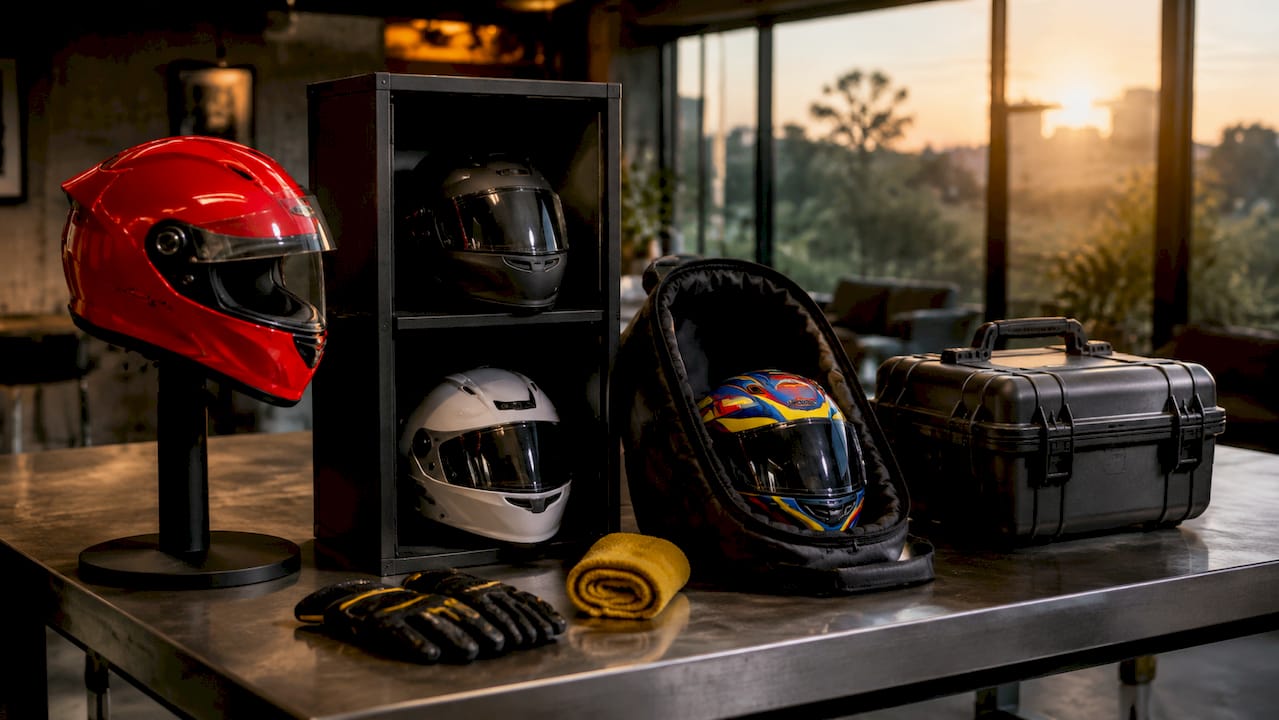
Here is a direct comparison of the five main methods:
| Method | Pros | Cons | Best for |
|---|---|---|---|
| Wall-mounted rack | Space-saving, quick access, visible | Risk of foam compression on narrow hooks | Daily commuters, small apartments |
| Open shelf | Simple, no installation needed | Dust buildup, liner compression risk | Occasional riders with dedicated gear space |
| Helmet bag | Dust and UV protection, portable | Traps moisture if helmet is damp | Travel, short-term storage |
| Portable hard case | Impact protection, weather-resistant | Bulky, higher cost | Urban riders, travel, multi-day trips |
| On-bike storage (tail box) | Hands-free convenience | Limited protection, theft risk | Commuters with secure parking |
Wall-mounted racks should be installed in climate-controlled, shaded areas away from direct sunlight and humidity. A rack positioned near a south-facing window or above a radiator creates the same heat risk as leaving your helmet in a parked car. Portable hard-shell cases solve the travel problem well, offering crush resistance, water resistance, and lock compatibility in a single unit.
Pro Tip: When using a wall-mounted rack, choose a cradle-style mount that supports the helmet through its opening rather than a single narrow peg. This distributes weight evenly and avoids stress on the EPS liner.
How to prepare and maintain helmets before storage
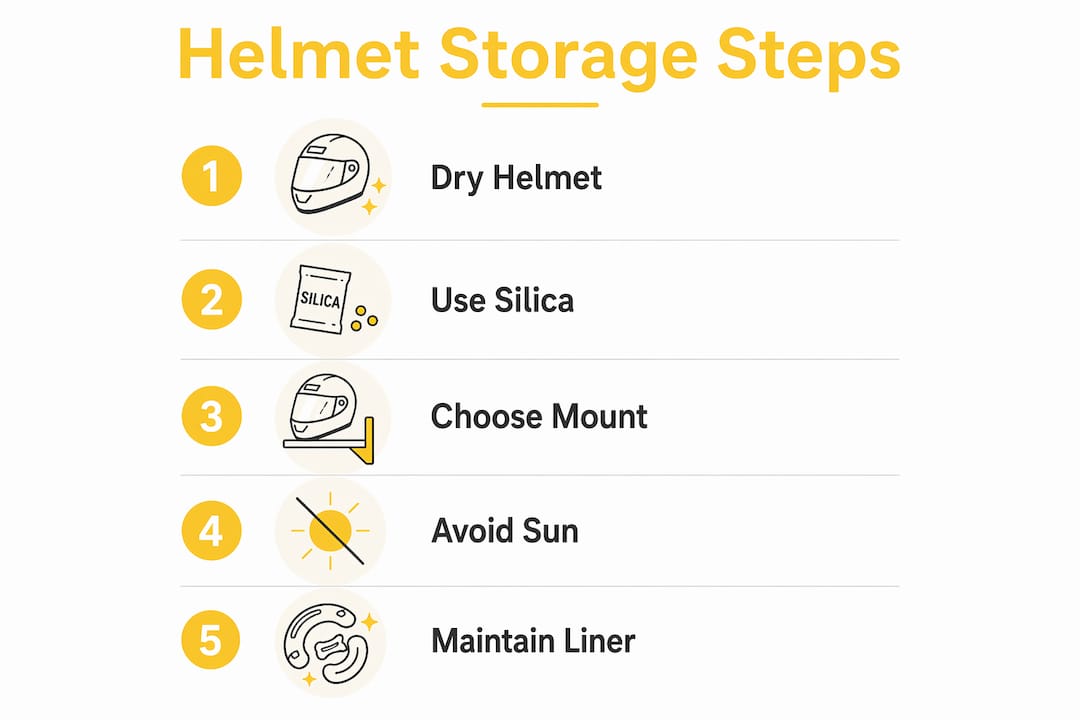
Cleaning and drying your helmet before storage is not optional. It is the step that determines whether your liner lasts two years or five. Helmet care includes cleaning the interior padding and visor with mild soap and a soft cloth, avoiding harsh detergents or bleach that break down foam adhesives and shell coatings.
Follow these steps before every storage session:
- Remove the interior liner and cheek pads if your helmet allows it. Wash them separately with mild soap and let them air dry completely before reinserting.
- Wipe the exterior shell with a damp cloth. Pay attention to vents where road grime and insects collect.
- Clean the visor with a microfiber cloth. Avoid paper towels, which scratch polycarbonate.
- Inspect the retention system and chin strap for fraying, cracking, or loose buckles. Storage is a good time to catch wear before it becomes a safety issue. You can follow a structured helmet safety check to make this process consistent.
- Air out the helmet for at least two hours before placing it in a bag or cabinet. Helmet interiors must be completely dry before sealing in storage bags, since trapped moisture accelerates liner degradation and odor formation.
Pro Tip: Place one or two silica gel packets inside your helmet bag or storage box. Silica gel absorbs residual moisture without damaging foam or fabric, and it costs almost nothing to replace every few months.
Allowing the liner to dry thoroughly before sealing it away prevents both odor and the kind of slow liner degradation that is invisible until the helmet fails an impact. This step takes less than five minutes and extends your helmet’s usable life significantly.
Innovative and DIY helmet storage solutions for different spaces
Not every cyclist has a dedicated gear room. Most of us are working with a hallway closet, a corner of the garage, or a small apartment entryway. The good news is that effective helmet organization tips do not require expensive furniture or a full renovation.
Here are practical storage ideas organized by space type:
-
Pegboard wall system. A standard pegboard sheet mounted in a garage or hallway lets you configure hooks, shelves, and bins in any layout. Add padded J-hooks at helmet-width spacing and you have a modular, expandable gear wall for under $40. This setup works especially well when you combine helmet storage with jacket hooks, glove bins, and shoe racks in a single integrated gear zone.
-
Padded wall hooks with individual mounts. Single padded hooks mounted at eye level near the door give you grab-and-go access without a full rack system. Look for hooks with a wide, curved profile that cradles the helmet base rather than a narrow peg that concentrates pressure on the EPS liner.
-
Repurposed wooden crates or wine boxes. Mounted horizontally on a wall, a deep wooden crate becomes a ventilated helmet cubby. Line the interior with a thin foam sheet to prevent shell scratches. This approach costs almost nothing and looks intentional in a workshop or garage setting.
-
Overhead pulley or hanging system. In workshops or garages with high ceilings, a simple pulley system lets you hoist helmets and other gear out of the way when not in use. This is particularly useful for seasonal storage of road helmets during winter months when you switch to a more protective urban or e-bike setup.
-
Travel-friendly folding helmet bags. For cyclists who commute by train or fly to events, a semi-rigid folding bag with internal padding protects the helmet without the bulk of a hard case. Look for bags with mesh ventilation panels that allow airflow during transit.
Dedicated helmet stands and cradle racks preserve liner shape better than flat shelf storage because they distribute the helmet’s weight through the opening rather than concentrating it on the crown or sides. Helmet storage supports that distribute weight through the opening prevent stress concentration on the EPS liner, which otherwise reduces impact absorption capacity over time. That is a structural argument for spending a few extra dollars on the right mount.
Overcrowding helmet storage areas reduces both protection and accessibility. Give each helmet enough clearance so it does not contact other gear during retrieval. A helmet that gets knocked off a shelf repeatedly will eventually suffer the kind of invisible EPS damage that does not show on the surface but compromises protection.
Common helmet storage mistakes and how to avoid them
Most helmet damage happens not during rides but during storage. The errors below are the ones that shorten helmet lifespan fastest.
- Leaving helmets in parked cars. EPS foam starts breaking down above 60°C, and car interiors can exceed 70°C on a hot day. A single afternoon in a parked car in summer can begin degrading the liner without any visible sign of damage.
- Hanging helmets by the chin strap. Hanging by straps stretches the suspension and weakens retention systems over time. The chin strap is designed to hold your head during an impact, not to bear the helmet’s weight day after day.
- Sealing helmets in airtight plastic bins. Sealed plastic bins without ventilation trap moisture and promote mold growth inside the liner. If you need to use a bin, leave the lid slightly open or add ventilation holes and a silica gel packet.
- Stacking helmets or placing objects on top. EPS foam is designed to compress once during an impact. Repeated low-level compression from stacking degrades its ability to absorb energy when it counts.
- Leaving helmets outside on the bike overnight. UV exposure degrades both the outer shell and the EPS liner. Overnight outdoor storage also invites theft, moisture from dew, and physical contact with other surfaces.
Pro Tip: Designate a single, consistent storage spot for your helmet near your exit point. Riders who store helmets in a fixed, accessible location are less likely to leave them on a chair or countertop where they can be knocked off or sat on.
Proper helmet storage enhances long-term safety performance by preserving liner integrity and preventing moisture damage. Understanding your helmet’s lifespan factors makes it easier to recognize when storage habits are accelerating wear.
Key takeaways
The most effective helmet storage method combines a ventilated, weight-distributing mount in a climate-controlled space with a dry, clean helmet that has been aired out after every ride.
| Point | Details |
|---|---|
| Choose the right mount | Use cradle-style racks or padded wall hooks that support the helmet through its opening, not narrow pegs. |
| Dry before storing | Air out the helmet for at least two hours after every ride before placing it in a bag or cabinet. |
| Avoid heat and UV | Never store helmets in parked cars or near windows; EPS foam degrades above 60°C. |
| Skip the chin strap hang | Hanging by straps weakens retention systems; always rest the helmet on its base or a contoured rack. |
| Control moisture | Use silica gel packets in bags or boxes to prevent mold and liner degradation from trapped humidity. |
Why I stopped treating helmet storage as an afterthought
I spent years treating helmet storage as a secondary concern. The helmet went on the shelf, sometimes still damp, occasionally in the car during summer rides. It was not until I cut open an old helmet during a gear audit that I saw the EPS liner had compressed unevenly on one side, almost certainly from repeated flat-shelf contact and one too many hot-car afternoons. The shell looked fine. The protection was not.
What changed my practice was thinking about storage as part of the ride, not separate from it. Now every helmet gets a two-hour air-out on a padded wall mount before it goes anywhere near a bag. For households with multiple helmets, I strongly favor a pegboard system with individual cradle hooks. It keeps helmets visible, accessible, and separated so they do not contact each other.
The seasonal storage question is one most cyclists overlook. If you switch between a road helmet in summer and a more protective urban helmet in winter, the off-season helmet needs real storage, not just a corner of the closet floor. A breathable bag with a silica gel packet inside a cool, dark cabinet is the right call. Airing it out before the season starts is equally important.
One more thing worth saying plainly: integrating helmet storage with general gear organization makes you a more consistent rider. When your helmet is in the same spot every time, next to your gloves and jacket, you spend less time searching and more time riding. That convenience is not trivial. It is the difference between a gear system that works and one you abandon after two weeks.
— Sophie
Protect your ride from the ground up with Thebeamofficial

Storing your helmet correctly is one part of a complete approach to cycling safety. Thebeamofficial designs high-end cycling safety equipment for road, gravel, urban, and e-bike riders who take protection seriously. From the VIRGO integral helmet with MIPS technology to high-visibility bike reflectors that keep you seen on every ride, the full range is built around real-world usability. Browse the complete cycling safety collection to find gear that complements your helmet care routine and keeps you protected at every stage of the ride.
FAQ
What is the safest way to store a cycling helmet at home?
The safest method is a padded cradle-style wall mount in a cool, shaded, climate-controlled area. The helmet should be clean, fully dry, and stored away from direct sunlight, heat sources, and other gear that could compress or scratch it.
Can I store my helmet in a bag?
Yes, but only if the helmet is completely dry before sealing. Storing a damp helmet in a bag traps moisture, which accelerates liner degradation and promotes mold growth. Use a breathable bag with mesh ventilation panels and add a silica gel packet for moisture control.
How often should I clean my helmet before storage?
Clean the interior padding and visor after every few rides, or immediately after any ride in rain, heavy sweat, or dusty conditions. Use mild soap and a soft cloth, and allow all components to air dry fully before reassembling and storing.
Does hanging a helmet by the strap damage it?
Yes. Hanging a helmet by its chin strap stretches the retention system and weakens the buckle connections over time, which compromises the strap’s ability to hold the helmet securely during an impact. Always rest the helmet on its base or a contoured rack.
How do I store a helmet for an extended period, like off-season?
Place the clean, dry helmet in a breathable bag with one or two silica gel packets. Store it in a cool, dark location away from UV light and temperature extremes. Before using it again, inspect the liner, straps, and shell for any signs of degradation or wear.


