

TL;DR:
- Wearable cycling safety devices, like airbags, radar alerts, and smart helmets, create a layered protection system for riders. These technologies offer rapid crash detection, vehicle warnings, and enhanced visibility, reducing accident risks significantly. Proper device pairing, firmware updates, and deliberate route planning are essential for maximizing safety benefits without over-relying on technology.
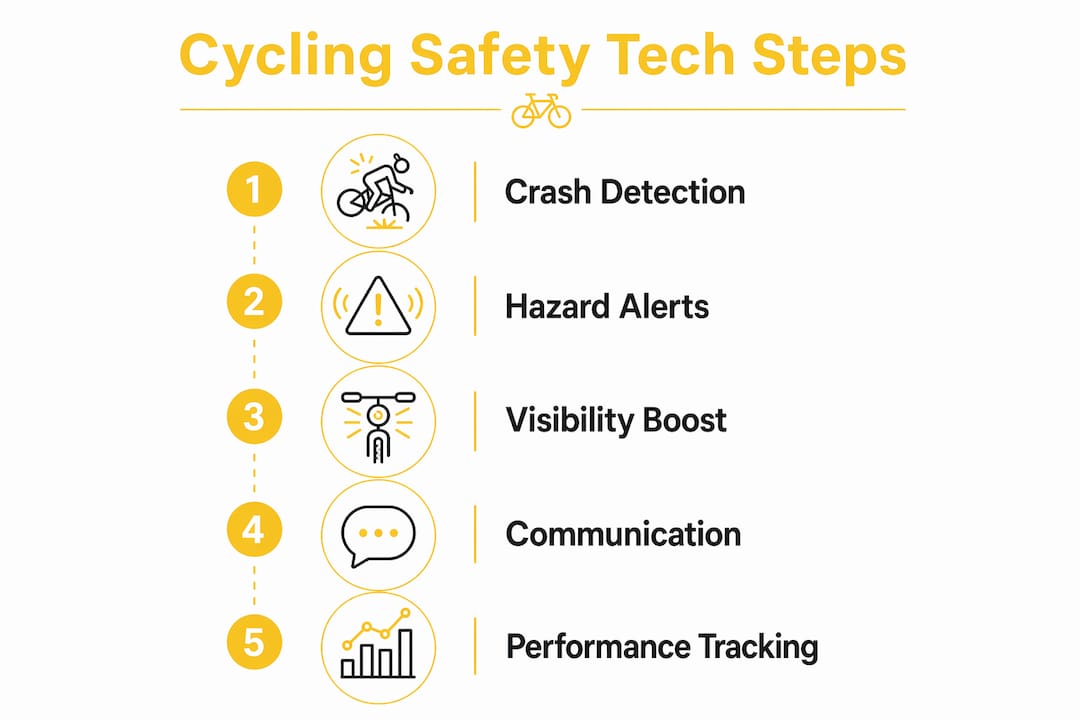
Wearable technology is now the most consequential category in cycling safety, combining crash detection, real-time hazard alerts, and full-body protection into systems riders can wear on every ride. The role of wearable tech in cycling safety has expanded well beyond fitness tracking. Today, devices from Garmin, Lumos, and Van Rysel address the three biggest threats cyclists face: being struck from behind, crashing without warning, and losing situational awareness in traffic. The trend driving 2026 is integration. Individual gadgets are giving way to connected ecosystems where your helmet, radar, and GPS unit share data and respond together.
How do wearable devices detect and prevent cycling accidents?
Crash detection in wearable cycling tech works through accelerometers and gyroscopes that continuously measure motion. When a sensor detects an impact pattern that matches a crash signature rather than a pothole or curb drop, it triggers a response. The speed of that response is what separates modern systems from older emergency alert tools.
Van Rysel’s airbag skinsuit is the clearest example of how fast this technology has become. The suit deploys in 60 milliseconds after detecting a crash event, weighing approximately 700 grams total. That response time is faster than a human blink, which means the airbag is inflated before your body makes contact with the road. Critically, protection extends beyond the head to cover the core, cervical zone, and spine. This reflects a broader shift in cycling safety thinking: helmets protect one zone, but crashes damage the whole body.
Radar systems address a different threat. The Garmin Varia RearVue 820 uses radar to detect vehicles approaching from behind and delivers visual and audible alerts to compatible Edge computers and smartwatches. Riders get advance warning of cars they cannot see, which is the exact scenario responsible for a large share of serious road cycling injuries. The system also supports LiveTrack, which shares your ride location in real time with designated contacts.
Connected apps extend hazard awareness even further. Cyclists can report road hazards like potholes, obstructions, and slippery surfaces through community-linked devices, pushing alerts to other riders on the same route. This crowdsourced layer adds situational awareness that no single sensor can provide on its own.
- Crash detection relies on multi-axis sensors distinguishing impacts from normal road vibration
- Airbag deployment systems like Van Rysel’s protect the spine and core, not just the head
- Radar tail lights alert riders to approaching vehicles before they are visible in mirrors
- Community hazard reporting through connected apps extends awareness beyond direct sensor range
- GPS incident detection triggers emergency alerts and shares location when a crash is confirmed
Pro Tip: Pair your radar tail light with a head unit or smartwatch that supports visual alerts, not just audio. In traffic, a glance at your handlebar display is faster and safer than interpreting a beep.
What are the latest wearable innovations enhancing cyclist communication and visibility?
Smart helmet communication has moved from a niche feature to a genuine safety tool. The Lumos Sonorus helmet integrates a full-duplex mesh intercom that connects up to 15 riders simultaneously, with VOX activation enabling hands-free conversation. Riders can talk naturally without pressing buttons, which keeps both hands on the bars and attention on the road. The system offers roughly a mile of range and up to 20 hours of talk time, making it practical for long group rides and sportives.
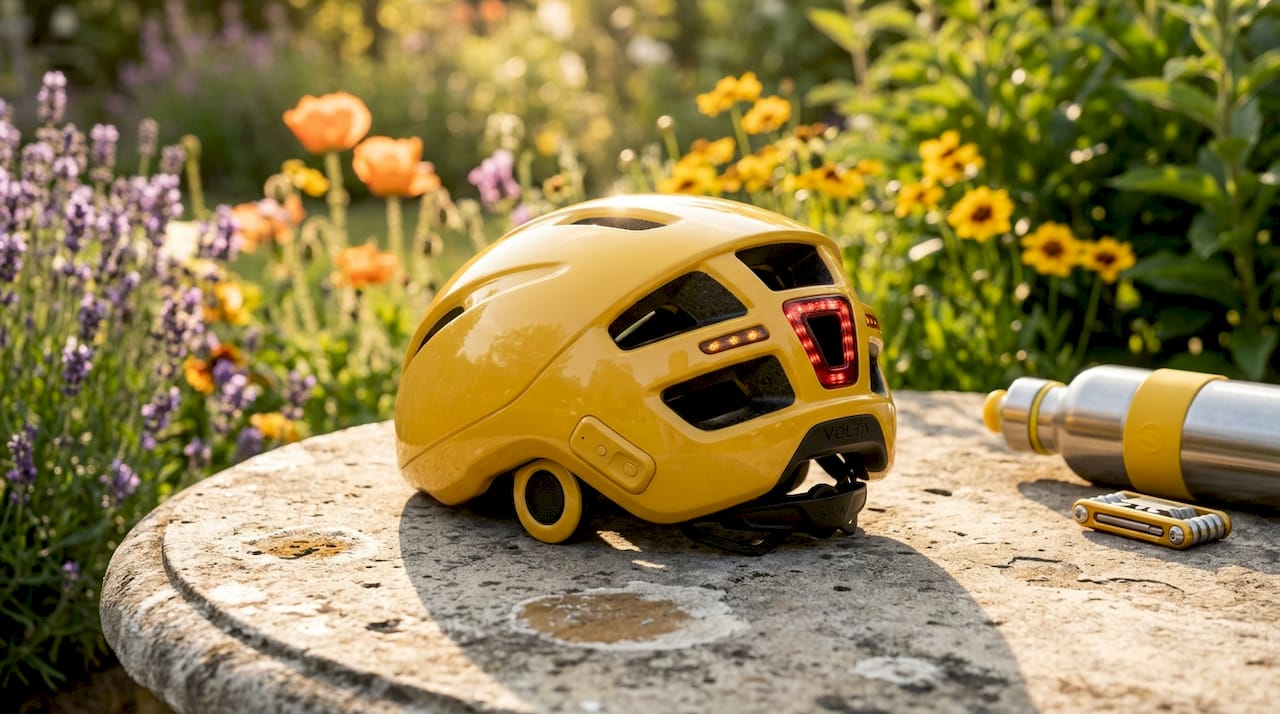
The safety logic behind helmet intercoms is straightforward. Shouting across a group ride forces riders to turn their heads, lose focus, and sometimes swerve. Lumos’ design reduces distraction by enabling natural conversation at normal volume, preserving rider focus on the road ahead. For training groups and cycling clubs, this is a meaningful upgrade over hand signals and shouted warnings.
Visibility features in smart helmets have also matured significantly. Here is what the current generation of integrated lighting systems delivers:
- Integrated front and rear lights that activate automatically at dusk or in tunnels, removing the need for clip-on lights that can shift or detach
- Wireless turn signal indicators controlled by a handlebar remote, signaling intentions to drivers without removing a hand from the bars
- Automatic brake lights that detect deceleration and flash the rear light, giving drivers behind you the same warning a car’s brake light provides
- Bone conduction audio for navigation prompts and calls, keeping ears open to traffic while still receiving information
Smart helmets increasingly combine turn signals, brake lights, and bone conduction headphones into a single unit, which reduces the number of separate devices a rider needs to manage. Fewer devices means fewer charging cycles, fewer pairing issues, and less cognitive load before a ride.
Pro Tip: For group rides larger than 15 riders, split into sub-groups with separate intercom channels rather than trying to link everyone. Exceeding a system’s supported rider limit degrades audio quality and can increase distraction rather than reduce it.
How do wearable performance trackers contribute to cycling safety?
Performance tracking and safety are more connected than most riders realize. Fatigue is one of the leading contributors to cycling accidents, and wearable devices now give you objective data to recognize it before it affects your riding. This is the practical side of the impact of fitness trackers on cycling safety: not just recording your effort, but telling you when to back off.
Power meters provide the clearest signal. By tracking output in watts against your Functional Threshold Power, you can see in real time whether you are riding at a sustainable intensity or pushing into a zone that will compromise your coordination and reaction time later in the ride. Heart rate variability metrics add another layer, showing whether your nervous system has recovered from previous training. A low HRV score on a planned hard ride day is a concrete reason to reduce intensity, not a suggestion.
- Power meters track wattage against FTP to prevent overexertion during long or high-intensity rides
- Heart rate variability data identifies recovery deficits before they affect coordination and judgment
- GPS tracking logs your route and triggers emergency alerts if a crash is detected and you are unresponsive
- Incident detection on devices like Garmin Edge units sends your location to emergency contacts automatically
- Training load metrics help you recognize cumulative fatigue, which is a direct accident risk factor
GPS incident detection deserves specific attention. When a compatible device detects a sudden stop or impact consistent with a crash, it sends an automated alert with your GPS coordinates to pre-selected contacts. This feature does not prevent the crash, but it dramatically reduces the time before help arrives. For solo riders on remote routes, that delay reduction is the difference between a manageable injury and a life-threatening situation.
For a deeper look at how connected devices work together on the bike, the connected safety for cyclists overview from Thebeamofficial covers the full ecosystem in detail.
How to choose the right wearable cycling safety device
Selecting the right combination of wearable devices depends on your riding style, typical environment, and the specific risks you face most often. No single device covers every scenario, so the goal is to build a layered system that addresses your actual exposure.
| Device type | Best for | Key trade-off |
|---|---|---|
| Airbag skinsuit (e.g., Van Rysel) | Road and gravel riders at speed | Higher cost and weight (~700g); requires crash algorithm calibration |
| Radar tail light (e.g., Garmin Varia) | Road cyclists in traffic | Requires compatible head unit for full alert functionality |
| Smart helmet with intercom (e.g., Lumos Sonorus) | Group riders and commuters | Range and group size limits; battery management adds pre-ride steps |
| GPS with incident detection (e.g., Garmin Edge) | Solo riders on remote routes | Dependent on cellular coverage for emergency alert delivery |
| Fitness tracker with HRV monitoring | Training-focused riders | Safety benefit is indirect; requires consistent daily use to be meaningful |
Commuters face different risks than road racers. Urban riders benefit most from radar tail lights, integrated helmet lighting, and turn signals because traffic density and intersection conflicts are their primary hazards. Road cyclists riding at higher speeds on open roads gain more from airbag protection and GPS incident detection. Gravel and off-road riders should prioritize GPS tracking and crash detection over communication systems, since group riding is less common and remote terrain makes location sharing critical.
Budget is a real constraint. A Garmin Varia radar unit and a quality helmet with integrated lighting covers the two most common accident scenarios at a lower combined cost than an airbag suit alone. Start with the device that addresses your highest-probability risk, then add layers as budget allows.
Pro Tip: Check app and device compatibility before purchasing. Proper device pairing between your radar, head unit, and phone is what makes the safety system function. A radar tail light that is not paired correctly to a display unit provides no advance warning at all.
For a full breakdown of how Bluetooth connects these devices, Thebeamofficial’s guide on Bluetooth in cycling safety explains the pairing logic clearly.
Key takeaways
Wearable cycling safety technology works best as a layered system, combining crash detection, hazard alerts, visibility tools, and performance monitoring to address the full range of risks a cyclist faces.
| Point | Details |
|---|---|
| Crash detection speed matters | Van Rysel’s airbag deploys in 60ms, protecting the spine and core before road contact. |
| Radar alerts prevent rear-end collisions | Garmin Varia delivers advance vehicle warnings that mirrors and instinct alone cannot provide. |
| Smart helmets reduce group ride distraction | Lumos Sonorus enables hands-free communication for up to 15 riders, keeping focus on the road. |
| Performance data is a safety input | Power meters and HRV tracking identify fatigue before it impairs coordination and reaction time. |
| Device compatibility is non-negotiable | Radar and alert systems only function correctly when properly paired with compatible displays or head units. |
What I’ve learned from watching riders use wearables in the real world
Most riders buy a single device and call it a safety upgrade. A radar tail light is genuinely useful, but treating it as a complete solution is a mistake I see repeatedly. The riders who get the most out of wearable tech are the ones who treat it as a system, not a product.
The detail that gets overlooked most often is firmware. Crash detection algorithms improve with updates, and a device running six-month-old firmware may have false positive rates that were already corrected. I check for updates before any significant ride, the same way I check tire pressure. It takes two minutes and it matters.
There is also a real risk of over-reliance. A Garmin Varia is excellent, but it does not replace shoulder checks, and it does not detect cyclists, pedestrians, or hazards that appear from the side. Riders who trust the radar completely and stop scanning their environment are trading one risk for another. The technology is there to add information, not to replace judgment.
The most underrated safety habit I can recommend is combining wearables with deliberate route planning. GPS data from platforms like Komoot or Strava shows you where other riders have flagged hazards, and pairing that with real-time radar and incident detection creates a genuinely layered defense. No single device does that alone.
— Sophie
Gear that works with your wearable tech setup
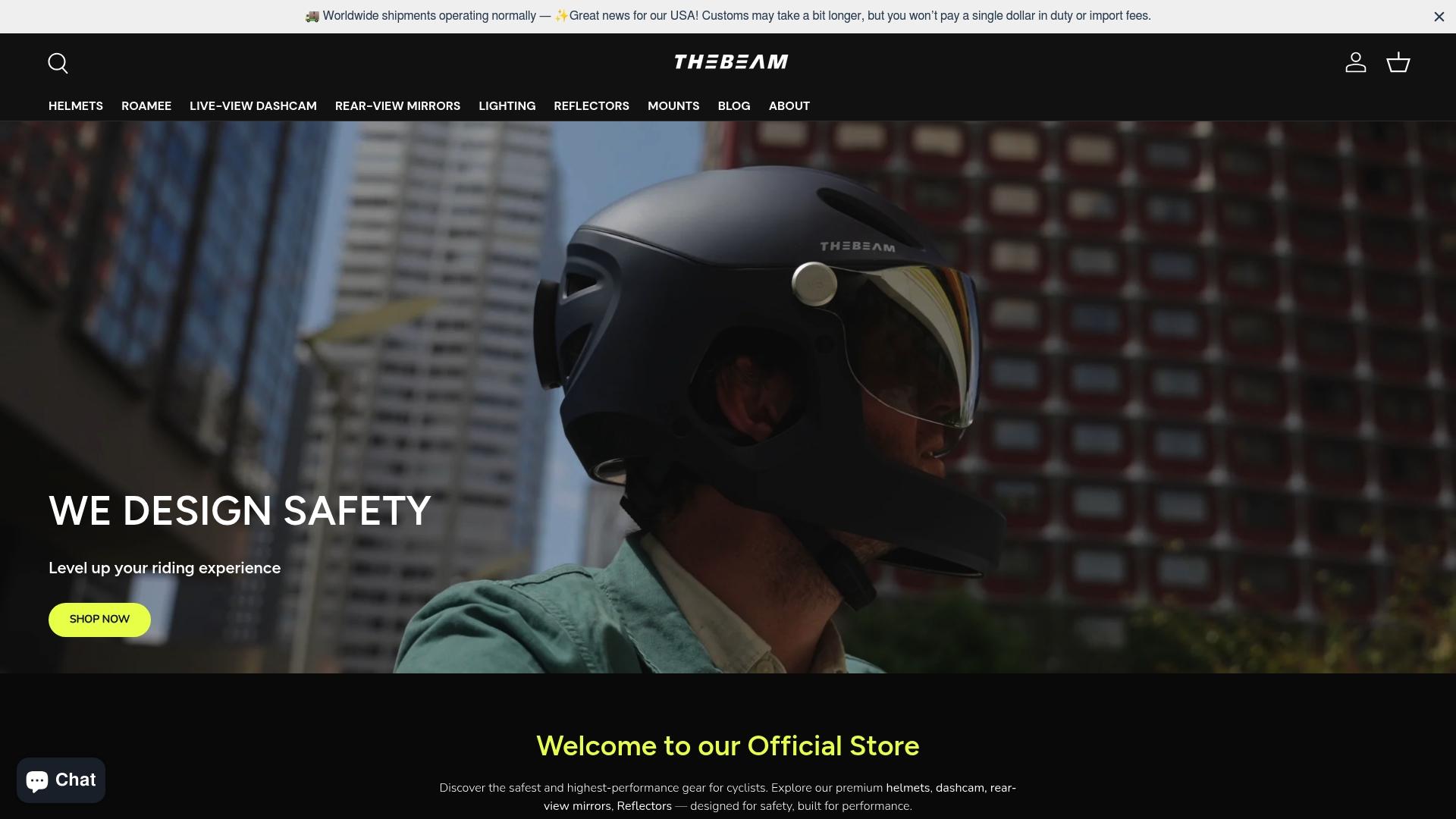
Your wearable devices are only as effective as the foundation they sit on. A radar system and smart intercom paired with a poorly fitting or low-protection helmet leaves a critical gap in your safety setup. Thebeamofficial designs premium cycling helmets built for real-world protection, including the VIRGO integral helmet with MIPS technology, which is engineered to work alongside connected safety systems. The collection covers road, gravel, urban, and e-bike riders. Thebeamofficial also offers high-visibility reflectors and rearview mirrors that complement radar and lighting systems, giving you passive and active visibility in one setup. Investing in quality gear across every layer is what makes the full system work.
FAQ
What is the role of wearable tech in cycling safety?
Wearable tech improves cycling safety by providing crash detection, real-time hazard alerts, body protection, and performance monitoring. Devices like radar tail lights, airbag suits, and smart helmets address the most common causes of serious cycling injuries.
How does a cycling airbag suit work?
An airbag suit uses onboard sensors to detect crash-pattern motion and deploys an inflatable airbag in milliseconds. Van Rysel’s system triggers in approximately 60 milliseconds, protecting the spine, core, and cervical zone before road impact occurs.
Do smart helmets actually improve safety for group riders?
Yes. Smart helmets with mesh intercom systems like the Lumos Sonorus enable hands-free communication between up to 15 riders, reducing the need to shout or turn heads. This keeps attention on the road and lowers the risk of swerving or missing hazards.
How do fitness trackers contribute to safer cycling?
Fitness trackers monitor power output, heart rate variability, and training load to identify fatigue before it impairs coordination. Riding in an exhausted state is a direct accident risk, and objective data from wearables helps riders recognize when to reduce intensity.
What should I check before buying a radar tail light?
Verify that the radar unit is compatible with your head unit, GPS computer, or smartwatch before purchasing. A radar tail light that is not properly paired to a display device cannot deliver the visual alerts that make it effective in traffic.


