

TL;DR:
- Adaptive cycling protection involves specialized equipment modifications, ergonomic fitting, and safety adaptations to enable diverse riders to ride safely and comfortably. It emphasizes the importance of proper fit and control placement over individual products, with safety being a systemic outcome rather than a single feature. Matching rider needs with tailored equipment and consistently reassessing fit are crucial for long-term safety and confidence in adaptive cycling.
Most cyclists think adaptive cycling protection simply means putting a helmet on someone who rides differently. That framing misses almost everything that matters. What is adaptive cycling protection, really? It is a system of specialized equipment modifications, ergonomic fitting, and safety-specific adaptations designed to let people with diverse physical abilities ride safely, comfortably, and consistently. The concept goes far beyond a single product category. It covers everything from brake lever placement to lateral body supports, and understanding how these elements work together is what separates a safe ride from a preventable injury.
Table of Contents
- Key takeaways
- What is adaptive cycling protection and how it works
- Equipment types and their safety features
- Ergonomic fit and how it protects you
- Comparing protection features across equipment types
- How to safely adopt adaptive cycling protection
- My take on what adaptive cycling protection really means
- Gear that completes your adaptive cycling setup
- FAQ
Key takeaways
| Point | Details |
|---|---|
| Protection is systemic | Adaptive cycling protection combines equipment type, ergonomic fit, and control placement into one safety system. |
| Fit matters more than bike type | Improper seating or control placement compromises safety regardless of which adaptive bike you ride. |
| Try before you buy | Rental programs let riders test multiple configurations to find the setup that genuinely protects them. |
| Safety gear still applies | Helmets, gloves, and visibility accessories are non-negotiable for adaptive cyclists, just as for any rider. |
| Matching needs to equipment | Pairing rider functional needs with the right bike platform is the core principle of adaptive cycling protection. |
What is adaptive cycling protection and how it works
Adaptive cycling uses specialized equipment or modifications to allow people with mobility needs to ride safely and comfortably. The industry term is adaptive cycling, and the protection framework within it is sometimes called adaptive cycling safety or functional cycling adaptation. Both terms describe the same goal: modifying the rider-bike interface so that the person can control, balance, and sustain their ride without unnecessary injury risk.
The protection piece is where most people stop reading carefully. They assume adaptive cycling gear means adding a cushier seat or lowering the handlebars. In practice, the adaptations are functional and specific. Single-sided brake levers, back-pedal braking, and automatic gearing are examples built specifically for riders with limited hand function. These are not convenience features. They are safety mechanisms that replace standard controls a rider physically cannot use.
What makes this topic genuinely complex is that matching adaptive cycling equipment to rider functional needs determines the level of protection delivered. Two riders on the same handcycle can have very different safety outcomes depending on whether the seating angle, footrests, and brake placement were configured for their specific bodies. Protection is not a product. It is a configuration.
Equipment types and their safety features
Adaptive biking equipment comes in several distinct categories, and each addresses different physical needs. Here is what you actually need to know about each type.
Handcycles are arm-powered bikes that allow riders with lower limb impairments to ride using their upper body. Safety adaptations here often include enclosed cockpits for low-center-of-gravity stability, wrist cuffs for riders with grip limitations, and single-hand braking systems.
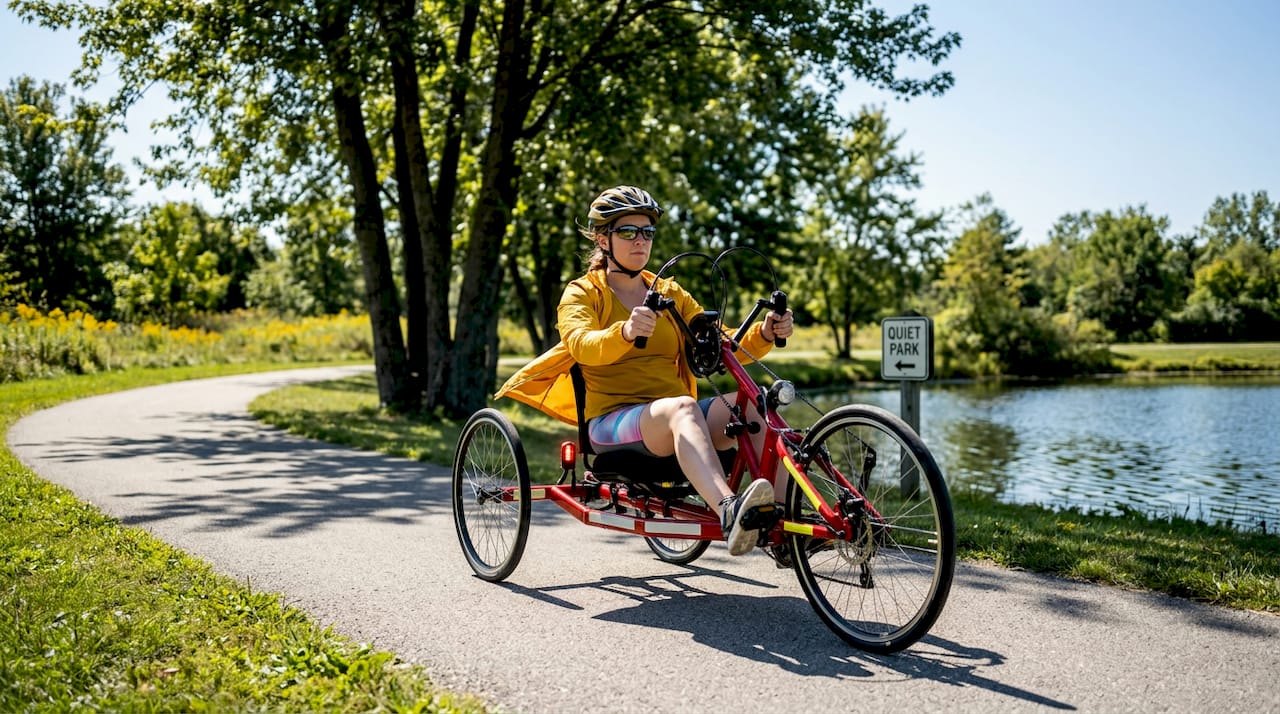
Recumbent bikes and trikes let the rider sit in a reclined or semi-reclined position. Recumbent seating reduces joint strain by distributing body weight over a larger surface area and lowering the center of gravity. This configuration is especially protective for riders managing lower body fatigue, spasticity, or balance challenges.
Tandem bikes pair a sighted or able-bodied pilot with a rider who may have visual impairment or limited motor coordination. The protection system here centers on synchronized braking and communication protocols between the two riders.
Adaptive trikes offer a three-wheeled platform that removes balance as a safety variable entirely. Key protective features include:
- Adjustable backrests and lateral trunk supports for torso stability
- Leg straps and foot cradles to keep limbs properly positioned
- Low step-through frames for safe mounting and dismounting
- Hand-operated or foot-operated braking depending on the rider’s functional strength
The common thread across all of these is that adaptations address vision, balance, and motor function needs through targeted equipment choices, not generic adjustability.
Ergonomic fit and how it protects you
Here is the part that even experienced adaptive cyclists sometimes underestimate. The bike type matters, but the fit is what actually keeps you safe on a daily basis.
Correct positioning is essential for adaptive trike effectiveness and rider protection. If the backrest angle is off by even a few degrees, a rider with core weakness may compensate by overusing their shoulders or shifting their weight unpredictably during turns. That compensation creates injury risk that no bike type can eliminate.
Control placement is equally critical. For riders with limited dexterity, brakes and gears positioned even slightly outside their natural reach zone can cause delayed reactions during sudden stops or off-camber moments. This is why adaptive cycling views protection as an equipment-and-fit challenge, not just a hardware selection problem. The bike creates the possibility of safe riding. The fit delivers it.
Seating angle adjustments are particularly important for spinal cord injury riders and those with muscular dystrophy, where pressure distribution and hip angle directly affect circulation and long-term joint health. Lateral supports that contact the body incorrectly can cause pressure sores during longer rides, which are serious medical concerns, not minor discomforts.
Pro Tip: If you are working with a fitting professional, bring a video of your current riding posture. Watching how your body shifts during turns and braking reveals fit issues that a static fitting session will never catch.
Adaptive cycling is as much about comfort and fit as bike type for sustained use and long-term safety. Getting the fit right is not a one-time event either. As a rider’s strength, flexibility, or condition changes, the equipment configuration needs reassessment.
Comparing protection features across equipment types
Different platforms offer different protection profiles. This comparison cuts through the noise and helps you match needs to the right choice.
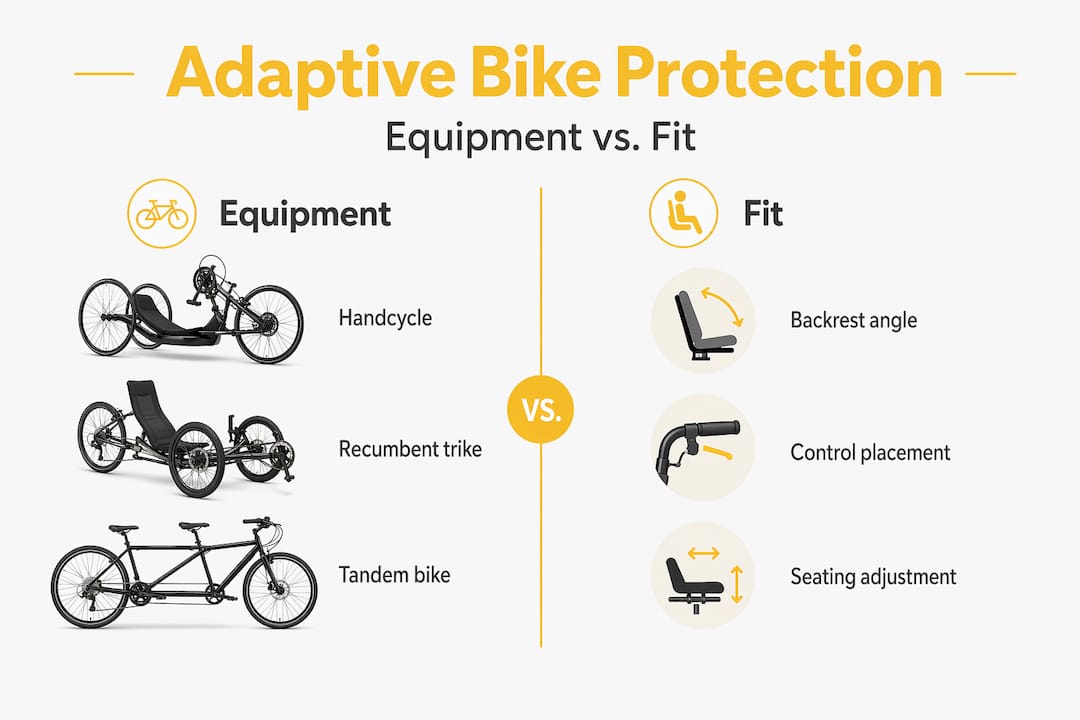
| Equipment type | Primary protection feature | Key safety adaptation | Best suited for |
|---|---|---|---|
| Handcycle | Upper body ergonomics | Single-hand braking, wrist support | Lower limb impairment |
| Recumbent bike/trike | Joint and fatigue protection | Reclined seating, low center of gravity | Lower body fatigue, balance issues |
| Tandem bike | Paired control system | Synchronized braking, pilot communication | Visual impairment, coordination needs |
| Adaptive trike | Balance elimination | Lateral supports, leg positioning straps | Core weakness, balance disorders |
| Attachable handcycle | Wheelchair conversion | Frame coupling, speed limiting | Wheelchair users, limited transition time |
Each of these platforms represents a different solution to the same core challenge: enabling a rider to maintain control, stability, and physical safety throughout a ride. No single option is universally superior. The right platform is the one that matches the rider’s specific functional profile. Adaptive cycling programs and equipment options are also expanding to serve non-competitive community riders, which means more entry-level configurations now exist with fewer compromises on protection quality.
For urban riding specifically, reviewing a cycling protection gear guide helps identify which additional safety accessories make sense beyond the adaptive bike itself.
How to safely adopt adaptive cycling protection
Understanding the theory matters, but applying it correctly is where safety actually happens. Follow this sequence to avoid the most common and costly mistakes.
- Start with a needs assessment. Work with a physical therapist or adaptive cycling specialist to identify your functional strengths, limitations, and specific riding goals before looking at any equipment.
- Use rental programs to trial multiple configurations. Seattle’s Outdoors for All program offers over 200 adaptive bikes for rental specifically to support community access and fitting trials. Many cities have similar programs. Riding five different setups in one afternoon teaches you more than any product description ever will.
- Get a professional fitting before purchase. Do not adjust the seat height once and call it done. A certified adaptive cycling fitter will address backrest angle, lateral support placement, and control positioning as a complete system.
- Add protective gear beyond the bike. A properly fitted helmet is non-negotiable. Add gloves for grip security and hand protection, eye protection against debris, and reflective accessories for visibility. For advanced cycling safety technology, connected rear-view mirrors and visibility lights significantly improve safety on shared paths.
- Connect with adaptive cycling communities. Organizations like the Challenged Athletes Foundation and local adaptive sports clubs offer group rides, peer advice, and access to equipment loan libraries. These networks accelerate learning faster than solo research.
- Reassess regularly. Trialing adaptive cycles via structured programs is not just for beginners. Experienced adaptive riders benefit from periodic reassessments as their physical condition, riding goals, or available equipment evolves.
Pro Tip: Always request a “test ride on terrain” during any fitting session. Riding on a flat gym floor reveals nothing about how your configuration performs on inclines, gravel, or curb cuts, all of which are common in real-world routes.
My take on what adaptive cycling protection really means
I have spent a lot of time looking at how people approach cycling safety, and the single biggest mistake I see is treating adaptive cycling as a niche topic with niche concerns. It is not. The principles that make adaptive cycling protection work, specifically fit precision, control placement, and systematic safety thinking, are the same principles every serious cyclist should apply to their own setup.
What strikes me most is how often the emotional dimension of adaptive cycling gets ignored in gear conversations. When someone gets onto a properly fitted adaptive trike for the first time and rides independently, that experience is not just physical. It is transformative. I have seen riders who had been told they could not cycle anymore discover that the problem was never their body. It was the equipment’s failure to meet their body where it was.
The practical lesson I keep coming back to is this: do not let the equipment category fool you into thinking protection is automatic. An adaptive bike without proper fit is not a protected ride. It is a risk that looks like a solution. Push for the fitting, push for the trial period, and treat every adjustment as a safety decision, not a comfort preference. Those two things are the same thing, done well.
— Sophie
Gear that completes your adaptive cycling setup
Adaptive bike configuration is only one side of the safety equation. What you wear while riding matters just as much, especially for riders whose adaptive setup already demands more physical focus per ride than a standard bike.
Thebeamofficial designs helmets and cycling safety accessories specifically for riders who take protection seriously. The VIRGO integral helmet with MIPS technology provides full-face coverage with the kind of comfort engineering that works across long adaptive rides, not just short sessions. The broader range of adult cycling helmets from Thebeamofficial includes options for road, gravel, urban, and e-bike contexts, and their safety accessories, including rear-view mirrors and high-visibility reflectors, add a meaningful layer of protection to any adaptive cycling setup.
FAQ
What does adaptive cycling protection include?
Adaptive cycling protection includes specialized bike configurations, safety adaptations like single-sided brakes and lateral supports, ergonomic fitting, and protective gear such as helmets and gloves. It covers the full system of modifications that allow riders with diverse physical abilities to ride safely.
Is adaptive cycling equipment only for people with disabilities?
Not at all. While adaptive biking equipment was developed primarily for riders with mobility or physical limitations, many adaptations, like recumbent seating and adjustable control placement, benefit any rider seeking greater comfort or injury prevention.
How do I find the right adaptive bike for my needs?
Start with a physical therapist or certified adaptive cycling specialist who can assess your functional needs. Then use a rental program to trial different platforms before purchasing. Matching rider abilities to equipment improves safety, comfort, and long-term riding engagement significantly.
Do adaptive cyclists still need helmets?
Yes, always. A helmet is required regardless of bike type, riding speed, or rider experience. For adaptive cyclists who may have limited reflexes or altered balance, road cycling protection methods including a properly fitted helmet are even more critical.
What is the difference between adaptive cycling gear and regular cycling gear?
Adaptive cycling gear includes purpose-built functional modifications: back-pedal braking, wrist cuffs, trunk supports, and single-hand control systems. Regular cycling gear is designed for a standard two-wheeled upright riding position and does not address the varied propulsion, balance, or control needs that adaptive riders require.


