

TL;DR:
- Gravel riding demands helmets with extended coverage, rotational impact protection, and good ventilation.
- Modern gravel helmets often feature MIPS or similar systems to reduce concussion risk.
- Proper fit and matching helmet features to terrain are crucial for safety and comfort.
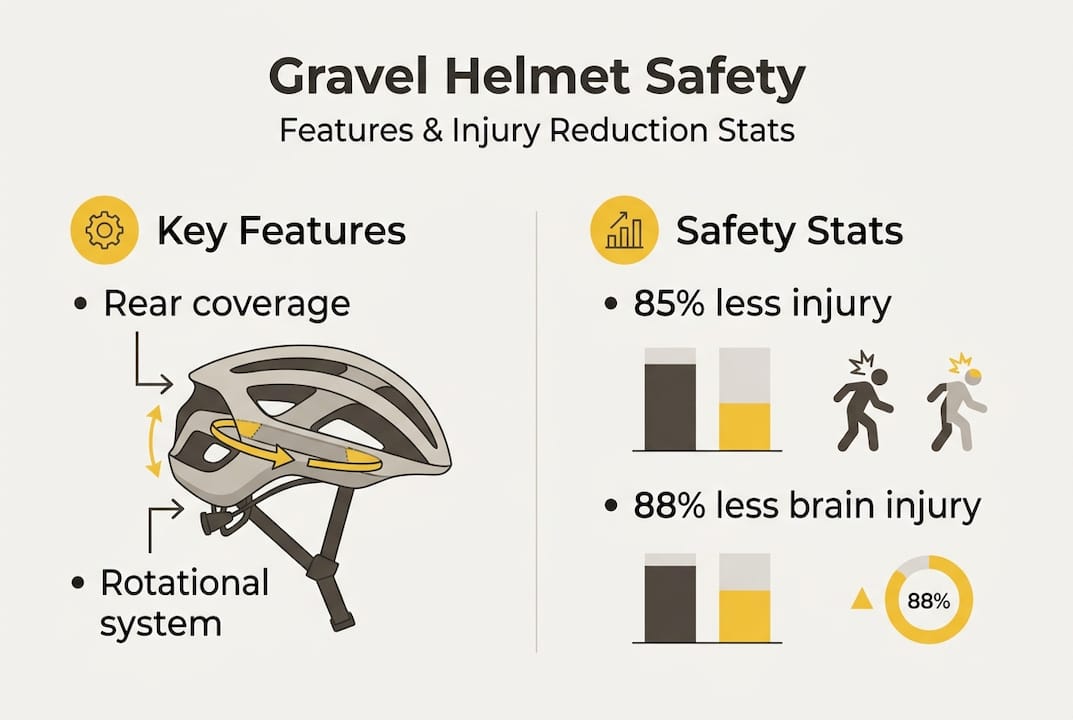
Helmets reduce head injury risk by 85% and severe brain injury by 88%, yet most cyclists still reach for whatever helmet is hanging by the door. On gravel, that choice carries real consequences. Gravel terrain is unpredictable by nature: loose rock, packed dirt, sudden drops, and fast-changing surfaces create a crash profile that standard road helmets simply were not designed to handle. This guide breaks down exactly why gravel riding demands a purpose-built helmet, what design features actually matter, and how to make a confident, informed decision before your next ride.
Table of Contents
- What sets gravel cycling apart
- Key design features of gravel helmets
- The science: How much safer are gravel helmets?
- Choosing and using a gravel helmet: Expert advice
- What most cyclists get wrong about gravel helmets
- Ready to ride safer? Explore our helmet tech and gravel solutions
- Frequently asked questions
Key Takeaways
| Point | Details |
|---|---|
| Gravel riding risks | Mixed terrain and unpredictable crashes make helmet choice far more important than on paved roads. |
| Purpose-built protection | Gravel helmets provide deeper coverage and rotational impact tech designed specifically for off-road cycling. |
| Lab-tested safety | Top-rated helmets with MIPS and 4-5 stars on independent tests dramatically lower injury risk. |
| Fit is critical | Even the best helmet won’t protect you if it fits poorly or is worn loosely. |
What sets gravel cycling apart
Gravel cycling is not road cycling with a different tire. The terrain changes everything. You are dealing with loose gravel that shifts under your wheel, embedded rocks that can stop a front wheel instantly, and packed dirt trails that offer little warning before a corner becomes a slide. That unpredictability is what makes gravel riding exciting, and also what makes it genuinely more dangerous than a smooth tarmac loop.
Crash types on gravel differ significantly from road or mountain bike (MTB) incidents. Road crashes tend to happen at higher speeds with sliding impacts. MTB crashes often involve technical obstacles and steep terrain. Gravel crashes sit in between: lower-speed falls are common, but rotational impacts are frequent because wheels catch on loose material and riders go over the bars or sideways without much warning. Rotational force is particularly dangerous because it causes the brain to twist inside the skull, which is the primary mechanism behind concussions.
There is also the endurance factor. Gravel rides often last four to eight hours or more. Over that duration, vibration from rough surfaces transfers constantly through your body, and a helmet that fits poorly or lacks adequate ventilation becomes a distraction. Discomfort leads to adjustments, which leads to a helmet that shifts out of position, which is exactly what you do not want when a crash happens.
Gravel riding involves mixed terrain with higher risks of off-road falls, requiring extended rear coverage, rotational impact protection like MIPS, and better low-speed ventilation compared to road helmets.
Understanding why cycling helmets matter in general is the foundation, but gravel riding adds layers of complexity that demand a more specific approach. The gravel helmet recommendations from independent reviewers consistently point to the same conclusion: terrain shapes helmet choice.
- Mixed surfaces increase fall frequency and unpredictability
- Rotational impacts are more common than pure linear impacts on gravel
- Extended rides require better ventilation and a more secure fit
- Rear and side coverage matter more when falls happen sideways or backward
Key design features of gravel helmets
Gravel helmets occupy a deliberate space between road and MTB helmets. They borrow the lightweight construction and aerodynamic efficiency of road helmets while adding the coverage and protection logic of trail riding gear. The result is a category that, when done right, gives you the best of both worlds without the bulk of a full-face MTB lid.
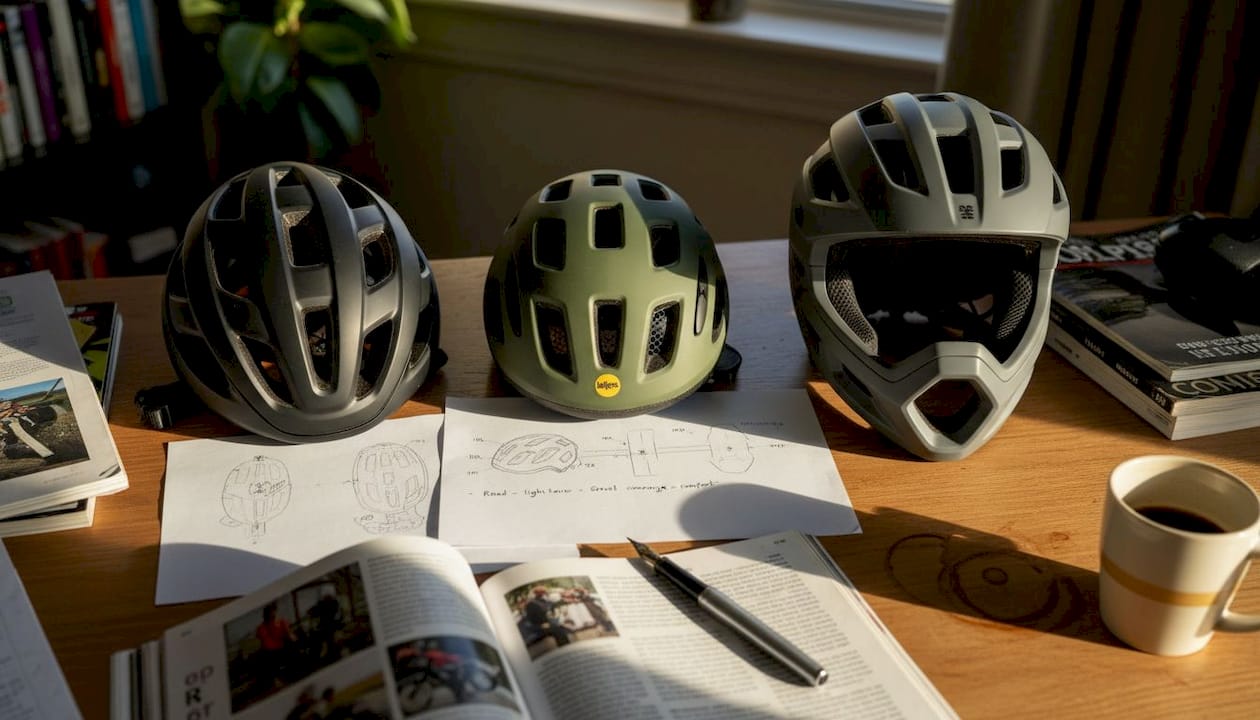
According to Bikeradar’s gravel helmet breakdown, gravel helmets feature deeper rear and side coverage, full-molded shells, visors, and road-level lightness combined with off-road protection. That rear coverage is not cosmetic. It protects the occipital region at the back of your skull, which is frequently exposed in backward falls common on gravel.
Rotational impact systems are the most important technology in modern gravel helmets. MIPS (Multi-directional Impact Protection System), Spherical (used by POC), and Kineticore (used by Lazer) all work by allowing the helmet shell to move slightly relative to your head during an angled impact. This reduces the rotational force transferred to the brain. These systems are not optional extras for gravel riders. They are baseline requirements.
| Feature | Road helmet | Gravel helmet | MTB helmet |
|---|---|---|---|
| Rear coverage | Minimal | Extended | Full |
| Rotational protection | Sometimes | Standard | Standard |
| Visor | Rarely | Often included | Always |
| Weight | Lightest | Light to moderate | Moderate |
| Ventilation | Maximum | High | Moderate |
Visors serve a practical function beyond sun blocking. On gravel, debris kicks up constantly. A visor deflects small rocks, mud, and low branches that would otherwise hit your face or eyes directly. On long routes, that protection adds up.
Pro Tip: When comparing gravel helmets, check whether the visor is adjustable or removable. A fixed visor limits your flexibility on mixed-surface routes where you might want to switch between road and trail configurations.
For a deeper look at what to prioritize when shopping, the guide on choosing a cycling helmet walks through the key decision points in practical terms.
The science: How much safer are gravel helmets?
Data makes the case clearly. Helmets reduce head injury risk by 85% and severe brain injury by 88%, but those numbers apply to helmets that fit correctly and include modern protection technology. Not all helmets are equal, and the gap between a basic certified helmet and a top-rated one is significant.
Virginia Tech runs the most rigorous independent helmet testing program available to consumers. Their results show that MIPS helmets outperform standard EPS (expanded polystyrene foam) helmets by 20 to 40% in concussion risk reduction. That is not a marginal improvement. That is the difference between a concussion and walking away from a crash.
Virginia Tech rates helmets on a 1 to 5 star scale. A 5-star helmet is not just better than a 1-star helmet. It can be up to three times more effective at reducing concussion risk. Price does not determine star rating. Some mid-range helmets outscore premium-priced options from prestige brands.
Here is a snapshot of how top-rated road and gravel helmets perform in Virginia Tech testing:
| Helmet | Stars | MIPS or equivalent |
|---|---|---|
| Smith Session MIPS | 5 stars | Yes |
| Specialized Tactic 4 | 5 stars | Yes |
| Giro Manifest Spherical | 5 stars | Yes (Spherical) |
For the full list of top-rated helmets, Virginia Tech publishes updated rankings that are worth bookmarking before any helmet purchase.
Here is how to use safety data effectively:
- Start with Virginia Tech ratings. Filter for 4 or 5 stars only.
- Confirm the helmet includes MIPS or an equivalent rotational protection system.
- Check that the helmet meets current helmet safety standards for your region (CE EN 1078 in Europe, CPSC in the U.S.).
- Cross-reference with cycling safety tips to understand how helmet choice fits into your broader safety strategy.
Star ratings matter more than the logo on the side of the helmet. That is the most important takeaway from the data.
Choosing and using a gravel helmet: Expert advice
Knowing what to look for is half the battle. The other half is applying that knowledge correctly when you are standing in a shop or scrolling through product pages.
Start with fit. A poor helmet fit causes shifting in crashes, which directly negates the helmet’s protection. On rough gravel terrain, a helmet that moves even slightly during a high-vibration descent is already compromised before any crash occurs. Fit is not a secondary concern. It is the primary one.
Here is a practical process for getting helmet selection right:
- Measure your head circumference at the widest point above your ears. Use this as your starting size.
- Try the helmet on and fasten the retention system. Shake your head firmly in all directions. The helmet should not shift.
- Check rear coverage by placing two fingers at the base of your skull. The helmet should reach or nearly reach that point.
- Confirm the visor does not obstruct your forward sightline when you are in your riding position.
- Wear it for at least 10 minutes in the store. Pressure points that feel minor at first become painful over a four-hour ride.
Pro Tip: If you ride in a low, aggressive position on your gravel bike, tilt your head forward when trying on helmets. The fit that feels right upright may shift uncomfortably when you are actually riding.
The biggest buying mistakes gravel riders make are relying on an old road helmet for technical terrain and prioritizing looks over coverage. A road helmet with minimal rear coverage and no rotational protection system is a genuine liability on demanding routes. The helmet fit tips at THE BEAM cover this in detail, including how to assess whether your current helmet is still performing as intended.
Comfort and security also drive consistent use. A helmet you actually want to wear every ride provides far more protection than a technically superior one you leave in the car because it gives you a headache.
What most cyclists get wrong about gravel helmets
Here is the honest take: not every gravel rider needs the most aggressive purpose-built helmet on the market. As Bikeradar notes, many road and XC MTB helmets perform well enough on smooth gravel paths. The problem is when riders apply that logic to technical routes where the risk profile is completely different.
The real mistake is not under-buying. It is mismatching your helmet to your actual terrain. A rider doing mellow gravel paths on weekends does not need a full MTB-style lid. But that same rider tackling a 100-kilometer mixed-surface route with exposed descents absolutely needs extended coverage, MIPS, and a 4 or 5 star Virginia Tech rating.
We also see the opposite error: riders spending heavily on a prestigious brand name without checking whether that helmet actually performs in independent testing. Price is not a proxy for safety. A well-fitted, 5-star rated helmet at a mid-range price point will protect you better than an expensive helmet with a 2-star rating and a name everyone recognizes.
The helmet buying guide we put together focuses on exactly this: cutting through brand noise and making decisions based on what actually reduces injury risk. Preparedness for unexpected crashes is what separates smart helmet choice from wishful thinking.
Ready to ride safer? Explore our helmet tech and gravel solutions
Knowledge is the starting point. The next step is putting the right equipment on your head before your next gravel adventure.
At THE BEAM, we design safety equipment for cyclists who take protection seriously without compromising on performance or style. Whether you are preparing for a demanding ultracycling event or upgrading your everyday gravel setup, our range is built around real-world usability. The Roamee Bluetooth helmet kit integrates seamlessly with your helmet to keep you connected without distraction. Explore the full range of cycling innovation designed to make every ride safer, smarter, and more enjoyable.
Frequently asked questions
Can I use my regular road helmet for gravel riding?
You can use a road helmet on smooth, non-technical gravel, but for rough or demanding conditions, a purpose-built gravel or MTB helmet provides significantly better protection and comfort. Road helmets work on smooth gravel but fall short where terrain gets technical.
What is MIPS and why is it important for gravel helmets?
MIPS is a helmet technology that reduces rotational forces during angled impacts, lowering concussion risk by 20 to 40% compared to standard foam-only helmets. For gravel riders who frequently experience sideways and rotational falls, it is a baseline requirement.
How do I know if a gravel helmet is actually safer?
Check for Virginia Tech 4 to 5 star ratings, confirm the presence of MIPS or an equivalent rotational protection system, and verify that the helmet offers extended rear and side coverage suited to gravel terrain.
Is helmet fit really that important for gravel riding?
Absolutely. A poor fit causes shifting during crashes, which directly reduces the helmet’s ability to protect you. On rough gravel surfaces, stability and comfort are not secondary features but essential safety requirements.


