

Riding through city streets in France or Germany often means facing unpredictable traffic, slick cobblestones, and changing weather from one block to the next. For urban cyclists who want more than just basic safety, understanding how your environment shapes your needs is the key to smarter protection. Explore how personalized gear selection and visibility solutions can transform your daily commute, helping you ride with greater confidence and security in any situation.
Table of Contents
- Step 1: Assess Your Cycling Environment and Needs
- Step 2: Select High-Performance Helmets and Accessories
- Step 3: Fit and Adjust Each Safety Item
- Step 4: Integrate Lighting and Visibility Solutions
- Step 5: Verify and Maintain All Safety Gear Regularly
Quick Summary
| Key Point | Explanation |
|---|---|
| 1. Assess your cycling environment | Evaluate road conditions, traffic density, and weather to determine appropriate safety gear. |
| 2. Choose high-performance helmets | Select helmets based on certification, fit, and safety features to enhance personal protection. |
| 3. Properly fit your safety gear | Adjust helmets and protective equipment to ensure maximum comfort and effective safety on the road. |
| 4. Integrate visibility solutions | Use lights and reflective materials to ensure you are seen by others, particularly in low-light conditions. |
| 5. Regularly maintain safety equipment | Establish a routine to check and maintain gear, reducing risks from equipment failures during rides. |
Step 1: Assess Your Cycling Environment and Needs
Before selecting your cycling safety gear, understanding your specific riding conditions is crucial. Urban cyclists face unique challenges that demand targeted protection strategies, which means evaluating your environment becomes the foundation of smart safety preparation.
To effectively assess your cycling needs, start by analyzing the key characteristics of your typical routes. Urban cycling infrastructure diversity plays a significant role in determining your safety requirements. Consider these critical environmental factors:
- Road surface conditions (smooth asphalt, cobblestones, mixed terrain)
- Traffic density and vehicle interaction zones
- Typical weather patterns in your region
- Presence of dedicated bike lanes or shared roadways
- Lighting conditions during your primary riding times
Your safety gear selection should directly correspond to these environmental variables. For instance, high-visibility accessories become paramount in areas with heavy traffic, while robust helmets are essential for routes with uneven surfaces.
Here’s a summary of how urban cycling environments impact your safety gear choices:
| Environmental Factor | Gear Selection Priority | Key Reason |
|---|---|---|
| High traffic density | High-visibility accessories | Increases rider detectability |
| Mixed terrain surfaces | Robust, durable helmets | Greater protection from falls |
| Poor lighting | Reflective clothing and lights | Enhances night visibility |
| Frequent bad weather | Sealed gear/lights | Maintains safety in wet conditions |
| Shared roadways | Additional warning devices | Alert drivers to your presence |
Urban cycling safety isn’t about one-size-fits-all solutions, but about personalized protection matching your specific environment.
Additionally, understanding diverse cyclist needs means recognizing that your individual characteristics also impact gear selection. Factors like your cycling experience, fitness level, and comfort with different road conditions will influence the type and extent of protective equipment you require.
Pro tip: Conduct a detailed route reconnaissance before investing in safety gear, documenting specific challenges and potential hazards to inform your most strategic protection choices.
Step 2: Select High-Performance Helmets and Accessories
Choosing the right cycling helmet is more than just selecting a piece of protective gear—it’s about investing in your personal safety and comfort. Protective helmets are crucial safety equipment designed to shield you from potential impacts and serious injuries during your urban rides.
When selecting a high-performance helmet, consider these critical factors:
- Certification standards matching your specific cycling environment
- Material construction (carbon fiber, fiberglass, advanced polymers)
- Fit and comfort with adjustable retention systems
- Ventilation design for temperature regulation
- Additional safety features like MIPS technology
Modern cycling helmets combine sophisticated engineering with user-focused design. Advanced helmet technology now integrates aerodynamic principles with robust protective capabilities, ensuring cyclists receive comprehensive safety without compromising performance.
Your helmet is not just an accessory—it’s your first line of defense against potential cycling hazards.
Beyond the helmet, consider complementary accessories that enhance your overall safety profile. Reflective elements, integrated lights, and specialized visors can significantly improve your visibility and protection during various riding conditions.
Pro tip: Always try on helmets in person and perform a proper fit test, ensuring the helmet sits level on your head with minimal movement and provides consistent coverage.
Step 3: Fit and Adjust Each Safety Item Properly
Fitting your cycling safety gear correctly is not just a recommendation—it’s a critical step in ensuring your personal protection on the road. Proper safety gear adjustment can mean the difference between effective protection and potential injury.
When adjusting your safety equipment, focus on these key areas:
- Helmet positioning level and centered on your head
- Chin strap tension allowing one finger between strap and chin
- Side straps alignment forming a ‘V’ shape under your ears
- Retention system snug but not uncomfortably tight
- Visual and comfort checks ensuring unrestricted movement
Helmet fit techniques are crucial for maintaining optimal protection during rides. A properly adjusted helmet reduces head injury risks by ensuring consistent coverage and stability during unexpected impacts.
Your safety gear is only as good as its fit—precision matters more than perfection.
Beyond helmets, apply similar meticulous adjustment principles to additional safety accessories like gloves, knee pads, and reflective gear. Each item should feel like a seamless extension of your cycling ensemble, providing protection without restricting your natural movement.
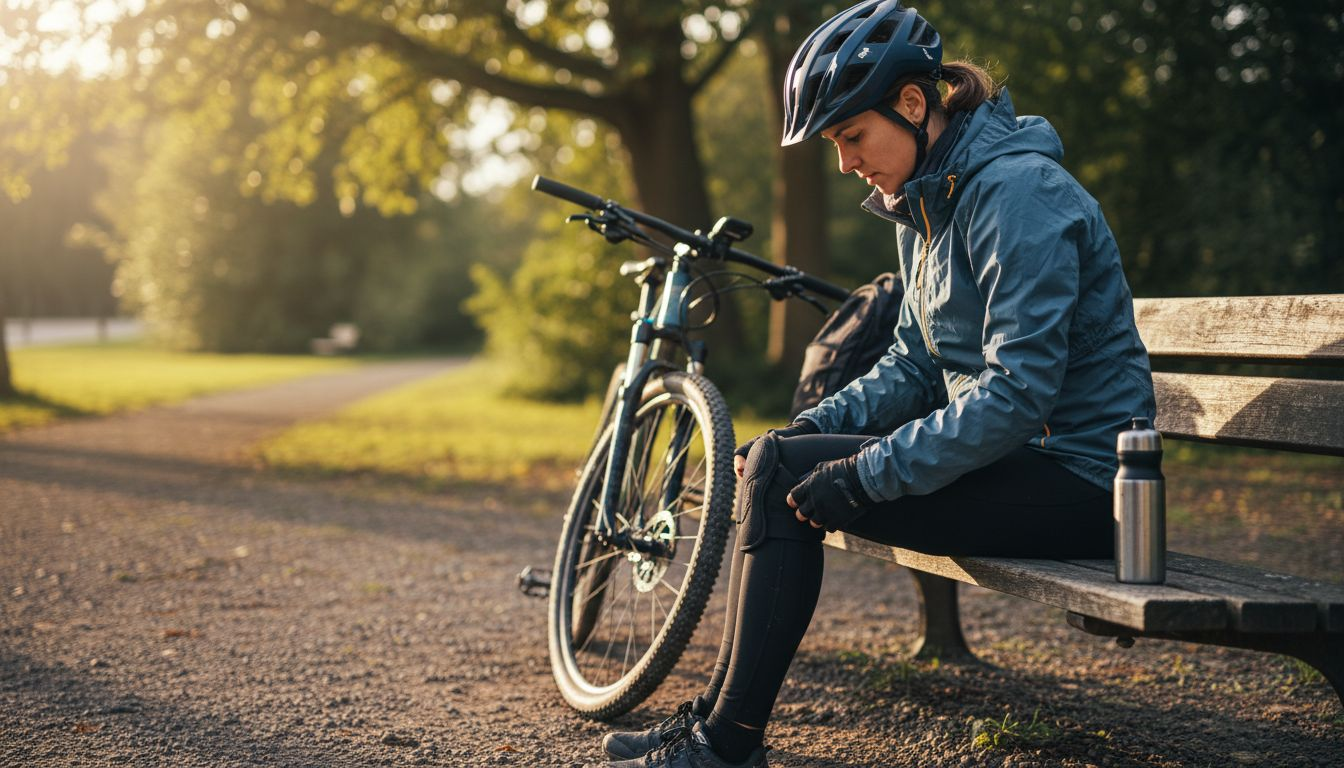
Pro tip: Perform a “shake test” after adjusting your helmet by gently moving your head—if the helmet shifts significantly, readjust the straps and retention system.
Step 4: Integrate Lighting and Visibility Solutions
Maximizing your visibility on the road is a critical strategy for ensuring cyclist safety during all riding conditions. Visibility aids significantly improve driver detection of cyclists, especially in low-light or challenging environments.
When integrating visibility solutions, consider these essential elements:
- Retroreflective materials for enhanced nighttime recognition
- Front and rear light systems with multiple brightness modes
- Fluorescent clothing for daytime visibility
- Helmet and bike reflectors placed strategically
- Dynamic lighting that adapts to ambient conditions
Urban cycling visibility strategies emphasize creating clear sightlines between cyclists and drivers. This means positioning lights and reflective gear to maximize awareness at intersections and during turns.
Visibility is not just about being seen—it’s about communicating your presence confidently and clearly.
Consider layering your visibility solutions, combining active lighting with passive reflective materials to create a comprehensive safety approach that works in multiple environmental conditions.
Pro tip: Select lighting systems with USB rechargeable batteries and multiple mounting options to ensure flexible and consistent visibility across different cycling scenarios.
Step 5: Verify and Maintain All Safety Gear Regularly
Ensuring your cycling safety gear remains in top condition is crucial for protecting yourself on the road. Consistent safety gear maintenance reduces injury risks by preventing potential equipment failures during rides.
Implement a comprehensive maintenance routine that covers these essential checks:
- Helmet inspection for cracks, dents, or structural damage
- Reflective gear assessment for visibility and material integrity
- Light systems testing for battery life and functionality
- Protective clothing examination for wear and tear
- Bike-mounted accessories verification of secure attachments
Pre-ride safety checks are fundamental to maintaining your equipment’s performance. A systematic approach helps identify potential issues before they become serious safety risks.
Regular maintenance transforms your safety gear from a passive protection system into an active defense mechanism.
Establish a maintenance schedule that aligns with your riding frequency. More intense riding conditions demand more frequent and thorough equipment inspections to ensure your safety gear remains reliable and effective.
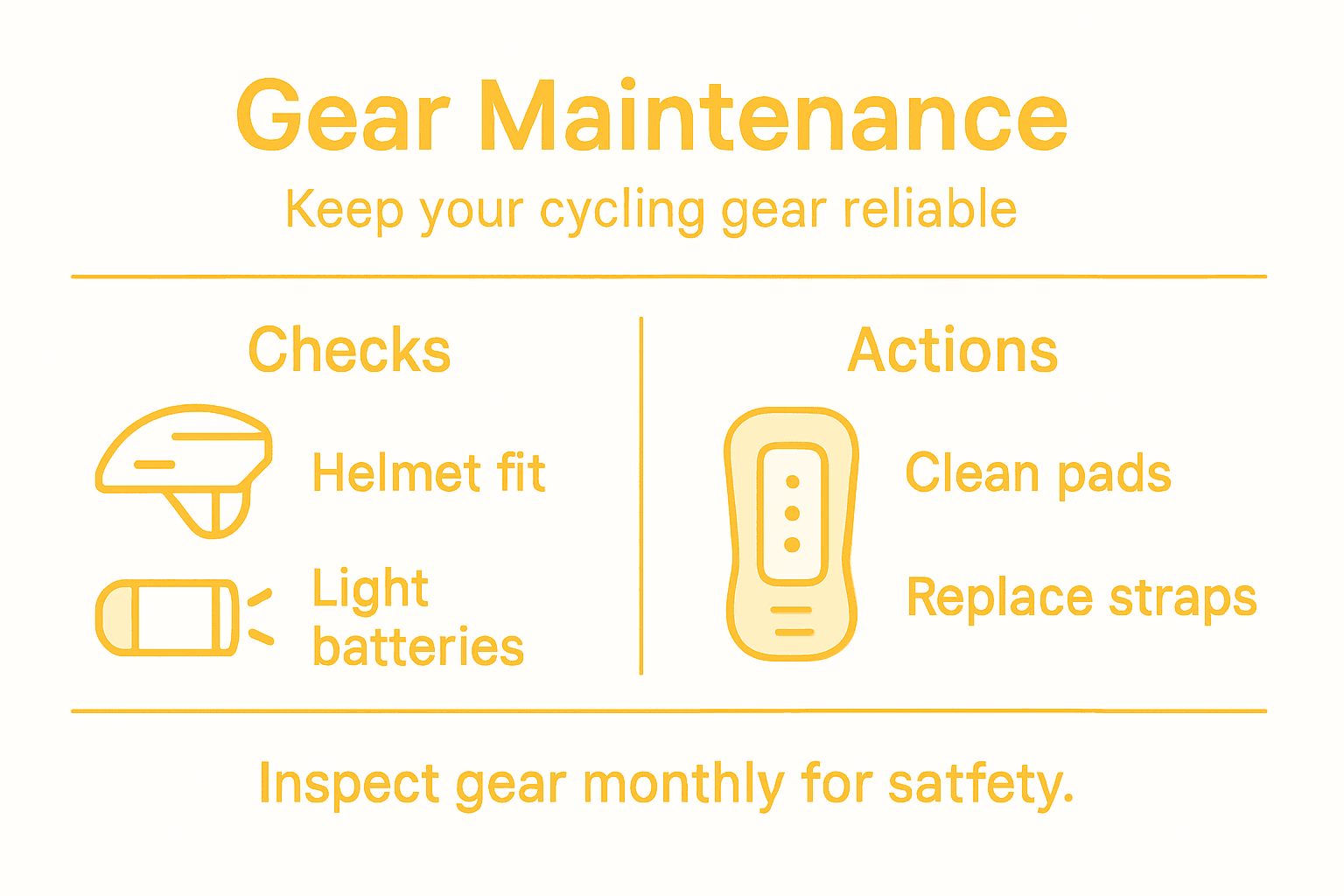
Use this table to schedule regular maintenance for your cycling safety gear:
| Gear Item | Inspection Frequency | Common Issues to Check |
|---|---|---|
| Helmet | Monthly | Cracks, loose fit |
| Lights | Weekly | Battery charge, mount security |
| Reflective gear | Bi-monthly | Fading, tearing |
| Gloves/pads | Monthly | Compression, worn padding |
| Attachments | Weekly | Mount tightness, stability |
Pro tip: Create a digital or physical maintenance log to track inspection dates, replace components proactively, and maintain a comprehensive record of your safety gear’s condition.
Enhance Your Cycling Safety with THE BEAM’s Advanced Protection Gear
The guide emphasizes the importance of customized safety gear selection and proper fit to protect cyclists from urban challenges such as high traffic, poor lighting, and varied terrain. Your goal is to optimize visibility and reduce injury risks with reliable, performance-driven equipment. THE BEAM understands these needs and offers innovative solutions like the VIRGO integral helmet featuring MIPS technology for superior head protection and comfort. Enhance your safety further with our specialized reflectors designed to maximize visibility in all conditions.
Ready to elevate your ride protection and truly feel confident on the road? Explore our full collection of high-end cycling safety gear at THE BEAM. Whether you are an everyday commuter or a safety-conscious urban rider, our helmets and accessories deliver cutting-edge design and real-world usability. Start protecting yourself smarter today.
Frequently Asked Questions
How do I assess my cycling environment for safety gear?
Before selecting safety gear, analyze the key characteristics of your typical routes, such as road surface, traffic density, and weather patterns. Identify these factors to ensure your gear matches your environment, such as choosing high-visibility items for crowded areas.
What features should I look for when choosing a helmet?
Prioritize helmets that meet certification standards, have adjustable fit systems, and include safety technologies like MIPS. Ensure to try on different helmets to find one that fits snugly and feels comfortable during rides.
How can I improve my visibility while cycling at night?
Integrate front and rear light systems, and wear reflective clothing to enhance your visibility in low-light conditions. Make sure to check that your lights have multiple brightness modes and are securely mounted.
What is the best way to maintain my cycling safety gear?
Establish a regular maintenance routine by inspecting your gear before each ride and checking for wear and tear. Aim to create a schedule, such as inspecting your helmet monthly and testing your lights weekly, to ensure all equipment stays in top condition.
How do I properly fit my cycling helmet?
Ensure your helmet is level on your head, adjust the chin strap to allow for a one-finger gap, and align the side straps in a ‘V’ shape under your ears. Perform a shake test to check for stability; if it shifts, readjust the straps until it fits securely.


