

TL;DR:
- Helmet impact sensors record collision forces and provide data to enhance safety awareness, not diagnose injuries. They rely on multi-axis accelerometers and gyroscopes to detect significant impacts and reduce false alarms through fusion logic. While advances like self-powered sensors improve monitoring, they cannot replace proper helmet fit or medical evaluation after a crash.
Impact sensors in helmets are devices that detect, measure, and record the forces generated during head collisions, giving cyclists objective data about potential injury risks in real time. Known in engineering as inertial measurement units (IMUs), these systems combine tri-axial accelerometers and gyroscopes to capture both linear and rotational forces. Research from Sports Gadget Review confirms that sensors record impact magnitude and cumulative load but cannot diagnose concussions. That distinction matters more than most riders realize. Understanding the role of impact sensors in helmets means knowing exactly what they can and cannot do for your safety on the road.
How do impact sensors in helmets detect and measure collisions?
The core mechanism behind impact detection in helmets relies on accelerometers measuring G-forces applied to the helmet shell. When your helmet strikes a surface, the accelerometer registers a sudden spike in force across three axes: front-to-back, side-to-side, and top-to-bottom. Gyroscopes work alongside these accelerometers to capture rotational velocity, which is critical because rotational forces are strongly linked to brain injury risk. Together, this combination is called sensor fusion, and it is the foundation of how smart helmets functionality has advanced in recent years.
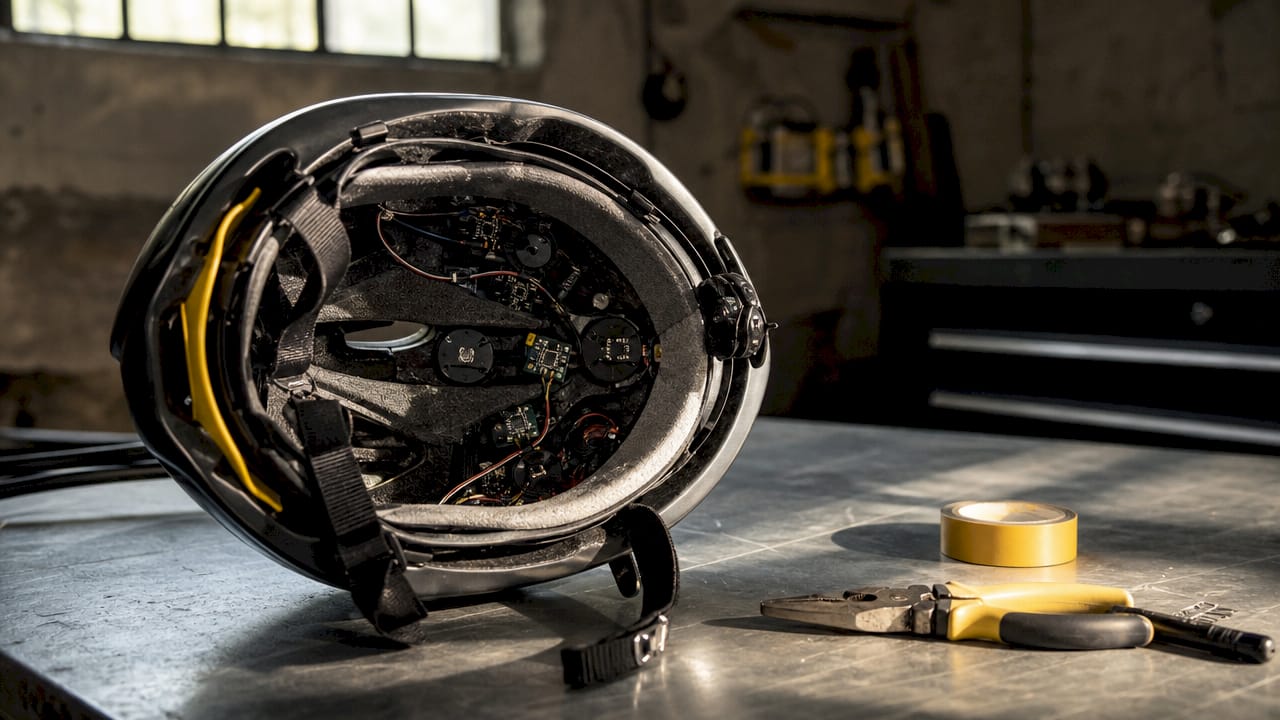
Sensor fusion goes further than raw data collection. Advanced systems pair tri-axial inertial measurement units with mechanical tilt sensors to reduce false alarms. Research published in the Journal of Sensor and Actuator Networks shows that detection triggers when both tilt exceeds 70 degrees and impact exceeds 1G simultaneously, improving reliability significantly. This threshold logic is what separates a genuine crash signal from the vibration of riding over cobblestones or a pothole.
Some of the most forward-looking designs use self-powered triboelectric nanogenerators embedded in the helmet foam. These sensors generate their own electricity from mechanical pressure, eliminating the need for batteries entirely. A study published in Chemical Engineering Journal found that nanofibrous sensors maintain 96% voltage output after 10,000 compression cycles, with Bluetooth enabling wireless alert transmission. For cyclists who want continuous monitoring without charging routines, this technology represents a meaningful step forward.
Here is what determines whether a sensor array is genuinely useful for impact detection:
- Axis coverage: Sensors must capture forces in all three planes, not just vertical impact.
- Gyroscopic data: Rotational velocity data is as important as linear G-force for assessing injury risk.
- Threshold calibration: The system must distinguish riding vibrations from genuine crash events.
- Fusion logic: Combining tilt and impact data together reduces false positives that would otherwise erode rider trust.
- Wireless transmission: Real-time alerts to a phone or connected device require low-latency Bluetooth or similar protocols.
Pro Tip: If you are evaluating a smart helmet for impact detection, ask specifically how many accelerometer axes it uses and whether it incorporates gyroscopic data. A single-axis accelerometer captures only a fraction of the forces involved in a real crash.
What are the strengths and limitations of helmet-mounted impact sensors?
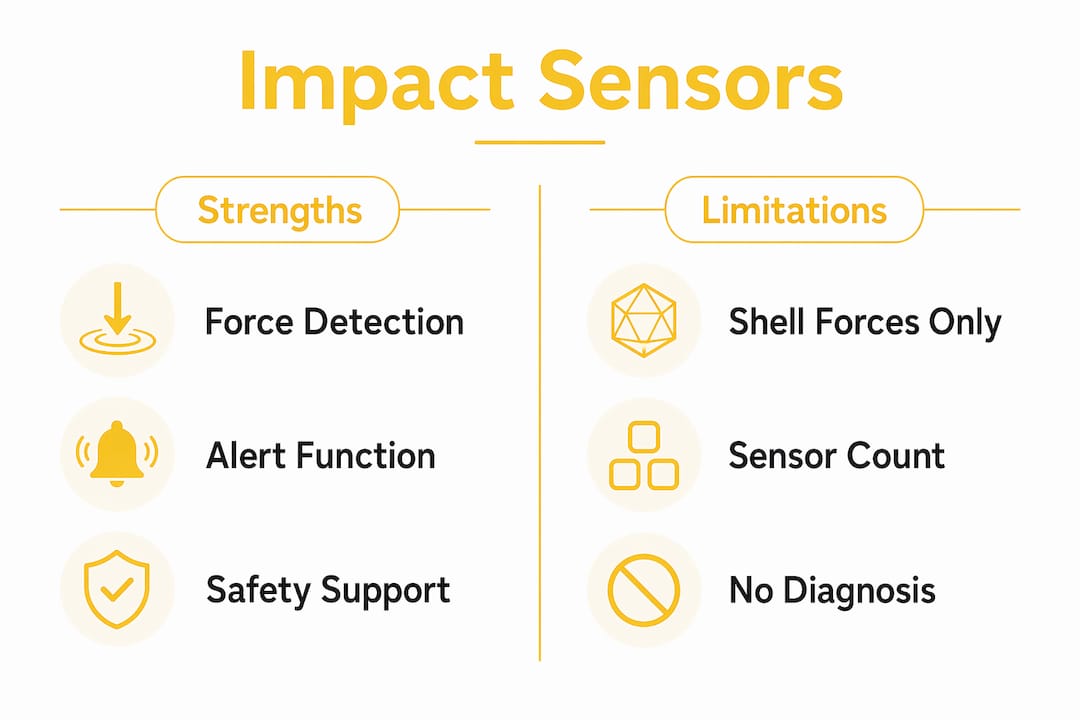
The most important limitation to understand is one that most product marketing glosses over. Helmet-mounted sensors measure forces on the outer shell, not the forces your brain actually experiences. The Bicycle Helmet Safety Institute explains that helmet covers manage energy absorption, meaning the head experiences different impact forces than what sensors record. This gap between shell data and brain data is real and consequential.
The number of sensors also matters enormously. The same research indicates that 7 to 11 accelerometers in different planes are needed for effective impact detection, yet most commercial devices use far fewer. Fewer sensors mean reduced ability to capture rotational forces, which are among the most damaging in cycling crashes. A single accelerometer placed at the crown of the helmet will miss oblique impacts entirely.
The FDA has issued caution about consumer devices that claim to detect concussions, and that caution applies directly to helmet sensors. No current consumer-grade sensor can tell you whether a concussion has occurred. What sensors can do is flag that a significant impact happened and prompt you to seek medical evaluation. That is a genuinely useful function, but it is a different one from diagnosis.
| Capability | Reality for cyclists |
|---|---|
| Measuring shell impact force | Reliable with multi-axis sensor arrays |
| Detecting rotational forces | Requires gyroscopes; many devices lack this |
| Diagnosing concussions | Not possible with current consumer technology |
| Triggering emergency alerts | Achievable with GPS-GSM integrated systems |
| Tracking cumulative impact load | Valuable for long-term brain health management |
Pro Tip: Treat sensor alerts as a prompt to stop riding and get evaluated, not as a pass or fail concussion test. The data is a starting point for a medical conversation, not the conclusion of one.
How can cyclists use impact sensor data to improve safety and brain health?
The practical value of impact sensors extends well beyond the moment of a crash. Used consistently, this data becomes a tool for managing your long-term brain health in ways that were simply not possible before wearable sensor technology existed. Research on wearable sensors and concussion detection confirms that tracking cumulative G-force and rotational load allows better planning to mitigate brain injury risks before symptoms appear. That is a shift from reactive to proactive safety management.
Here are four concrete ways cyclists can put impact sensor data to work:
-
Cumulative load tracking. Every ride adds to your total head impact exposure. Monitoring this over weeks and months lets you identify whether certain routes, surfaces, or riding styles are generating disproportionate impact loads. Gravel riders and mountain bikers in particular accumulate significant sub-concussive impacts that individually feel minor but compound over time.
-
Post-impact medical prompts. When a sensor registers a force above a set threshold, it creates a timestamped record. That record gives a physician concrete data to work with during an evaluation, rather than relying solely on your memory of the event. This is especially valuable for solo riders who may be disoriented after a fall.
-
Behavior modification. Studies in industrial safety show over 50% incident reduction through behavioral change when impact is monitored. The same principle applies to cycling. Riders who see their impact data tend to adjust their technique, choose smoother lines, and wear their helmets more consistently. Awareness drives change in a way that abstract safety advice rarely does.
-
Integration with connected safety apps. Many smart helmet systems sync with smartphone apps that log impact history, send alerts to emergency contacts, and provide visual dashboards of your exposure over time. This connectivity turns the helmet from a passive piece of equipment into an active part of your cycling safety ecosystem.
For parents of young cyclists and coaches managing teams, the alerting function alone justifies the investment. A high-G event triggers an immediate notification, removing the guesswork about whether a child who fell hard needs medical attention.
What are the latest innovations in helmet impact sensor technology?
The most significant recent development is the self-powered triboelectric sensor, which generates electricity from the mechanical pressure of an impact rather than drawing from a battery. This matters for cyclists because it removes the maintenance burden of charging a safety-critical component. The nanofibrous sponge structure used in these sensors is also highly breathable and lightweight, which means it integrates into helmet foam without adding bulk or reducing ventilation.
Standalone smart helmets with embedded GPS and GSM modules represent another major step. Research published in MDPI Journal of Sensor and Actuator Networks found that microcontroller-based systems achieved 93.7% detection accuracy with a 2.8-second alert latency and a low false positive rate. These systems operate independently of a smartphone, which is critical in scenarios where a rider is incapacitated and cannot interact with a paired device.
| Innovation | Current status | Benefit for cyclists |
|---|---|---|
| Triboelectric nanogenerators | Research-stage, emerging commercial use | Battery-free continuous monitoring |
| GPS-GSM standalone helmets | Available in select smart helmet models | Autonomous emergency alerts |
| Multi-axis sensor fusion | Available in advanced consumer helmets | Reduced false positives, better accuracy |
| Long-term cumulative tracking | Available via connected apps | Brain health management over time |
The trajectory of helmet technology trends points toward tighter integration between sensor hardware, medical-grade data standards, and emergency response systems. The helmets being designed today are laying the groundwork for devices that will communicate directly with emergency services and personal health records within the next few years.
Key takeaways
Impact sensors in helmets are monitoring tools that record force data to support safety awareness and medical evaluation, not devices that diagnose brain injuries.
| Point | Details |
|---|---|
| Sensors measure shell forces, not brain forces | Helmet energy absorption means recorded data differs from actual head impact. |
| Sensor fusion improves accuracy | Combining accelerometers and gyroscopes reduces false positives significantly. |
| Diagnosis requires a physician | No consumer sensor can confirm a concussion; data prompts evaluation, not replaces it. |
| Cumulative tracking protects long-term health | Monitoring impact load over time helps riders manage brain injury risk proactively. |
| Self-powered sensors are the next frontier | Triboelectric nanogenerators eliminate battery dependency for continuous monitoring. |
What I’ve learned from watching sensor tech meet real-world cycling
The conversation around impact sensors often gets pulled in two directions. On one side, enthusiasts treat sensor data as near-medical authority. On the other, skeptics dismiss the technology as marketing noise. After spending time with both the research and the riders who use these systems, I think both camps are missing the point.
The genuine value of impact sensors is not in the moment of the crash. It is in the weeks and months of data that accumulate before and after. A rider who sees that their weekly gravel rides are generating twice the impact load of their road rides has information they can act on. That is not a gimmick. That is a meaningful shift in how we think about head protection for cyclists.
What I would push back on is the idea that a sensor replaces proper helmet fit, quality construction, or MIPS technology. It does not. A well-fitted helmet with rotational impact protection will always be the foundation. Sensors are a layer on top of that foundation, not a substitute for it. Riders who invest in sensor technology while wearing a poorly fitted or outdated helmet are solving the wrong problem first.
The most encouraging trend is the move toward long-term brain health monitoring, as highlighted in wearable sensor research. That framing treats the brain as something worth managing over a lifetime of riding, not just protecting in a single crash. That is the right way to think about this technology, and it is where the most meaningful progress will come from.
— Sophie
Gear up with helmets built for real protection

Thebeamofficial designs helmets for cyclists who take safety seriously, from daily commuters to gravel riders pushing technical terrain. The VIRGO integral helmet with MIPS technology combines rotational impact protection with the kind of build quality that holds up across thousands of kilometers. If you are ready to move beyond basic protection and explore helmets engineered with advanced safety technology, browse the full range of adult cycling helmets at Thebeamofficial. For younger riders, the kids’ helmet collection brings the same safety-first approach to a smaller fit. Every helmet Thebeamofficial builds reflects the same principle: protection you can trust before, during, and after the ride.
FAQ
What is the role of impact sensors in helmets?
Impact sensors in helmets detect and record the forces generated during collisions, providing data on impact magnitude and cumulative load. They serve as monitoring and alert tools, not diagnostic devices, and should prompt medical evaluation after significant impacts.
Can helmet sensors diagnose a concussion?
No consumer-grade helmet sensor can diagnose a concussion. Sensors measure forces on the helmet shell, which differ from the forces the brain actually experiences, and individual injury thresholds vary too widely for automated diagnosis.
How do impact sensors work in a smart helmet?
Most smart helmets use tri-axial accelerometers and gyroscopes in a sensor fusion configuration. Detection triggers when both tilt angle and impact force exceed set thresholds simultaneously, reducing false alerts from normal riding vibrations.
How many sensors does a helmet need for accurate detection?
Research indicates that 7 to 11 accelerometers positioned across different planes are needed for reliable impact detection. Most commercial helmets use fewer, which limits their ability to capture rotational forces from oblique impacts.
Are self-powered helmet sensors available yet?
Triboelectric nanogenerator sensors are currently in advanced research stages and beginning to appear in commercial development. These sensors generate power from mechanical pressure, eliminating batteries while maintaining reliable wireless alert transmission.


