

Riding through busy streets in Berlin or Paris, every cyclist wants real protection, not just a promise. Cycling helmet certifications go far beyond a label—they show your helmet has survived rigorous impact and retention tests proven to reduce head injuries. For anyone cycling daily in Germany or France, knowing what certification stands for gives you confidence that your helmet meets strict, region-specific standards for safety. This guide breaks down how proper certification keeps your commute safe and why that label is your best assurance.
Table of Contents
- What Cycling Helmet Certifications Mean
- Key Helmet Certification Standards Worldwide
- Testing Protocols Behind Certification Labels
- Legal Rules For Helmets In Europe And The U.S.
- Common Certification Pitfalls And How To Avoid Them
Key Takeaways
| Point | Details |
|---|---|
| Certification Ensures Protection | A certified cycling helmet has passed rigorous tests ensuring it protects your head during crashes. |
| Focus on Recognized Standards | Look for helmets with certifications like CPSC or EN 1078, which indicate compliance with safety benchmarks. |
| Beware of Marketing Claims | Regulatory certifications vary, so avoid helmets with vague or outdated labels that may not provide real protection. |
| Check for Multiple Certifications | Helmets with multiple certification labels often reflect higher overall safety standards for diverse riding conditions. |
What Cycling Helmet Certifications Mean
Cycling helmet certifications are regulatory performance standards that verify your helmet actually protects your head during crashes. They’re not just stickers or marketing claims—they represent real testing and measurable safety outcomes. When you see a certification label, it means the helmet has passed rigorous tests proving it reduces impact forces and stays secure during collisions.
Think of certification as your proof of protection. A certified helmet has been tested to ensure it doesn’t obstruct your vision, stays firmly on your head during impact, and maintains secure straps under stress. These aren’t optional features—they’re fundamental requirements that distinguish protective cycling helmets from novelty headgear. Certified helmets significantly reduce force to the head during collisions, which is the whole point of wearing one.
Why does this matter for your daily commute through Berlin or Paris? Because the difference between a certified and uncertified helmet could mean the difference between a minor bump and a serious injury. Certifications ensure you’re not gambling with your safety.
How Certifications Protect You
Certified helmets meet established safety requirements through standardized testing protocols. Manufacturers must prove their designs work before they hit the market. You can’t visually evaluate how a helmet absorbs impact or whether the straps will hold during a crash—that’s where certification testing fills the gap.
The certification process includes tests for:
- Impact absorption and force reduction
- Strap retention strength under stress
- Vision obstruction measurement
- Helmet retention during simulated crashes
- Material durability and construction quality
Standards focus on managing impacts through energy absorption, ensuring your brain experiences reduced force during accidents. This absorption is engineered, tested, and verified—not guessed.
What Certification Labels Actually Mean
When you see a certification label inside your helmet, it’s telling you something specific: this helmet meets an internationally recognized safety benchmark. Different regions have different standards—Europe has different requirements than North America—but all certified helmets have proven their protection through rigorous testing.
The label represents thousands of impact tests, strap pulls, and durability checks. It’s your assurance that someone independent tested the helmet before you trusted it with your head. Certification labels indicate compliance with these performance benchmarks, which are absolutely essential for ensuring real safety in cycling.
A certification label isn’t decorative—it’s proof that your helmet has survived the tests your head might face on the road.
When shopping for your next helmet, prioritize certified models over trendy designs without proper testing. Your commute is too important to cut corners on protection. Understanding these standards helps you make informed decisions rather than guessing based on appearance or price alone.
Pro tip: Always check for certification labels inside the helmet before purchase, and verify the label matches current standards for your region—older labels may indicate an older design that no longer meets current protection requirements.
Key Helmet Certification Standards Worldwide
Helmet certifications vary across regions, but they all serve the same purpose: proving your helmet meets measurable safety benchmarks. The standard you see on your helmet’s label tells you which testing protocols it passed. Understanding these differences helps you know exactly what protection you’re getting, whether you’re cycling in France, Germany, or beyond.
Different standards exist because regions prioritize different testing methods and coverage requirements. A helmet certified in Europe may use different impact tests than one certified in North America. This doesn’t mean one is better—they’re just suited to different markets and rider needs. Most quality helmets carry multiple certification labels to meet requirements across different markets.
Major Global Standards
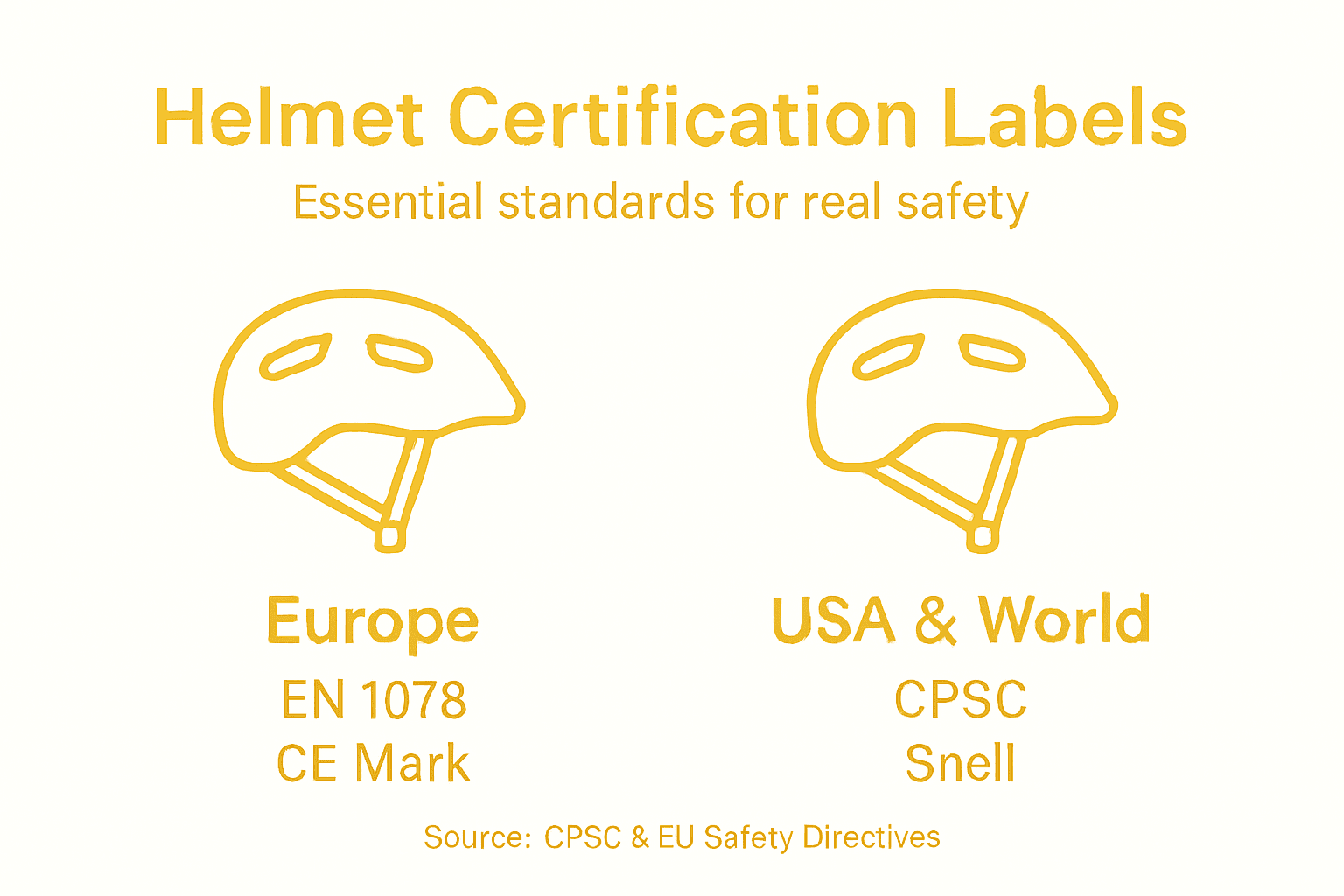
The U.S. Consumer Product Safety Commission (CPSC) standard is the baseline requirement in America. It covers impact attenuation, retention system strength, and basic coverage area. If you’re buying a helmet sold in the United States, CPSC certification is mandatory.
European EN 1078 is the standard most relevant to you as an urban commuter in France or Germany. This certification ensures helmets meet European safety benchmarks through rigorous testing protocols. EN 1078 sets strict requirements for impact energy absorption and strap retention that European riders depend on.
Snell standards are among the strictest, including certifications like B-95 and B-95A. These go beyond baseline regulatory compliance with enhanced impact testing methods. Snell-certified helmets undergo more rigorous testing than many other standards require, making them popular with serious cyclists who prioritize maximum protection.
Other notable standards include ASTM F1447 in the United States and various Asia-Pacific certifications. Cycling helmets are certified to different standards globally, each addressing factors like impact attenuation, retention system strength, and coverage area.
Here’s how major helmet certification standards differ around the world:
| Standard | Region | Testing Focus | Typical Use Cases |
|---|---|---|---|
| CPSC | United States | Impact attenuation, strap strength, coverage area | Urban, recreational cycling |
| EN 1078 | Europe | Impact energy absorption, retention, vision checks | Urban commuting, sport cycling |
| Snell B-95 | Worldwide | Enhanced impact, stricter protocols | Performance, racing cycling |
| ASTM F1447 | United States | Impact, retention, helmet fit | Leisure, general cycling |
What This Means for Your Choice
When shopping for your next helmet, look for these key certifications:
- EN 1078 (European standard—essential for your region)
- CPSC (U.S. standard if buying American brands)
- Snell B-95 or B-95A (optional but indicates premium protection)
- Multiple labels (shows compliance across markets)
A helmet with multiple certification labels meets requirements in different regions and often indicates higher overall safety standards.
Don’t assume a cheaper helmet is unsafe just because it has fewer certifications. A single EN 1078 label means it passed rigorous European testing. However, helmets with additional Snell or other certifications suggest the manufacturer invests extra in safety beyond minimum requirements.
Your daily commute through Berlin or Paris deserves a helmet that meets at least EN 1078 standards. This gives you confidence that your helmet has survived the exact testing protocols designed for European cycling conditions.
Pro tip: Check the helmet’s interior label before purchase to verify it displays current EN 1078 certification—avoid older models with outdated certification codes, as testing standards have become more stringent in recent years.
Testing Protocols Behind Certification Labels
Certification labels mean nothing without rigorous testing behind them. Behind every certified helmet lies a battery of specific tests designed to simulate real-world crash conditions. These protocols ensure helmets don’t just look safe—they actually protect your head when things go wrong.
Manufacturers can’t simply claim their helmets are safe. They must submit prototypes for independent testing that proves impact protection, strap retention, and visibility all meet strict benchmarks. Testing protocols are established to verify helmet durability and effectiveness across different usage conditions you might encounter on your daily commute.
The Core Testing Requirements
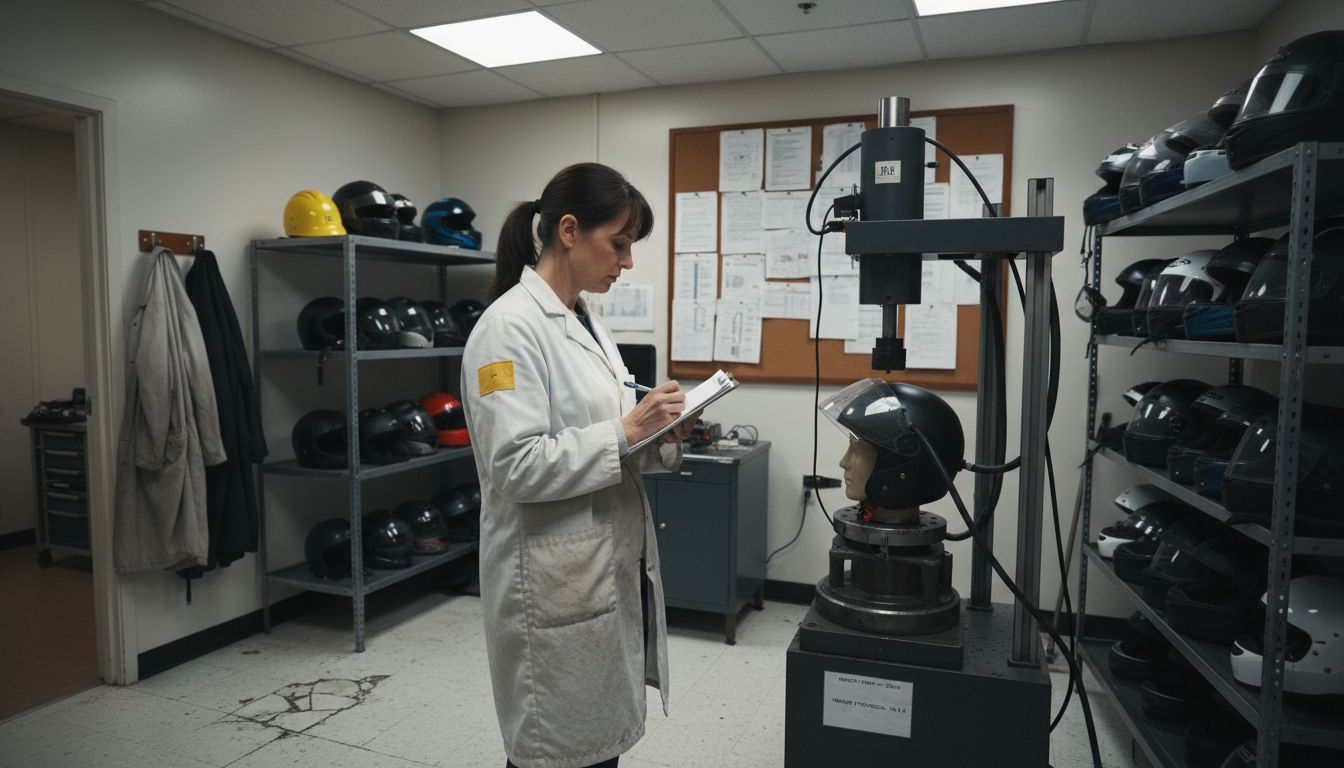
Impact attenuation testing simulates what happens when your head hits pavement. Helmets undergo impacts using various anvils at different velocities to mimic realistic crash scenarios. Sensors measure acceleration and force transmitted to the head to ensure the helmet absorbs enough energy to prevent injury.
Retention system testing verifies your helmet actually stays on during impact. The strap system gets pulled with precise force measurements to ensure it won’t break or slip during a crash. A helmet that flies off your head offers zero protection, so retention strength is non-negotiable.
Peripheral vision assessments confirm helmets don’t obstruct your view of traffic and hazards. This matters enormously for urban cycling in busy German and French cities where seeing oncoming cars is critical to survival.
Positional stability testing ensures helmets don’t slip forward or backward during impact. Helmets are tested on headforms simulating human heads to measure exactly how force distributes during collision.
What Gets Tested
Key testing areas include:
- Impact energy absorption at multiple impact points
- Strap retention strength under stress
- Vision obstruction measurement
- Helmet positioning stability during crash simulation
- Material durability and long-term integrity
- Coverage area adequacy for protection
Every certified helmet has survived dozens of impact tests before reaching your head—this is what that label actually represents.
Different certifications use slightly different testing methodologies, but all require helmets to meet minimum performance thresholds. European EN 1078 testing, for example, uses specific anvil types and drop heights designed for typical European cycling accidents.
These tests take time and cost money, which is why certified helmets cost more than uncertified alternatives. You’re paying for laboratory validation that your helmet will protect your brain, not just hopes and marketing claims.
Pro tip: Look for certification labels that show recent test dates—certifications from the last three years indicate your helmet meets current safety standards, while older certifications may indicate designs tested using less rigorous methodologies.
Legal Rules for Helmets in Europe and the U.S.
Helmet laws and regulations differ dramatically between Europe and North America, which affects what helmets you can legally buy and whether you’re required to wear one. Understanding these differences matters if you’re cycling across borders or ordering helmets internationally. The rules aren’t just about safety standards—they’re about legal compliance and what manufacturers can sell in each market.
In the United States, the Consumer Product Safety Commission (CPSC) establishes mandatory safety standards for all bicycle helmets sold domestically. CPSC standards specify testing criteria for impact, retention system strength, and labeling requirements. However, helmet use itself isn’t federally mandated—individual states decide whether riders must wear helmets, creating a patchwork of local laws.
Europe takes a more unified approach through harmonized standards. European helmet standards such as EN 1078 mandate specific testing and performance requirements across countries. However, helmet-wearing laws vary significantly—some European nations require helmets for all cyclists, while others only mandate them for children or specific age groups.
The Key Differences
Understand how regulations diverge between regions:
- U.S. federal requirement: CPSC certification mandatory for sale; helmet use varies by state
- European requirement: CE marking mandatory; EN 1078 standards harmonized; wearing laws vary by country
- Labeling: U.S. helmets display CPSC labels; European helmets display CE marks
- Design impact: European standards often require different coverage areas than U.S. standards
- Age restrictions: Many European countries legally require helmets for minors only
Germany requires cyclists under 16 to wear certified helmets, while France encourages but doesn’t mandate helmet use for adults. The United States has no federal helmet requirement, though most states require them for children.
What This Means When Buying
If you’re purchasing a helmet in Europe, look for CE marking indicating European compliance. If buying from American brands for use in Europe, verify the helmet meets EN 1078 standards in addition to CPSC certification. Many quality helmets carry multiple certifications to serve both markets.
Your liability and insurance coverage might depend on helmet use and certification status. Some insurance policies in European countries won’t cover accidents if riders weren’t wearing certified helmets, making compliance a financial issue, not just a safety one.
Legal requirements vary by location, but wearing a certified helmet protects you regardless of local mandates.
When traveling between countries or ordering online, check destination country requirements before purchasing. A helmet certified only for the U.S. market might not legally meet European standards, even though both undergone rigorous testing.
Pro tip: Before ordering a helmet online from international sellers, verify it displays both the certification standard required in your country and current certification date—avoid bargain helmets with outdated certifications or labels for regions other than where you’ll ride.
Common Certification Pitfalls and How to Avoid Them
Not all certification labels mean the same thing, and some helmets exploit consumer confusion to claim safety they haven’t actually proven. Marketing hype often masks weak certifications or outdated standards. Understanding common pitfalls protects you from wasting money on helmets that look safe but deliver minimal protection.
The biggest mistake is assuming any certified helmet offers equal protection. Some helmets pass basic certification but fail real-world performance tests beyond minimum requirements. Others carry labels for standards that no longer reflect current safety benchmarks. Common pitfalls with helmet certifications include misunderstanding certification scope and relying on expired or irrelevant standards that don’t address modern crash scenarios.
Counterfeit helmets are another serious concern. Fake certification labels exist, and knock-off versions of popular models sometimes appear on discount sites. These counterfeit helmets can look identical to certified versions but offer zero actual protection. Always purchase from reputable retailers and authorized distributors.
Red Flags to Watch For
Avoid helmets with these warning signs:
- No visible certification label or unclear labeling
- Claims of certification without displaying the label
- Labels for unrelated activities (skateboarding, motorcycle certifications don’t apply to cycling)
- Test dates older than five years
- Suspiciously low prices compared to quality brands
- No manufacturer information or contact details
- Marketing claims that exceed certification scope
Some manufacturers claim their helmets are certified for multiple activities without proper testing for each. A helmet certified only for skateboarding won’t protect you adequately on a road bike, even if marketing suggests otherwise.
What Real Certification Looks Like
Helmet safety depends on passing all required tests, not just marketing claims or partial compliance. Look for clear, visible labels inside the helmet showing the standard met and test date. The label should include manufacturer name, model number, and certification body information.
Quality helmets display complete certification information without vague language. If a helmet’s label is faded, damaged, or unclear, consider it a red flag. The certification should be recent enough to reflect current safety standards.
To help you spot authentic certification labels, here are key differences:
| Label Feature | Genuine Certification | Counterfeit Indicators | Why It Matters |
|---|---|---|---|
| Standard info | Shows region, code, date | Vague text, outdated, missing | Ensures tested safety |
| Manufacturer name | Clearly listed and current | Absent or generic term used | Traces helmet back to producer |
| Certification body | Recognized agency shown | No agency or fake mark | Confirms independent verification |
| Condition | Legible, undamaged | Worn, faded, unclear printing | Confidence in recent testing |
Real safety comes from understanding your helmet’s actual certification, not from believing marketing promises.
When ordering online, verify certification before purchase. Contact the manufacturer directly if you’re unsure whether a helmet meets specific standards. Reputable companies respond quickly to certification questions because they have nothing to hide.
Don’t assume European brands are automatically safer than American ones, or vice versa. Focus on the specific certification label and test date, not the brand’s origin.
Pro tip: Before buying, take a photo of the certification label, research that specific standard online, and confirm it’s current—if a retailer can’t provide clear certification details or the label seems vague, look elsewhere regardless of price.
Choose Real Protection Backed By Certified Safety Standards
Understanding cycling helmet certifications helps you avoid costly mistakes when it comes to your head’s protection. The article highlights the critical role of certified helmets in absorbing impact, securing straps, and meeting regional standards like EN 1078 that truly safeguard you during crashes. Your daily urban commute or adventurous ride deserves a helmet proven through rigorous testing, not just marketing claims.

Explore THE BEAM’s premium collection of certified HELMETS – The Beam designed with advanced safety features including MIPS technology to stay ahead of global standards. Whether you ride in Europe or the United States, our helmets meet multiple certification benchmarks ensuring dependable protection tailored to your cycling lifestyle. Visit https://thebeamofficial.com now to invest in your safety and discover how combining high-end design with real-world usability can transform every ride into a secure experience. Don’t settle for less than tested safety. Start protecting your head today.
Frequently Asked Questions
What are cycling helmet certifications, and why are they important?
Cycling helmet certifications are regulatory performance standards that verify helmets provide actual head protection during crashes. They are essential because certified helmets have been tested for safety, ensuring they effectively reduce impact forces and stay secure during collisions.
How can I identify if my cycling helmet is certified?
You can identify if your helmet is certified by checking for a label inside the helmet that indicates compliance with recognized safety standards, such as CPSC or EN 1078. This label is proof that the helmet has passed rigorous safety tests.
What testing protocols are used for helmet certification?
Testing protocols for helmet certification include impact attenuation tests, retention system strength verification, vision obstruction assessments, and positional stability testing. Each of these tests ensures that the helmet adequately protects your head during accidents.
What should I look for when comparing different helmets?
When comparing helmets, prioritize those with visible certification labels that meet current standards. Look for additional certifications beyond the minimum requirements, such as Snell standards for enhanced protection, and ensure that the helmet’s test date is recent to guarantee compliance with updated safety guidelines.


