

TL;DR:
- Rotational protection systems like WaveCel and MIPS Spherical are essential in 2026 helmets.
- Smart helmets with AI crash detection and adaptive features are increasingly common and effective.
- Independent impact tests and verification are crucial when choosing a high-protection cycling helmet.
Most cyclists assume that if a helmet has a certification sticker, it protects equally well as any other. That assumption is wrong, and it could cost you. The gap between a basic certified helmet and one built with the latest rotational protection or AI-powered systems is enormous, and that gap widened significantly in 2026. New materials, smarter crash detection, and independent test data are reshaping what serious cyclists should expect from their gear. This guide breaks down the most important helmet technology innovations of 2026, compares the leading protection systems head to head, and gives you a clear framework for making a smarter purchase.
Table of Contents
- What’s new in helmet technology for 2026?
- Rotational protection: Which systems lead in 2026?
- AI and smart materials: The next frontier
- Practical buying guide: How to choose your 2026 helmet
- Our take: Why the safest helmet isn’t always the most expensive
- Where to find the latest in helmet technology
- Frequently asked questions
Key Takeaways
| Point | Details |
|---|---|
| Rotational protection leads | Tech like WaveCel and MIPS Spherical offer the highest levels of independent test-proven protection. |
| Smart features enhance safety | AI-powered sensors and smart materials are now built into helmets for automatic crash detection and comfort. |
| Airbags add extra coverage | Airbag systems are emerging for broader protection but come with cost and practical trade-offs. |
| Choose tech for your needs | Match helmet innovations to your riding style, comfort preference, and budget for the best outcome. |
| Cost doesn’t equal safety | Many mid-range helmets use advanced technology, so prioritize safety standards over price. |
What’s new in helmet technology for 2026?
Helmet technology has moved faster in the last two years than in the previous decade. The biggest shift is that protection is no longer just about absorbing a direct hit. It’s about managing the rotational forces that cause most serious brain injuries in real crashes. At the same time, manufacturers are integrating electronics and adaptive materials that would have seemed futuristic just a few years ago.
Here’s what’s defining the 2026 helmet landscape:
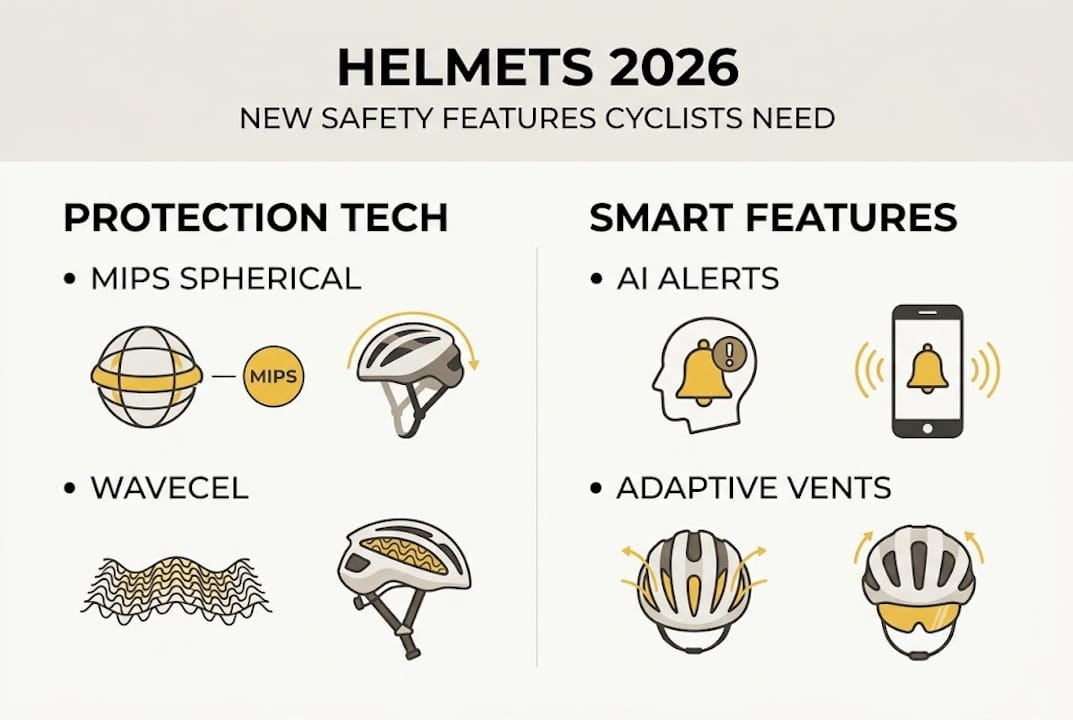
- Rotational protection systems have multiplied beyond MIPS. Alternatives like WaveCel, KinetiCore, and Koroyd now compete directly, with WaveCel and MIPS Spherical consistently topping independent impact tests.
- Smart helmets now offer AI-powered crash detection, real-time biometric monitoring, and adaptive ventilation that adjusts airflow based on your speed and temperature.
- Advanced lightweight materials such as carbon fiber shells and multi-density EPS foam allow helmets to be both lighter and more protective than older designs.
- E-bike specific helmets have become a distinct category, built for higher impact speeds and often including integrated lighting and connectivity.
The focus on gear innovations for 2026 reflects a broader industry push: protection and performance are no longer trade-offs. You can have both.
Pro Tip: Don’t judge a helmet’s effectiveness by price or aesthetics. Always check whether it has been tested by an independent lab and which specific protection system it uses. Marketing language can be misleading, but test scores don’t lie.
One statistic worth knowing: rotational forces are responsible for the majority of traumatic brain injuries in cycling crashes, which is why the shift away from purely linear impact protection represents a genuine safety upgrade, not just a marketing trend.
Rotational protection: Which systems lead in 2026?
Rotational protection refers to a helmet’s ability to reduce the twisting forces transmitted to the brain during an angled impact, which is the most common type in real crashes. Traditional helmets focused on absorbing direct, linear hits. Rotational systems add a layer that allows the helmet to move slightly relative to your head, reducing the torque that causes concussions and diffuse axonal injuries.
The leading systems in 2026 each take a different engineering approach:
| System | Brand | Mechanism | Best for |
|---|---|---|---|
| MIPS Spherical | Multiple brands | Dual-shell slip plane | Road, gravel, commuter |
| WaveCel | Trek/Bontrager | Collapsible cell structure | Mountain, road |
| KinetiCore | Lazer | Integrated flex zones | Road, urban |
| Koroyd | Smith | Welded tube core | Mountain, all-terrain |
According to independent impact tests, WaveCel and MIPS Spherical consistently outperform other systems across multiple impact scenarios. KinetiCore is notable because it eliminates the need for a separate liner, which reduces weight and simplifies construction. Koroyd excels at energy absorption across a wide range of impact angles.
What to look for when evaluating rotational protection:
- Independent test scores, not just brand claims
- Coverage area of the protection system inside the helmet
- Compatibility with your riding style and impact risk profile
- Weight penalty, since some systems add meaningful grams
“Alternative rotational protection systems include WaveCel (Trek/Bontrager), KinetiCore (Lazer), and Koroyd (Smith), with WaveCel and MIPS Spherical often topping independent impact tests.” — Helmet safety research, 2025
For road cycling helmet trends, MIPS Spherical and WaveCel dominate because road crashes tend to involve high-speed angled impacts. For urban commuters and e-bike riders, KinetiCore offers a lighter, simpler option without sacrificing meaningful protection. Understanding 2026 helmet standards helps you verify that any system you choose meets current certification requirements.
AI and smart materials: The next frontier
Passive protection is no longer the ceiling. The most advanced helmets in 2026 actively respond to what’s happening around you and to your body. This is where AI and smart materials enter the picture.
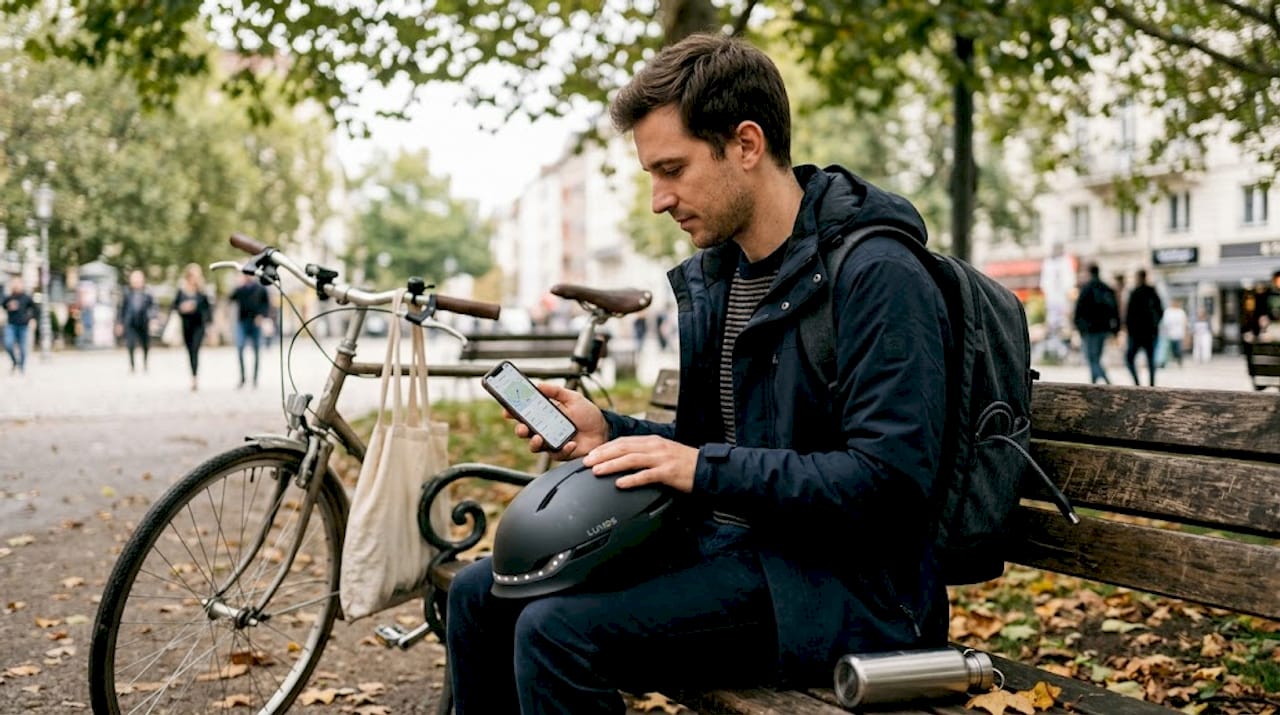
Emerging trends include AI-powered crash detection, adaptive ventilation that responds to your speed and exertion, and real-time biometric data like heart rate and body temperature fed directly to your device. Smart materials, such as D3O and rate-sensitive foams, stay flexible during normal riding but stiffen instantly on impact, offering better protection across a wider range of crash forces.
Airbag systems represent the most dramatic leap. The Aerobag system, for example, uses AI to detect a fall in just 20 milliseconds and inflates fully in 100 milliseconds, before your head hits the ground. These systems are designed to complement helmets by protecting the 70% of cycling injuries that are not head-related, including collarbones, shoulders, and hips. Professional kits can cost up to €6,000, which limits adoption, but consumer-grade versions are entering the market.
How AI-powered protection works in a crash:
- Onboard sensors detect abnormal motion patterns in real time.
- AI algorithm distinguishes a crash from a normal sharp movement in under 20ms.
- Inflation signal is sent to the airbag system.
- Full inflation is complete within 100ms, before impact occurs.
- Post-crash, the system logs the event and can send an alert to an emergency contact.
| Feature | Benefit | Trade-off |
|---|---|---|
| AI crash detection | Faster response than any reflex | Adds cost and battery dependency |
| Adaptive ventilation | Comfort across all conditions | Adds mechanical complexity |
| Biometric monitoring | Real-time health awareness | Requires pairing with a device |
| Smart materials | Better multi-impact protection | Can add weight |
Pro Tip: Before investing in a smart helmet, check the total weight and battery life. Some 2026 models have minimized the bulk significantly, but others still add 80 to 120 grams compared to passive alternatives. For cycling safety tips that go beyond the helmet itself, pairing smart tech with good visibility accessories gives you the most complete protection setup.
Practical buying guide: How to choose your 2026 helmet
With all this technology available, the real challenge is matching it to your actual riding life. Here’s a structured way to think through the decision.
Step-by-step process for choosing your helmet:
- Define your primary riding context. Commuting, road racing, gravel, mountain biking, and e-biking each carry different impact risk profiles and require different protection priorities.
- Set your protection floor. At minimum, choose a helmet with an independent rotational protection system. This is non-negotiable in 2026.
- Decide on smart features. If you ride in traffic or at high speeds, AI crash detection and visibility features add real value. If you ride recreationally, passive protection may be enough.
- Check independent test results. Look for ratings from organizations that test beyond basic certification, including rotational impact scores.
- Try before you buy. Fit affects protection. A helmet that moves on your head in a crash reduces the effectiveness of any technology inside it.
Key features to prioritize:
- Rotational protection system with verified independent test results
- Certification for your region (CPSC in the U.S., EN 1078 or NTA 8776 in Europe)
- Ventilation appropriate for your climate and effort level
- Weight under 300 grams for road use, or under 400 grams for urban and e-bike
- Integrated or compatible lighting for commuters
Budget reality: in 2026, road cycling helmet trends show that strong rotational protection is available from around $150. Spending more buys you lighter materials, smarter features, and better fit systems, but the protection floor is accessible without going to the top of the price range. Reviewing 2026 cycling gear trends can help you spot which features are genuinely new versus rebranded older tech.
Our take: Why the safest helmet isn’t always the most expensive
After watching the helmet market evolve and testing gear across multiple categories, one pattern keeps repeating: price and protection don’t correlate as cleanly as most people assume. Some of the most expensive helmets on the market score lower in independent rotational impact tests than mid-range competitors. The reason is often brand positioning and materials cost, not safety engineering.
The brands pushing the hardest on cyclist protection challenges in 2026 are not always the legacy names. Newer entrants are adopting KinetiCore and MIPS Spherical at accessible price points, and their test scores reflect serious engineering investment. A $180 helmet with a verified rotational system and strong independent scores will protect you better than a $400 helmet with a legacy liner and no rotational tech.
Our honest advice: anchor your decision to independent test performance and verified protection standards. Then let comfort, fit, and features guide the rest. That approach will serve you far better than chasing a price tag.
Where to find the latest in helmet technology
If you’re ready to upgrade your gear with 2026’s latest helmet innovations, the right starting point is a curated selection built around real protection standards, not just aesthetics.
At THE BEAM, we’ve built our helmet collection around the technologies covered in this guide, including MIPS-equipped options and designs built for road, urban, and e-bike riders who take safety seriously. If you want to go further, our helmet add-ons include visibility accessories and connected safety tools that complement any helmet upgrade. Apply what you’ve learned here, check the specs, verify the test results, and choose gear that actually matches how and where you ride.
Frequently asked questions
What is the most important helmet feature for 2026?
Advanced rotational impact protection is the single most important feature, with systems like WaveCel and MIPS Spherical leading independent tests. AI-powered crash detection features are a strong secondary priority for high-speed or traffic-heavy riding.
Are airbag systems worth the extra cost for cyclists?
Airbag systems offer meaningful protection for the 70% of injuries that are not head-related, but professional kits can cost up to €6,000 and add weight, making them most practical for high-risk or performance-focused riders.
How do I know my helmet meets the latest safety standards?
Look for independent lab test results beyond basic certification, and prioritize helmets featuring WaveCel or MIPS Spherical, which consistently top rotational impact performance tests in 2026.
Do smart helmets feel heavier or less comfortable?
Some 2026 smart helmets have reduced the weight penalty significantly, but models with full AI hardware can still add 80 to 120 grams compared to passive helmets, so always check the listed weight before purchasing.


