

Finding a road cycling helmet that delivers both top-tier protection and sleek design can feel like a challenge for safety-focused riders in France and Germany. Modern helmets are evolving quickly, driven by demands for enhanced safety systems, integrated technologies, and refined aesthetic appeal. This article highlights the most important 2026 helmet innovations, revealing how advancements like airbag technology, smart materials, and minimalist European styling address the needs of premium buyers looking for superior performance and style.
Table of Contents
- Defining 2026 Road Cycling Helmet Trends
- Emerging Technologies Shaping Helmet Design
- Advanced Safety Features and MIPS Integration
- Sustainability, Comfort, and Aesthetic Innovations
- Regulatory Changes and Market Shifts Worldwide
Key Takeaways
| Point | Details |
|---|---|
| Helmet Innovation | 2026 helmets will feature advanced impact absorption systems, integrated technologies, and refined aesthetics, emphasizing both safety and style. |
| Safety Standards | Expect rigorous certification standards that exceed minimum safety requirements, driven by a growing awareness of cycling safety among consumers. |
| Technology Integration | Innovative technologies like AI and smart materials will enhance helmets, offering personalized monitoring and adaptive safety features. |
| Sustainability Focus | The use of sustainable materials and modular designs will become standard, reflecting the market’s demand for environmentally responsible products. |
Defining 2026 Road Cycling Helmet Trends
Road cycling helmets are entering a transformation driven by safety demands, design evolution, and technological breakthroughs. The trends emerging for 2026 reflect a fundamental shift in how manufacturers approach protection, aesthetics, and rider experience.
Three core forces are reshaping helmet design right now:
- Safety innovation expansion with advanced impact absorption systems
- Integrated technology including sensors and connectivity features
- Aesthetic refinement balancing protection with modern, lightweight designs
What’s Driving These Changes
Research shows that societal behavior, policy, and infrastructure are the key drivers influencing helmet design globally. Safety-conscious European cyclists, particularly those in France and Germany, are demanding helmets that deliver professional-grade protection without compromising on style.
The shift reflects real changes in cycling culture. More riders prioritize safety certifications and want to understand what they’re buying.
Key Product Development Trends for 2026
The 2026 cycling market shows clear direction toward specific innovations:
- Enhanced protection systems like airbag technology for road helmets
- Multi-use versatility allowing helmets to adapt across different cycling disciplines
- Safety innovation as priority rather than afterthought in design
- Integration with wearable technology for real-time rider monitoring
Safety innovations like airbag systems represent the most significant leap forward. These systems provide additional protection during impact by deploying automatically, addressing a critical gap in traditional foam-based helmets.
Design Meets Function
Modern road helmets are abandoning the “plastic shell” appearance. Instead, designers are creating integrated aerodynamic shapes that improve airflow while maintaining structural integrity.
Visual design matters to premium buyers. You’ll see more helmets featuring:
- Refined color palettes that appeal to European aesthetics
- Minimalist branding and cleaner lines
- Ventilation ports that serve both cooling and visual purposes
- Integrated rear visibility features without bulky add-ons
The Certification Standard Evolution
Certification standards continue tightening. Understanding cycling helmet certifications helps you identify genuinely protective equipment versus marketing claims.
Expect 2026 helmets to exceed baseline safety requirements, not just meet them. Manufacturers competing for quality-focused buyers are voluntarily testing beyond minimum standards.
Premium Market Direction
The premium segment—where THE BEAM operates—prioritizes integrated solutions. This means helmets working seamlessly with visibility accessories like rear-view mirrors and reflectors.
Riders investing in high-end equipment want cohesive safety ecosystems, not disconnected products scattered across different brands.
Helmet design in 2026 balances three competing demands: maximum protection, minimal weight, and refined aesthetics that reflect personal style.
Pro tip: When evaluating 2026 helmets, compare more than just weight and price—examine impact absorption technology, ventilation design, and integration compatibility with safety accessories you already own or plan to purchase.
Emerging Technologies Shaping Helmet Design
Technology is fundamentally changing what road cycling helmets can do. The helmets arriving in 2026 will function more like wearable computers than passive protective shells, offering capabilities that seemed impossible just a few years ago.
Three technological pillars are driving this transformation:
- Artificial intelligence for adaptive performance and crash detection
- Smart materials that respond to impact and environmental conditions
- Integrated connectivity linking helmets to rider devices and safety systems
AI-Optimized Performance
AI integration and advanced impact detection are enabling helmets to learn from rider behavior. These systems analyze your riding patterns and adjust ventilation, alert sensitivity, and safety features in real-time.
Imagine a helmet that knows when you’re commuting at steady pace versus attacking a climb, then optimizes cooling accordingly. That’s the reality arriving in 2026.
AI-powered helmets offer distinct advantages:
- Automatic crash detection with emergency alert capabilities
- Real-time biometric monitoring tracking heart rate and exertion
- Predictive safety features that anticipate dangerous scenarios
- Personalized performance data synced to your cycling apps
Smart Impact Absorption Materials
Traditional foam helmets work the same way every time. Modern helmets are different—they adapt to impact force and type through advanced material science.
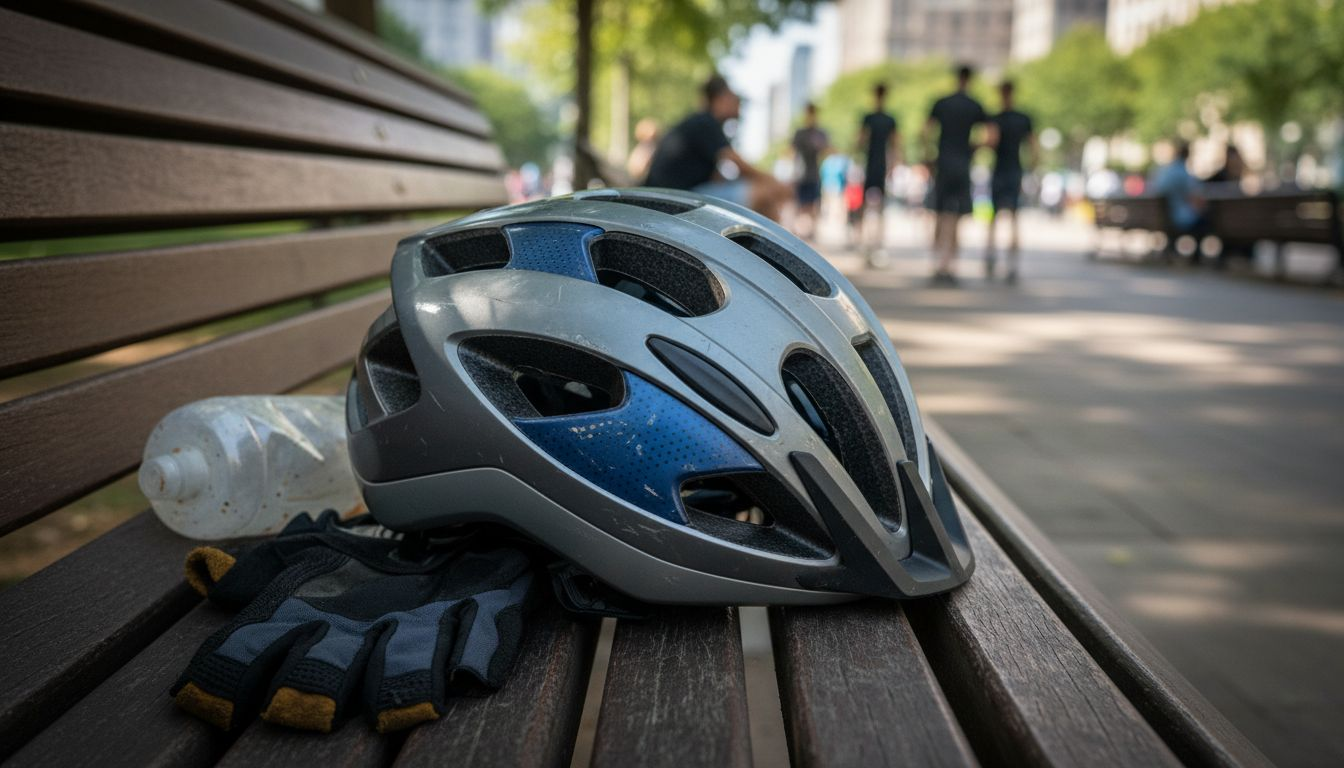
New polymer composites and energy-absorbing systems respond dynamically to crashes. This means better protection across varied impact scenarios, not just theoretical lab conditions.
Connected Safety Ecosystems
The premium market is moving toward integrated safety solutions. Enhanced impact absorption materials combine with integrated lighting and connectivity features that work seamlessly together.
When your helmet includes rear lighting and connects to a rear-view mirror system, you’re building a comprehensive visibility and detection network. This is how THE BEAM approaches safety—not isolated products, but coordinated systems.
MIPS and Beyond
Rotational impact protection systems like MIPS technology remain foundational, but 2026 helmets build on this base with additional technologies. Expect to see multi-directional protection systems layering MIPS with AI-enhanced impact zones.
The combination of mechanical and smart systems creates redundancy—your helmet protects you even if electronics fail.
Smart helmets don’t replace protective design—they amplify it. The best 2026 helmets combine proven mechanical protection with intelligent adaptive features.
Practical Integration Challenges
Adding technology means managing weight, battery life, and reliability. Premium manufacturers are solving these through miniaturization and efficient power management.
Your 2026 helmet needs to function flawlessly in rain, heat, and crashes. That’s why quality manufacturers are prioritizing durability over feature count.
Pro tip: When evaluating smart helmets, check battery life specifications and water resistance ratings before purchasing—technology only helps if it functions reliably in real-world cycling conditions.
Advanced Safety Features and MIPS Integration
MIPS technology has become the gold standard for road cycling helmets. This protective system addresses a critical gap in traditional helmet design by specifically targeting rotational forces during impacts.
Understanding why MIPS matters helps you make informed purchasing decisions for premium helmets in 2026.
How MIPS Works
MIPS significantly reduces rotational forces by allowing a thin layer inside your helmet to slide slightly during angled impacts. This movement mimics the brain’s natural fluid layer, absorbing rotational energy that traditional foam alone cannot handle.
When you crash at an angle—the most common real-world scenario—MIPS prevents your head from rotating excessively inside the helmet. This simple but elegant system addresses physics that standard helmets ignore.
Key benefits of MIPS include:
- Reduced rotational acceleration during angled impacts
- Protection against the injuries most likely in real crashes
- Compatibility with existing helmet designs and comfort features
- Independent laboratory verification of effectiveness
Beyond MIPS: Multi-Layer Protection
2026 helmets are building on MIPS foundations with additional protective technologies. You’ll see helmets combining MIPS with reinforced impact zones, advanced foam materials, and directional protection systems.
The best approach layers multiple protection strategies. Your helmet protects you through foam absorption, rotational control, and structural reinforcement working together.
Research-Backed Protection
Bicycle helmets with MIPS effectively reduce injury severity according to peer-reviewed research. Studies examining real-world crashes confirm that rotational protection saves lives by preventing brain injuries from angular impacts.
This isn’t marketing—it’s peer-reviewed science. European safety-conscious cyclists benefit from helmets designed around proven biomechanical principles.
Integration with Modern Design
The challenge for 2026 designers is incorporating MIPS without adding weight or sacrificing ventilation. The best premium helmets solve this through:
- Lightweight MIPS systems using minimal material
- Integrated ventilation that works with protective layers
- Aerodynamic designs that reduce drag
- Comfortable padding that doesn’t interfere with the protective system
MIPS technology proves that better protection doesn’t require heavier helmets. Smart engineering balances safety with performance.
Certification Beyond Minimums
Quality manufacturers test beyond basic certification requirements. Look for helmets that exceed minimum safety standards and include independent laboratory testing documentation.
You’re investing in equipment that protects your brain. Premium helmets document their protection through rigorous testing, not just marketing claims.
Pro tip: When comparing 2026 helmets, verify that MIPS certification is genuine by checking for official MIPS branding and asking manufacturers about independent testing results specific to your helmet model.
Sustainability, Comfort, and Aesthetic Innovations
The 2026 helmet market reflects a fundamental shift: premium cyclists want protection without compromise on comfort, style, or environmental responsibility. These three factors now drive design decisions as much as safety does.
Manufacturers are recognizing that a helmet you don’t wear consistently offers zero protection, regardless of how advanced its technology is.
Comfort Through Advanced Materials
Enhanced comfort through AI-guided ventilation represents a major shift in helmet engineering. Smart ventilation systems now adapt to your riding intensity and environmental conditions, keeping your head cool without creating unwanted wind noise or turbulence.
Traditional helmets force you to choose between cooling and aerodynamic efficiency. 2026 helmets optimize both simultaneously through AI-assisted airflow design.
Summary of 2026 helmet innovation approaches:
| Innovation Area | Traditional Design | 2026 Trend | User Benefit |
|---|---|---|---|
| Impact Absorption | Standard foam | Smart polymers, airbags | Better real-world crash protection |
| Connectivity | None | Integrated sensors/apps | Emergency alerts, real-time data |
| Sustainability | Petroleum-based plastics | Recycled, bio-based materials | Reduced environmental footprint |
| Comfort | Fixed ventilation | AI-guided airflow, 3D fit | Custom cooling, improved fit |
Comfort innovations include:
- Custom fit options using 3D scanning technology
- Moisture-wicking interior padding with enhanced breathability
- Adjustable ventilation ports that respond to rider data
- Lightweight materials reducing overall helmet weight
Sustainability Driving Material Innovation
Eco-friendly materials and sustainable manufacturing are becoming standard in premium helmet design. European manufacturers increasingly use recycled polymers, bio-based foam, and responsibly sourced materials without sacrificing protective performance.
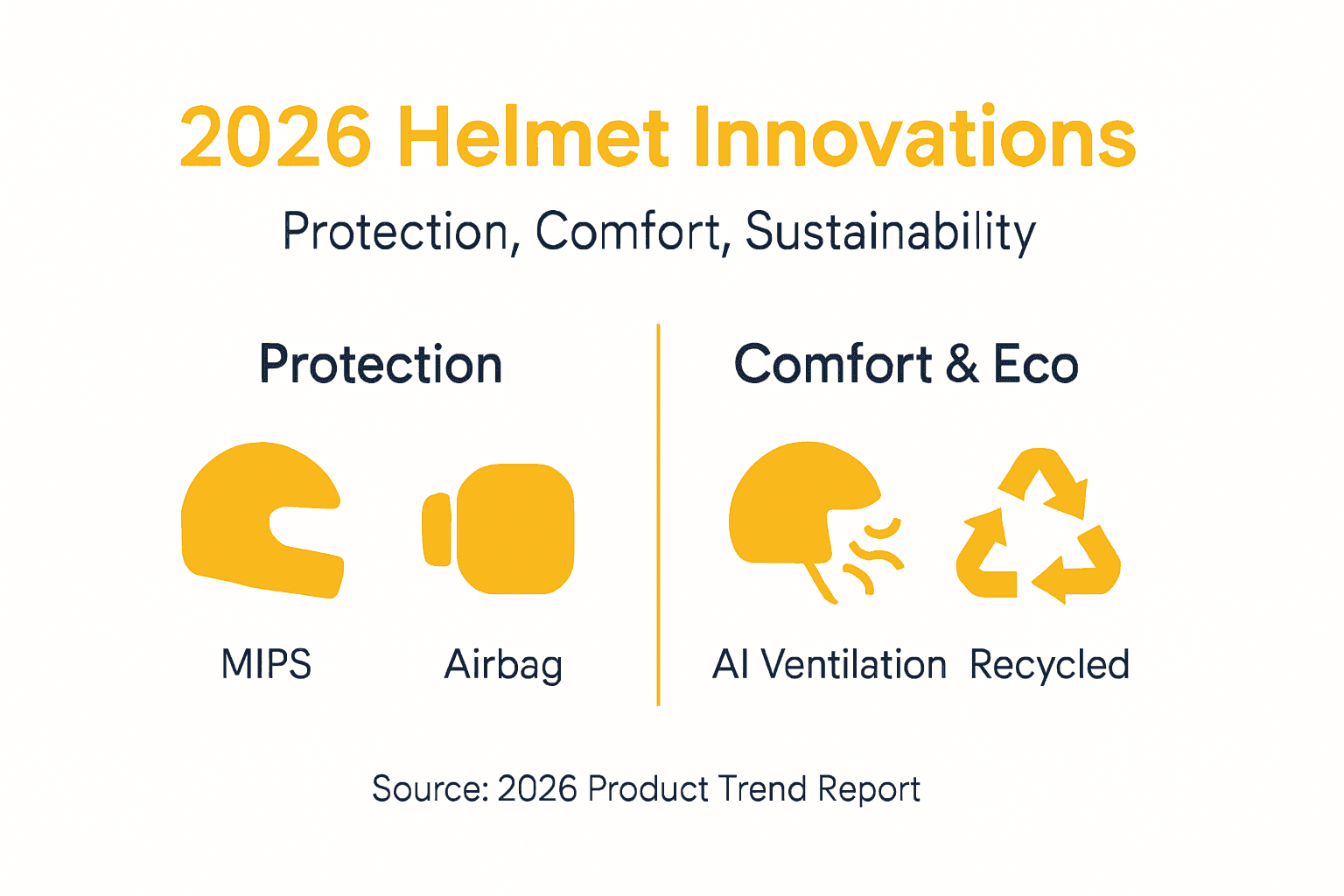
Sustainability isn’t a marketing feature—it’s core to how forward-thinking brands now operate. THE BEAM and similar premium manufacturers recognize that safety-conscious riders care about environmental impact.
Key sustainable innovations:
- Recycled composite materials in helmet shells
- Bio-based foam alternatives to petroleum-based options
- Modular designs enabling component replacement instead of full helmet disposal
- Responsible manufacturing practices with reduced carbon footprint
Aesthetic Design That Reflects Personal Style
Modern road helmets move beyond basic black and white. Customizable, sleek designs appeal to diverse riders who want their equipment to reflect personal style and identity.
2026 helmets feature refined color palettes, subtle branding, and clean lines that work with contemporary cycling apparel. Design excellence matters—you’ll actually want to wear your helmet.
Aesthetic trends include:
- Integrated lighting seamlessly built into helmet design
- Minimal branding allowing helmet color to be the visual focus
- Modular accessories that attach cleanly without appearing bolted-on
- Aerodynamic shapes that look purposeful, not overly bulbous
Integration with Your Ecosystem
Premium helmets now function as part of a coordinated safety system. Your helmet connects visually and functionally with rear mirrors, reflectors, and lighting accessories for a cohesive look.
This approach matters to safety-conscious European cyclists who invest in complete visibility systems, not isolated components.
Comfort, aesthetics, and sustainability aren’t compromises on safety—they’re requirements for helmets you’ll consistently wear and trust.
Real-World Fit Testing
3D scanning technology enables custom fit before purchase. Some premium retailers now offer virtual fitting consultations where your head shape is scanned, ensuring your helmet fits perfectly.
Proper fit determines whether all those protective technologies actually work as designed. A poorly fitting helmet shifts during impacts, compromising protection.
Pro tip: Before purchasing a 2026 helmet, verify that the manufacturer offers 3D fit analysis or detailed sizing guides—proper fit ensures comfort, style, and maximum protection in real-world cycling conditions.
Regulatory Changes and Market Shifts Worldwide
Global helmet regulations are tightening and fragmenting simultaneously. Different regions are adopting different safety standards, creating complexity for manufacturers but driving innovation across the industry by 2026.
Understanding these changes helps you make informed decisions about helmet certifications and what they actually guarantee for your safety.
The E-Bike Impact on Standards
Regulatory changes are driven by e-bike adoption and urbanization trends. Traditional helmet standards were designed for casual cyclists, not riders traveling at higher speeds on electric bicycles.
E-bikes fundamentally changed how regulators think about helmet requirements. New standards now account for increased speeds and impact forces that standard road helmets weren’t specifically tested for.
Key regulatory shifts include:
- Stricter impact absorption requirements at higher velocities
- Enhanced rotational protection mandates in new certifications
- Updated testing protocols reflecting real-world crash scenarios
- Integration of technology safety standards for smart helmets
Market Response to Stricter Standards
Manufacturers competing in 2026 markets face a choice: meet minimum standards or exceed them. Premium brands increasingly voluntarily exceed baseline requirements to capture safety-conscious buyers.
This creates market segmentation where you can clearly identify helmets tested beyond minimum safety requirements through independent certifications and testing documentation.
Cultural Shifts Beyond Mandatory Laws
Increasing bicycle helmet use occurs even in regions without mandatory laws, reflecting changing cultural attitudes toward cycling safety. European cyclists increasingly view quality helmets as essential equipment, not optional accessories.
This cultural shift drives demand for premium helmets with advanced protective technologies. Safety-conscious riders in France and Germany actively seek certifications, materials science details, and independent testing results.
European Certification Landscape
Europe maintains stricter standards than many global markets. CE certification, EN standards, and emerging regulations create higher baselines for helmet safety across the continent.
When purchasing helmets designed for European markets, you benefit from more rigorous testing requirements than helmets designed primarily for other regions.
Here’s how helmet safety certifications compare across regions:
| Certification Standard | Region | Testing Focus | Typical Requirements |
|---|---|---|---|
| CE (EN 1078) | Europe | Impact, retention, coverage | Rigorous lab testing, rotational force |
| CPSC | USA | Impact absorption | Mandatory for all bicycle helmets |
| AS/NZS 2063 | Australia/New Zealand | Multi-impact, chinstrap safety | High velocity impact testing |
| JIS | Japan | Lightweight, heat resistance | Specific fit and material standards |
Regulatory complexity includes:
- Multiple overlapping certification standards (CE, EN 1078, CPSC, AS/NZS)
- Varying requirements for different helmet categories
- Emerging standards for integrated technology (lights, sensors)
- Country-specific safety mandates and recommendations
Urban Cycling Drives Helmet Innovation
Urbanization increases commuter cycling, which drives demand for helmets addressing real urban risks: low-speed impacts, visibility needs, and practical comfort for daily use.
This urban focus influences helmet design toward integrated safety ecosystems combining helmets with mirrors, reflectors, and lighting—exactly the approach THE BEAM prioritizes.
Regulatory changes create market opportunity for helmets exceeding minimum standards. The best 2026 helmets leverage stricter regulations as baseline, then innovate beyond.
What You Should Verify
When evaluating helmets, check which certifications apply and whether testing exceeds minimums. Some premium helmets undergo voluntary third-party testing beyond regulatory requirements.
Asking manufacturers about their testing protocols reveals commitment to safety beyond marketing claims.
Pro tip: Before purchasing, verify your helmet meets current European safety standards (CE and EN 1078) and check whether the manufacturer has conducted additional independent testing beyond regulatory minimums.
Elevate Your Safety with the Latest Road Cycling Helmet Innovations
The 2026 road cycling helmet trends reveal a clear challenge for riders seeking maximum protection without sacrificing comfort or style. You want helmets that combine advanced impact absorption, such as MIPS technology, with smart airflow and seamless integration with safety accessories. THE BEAM understands these needs and offers expertly designed solutions that reflect the cutting-edge developments outlined in this article.
Experience premium protection with our flagship VIRGO integral helmet featuring MIPS technology, crafted to exceed safety standards while delivering lightweight comfort and sleek European design. Complement your ride with coordinated safety accessories like our rear-view mirrors and high visibility reflectors, all created to build a connected safety ecosystem for every road cyclist.
Explore our full collection to find helmets that balance innovation and real-world usability. Visit Adults’ Helmets – The Beam to discover high-end options built for the safety-conscious rider. For a broader view, check out All Products – The Beam and start upgrading your gear today at THE BEAM. Protect yourself with purpose and style now.
Frequently Asked Questions
What are the key trends in road cycling helmet design for 2026?
The key trends include enhanced safety innovations such as airbag technology, integrated technology with sensors and connectivity features, and refined aesthetics that combine modern designs with lightweight materials.
How does MIPS technology improve road cycling helmet safety?
MIPS technology significantly reduces rotational forces during impacts by allowing a slip layer inside the helmet to move slightly, which mimics the brain’s natural fluid layer. This helps prevent excessive rotation of the head during crashes, reducing the risk of brain injuries.
What technological features should I look for in a 2026 cycling helmet?
Look for features such as AI-optimized performance for real-time adjustments to ventilation and safety alerts, smart materials that adapt to impact forces, and integrated connectivity for linking with rider devices for enhanced safety monitoring.
Why is comfort an important consideration in helmet design?
Comfort is crucial because a helmet that fits well and is comfortable encourages consistent use. Advanced materials, custom fit options, and AI-guided ventilation systems enhance comfort while ensuring maximum protection during rides.


