

TL;DR:
- Urban cycling safety relies on proper road positioning, high-visibility gear, and predictable signaling to reduce city traffic risks.
- Strategic route planning, wearing protective equipment, and maintaining confidence and clarity while riding enhance safety in urban environments.
Urban cycling safety is defined as the consistent practice of using the right gear, positioning, and behaviors to reduce the specific risks that city traffic creates for riders. The League of American Bicyclists, Consumer Reports, and the Adventure Cycling Association all agree that visibility, predictability, and preparation are the three pillars that separate safe urban riders from those who rely on luck. This guide breaks down each pillar into concrete, step-by-step actions you can apply on your next commute.
1. Urban cycling tips for safety: master your road position
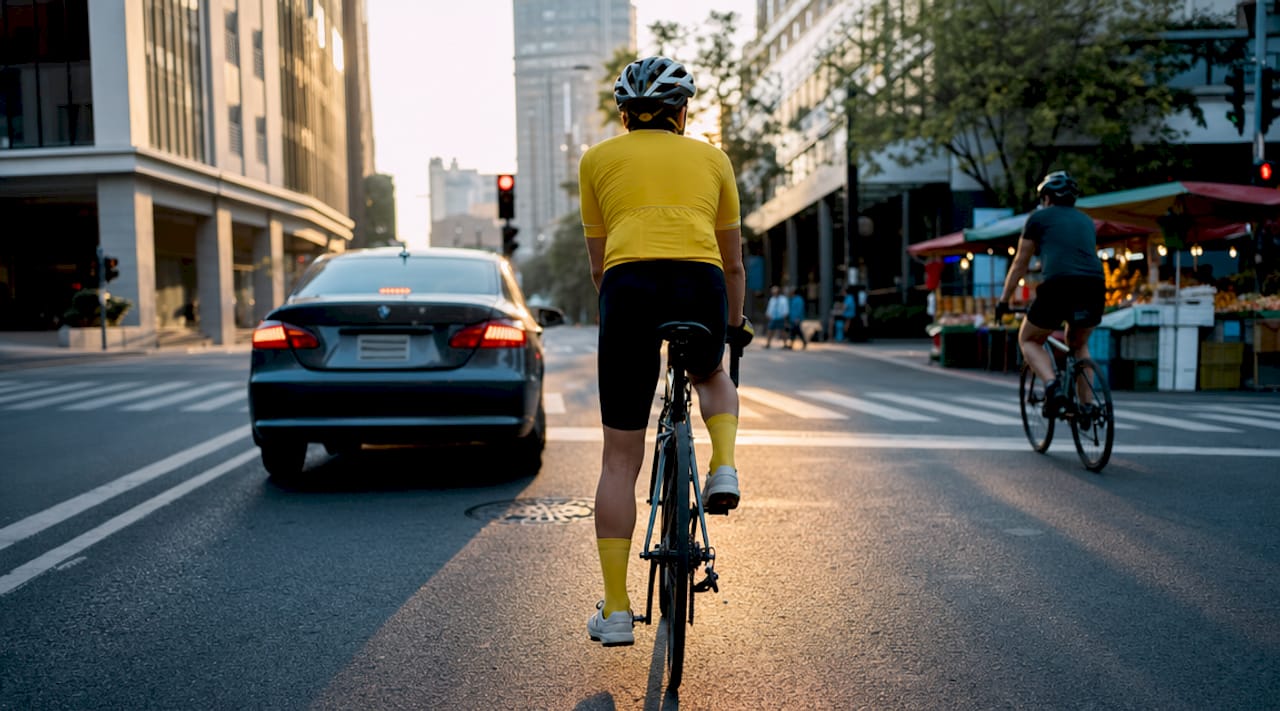
Where you ride on the road matters more than most cyclists realize. Riding about one meter from the edge of the road gives you room to dodge potholes, sewer grates, and debris while keeping you visible to drivers behind you. Hugging the curb feels instinctively polite, but it actually invites drivers to squeeze past you at unsafe distances.
The concept of “taking the primary position,” meaning riding near the center of your lane, applies whenever the lane is too narrow for a car to pass safely. Consumer Reports confirms that managing space and predictability matters more than simply hoping drivers see you. Claiming the lane forces drivers to wait for a safe gap before overtaking, which is exactly what you want.
The door zone is the strip of road within about one meter of parked cars. Riding through it puts you at constant risk of a suddenly opened car door. Scan for occupied vehicles, watch for movement inside, and position yourself outside that zone at all times.
Pro Tip: Use your road position as a communication tool. Moving slightly toward the center signals to drivers that the lane is too narrow to share, which reduces the chance of a dangerous close pass.
2. Essential visibility gear and habits
Visibility is your first line of defense in city traffic. Front and rear lights at all times, including during daylight hours, significantly reduce crash risk by making you conspicuous before drivers even process your presence. A flashing rear light during the day is especially effective because it draws attention in a way that a steady beam does not.
Your clothing choices carry equal weight. Bright, fluorescent, or reflective materials make you visible from a distance and from multiple angles. A reflective vest over a dark jacket takes seconds to put on and dramatically changes how early drivers spot you.
Here is a practical visibility gear checklist:
- Front white light: minimum 200 lumens for daytime, 400 or more for night riding
- Rear red light: flashing mode during the day, steady or flashing at night
- Reflective ankle bands: catch headlights from behind as your legs move
- High-visibility vest or jacket: fluorescent yellow or orange for maximum daytime contrast
- Helmet-mounted rear light: raises your light source to eye level for drivers
- Reflective helmet cover: adds 360-degree passive visibility at night
Pro Tip: Run your rear light in flashing mode during daylight commutes. The irregular pulse catches peripheral vision faster than a steady beam, giving drivers an extra half-second to react.
3. Hand signals and predictable riding behavior
Clear communication with drivers is a legal requirement in most U.S. states and a proven safety measure. Proper hand signals, as recommended by NHTSA and the League of American Bicyclists, tell drivers exactly what you plan to do before you do it. That advance notice is what prevents the most common intersection collisions.
Research from Rice University, cited by Futurity, found that drivers rely almost entirely on a cyclist’s arm signals to infer intent. The critical finding: bent-arm right turn signals are frequently misread by drivers, increasing collision risk. The straight-arm signal, where you simply extend your right arm to point right, is understood almost universally. Use it every time.
Beyond signals, your overall riding pattern sends constant messages to traffic around you. Avoid weaving between lanes or between parked cars and moving traffic. If you need to check your phone or a map, pull completely off the road before doing so. Weaving destroys the predictability that keeps drivers from making dangerous assumptions about your trajectory.
Eye contact at intersections adds another layer of safety. When you make eye contact with a driver waiting to turn, you confirm they have seen you before you commit to crossing. Do not assume a stopped car will stay stopped.
Pro Tip: Practice your hand signals on a quiet residential street before your commute. Signaling while maintaining a straight line and steady speed takes coordination that improves with repetition.
4. Route planning and hazard anticipation
Route choice is the single most important safety decision you make before getting on your bike. Dedicated cycling infrastructure, such as protected bike lanes and low-traffic neighborhood streets, reduces your exposure to fast-moving vehicles more than any piece of gear can. Apps like Google Maps, Komoot, and Ride with GPS all include cycling-specific routing that prioritizes bike lanes and quieter roads.
Before riding a new route, do a trial run during off-peak hours. You will spot hazards like diagonal rail crossings, narrow pinch points, and poorly lit underpasses that do not appear on maps. Keeping your eyes ahead and scanning 10 to 15 meters in front of you gives you enough reaction time to avoid most road hazards.
Common urban hazards and how to handle them:
| Hazard | Risk | Response |
|---|---|---|
| Potholes | Tire blowout, loss of control | Scan ahead, steer around, slow before impact |
| Sewer grates | Wheel trap, sudden stop | Ride parallel to grates, never over them |
| Wet paint or metal | Severe loss of traction | Cross at 90 degrees, reduce speed |
| Car doors | Sudden impact at speed | Stay outside the door zone at all times |
| Debris and gravel | Skidding, punctures | Reduce speed, avoid sharp steering inputs |
Weather changes your stopping distance and your visibility to others. On wet roads, leave extra stopping distance and reduce your speed through corners. Ice is particularly dangerous on bridge decks and shaded sections of road that dry more slowly than open pavement.
Pro Tip: Use Google Maps cycling mode or Komoot to preview your route the night before. Satellite view reveals road surface quality, intersection complexity, and the presence of bike lanes that standard map view misses.
5. Protective gear every urban cyclist should carry
Helmet use reduces head injury odds by 50 percent, making it the single most impactful piece of protective equipment you own. Consumer Reports recommends replacing your helmet every five years, or immediately after any impact, because the foam liner compresses permanently on first contact and cannot absorb a second hit at full capacity. Fit matters as much as the helmet itself: the front edge should sit two finger-widths above your eyebrows, and the straps should form a V just below each ear.
Beyond the helmet, gloves protect your palms in a fall, which is your body’s instinctive first point of contact with the ground. Cycling-specific eyewear blocks wind, debris, and UV exposure, all of which cause eye fatigue that slows your reaction time. For urban commuting specifically, consider the following gear:
- MIPS-equipped helmet: the Multi-directional Impact Protection System reduces rotational force on the brain during angled impacts
- Padded cycling gloves: protect palms and improve grip in wet conditions
- Clear or yellow-tinted eyewear: maintains visibility in low light while blocking debris
- Rear-view mirror: bar-mounted or helmet-mounted mirrors let you monitor traffic without turning your head
- Bell or horn: legally required in many U.S. cities and essential for alerting pedestrians
- Puncture repair kit: a flat tire in traffic is a safety hazard, not just an inconvenience
For a thorough breakdown of what to carry and wear, the urban cyclist safety checklist from Thebeamofficial covers both gear selection and daily inspection routines.
Pro Tip: Inspect your helmet, tires, and lights before every ride. A 60-second check catches the flat tire, dead battery, or cracked strap that would otherwise become a problem at the worst possible moment.
6. Riding single file and managing group dynamics
Group riding in urban environments introduces a specific set of risks that solo commuters do not face. Riding single file allows cars to pass safely and prevents the group from blocking intersections or crowding pedestrian crossings. The Adventure Cycling Association identifies single-file riding as a core predictability practice, not just a courtesy.
When riding with others, maintain a consistent gap of at least one bike length between you and the rider ahead. This gives you reaction time if they brake suddenly and prevents the accordion effect where a small slowdown at the front becomes a sudden stop at the back. Communicate hazards verbally and with hand signals so the whole group responds together.
Avoid riding on sidewalks unless local law explicitly permits it. Sidewalk riding puts pedestrians at risk and places you in conflict with turning vehicles that are not looking for cyclists at that level. Stay on the road, stay visible, and stay predictable.
Key takeaways
Safe urban cycling depends on three non-negotiable practices: positioning yourself where drivers can see you, communicating every move with clear signals, and wearing gear that protects you when everything else fails.
| Point | Details |
|---|---|
| Road positioning | Ride one meter from the curb to stay visible and avoid hazards. |
| Visibility gear | Run front and rear lights at all times, including a flashing rear light in daylight. |
| Hand signals | Use straight-arm signals only; bent-arm signals are frequently misread by drivers. |
| Route planning | Choose protected bike lanes and preview new routes before peak-hour riding. |
| Helmet protection | Replace your helmet every five years or after any impact, and check fit before every ride. |
What I’ve learned riding city streets that no safety guide tells you
Most urban cycling guides focus on what to do. What they underemphasize is the mental shift required to do it consistently under pressure.
The hardest part of city riding is not learning the rules. It is holding your position when a driver behind you is clearly impatient. Every instinct tells you to move left, hug the curb, and let them pass. That instinct is wrong. Moving left puts you in the door zone and signals to the driver that squeezing past is acceptable. Holding your line, staying one meter from the curb, and riding with calm authority is what actually keeps you safe.
I have also found that the riders who get into trouble most often are the ones trying to be invisible. They hug walls, avoid eye contact, and defer to every vehicle. Confident, predictable riding, where you take the space you need and signal every move, produces far fewer close calls than timid riding does. Drivers respond to clarity. Give them clarity.
One more thing: leave your headphones at home, or use only one ear. The Adventure Cycling Association is explicit about this. Staying alert to surroundings means hearing the truck that has not seen you yet, the pedestrian stepping off the curb, and the car door about to open. Your ears are a safety system. Use them.
For more on building a complete urban safety workflow, the urban cycling protection guide from Thebeamofficial is worth reading before your next commute.
— Sophie
Gear that makes every one of these tips work better
The tips above work best when your equipment matches your commitment to safety. Thebeamofficial designs helmets and accessories specifically for urban cyclists who want real protection without sacrificing comfort or style. The VIRGO integral helmet with MIPS technology addresses the rotational impact risk that standard helmets ignore, and it meets both European and U.S. safety standards.

Beyond helmets, Thebeamofficial’s safety accessories collection includes rear-view mirrors, high-visibility reflectors, and connected products that cover every visibility gap this guide describes. If you are ready to upgrade your protection, start with the full helmet range and add the accessories that match your commute conditions. Quality gear is not an upgrade. It is the baseline.
FAQ
What is the safest position to ride in city traffic?
Ride approximately one meter from the curb, not against it. This position keeps you visible to drivers, gives you room to avoid road hazards, and discourages unsafe close passes.
How often should I replace my cycling helmet?
Consumer Reports recommends replacing your helmet every five years under normal use, or immediately after any impact. The foam liner loses its protective capacity after a single significant compression.
Do hand signals actually reduce crash risk?
Yes. NHTSA and the League of American Bicyclists both support hand signals as a proven safety measure. Research from Rice University confirms that straight-arm signals are understood almost universally by drivers, while bent-arm signals are frequently misread.
Should I use lights during the day?
Daytime lights, particularly a flashing rear light, significantly reduce crash risk by making you visible before drivers consciously process your presence. Running lights in all conditions is one of the most cost-effective safety habits you can adopt.
What is the best way to plan a safe urban cycling route?
Prioritize routes with protected bike lanes or low-traffic streets. Use apps like Google Maps cycling mode or Komoot to identify infrastructure before you ride, and do a trial run on new routes during off-peak hours to spot hazards that maps do not show.


