

TL;DR:
- Proper safety measures including helmet fit, bike features, and rider behavior significantly reduce risks in urban cycling. Learning to take the lane, use reliable lighting, and wear reflective gear enhances protection, especially in low-light conditions. Regularly updating all equipment and practicing predictability transforms protection from a checklist into a complete safety system.
Commuter cycling protection is the full combination of safety gear, bike features, and rider behavior that reduces your risk on urban roads. It covers everything from a properly fitted helmet to hydraulic disc brakes, reflective clothing, and the lane position you choose at a busy intersection. Research confirms that a correctly worn helmet reduces serious head injury risk by up to 60%. That single statistic shows why cycling safety measures are not optional extras. They are the foundation of every safe commute.
What is commuter cycling protection, and why does it matter?
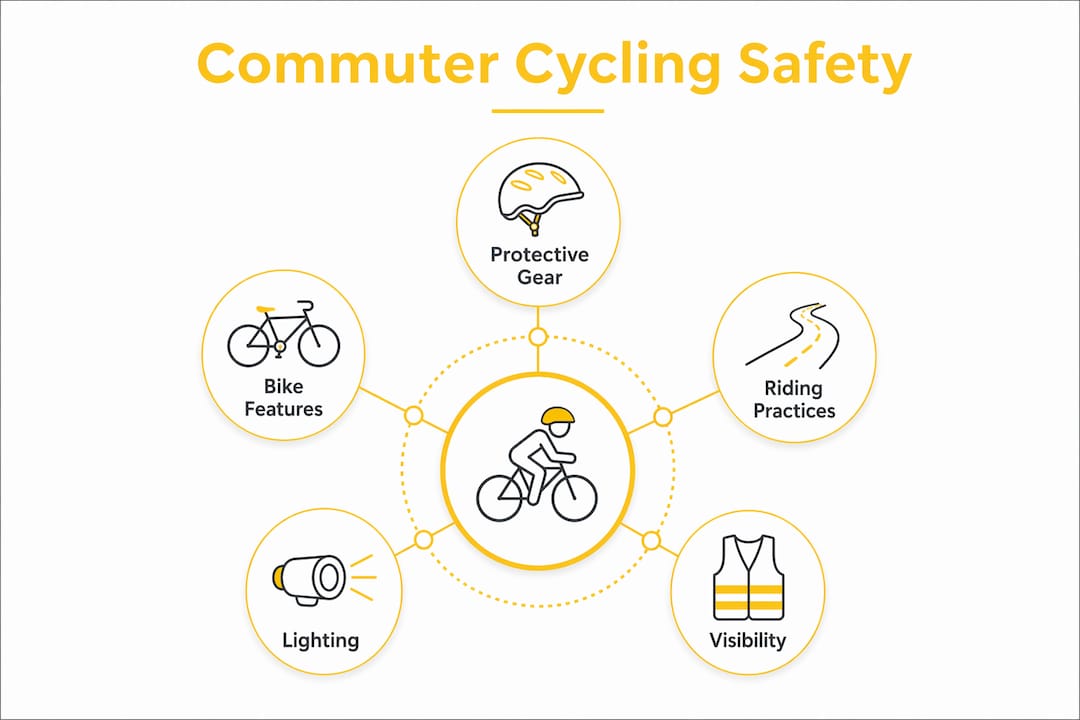
Commuter cycling protection is defined as the layered system of equipment, bike technology, and riding practices that work together to keep urban cyclists safe. No single item does the job alone. A high-quality helmet means little if your brakes fail in wet traffic. Bright lights mean little if you hug the curb and invite dangerous close passes.
The industry standard approach treats protection as three interlocking layers: personal protective equipment, bike safety features, and rider behavior. Regulatory bodies in the U.S. and Europe, including the Consumer Product Safety Commission (CPSC) and the European EN 1078 standard, set minimum requirements for helmet construction and testing. Meeting those standards is the baseline, not the ceiling.
Urban cycling carries specific risks that recreational riding does not. Stop-and-go traffic, car door zones, wet pavement, and low-light conditions all demand a protection strategy built for city riding. Commuters who treat safety as a system, rather than a checklist, consistently fare better than those who rely on one piece of gear.
What key safety features on commuter bikes enhance protection?
Your bike itself is protective equipment. The components you choose determine how quickly you can stop, how visible you are, and how likely you are to suffer a flat tire at the worst possible moment.
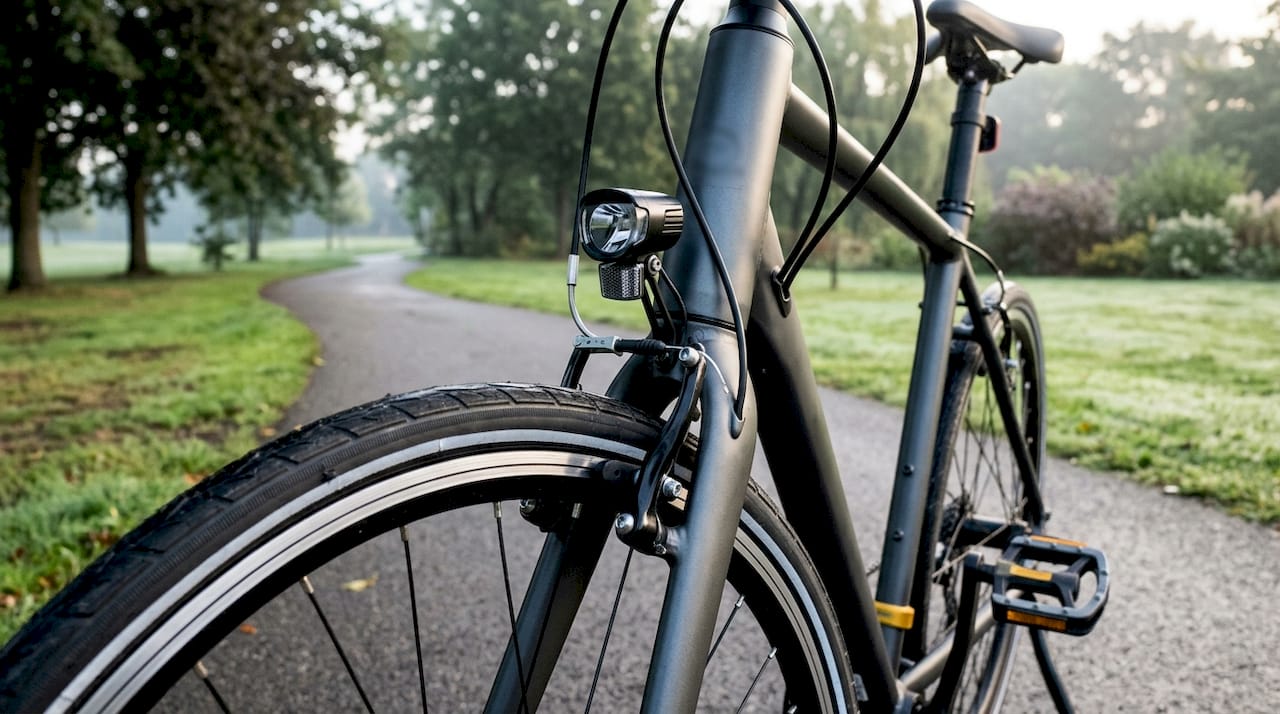
Braking performance is the most critical mechanical safety factor. Hydraulic disc brakes deliver 20–30% shorter stopping distances compared to mechanical brakes. In unpredictable urban traffic, that margin is the difference between a near miss and a collision. One maintenance note: silicone-based lubricants reduce disc brake effectiveness by 40%, so keep them away from rotors entirely.
Tires and lighting round out the bike’s protective role:
- Reflective sidewall tires reduce nighttime collision risk by up to 37%, adding passive visibility without any effort from the rider.
- Puncture-resistant tires cut flat-tire incidents by approximately 80%, which matters because a sudden flat at speed is a genuine crash risk.
- Integrated LED lighting systems maintain consistent output regardless of battery fluctuation, unlike clip-on lights that dim as the charge drops.
- Reflective frame decals and spoke reflectors add 360-degree visibility at no weight penalty.
- Durable aluminum or chromoly steel frames absorb road vibration better than rigid carbon in pothole-heavy city streets.
Pro Tip: Add reflective ankle straps to your kit. They move with your pedaling motion, which draws a driver’s eye far more effectively than a static reflector on the frame.
Integrated lighting is worth prioritizing over aftermarket add-ons when buying a commuter bike. Systems wired directly to the bike’s dynamo or battery never run out of charge mid-ride. That reliability matters most on the days you forget to check your lights before leaving the house.
How does protective gear complement commuter cycling safety?
Personal protective equipment is the layer of commuter bike safety that travels with you regardless of what bike you ride. Getting it right requires more than buying the most expensive option.
- Helmet fit using the 2V1 rule. Position the helmet two fingers above your eyebrows. Adjust the straps so they form a V shape directly under each ear. Leave one finger of space between the strap and your chin. The 2V1 fitting method prevents the helmet from shifting during a collision, which is when fit matters most.
- Helmet certification. Choose a helmet that meets CPSC standards in the U.S. or EN 1078 in Europe. MIPS (Multi-directional Impact Protection System) technology adds rotational force management, which standard certifications do not fully address. Thebeamofficial’s VIRGO integral helmet incorporates MIPS technology specifically for this reason.
- Gloves. Cycling gloves protect the palms during a fall, which is the body’s first point of contact with the ground. Padded gloves also reduce handlebar vibration fatigue on longer commutes and improve grip on wet grips.
- Reflective and high-visibility clothing. Bright colors work in daylight. Reflective materials work at night. The best commuter clothing combines both. A reflective vest worn over a work jacket adds visibility without changing your outfit.
- Cycling glasses. Road debris, insects, and wind all impair vision. Clear or lightly tinted lenses protect your eyes in low light without reducing hazard detection.
Pro Tip: Replace your helmet after any significant impact, even if you see no visible damage. The foam liner compresses on impact and does not recover. A helmet that has taken a hard hit no longer offers full protection.
Choosing the right helmet is the single highest-return investment a commuter cyclist can make. Head injuries remain the leading cause of death among cyclists, and a certified, well-fitted helmet directly addresses that risk.
What riding practices and environmental factors enhance commuter cycling protection?
Gear and bike features set your ceiling for protection. Rider behavior determines whether you reach it. The most protected commuter cyclist is the one who is predictable, visible, and legally compliant at every moment.
- Take the lane. Riding approximately one-third of the way into the lane forces drivers to make a full lane change to pass you safely. Hugging the curb invites dangerous close passes and puts you directly in the door zone of parked cars.
- Signal every turn. Consistent hand signals remove ambiguity for drivers behind you. Unpredictable movements cause rear-end collisions. Signal early, hold the signal, then execute the turn.
- Ride with traffic, not against it. Riding against traffic reduces the time both you and a driver have to react. It also makes you invisible to drivers pulling out of side streets who check only for oncoming vehicle traffic.
- Choose routes with separated infrastructure. The Safe System approach, supported by academic injury epidemiology research, identifies physical separation from vehicles as the most effective protection available. When a separated bike lane exists, use it.
- Use mirrors and bells. A handlebar mirror extends your situational awareness behind you without requiring you to turn your head in traffic. A bell communicates your presence to pedestrians before a conflict develops.
- Adjust for e-bike dynamics. E-bikes carry more weight and reach higher speeds than standard commuter bikes. That combination extends stopping distances and increases the severity of any collision. Riders switching from standard bikes to e-bikes need to recalibrate their following distance and braking timing.
Predictability is protection. Adapting your behavior to local traffic patterns, road conditions, and the specific risks of your route is as important as any piece of equipment you wear.
How do lighting and visibility solutions protect cyclists in low light?
Low-light conditions are when commuter cyclists face the highest collision risk. Effective lighting is not just about being seen. It is about being seen early enough for a driver to react.
Flashing rear lights help drivers detect cyclists up to three times earlier than static lights. On a straight road, that translates to detection at 270 feet, giving a driver traveling at 30 mph roughly six seconds to respond. Static lights compress that window significantly.
Front lights need sufficient lumens to illuminate the road ahead and to be visible to oncoming traffic. A minimum of 200 lumens is practical for urban streets with ambient lighting. On unlit paths, 400 lumens or more is appropriate. Beam angle matters as much as brightness: a wide flood beam covers more of the road surface than a narrow spot beam.
| Feature | Integrated bike lighting | Smartphone flashlight |
|---|---|---|
| Reliability | Consistent, wired or rechargeable | Battery drain, app-dependent |
| Visibility angle | Designed for 360° coverage | Single direction only |
| Mounting stability | Fixed, purpose-built mount | Prone to shifting or falling |
| Legal compliance | Meets road lighting standards | Rarely compliant |
Automatic light sensors remove the most common failure point: forgetting to turn lights on. Sensors that activate at dusk or in tunnels provide protection even when a rider is distracted or running late. Reflective accessories on bike frames and clothing complement active lighting by returning headlight beams from any angle, covering gaps that forward-facing lights cannot address.
Pro Tip: Use a daytime pulse mode on your rear light during bright conditions. The pulsing pattern draws attention against glare and busy visual backgrounds far better than a steady beam.
Key takeaways
Commuter cycling protection works only when gear, bike features, and rider behavior function as a single system, not as separate choices.
| Point | Details |
|---|---|
| Helmet fit is non-negotiable | Apply the 2V1 rule and replace any helmet that has taken a significant impact. |
| Hydraulic disc brakes outperform mechanical | They stop 20–30% shorter, which is critical in stop-and-go urban traffic. |
| Take the lane, not the curb | Riding one-third into the lane forces safer passes and keeps you out of the door zone. |
| Flashing lights beat static ones | Drivers detect flashing rear lights up to three times earlier than static lights. |
| Reflective tires add passive protection | Reflective sidewalls reduce nighttime collision risk by up to 37% with no rider effort. |
What I’ve learned after years of urban commuting
The biggest mistake I see commuters make is treating protection as a one-time purchase. They buy a helmet, clip on a light, and consider the job done. Protection is not a product. It is a practice.
The gear matters enormously. A certified helmet with MIPS technology and a correct fit is not the same as a cheap helmet worn loosely. Hydraulic disc brakes on a wet morning are not the same as worn cable brakes. But I have watched well-equipped riders create dangerous situations because they hugged the curb, skipped signals, or rode distracted.
The riders I trust most in city traffic are the ones who take the lane confidently, signal clearly, and adjust their behavior to the road they are actually on, not the road they wish they were on. They also upgrade their gear regularly. A five-year-old helmet, a fading rear light, and cracked tires are not protection. They are the appearance of protection.
Technology keeps improving. Integrated helmet designs now combine MIPS protection, aerodynamics, and visibility features that did not exist a decade ago. The best commuter cyclists I know treat gear upgrades the same way they treat route knowledge: something to revisit every season, not every five years.
— Sophie
Gear worth considering for your daily commute
Commuter cycling protection starts with the right equipment, and the quality of that equipment directly affects how much protection it actually delivers.
Thebeamofficial designs helmets and safety accessories built specifically for urban and everyday cyclists. The VIRGO integral helmet features MIPS technology and meets both CPSC and European EN 1078 standards, with a fit system designed around the 2V1 rule. Beyond helmets, Thebeamofficial offers reflective accessories including the FRAME FLASH bike reflectors, rear-view mirrors, and connected visibility products that address the full 360-degree visibility problem. Browse the full adult helmet collection to find certified protection that fits your commute and your style.
FAQ
What is commuter cycling protection?
Commuter cycling protection is the combination of certified safety gear, bike safety features, and riding practices that reduce collision and injury risk on urban roads. It includes helmets, lighting, reflective elements, braking systems, and predictable rider behavior.
How much does a helmet reduce injury risk?
A properly fitted and correctly worn bicycle helmet reduces the risk of serious head injury by up to 60%. Fit is as important as the helmet itself, so apply the 2V1 rule every time you ride.
What are the most important commuter bike safety tips?
Take the lane rather than hugging the curb, use flashing front and rear lights, signal every turn, and choose routes with separated bike infrastructure when available. These behavioral practices multiply the protection your gear provides.
What should I wear for cycling protection on a commute?
Wear a certified helmet with MIPS technology, padded gloves, and clothing that combines high-visibility color with reflective panels. Cycling glasses protect your eyes from debris and improve hazard detection in varying light conditions.
How often should I replace my cycling helmet?
Replace your helmet after any significant impact, even without visible damage. As a general rule, replace it every five years regardless of impact history, since foam liners degrade over time and lose their protective properties.


