

Navigating the rush hour streets of France and Germany means blending into a sea of vehicles, where being seen can be the difference between safety and risk. For urban cyclists, selecting high visibility gear is more than a style choice—it’s a daily strategy for staying visible in complex traffic. This guide breaks down what defines high visibility gear, why material type matters, and how smart accessory placement can make you a standout commuter, whether you ride by day or night.
Table of Contents
- Defining High Visibility Gear for Cyclists
- Main Types of High Visibility Products
- Key Features and How They Work
- Regional Safety Standards and Legal Requirements
- Comparing Effectiveness and Common Mistakes
Key Takeaways
| Point | Details |
|---|---|
| High Visibility Gear Enhances Safety | High visibility gear employs fluorescent and retroreflective materials to improve cyclist detectability in various lighting conditions. |
| Dynamic Visibility is Essential | Utilizing reflective elements on moving body parts significantly increases recognition by motorists and enhances safety. |
| Consider Multiple Factors When Selecting Gear | When choosing high visibility gear, evaluate material quality, comfort, durability, and adaptability to different environments. |
| Awareness of Regional Regulations is Crucial | Cyclists should understand local safety standards to ensure their gear meets or exceeds legal requirements for visibility. |
Defining High Visibility Gear for Cyclists
High visibility gear represents specialized cycling equipment designed to dramatically increase a rider’s detectability in complex traffic environments. The primary goal of these safety accessories is to make cyclists more conspicuous to motorists, pedestrians, and other road users across diverse lighting conditions.
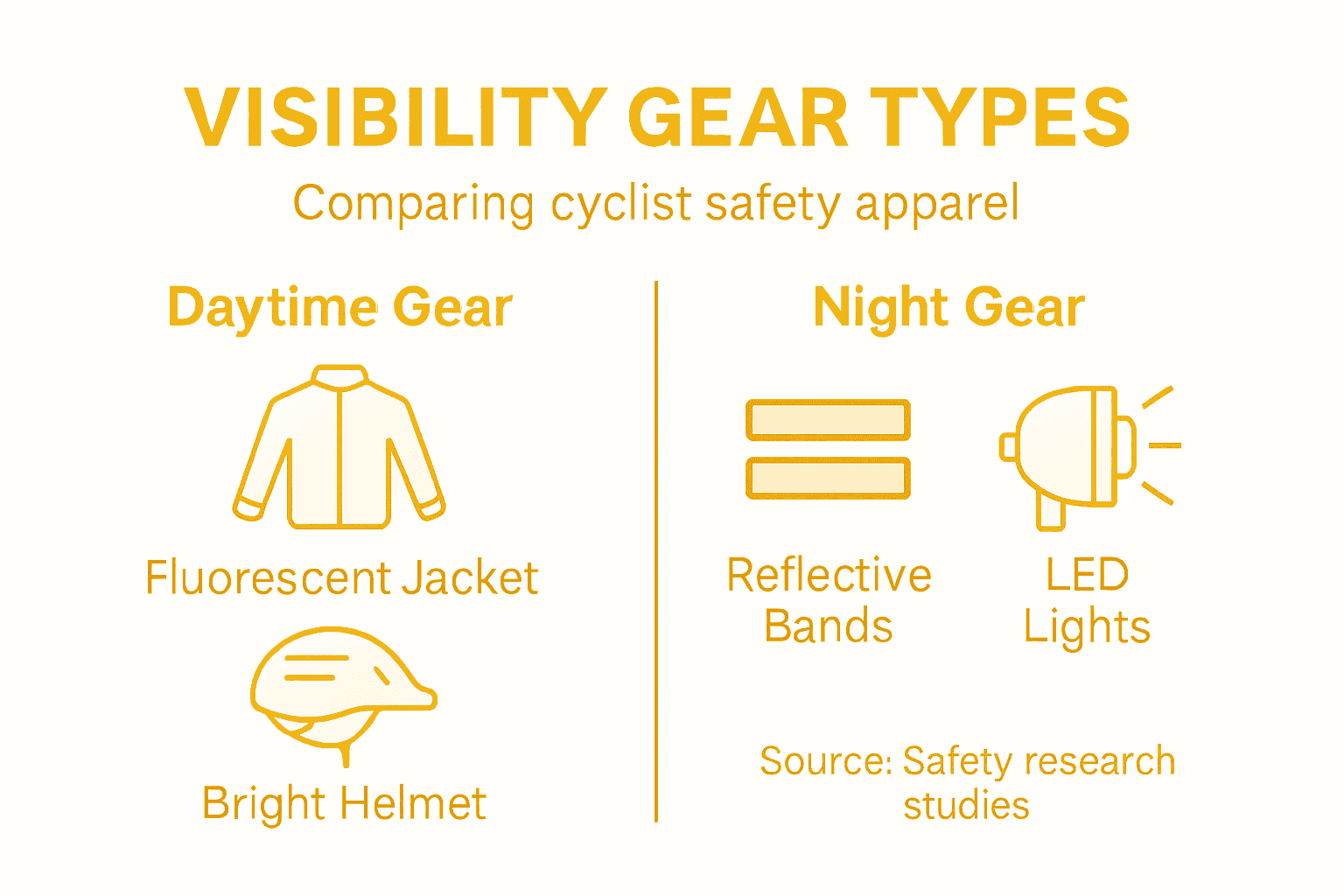
Traditionally, high visibility gear incorporates two critical material technologies: fluorescent and retroreflective components. Cycling research highlights that these materials work differently to enhance cyclist visibility:
- Fluorescent Materials: Absorb and intensify light during daylight hours, appearing exceptionally bright
- Retroreflective Materials: Reflect light directly back to its source, creating maximum visibility in low-light scenarios
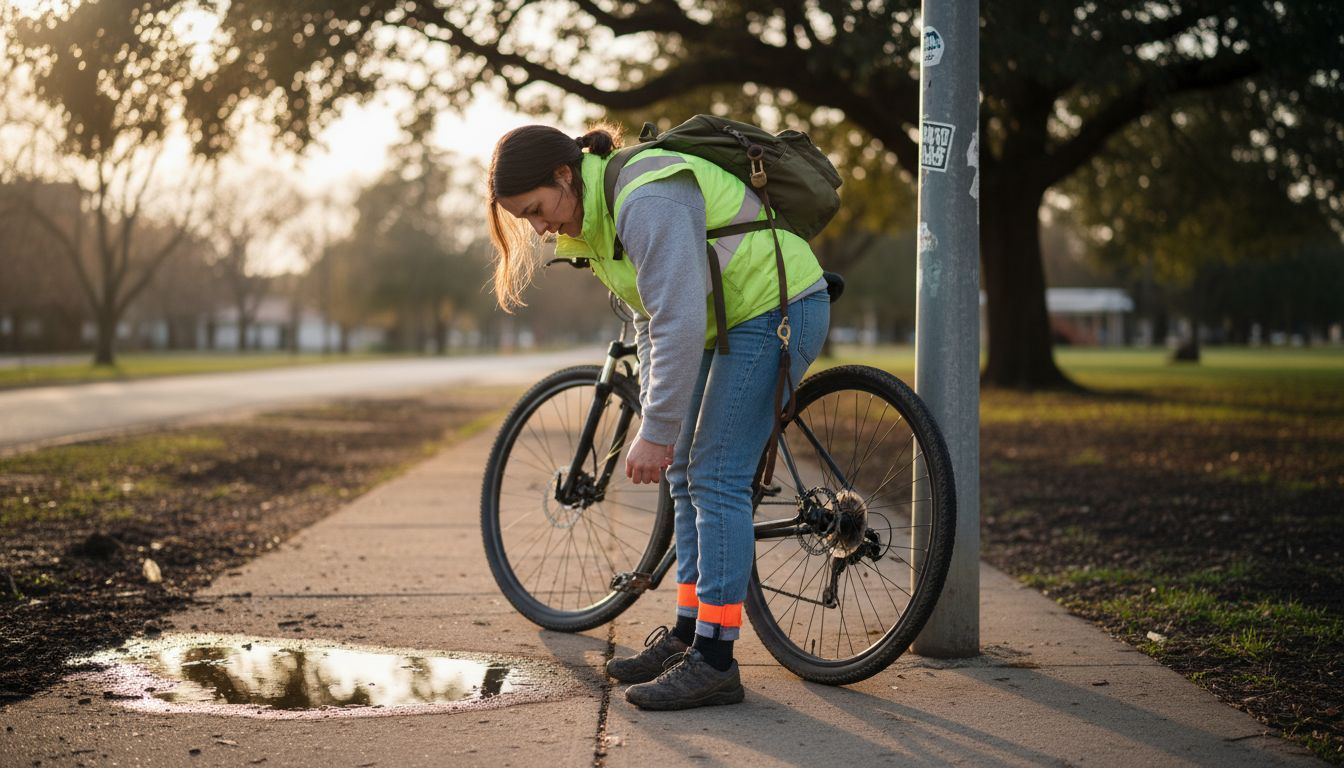
- Dynamic Visibility Accessories: Moving elements like reflective ankle straps that attract more driver attention
Interestingly, scientific studies reveal nuanced perspectives on high visibility gear. Recent research suggests that while safety equipment increases visibility, there are complex social perceptions surrounding cyclists wearing such attire. Some studies indicate that highly visible clothing might inadvertently impact how motorists perceive and interact with cyclists.
When selecting high visibility gear, cyclists should consider multiple factors beyond just brightness, including:
- Material quality and durability
- Comfort and fit
- Range of visibility (day vs. night performance)
- Coverage area of reflective elements
- Compatibility with existing cycling clothing
Pro tip: Combine multiple visibility strategies by using both fluorescent clothing and strategically placed reflective accessories for maximum safety.
Main Types of High Visibility Products
Cyclists have multiple options for high visibility products that enhance safety and detectability across different riding conditions. Lighting research reveals that these products fall into several critical categories designed to maximize rider visibility.
The primary types of high visibility gear include:
- Fluorescent Clothing: Bright, color-saturated garments that intensify visibility during daylight hours
- Retroreflective Accessories: Items that bounce light directly back to its source, creating maximum nighttime visibility
- Dynamic Reflective Elements: Strategically placed reflective materials on moving body parts like ankles and joints
- Wearable Lighting: Battery-powered or USB rechargeable LED visibility devices
- Reflective Bike Accessories: Strips, stickers, and attachments for bicycles and helmets
Fluorescent clothing works by absorbing and amplifying light wavelengths, making cyclists dramatically more noticeable during daytime riding. Retroreflective gear, conversely, becomes most effective in low-light conditions, utilizing specialized materials that redirect light directly back to its source like car headlights.
The most sophisticated high visibility products combine multiple technologies to create comprehensive safety solutions. Modern cyclists can select from an array of innovative options that balance functionality, comfort, and advanced visibility technologies:
Here’s a concise comparison of material technologies used in high visibility cycling gear:
| Material Type | Optimal Lighting | Visibility Method | Typical Use |
|---|---|---|---|
| Fluorescent | Daytime | Intensifies absorbed light | Jackets, jerseys |
| Retroreflective | Nighttime | Reflects light to its source | Bands, stickers |
| Dynamic Reflective | All conditions | Emphasizes motion for alerting | Ankle/knee straps |
| Wearable Lighting | Variable | Emits LED light directly | Safety vests, lights |
- Full-body fluorescent cycling jerseys
- Reflective ankle and knee bands
- Helmet-mounted reflective stickers
- Bike frame reflective tape
- Integrated LED safety vests
Pro tip: Layer different visibility technologies for maximum safety, combining fluorescent clothing with dynamic reflective accessories.
Key Features and How They Work
High visibility gear operates through sophisticated light interaction technologies that dramatically enhance cyclist safety. Visibility science explores how different materials and design strategies can maximize a cyclist’s detectability in various environmental conditions.
The primary mechanisms of high visibility gear include:
- Fluorescent Color Technology: Absorbs and re-emits UV light to create intense daytime brightness
- Retroreflective Material Science: Redirects light directly back to its source for nighttime visibility
- Biomotion Reflective Placement: Strategic positioning of reflective elements on moving body parts
- Light Conversion Techniques: Converting invisible light wavelengths into visible spectrum
- Contrast Enhancement Methods: Maximizing visual differentiation from surrounding environments
Fluorescent materials work by converting ultraviolet light into visible light, creating an almost luminescent effect that significantly increases daytime visibility. Retroreflective technologies take a different approach, utilizing specialized surfaces that bounce light directly back to its source, making cyclists incredibly noticeable when illuminated by vehicle headlights.
Cyclists can optimize their visibility through strategic combinations of high-tech features:
- Select neon yellow-green fluorescent base layers
- Add reflective strips on joints and moving parts
- Incorporate dynamic lighting elements
- Use multi-layered visibility technologies
- Choose garments with wrap-around reflective graphics
Pro tip: Combine multiple visibility technologies to create a comprehensive safety approach that works across different lighting conditions.
Regional Safety Standards and Legal Requirements
Safety regulations for high visibility cycling gear vary significantly across different regions and jurisdictions. European cycling standards demonstrate a nuanced approach to visibility requirements, balancing safety recommendations with cyclist mobility and participation.
Key aspects of regional safety standards include:
- European Standardization: EN 17353 regulation for reflective materials
- Fluorescent Material Specifications: Minimum brightness and color requirements
- Retroreflectivity Performance Metrics: Quantitative visibility measurements
- Regional Variation in Legal Approaches: Recommendations vs. mandatory requirements
- Night Riding Safety Guidelines: Specific visibility gear expectations
Most governments currently recommend high visibility gear without mandating its use, recognizing that overly strict regulations might discourage cycling participation. The European approach, particularly exemplified by standards like EN 17353, focuses on providing comprehensive guidelines for manufacturers and cyclists.
Cyclists should understand the varying safety expectations across different regions:
- Check local cycling safety recommendations
- Invest in gear meeting international standards
- Prioritize multi-condition visibility solutions
- Consider region-specific visibility requirements
- Stay updated on evolving safety regulations
Pro tip: Select high visibility gear that exceeds minimum standards, providing an extra margin of safety across different riding conditions.
Comparing Effectiveness and Common Mistakes
High visibility strategies require nuanced understanding beyond simple gear selection. Cycling visibility research reveals complex factors that dramatically influence cyclist detectability on roadways.
Key effectiveness considerations include:
- Dynamic Visibility: Reflective elements on moving body parts
- Strategic Placement: Positioning of high visibility materials
- Comprehensive Coverage: Combining multiple visibility technologies
- Context-Specific Approaches: Adapting to different lighting conditions
- Movement-Based Conspicuity: Enhancing recognition through motion
Researchers have consistently demonstrated that static fluorescent clothing provides limited protection. The most effective visibility strategies involve dynamic reflective elements, particularly on moving limbs like legs and ankles, which significantly increase driver recognition distance and reaction time.
Cyclists commonly make several critical mistakes in visibility planning:
To help cyclists avoid common mistakes, here’s a summary of key visibility errors and how to address them:
| Mistake | Impact on Safety | Recommended Action |
|---|---|---|
| Only wearing static clothing | Reduced nighttime detection | Add reflective/dynamic elements |
| Ignoring moving body placement | Drivers miss cyclist motion | Use straps on limbs and joints |
| Not adapting to conditions | Inconsistent visibility | Layer gear for day and night |
| Poor gear maintenance | Diminished effectiveness | Check and replace worn materials |
- Relying exclusively on static fluorescent clothing
- Neglecting reflective elements on moving body parts
- Ignoring lighting conditions and context
- Assuming visibility guarantees safety
- Failing to update or maintain high visibility gear
Pro tip: Prioritize dynamic, multi-layered visibility solutions that maximize recognition across different riding environments and lighting conditions.
Boost Your Safety with Advanced High Visibility Gear from THE BEAM
Cyclists face the constant challenge of being seen in changing light and traffic conditions. This article highlights how dynamic visibility, combining fluorescent and retroreflective technologies, significantly improves safety by attracting driver attention. If you want to avoid common mistakes like relying only on static clothing or ignoring reflective placements on moving parts, THE BEAM offers innovative solutions designed for real-world protection and comfort.
Discover our carefully crafted range of Reflectors – The Beam and Lighting – The Beam that incorporate multi-layered visibility technologies proven to enhance cyclist conspicuity day and night.

Take control of your cycling safety today by equipping yourself with cutting-edge high visibility gear from THE BEAM. Visit our website for exclusive products like the VIRGO integral helmet and advanced accessories that elevate your visibility and confidence on every ride. Maximize your protection and stand out where it matters most.
Frequently Asked Questions
What is high visibility gear for cyclists?
High visibility gear includes specialized cycling clothing and accessories designed to enhance a cyclist’s visibility to motorists and pedestrians, especially in low-light conditions. This gear typically features fluorescent and retroreflective materials.
How does fluorescent material work in high visibility gear?
Fluorescent materials absorb and amplify natural light, making the clothing appear exceptionally bright during daylight. This quality significantly improves visibility for cyclists on the road.
Why are dynamic reflective elements important in high visibility gear?
Dynamic reflective elements, like ankle straps, emphasize movement, making cyclists more noticeable to drivers. They enhance safety because motion can attract attention more effectively than static gear alone.
What are some common mistakes cyclists make with high visibility gear?
Cyclists often rely solely on static fluorescent clothing, neglect reflective elements on moving body parts, fail to adapt gear for different lighting conditions, and overlook gear maintenance. Addressing these issues is crucial to maximizing safety and visibility.


