

Every urban cyclist in France and Germany knows that navigating city streets is not just about speed or efficiency. Staying protected in traffic means going beyond basic gear and investing in high-end visibility and safety equipment. Global research from the World Health Organization highlights that cycling safety is shaped by smart choices in clothing, helmets, and reflective gear. Discover how the latest protective technology and proactive habits can turn every ride into a safer, more confident experience.
Table of Contents
- Cycling Safety Defined And Common Myths
- Types Of Hazards Facing Urban Cyclists
- Key Elements Of Protective Cycling Gear
- Legal Standards For Road Cycling Safety
- Risks Of Neglecting Visibility And Protection
- Infrastructure And Design Impacts On Safety
Key Takeaways
| Point | Details |
|---|---|
| Comprehensive Safety Approach | Cycling safety involves more than just gear; it includes awareness of traffic patterns, environment, and using high-visibility clothing. |
| Myth-Busting | Common misconceptions about cycling risks can deter riders from enjoying its benefits; understanding the truth allows for safer practices. |
| Importance of Infrastructure | Urban cycling safety is significantly influenced by well-designed infrastructure like dedicated bike lanes and clear demarcations. |
| Visibility and Protection | Neglecting visibility and protective gear increases accident risks; investing in quality gear is essential for safety. |
Cycling Safety Defined and Common Myths
Cycling safety is more than just wearing a helmet or following traffic rules. It’s a comprehensive approach to protecting urban riders from potential risks while maximizing the health and environmental benefits of cycling. Global safety research from the World Health Organization reveals that cycling safety involves multiple interconnected strategies.
Contrary to popular belief, urban cycling isn’t inherently dangerous when riders understand and implement proper safety techniques. Safety myths can actually discourage people from experiencing the numerous benefits of cycling. Let’s break down some common misconceptions:
- Myth 1: Cycling is too risky for city commuters
- Myth 2: Safety gear is unnecessary for short trips
- Myth 3: Experienced cyclists don’t need additional protection
Understanding these myths helps riders develop a more nuanced approach to urban cycling safety. Proper preparation, awareness, and equipment can dramatically reduce potential risks. Urban cyclists must consider factors like visibility, defensive riding techniques, and understanding local traffic patterns.
Cycling safety is not about eliminating risk entirely, but about making informed choices that minimize potential hazards.
Key elements of comprehensive cycling safety include:
- Wearing high-visibility clothing
- Using proper lighting and reflective gear
- Maintaining your bicycle regularly
- Practicing defensive riding techniques
- Understanding and following local traffic regulations
Urban cycling requires a proactive mindset. Riders must constantly assess their environment, anticipate potential challenges, and make split-second decisions that prioritize their safety.
Pro tip: Invest in a high-quality helmet with MIPS technology and practice situational awareness during every ride.
Types of Hazards Facing Urban Cyclists
Urban cyclists encounter a complex landscape of potential dangers that require constant awareness and strategic navigation. E-bike safety strategies become critical when understanding the diverse range of hazards present in city environments. These risks extend far beyond simple traffic interactions and encompass multiple layers of potential threat.
Urban cycling hazards can be categorized into several key types that demand different defensive approaches:
-
Road Surface Hazards
- Potholes and uneven pavement
- Loose gravel and debris
- Unexpected road construction zones
- Wet or slippery surfaces
-
Traffic-Related Risks
- Unpredictable vehicle movements
- Driver blind spots
- Sudden lane changes
- Dooring from parked vehicles
- Intersection conflicts
Successful urban cyclists develop a 360-degree awareness that anticipates potential dangers before they become immediate threats.
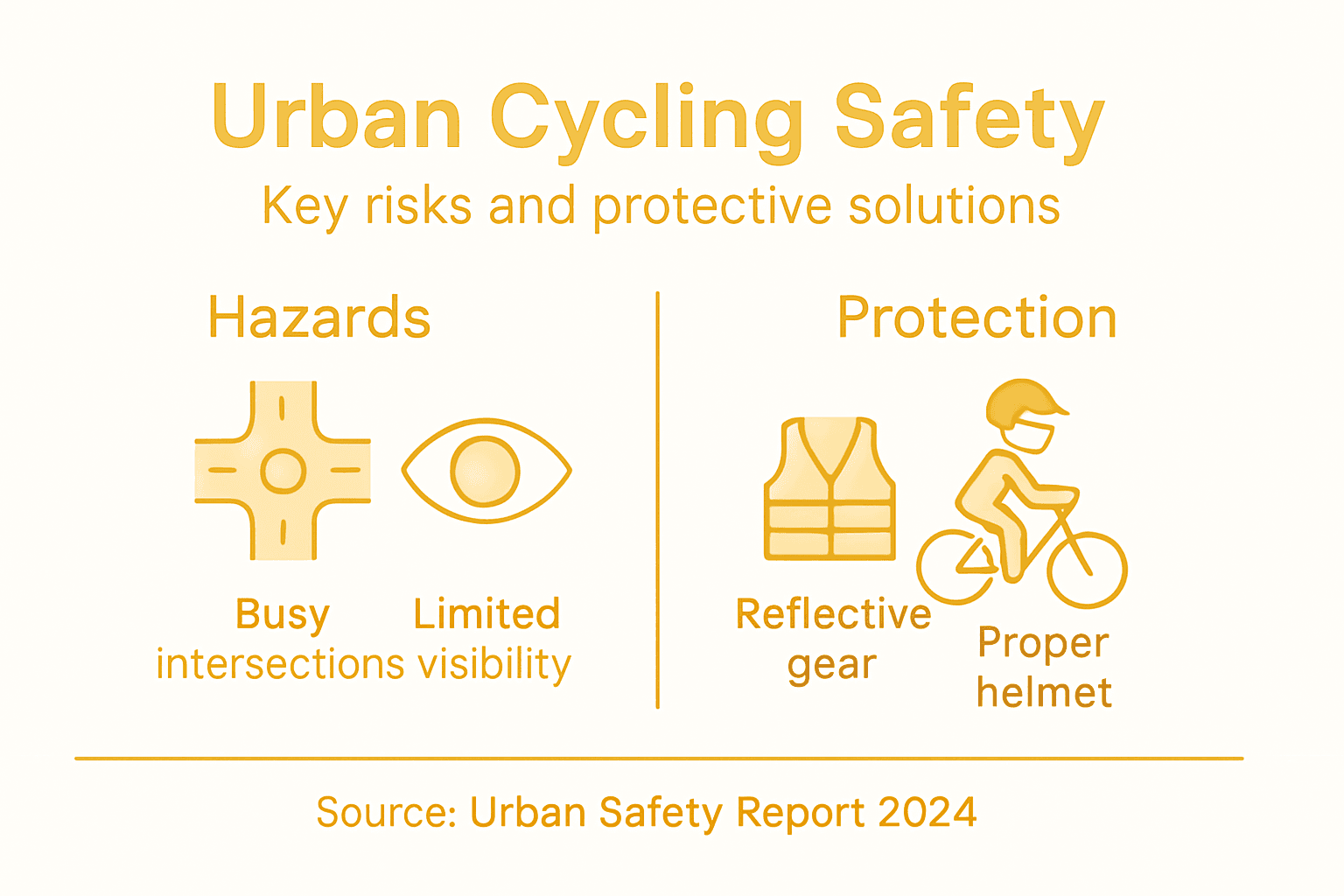
Intersections represent particularly complex environments where multiple hazards converge simultaneously. Cyclists must simultaneously monitor vehicle traffic, pedestrian movements, traffic signals, and potential road surface irregularities. Defensive riding becomes less a choice and more a survival strategy in these high-risk zones.

Beyond physical infrastructure challenges, urban cyclists also face environmental and situational risks that can dramatically impact safety. Weather conditions like rain, wind, and low visibility create additional layers of complexity. Nighttime riding introduces further challenges, requiring advanced lighting and reflective gear to ensure visibility.
Here’s a quick overview comparing major urban cycling hazards and the primary strategies to counteract them:
| Hazard Type | Key Challenge | Recommended Strategy |
|---|---|---|
| Road Surface Issues | Sudden potholes and debris | Scan ahead, adjust speed |
| Traffic Interactions | Unpredictable drivers | Maintain safe distance |
| Environmental Factors | Rain, low visibility, wind | Use advanced lighting gear |
| Intersection Risks | Multiple hazards converge | Practice defensive riding |
- Assess intersection visibility
- Monitor surrounding traffic patterns
- Make eye contact with drivers
- Use hand signals consistently
- Maintain a predictable riding line
Pro tip: Always assume drivers cannot see you and position yourself strategically to maximize visibility and minimize potential collision risks.
Key Elements of Protective Cycling Gear
Protective cycling gear represents a critical line of defense for urban riders navigating complex and unpredictable city environments. Comprehensive helmet effectiveness research demonstrates that strategic protective equipment can significantly reduce injury risks during potential accidents. Urban cyclists must approach gear selection with a holistic understanding of potential hazards.
Protective cycling gear encompasses multiple essential components designed to minimize injury and maximize rider safety:
-
Head Protection
- Multi-impact helmets
- MIPS technology
- Proper fit and sizing
- Ventilation and comfort features
-
Visibility Enhancements
- Reflective clothing
- High-visibility jackets
- LED lighting systems
- Reflective helmet elements
-
Body Armor
- Impact-resistant padded shorts
- Protective gloves
- Reinforced jacket materials
- Knee and elbow guards
Effective protective gear transforms potential vulnerability into confident urban mobility.
Beyond physical protection, modern cycling gear integrates advanced materials and intelligent design principles. Lightweight, breathable fabrics now offer superior protection without compromising comfort or mobility. Technological innovations like integrated impact absorption systems and moisture-wicking properties have revolutionized rider safety standards.
Urban cyclists must consider multiple factors when selecting protective equipment:
Compare the impact of cycling gear features on safety and comfort:
| Gear Feature | Safety Benefit | Comfort/Usability Impact |
|---|---|---|
| MIPS Helmet Technology | Reduces rotational injuries | Lightweight, breathable fit |
| Reflective Clothing | Improves daytime visibility | Enhances mobility |
| Impact-Resistant Armor | Protects joints in crashes | May limit movement slightly |
| LED Lighting Systems | High nighttime visibility | Easy to operate, rechargeable |
- Assess personal riding environment
- Match gear to specific cycling style
- Prioritize certified safety standards
- Ensure proper fit and comfort
- Replace gear after significant impacts
Pro tip: Invest in high-quality, multi-purpose gear that provides comprehensive protection while maintaining comfort and style.
Legal Standards for Road Cycling Safety
Road cycling safety is fundamentally shaped by comprehensive legal frameworks designed to protect vulnerable road users. Global road safety initiatives establish critical standards that govern cyclist protection, infrastructure design, and traffic interaction protocols. These legal standards represent a sophisticated approach to minimizing cycling-related risks and promoting urban mobility.
Legal cycling regulations encompass multiple critical dimensions of road safety:
-
Personal Protection Requirements
- Mandatory helmet usage
- Reflective clothing standards
- Age-specific safety equipment rules
- Lighting and visibility regulations
-
Traffic Interaction Laws
- Right-of-way specifications
- Bicycle lane usage protocols
- Signaling and communication requirements
- Intersection navigation rules
-
Infrastructure Legal Standards
- Minimum bicycle lane width
- Dedicated cycling infrastructure mandates
- Road surface maintenance requirements
- Safety barrier and separation guidelines
Legal standards transform cycling from a high-risk activity into a structured, protected mode of transportation.
European jurisdictions have been particularly progressive in developing nuanced legal frameworks that recognize cyclists as integral components of urban transportation systems. These regulations go beyond simple traffic rules, integrating comprehensive safety considerations that address infrastructure design, driver education, and cyclist protection.
Key legal considerations for urban cyclists include:
- Understanding local traffic regulations
- Knowing specific cycling lane laws
- Recognizing liability and insurance requirements
- Documenting safety equipment standards
- Staying informed about regional cycling policies
Pro tip: Regularly review local cycling regulations, as safety standards can change and vary significantly between different municipalities.
Risks of Neglecting Visibility and Protection
Neglecting visibility and protection represents a critical vulnerability for urban cyclists, potentially transforming routine commutes into dangerous encounters. Systematic visibility research demonstrates that inadequate safety precautions exponentially increase the likelihood of serious accidents. Urban riders who underestimate the importance of comprehensive protection mechanisms expose themselves to substantial and preventable risks.
Visibility risks manifest through multiple interconnected potential hazards:
-
Driver Detection Challenges
- Reduced reaction time for motorists
- Increased collision probability
- Limited peripheral awareness
- Higher nighttime accident rates
-
Personal Safety Vulnerabilities
- Diminished road presence
- Increased pedestrian and vehicle interaction risks
- Reduced emergency response capabilities
- Limited self-protection mechanisms
-
Equipment Compromise
- Ineffective lighting systems
- Poor reflective gear performance
- Inadequate protective clothing
- Compromised safety technology integration
Visibility is not optional; it’s a fundamental survival strategy for urban cyclists.
Traditional misconceptions about cyclist safety often lead riders to underestimate the sophisticated interplay between visibility technologies and personal protection. Modern urban cycling demands a holistic approach that integrates advanced materials, intelligent design, and proactive safety strategies.
Critical consequences of neglecting visibility include:
- Increased accident probability
- Higher severity of potential injuries
- Reduced driver awareness
- Limited legal protection
- Potential insurance complications
Pro tip: Invest in multi-layered visibility solutions that combine reflective clothing, intelligent lighting systems, and high-contrast protective gear.
Infrastructure and Design Impacts on Safety
Urban cycling safety is fundamentally shaped by the underlying infrastructure and design principles that guide transportation systems. Comprehensive cycling infrastructure research reveals that strategic design elements can dramatically reduce cyclist vulnerability and create safer urban mobility environments.
Infrastructure safety components encompass multiple critical design considerations:
-
Physical Path Design
- Dedicated bicycle lane width
- Smooth, obstacle-free surfaces
- Clear lane demarcations
- Forgiving road edge designs
-
Intersection Engineering
- Visible cyclist crossing zones
- Reduced turning radius for vehicles
- Advanced stop lines
- Traffic signal synchronization
-
Urban Planning Elements
- Separation from motor vehicle traffic
- Consistent road surface quality
- Strategic signage placement
- Predictable traffic flow patterns
Intelligent infrastructure design transforms streets from potential danger zones into collaborative mobility spaces.
Modern urban planning increasingly recognizes cyclists as integral transportation participants, not peripheral road users. This philosophical shift drives more sophisticated infrastructure strategies that prioritize safety through proactive design, anticipating potential interaction points between different transportation modes.
Key design considerations for cyclist safety include:
- Minimizing interaction with motor vehicles
- Creating predictable traffic patterns
- Ensuring clear visibility
- Designing forgiving road surfaces
- Implementing comprehensive wayfinding systems
Pro tip: Evaluate local cycling infrastructure critically, identifying potential design improvements that enhance safety for all road users.
Elevate Your Urban Cycling Safety with THE BEAM
Cycling safety in urban environments demands more than basic gear and awareness. This article highlights the critical challenges such as visibility risks and protective equipment shortcomings that riders face every day. To truly minimize hazards like unpredictable traffic and poor lighting conditions, you need innovative solutions that blend protection, design, and usability. THE BEAM specializes in high-end cycling safety equipment designed specifically for road, gravel, urban, and e-bike riders who want to ride with confidence and style.
Discover our flagship VIRGO integral helmet featuring MIPS technology that offers superior head protection. Complement your safety setup with our exclusive range of lighting and reflectors designed to maximize visibility day and night.

Don’t wait until risks turn into accidents. Upgrade your safety gear now at THE BEAM and experience peace of mind on every ride. Explore our collection to find equipment that meets the highest safety standards while enhancing your urban cycling experience.
Frequently Asked Questions
What are the key elements of cycling safety for urban riders?
Key elements include wearing high-visibility clothing, using proper lighting and reflective gear, maintaining your bicycle regularly, practicing defensive riding techniques, and understanding local traffic regulations.
How can cyclists minimize risks while riding in urban environments?
Cyclists can minimize risks by maintaining awareness of their surroundings, anticipating potential hazards, selecting proper routes, and using protective gear to enhance visibility and safety.
Why is visibility important for urban cyclists?
Visibility is crucial as it helps drivers to detect cyclists more easily, reducing the likelihood of accidents. Proper lighting systems, reflective clothing, and high-visibility gear significantly improve a cyclist’s presence on the road.
What types of protective gear should urban cyclists consider?
Urban cyclists should consider multi-impact helmets (preferably with MIPS technology), reflective clothing, LED lighting systems, and body armor such as padded shorts, gloves, and knee and elbow guards.


