

Every seasoned road cyclist in France and Germany knows the feeling of sharing busy streets with fast-moving traffic and unpredictable weather. Prioritizing safety becomes second nature, especially when daily rides mean exposure to countless risks. Exploring the latest advancements in cycling gear, from advanced helmet technology that significantly reduces the risk of head injuries to cutting-edge smart devices and high-visibility accessories, helps you ride with confidence and style, no matter the conditions.
Table of Contents
- Step 1: Select Advanced Protective Cycling Gear
- Step 2: Equip High-Visibility and Reflective Accessories
- Step 3: Install Smart Safety Devices For Added Protection
- Step 4: Adjust and Personalize Equipment Fit
- Step 5: Verify Protection Effectiveness Before Riding
Quick Summary
| Key Point | Explanation |
|---|---|
| 1. Invest in advanced protective gear | Select modern helmets with MIPS technology, padded shorts, and gloves to enhance safety and comfort while cycling. |
| 2. Use high-visibility accessories | Incorporate reflective gear like vests, bands, and wheel accessories to increase visibility and reduce accident risk in low-light conditions. |
| 3. Implement smart safety devices | Equip your bike with smart helmets and handlebar devices that offer real-time alerts and tracking to improve your safety on the road. |
| 4. Personalize your bike fit | Adjust saddle height, handlebar configuration, and cleat alignment for optimal comfort and performance, reducing injury risk while cycling. |
| 5. Verify gear effectiveness before rides | Conduct thorough pre-ride checks, including visual inspections and fit assessments, to ensure your protective cycling equipment is functional and safe. |
Step 1: Select advanced protective cycling gear
Selecting the right protective cycling gear is critical for ensuring your safety on the road. Modern cycling protection goes far beyond basic helmets, involving a comprehensive approach to rider safety.
When choosing advanced protective gear, focus on these key elements:
-
Helmet Technology: Modern helmets like those with MIPS technology provide superior impact protection. Advanced helmet designs can significantly reduce head injury risks by absorbing and dispersing impact forces.
-
Material Quality: Look for gear constructed from high-performance materials like carbon fiber, reinforced polymers, and impact-resistant composites.
-
Fit and Comfort: Protective equipment must fit perfectly - too loose compromises protection, too tight restricts movement.
- Measure your body precisely
- Try multiple sizes and brands
- Check range of motion while wearing gear
Professional cyclists understand that protection isn’t just about helmets. Advanced protection includes padded cycling shorts, reinforced gloves, protective eyewear, and impact-resistant jackets.
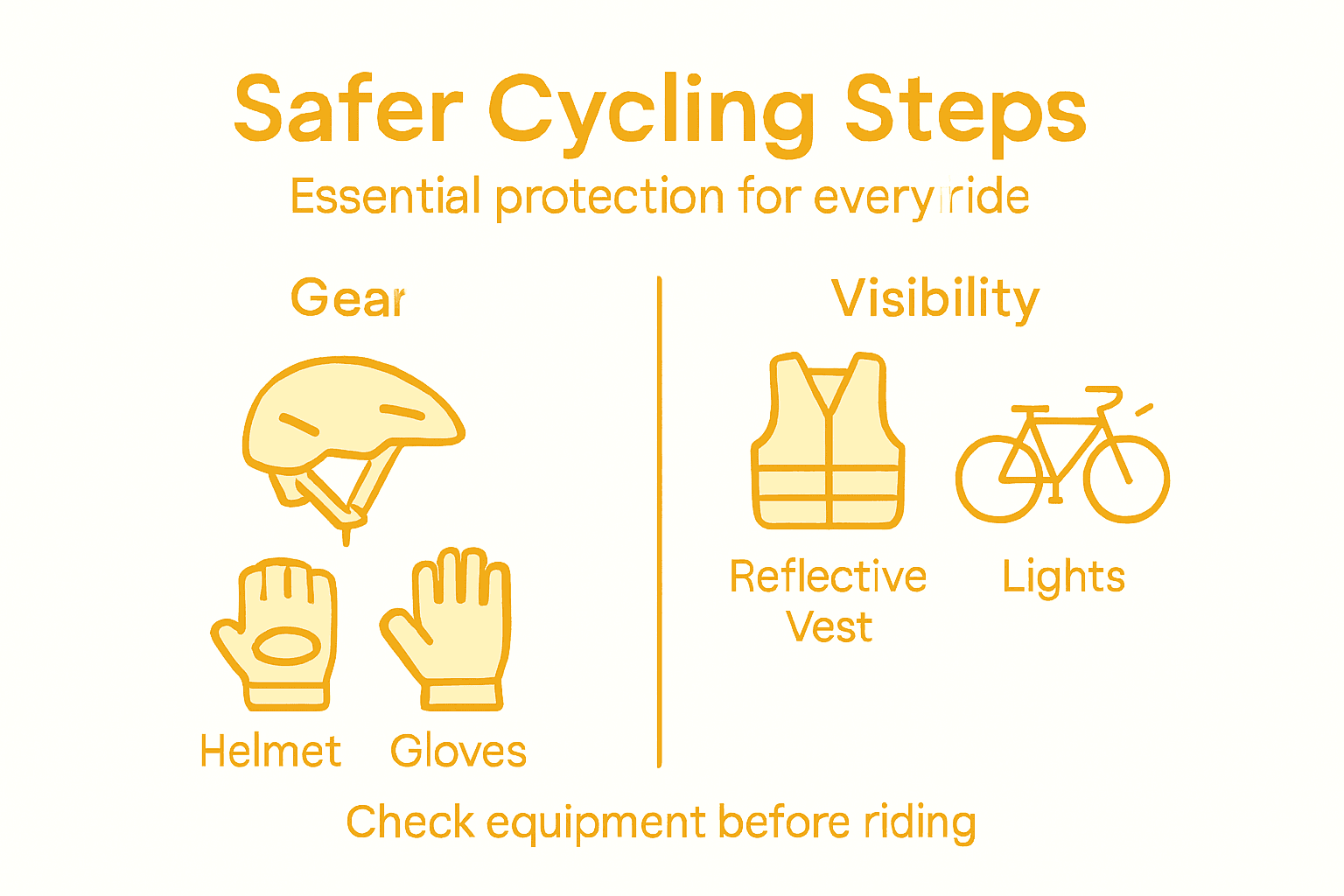
Here’s how advanced protective cycling gear options compare:
| Category | Traditional Gear | Advanced Gear |
|---|---|---|
| Helmet Features | Basic impact protection | MIPS, multi-impact absorption |
| Materials Used | Standard plastics | Carbon fiber, composites |
| Comfort Level | Basic padding | Adjustable, ergonomic design |
| Additional Gear | Helmet only | Gloves, shorts, eyewear, jackets |
Invest in quality gear that combines safety, comfort, and performance - your body will thank you later.
Pro tip: Always replace protective gear after a significant impact or every 3-5 years to ensure maximum safety standards are maintained.
Step 2: Equip high-visibility and reflective accessories
Ensuring your visibility on the road is a critical component of cycling safety. High-visibility gear dramatically increases cyclist detection by motorists, reducing the risk of accidents during low-light conditions.
When selecting high-visibility and reflective accessories, consider these essential elements:
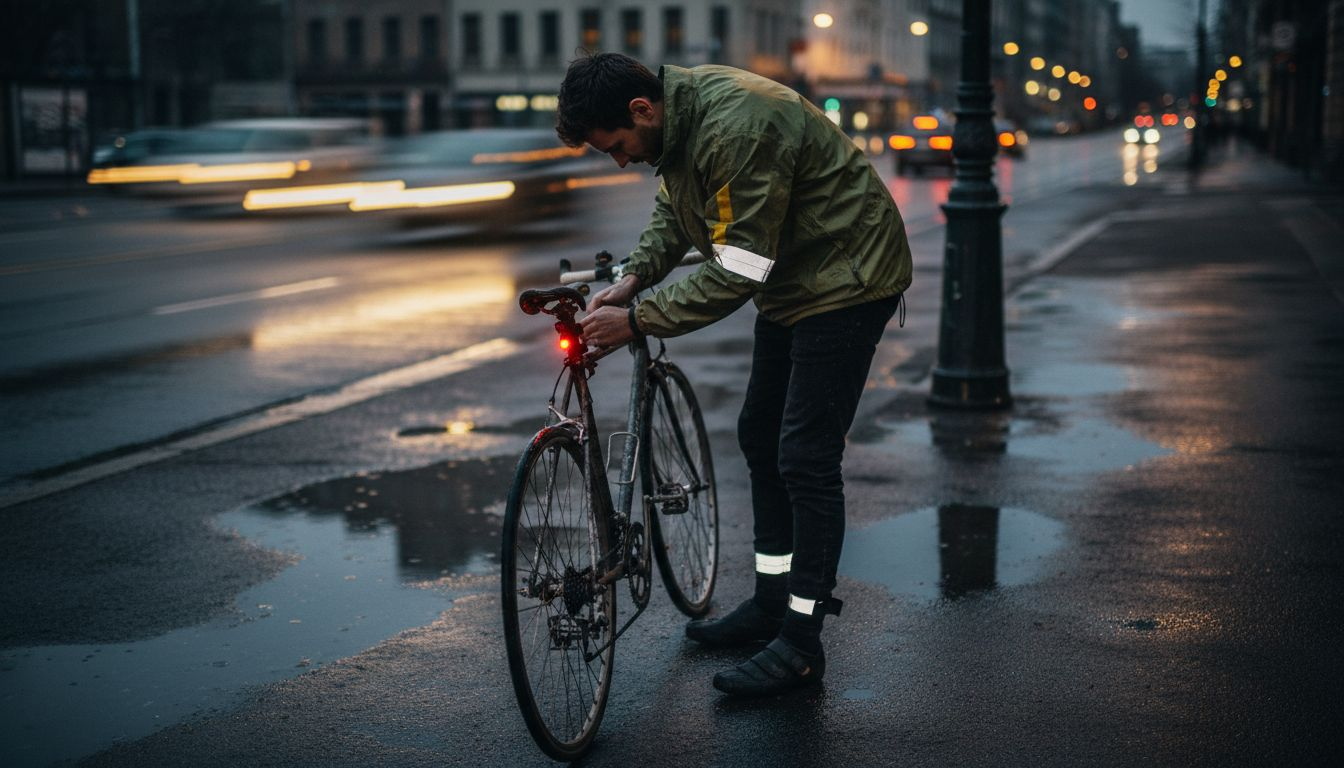
- Strategic Placement: Position reflective elements on moving body parts like ankles, knees, and wrists for maximum visibility
- Material Quality: Choose accessories with 360-degree reflective technologies
- Comprehensive Coverage: Combine multiple visibility solutions
- Select reflective jacket or vest
- Add reflective ankle/wrist bands
- Install reflective wheel or frame accessories
Professional cyclists understand that visibility goes beyond basic clothing. Innovative solutions like reflective wheel and frame accessories can significantly enhance your safety profile.
Effective visibility is about creating multiple light-reflecting points that catch drivers’ attention from all angles.
Pro tip: Layer your reflective gear - combining multiple reflective accessories creates a more comprehensive visibility strategy that works in various lighting conditions.
Step 3: Install smart safety devices for added protection
Advanced cycling safety technologies are transforming road safety for cyclists. Modern smart devices offer unprecedented protection by integrating cutting-edge sensors and communication technologies directly into your cycling gear.
When selecting smart safety devices, consider these critical features:
- Sensor Integration: Look for devices with accelerometers and gyroscope technology
- Connectivity: Ensure compatibility with smartphone apps
- Multi-Function Capabilities: Prioritize devices offering multiple safety features
- Choose a smart helmet with integrated sensors
- Install handlebar-mounted communication devices
- Connect safety devices to your smartphone
Professional cyclists now rely on intelligent safety ecosystems that provide real-time alerts and tracking. Smart helmet technologies now offer features like accident detection, rear-view camera functions, and GPS navigation.
Explore the benefits of smart safety devices for cyclists:
| Device Type | Key Function | Added Protection Benefit |
|---|---|---|
| Smart Helmet | Sensors, GPS, alerts | Real-time accident response |
| Handlebar Device | Communication, lighting | Enhanced road awareness |
| Wearable Tracker | Location sharing | Emergency notification |
Smart safety devices are not just accessories - they’re your digital guardians on the road.
Pro tip: Regularly update your smart device firmware to ensure you have the most recent safety algorithms and protection features.
Step 4: Adjust and personalize equipment fit
Bike fitting is a precise science that directly impacts your comfort, performance, and injury prevention. Every cyclist’s body is unique, which means your equipment should be tailored specifically to your physical characteristics and riding style.
To achieve the perfect equipment fit, focus on these critical adjustment areas:
- Saddle Height and Position: Align for optimal leg extension and power transfer
- Handlebar Configuration: Adjust reach and height for comfort and control
- Cleat and Shoe Alignment: Ensure proper biomechanical positioning
- Measure your body’s key dimensions
- Use professional fitting tools or services
- Make incremental adjustments during test rides
Advanced technologies like infrared thermography now offer objective methods for detecting potential discomfort zones and asymmetries in your riding position.
A well-fitted bicycle is an extension of your body - precise adjustments translate directly into improved performance and reduced injury risk.
Pro tip: Schedule a professional bike fitting annually, as your body’s flexibility and cycling dynamics can change over time.
Step 5: Verify protection effectiveness before riding
Bicycle helmet effectiveness depends on rigorous pre-ride verification. Your safety gear is only as good as its condition and proper fit, making systematic checks crucial before every cycling session.
Conduct these comprehensive protection verification steps:
- Visual Inspection: Check for cracks, dents, or structural damage
- Strap Functionality: Test buckle and adjustment mechanisms
- Fit Assessment: Ensure snug but comfortable positioning
- Perform a visual equipment scan
- Test all protective gear connections
- Complete a range-of-motion check
Professional safety demonstrations suggest using practical techniques like the helmet wiggle test - if your helmet moves more than an inch in any direction, readjust immediately.
Effective protection is about consistent, meticulous verification - not just owning the gear.
Pro tip: Replace your protective equipment every 3-5 years or immediately after any significant impact, as material degradation can compromise safety.
Enhance Your Road Cycling Safety with THE BEAM’s Cutting-Edge Gear
Mastering road cycling protection is about choosing advanced gear that truly works. This article highlights the crucial need for high-visibility accessories, smart safety devices, and perfectly fitted equipment to reduce risks and boost your confidence on every ride. If you want to transform your cycling experience and protect yourself at the highest level explore our thoughtfully designed high-end helmets and reflective accessories tailored for serious cyclists like you.
Don’t compromise on safety or comfort. Discover THE BEAM’s flagship VIRGO helmet featuring MIPS technology for superior impact protection and browse our selection of high-visibility reflectors that dramatically increase your road visibility when it matters most. Complement your safety setup with innovative mounting solutions from our MOUNTS collection designed for seamless integration of smart devices. Visit THE BEAM official site today and take the essential step to ride safer, smarter, and with total peace of mind.
Frequently Asked Questions
What should I look for when selecting advanced protective cycling gear?
Selecting advanced protective cycling gear involves focusing on helmet technology, material quality, and fit. Prioritize helmets with MIPS technology for better impact protection, and ensure the gear fits snugly for optimal safety and comfort. Measure your body accurately and try multiple sizes and brands to ensure the best fit.
How can I improve my visibility while cycling at night or in low light?
Improve your visibility by equipping high-visibility and reflective accessories. Layer reflective gear such as jackets, ankle bands, and wheel accessories to create multiple light-reflecting points that catch drivers’ attention. Make a habit of checking your visibility gear before every ride to enhance your safety.
What are smart safety devices, and how do they benefit cyclists?
Smart safety devices are advanced tools that integrate sensors and communication technologies into your cycling gear. They provide features like real-time accident detection, GPS navigation, and emergency notifications. Install a smart helmet or handlebar communication device to enhance your safety while cycling.
How can I ensure my bike and protective gear fit correctly?
Achieving the right fit involves adjusting components like saddle height, handlebar configuration, and shoe cleat alignment. Measure your key dimensions and test ride your bike to make sure everything feels comfortable and allows for optimal power transfer. Schedule a professional bike fitting if necessary to tailor your equipment to your unique body.
What steps should I take to verify my protection effectiveness?
To verify protection effectiveness, conduct a thorough pre-ride inspection of your gear. Check for visible damage, ensure all straps are functional, and assess the fit of your helmet. Implement a routine inspection process before every ride to maintain the integrity of your safety equipment.
How often should I replace my cycling protective equipment?
Replace your protective equipment every 3-5 years, or immediately after any significant impact. This ensures that your gear maintains maximum safety standards and effectiveness. Keep a log of your equipment’s age and condition to help you track when replacements are needed.


