

TL;DR:
- Connected cycling accessories are IoT-enabled devices that enhance rider safety, navigation, and performance by providing real-time data. They address specific needs through smart helmets, GPS computers, tire sensors, and lights, improving safety and convenience for all cyclists. Proper selection, gradual integration, and regular updates are essential for maximizing benefits and minimizing technical challenges.
Connected cycling accessories are smart, IoT-enabled devices that improve rider safety, navigation, and performance by delivering real-time data directly to you on the bike. The role of connected cycling accessories has expanded far beyond basic gadgets. The bicycle accessories market is projected to grow from $19.7 billion in 2026 to $30.9 billion by 2033, driven by IoT and AI adoption. That growth reflects a fundamental shift: cyclists at every level, from daily commuters to weekend enthusiasts, now expect their gear to communicate, adapt, and protect. Brands like Garmin, Tubolito, and Thebeamofficial are leading this shift with products that turn raw ride data into real decisions.
What types of connected cycling devices are available?
The diversity of connected bike equipment available today is wider than most cyclists realize. Each category solves a specific problem, and understanding what each does helps you build a setup that actually fits your riding style.
Smart helmets
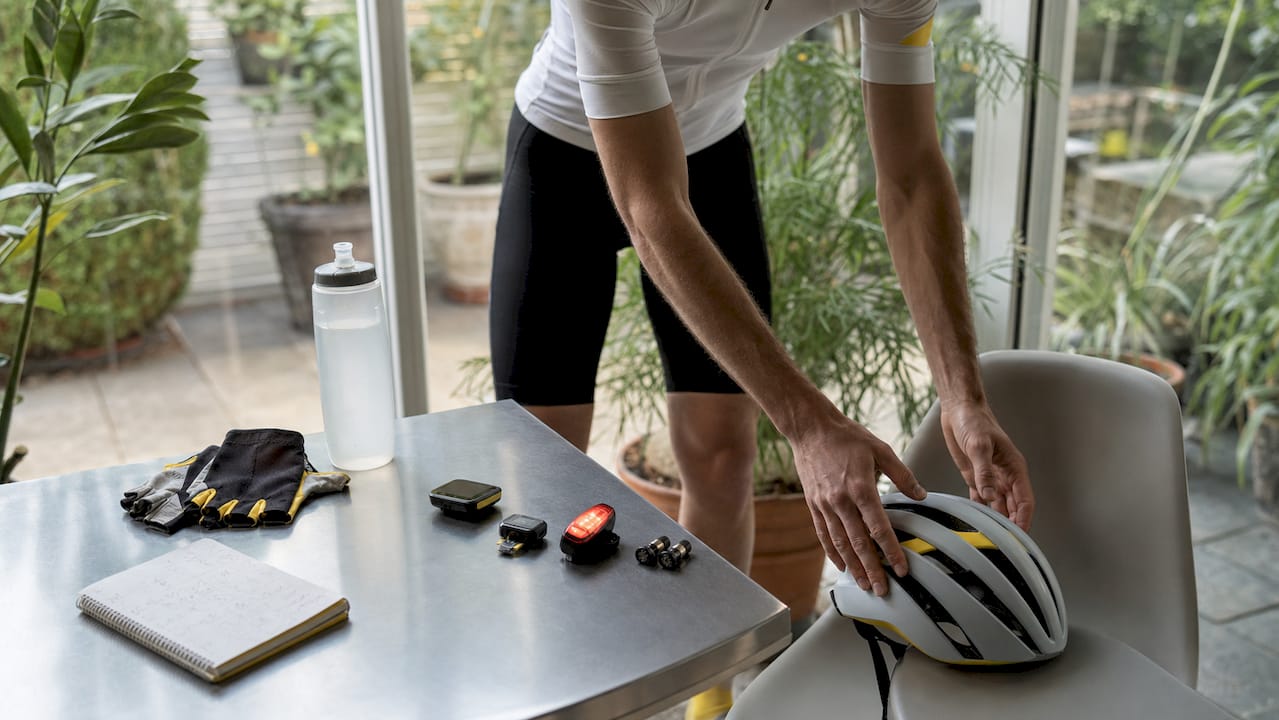
Connected helmets integrate impact detection, Bluetooth communication, and emergency alert systems into the shell itself. These features go beyond passive protection. When a crash is detected, some models automatically send location data to emergency contacts, cutting response time significantly.
Connected lights and reflectors
Adaptive lighting systems adjust brightness based on ambient conditions, making you visible in daylight, dusk, and full darkness without manual adjustment. Thebeamofficial’s FRAME FLASH reflectors use motion-powered technology, meaning they activate with movement and require no battery charging. Visibility is the single most effective factor in preventing urban cycling accidents.
GPS bike computers
Garmin’s Edge series and similar devices provide turn-by-turn navigation, live segment tracking, and performance metrics on a single screen. These units sync with smartphones, heart rate monitors, and power meters through ANT+ and Bluetooth. The result is a complete picture of your ride without pulling out your phone.
Smart sensors
Tubolito’s SYNCD smart inner tubes deliver real-time tire pressure monitoring via Bluetooth, compatible with iOS, Android, and Garmin Connect IQ. The system sends instant alerts when pressure drops, which matters most at speed on descents. Cadence sensors and power meters round out this category by tracking pedaling efficiency in real time.
Wearables and HUD glasses
Devices like CYBERSIGHT’s Zenith Pro project performance data onto a heads-up display connected to Garmin units and Apple Watch via Bluetooth. You keep your eyes on the road while reading speed, heart rate, and navigation cues. Heart rate monitors worn on the wrist or chest feed data to bike computers and coaching platforms simultaneously.
| Device Type | Primary Function | Best For |
|---|---|---|
| Smart Helmet | Impact detection, emergency alerts | All cyclists, especially urban riders |
| GPS Bike Computer | Navigation, performance tracking | Enthusiasts, endurance riders |
| Smart Tire Sensor | Real-time pressure monitoring | Road, gravel, and commuter cyclists |
| Connected Lights | Adaptive visibility | Commuters, night riders |
| HUD Glasses | Heads-up data display | Performance-focused cyclists |
How do connected accessories improve safety and navigation?
The core mechanism behind smart cycling gadgets is continuous data monitoring paired with instant alerts. Rather than reviewing ride data after the fact, connected accessories flag problems the moment they occur.
Tire pressure loss is one of the clearest examples. The Tubolito SYNCD system detects a puncture in real time and sends a Bluetooth alert to your phone or Garmin device before you feel the handling change. That early warning can prevent a high-speed blowout from becoming a crash.
Navigation has also changed fundamentally. Garmin’s Connect IQ platform integrates third-party apps directly onto the bike computer screen, so route adjustments, weather updates, and points of interest appear without a separate device. Bluetooth-enabled devices now connect helmets, lights, and computers into a single communication layer, so a turn signal on your handlebar can trigger a flashing light on your helmet automatically.
AI adds another layer. Platforms like Vekta, used by roughly 50% of pro cycling teams, analyze biometric and performance metrics in real time to adjust training loads and flag fatigue before it becomes injury. That level of analysis was previously available only in professional labs.
Connected safety accessories are forecast to reduce urban accident severity by 21% by 2028. The technology behind that projection includes adaptive lighting, automatic crash detection, and real-time communication between rider and emergency services.
Pro Tip: Pair your GPS computer with a connected rear light that uses radar detection, like Garmin’s Varia series, to get audio and visual alerts when vehicles approach from behind. It changes how confidently you ride on open roads.
What are the benefits and challenges of smart cycling accessories?
The benefits of cycling tech are measurable and well-documented. The challenges are real too, and ignoring them leads to frustration and abandoned gear.
Clear benefits:
- Performance tracking: Power meters, cadence sensors, and AI coaching platforms give you objective data on every ride, removing guesswork from training.
- Safety improvements: Impact detection in helmets, tire pressure alerts, and adaptive lighting each address a specific accident risk with a specific technical solution.
- Navigation confidence: GPS computers with live rerouting mean you spend less time stopped at intersections and more time riding.
- Connectivity: Fitness monitoring, GPS, and lighting now integrate into a single connected experience, which is especially useful for commuters switching between urban and suburban routes.
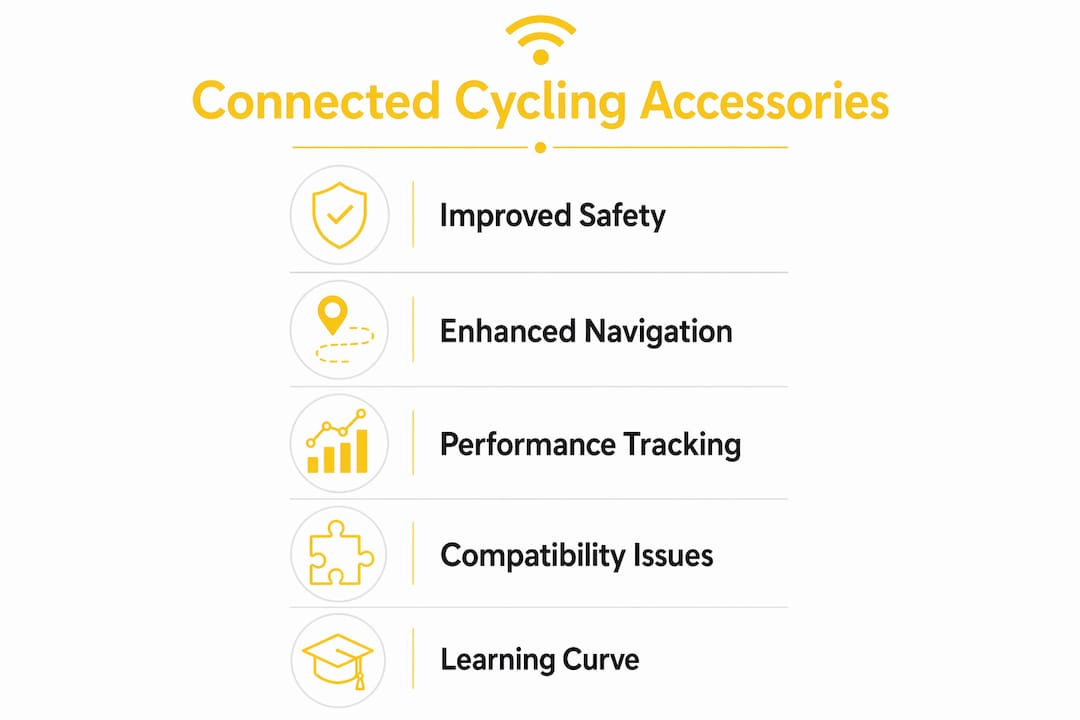
The challenges are equally concrete. Managing up to 15 or more simultaneous wireless connections creates a steep learning curve for new users. Pairing failures, firmware conflicts, and app updates that break existing connections are common complaints. Compatibility between platforms adds another layer of complexity, particularly when mixing devices from different manufacturers.
Pro Tip: Before buying any new sensor or accessory, check whether it supports both ANT+ and Bluetooth. Dual-protocol devices give you the most flexibility across different head units and smartphones without forcing you into a single ecosystem.
The rising adoption of connected accessories reflects a broader trend toward data-driven, personalized cycling experiences accessible to amateurs and professionals alike. The technology is democratizing what was once available only to sponsored athletes.
How to choose and integrate connected accessories into your riding
Choosing connected cycling accessories without a clear plan leads to redundant devices, compatibility headaches, and gear that sits unused. Follow a structured approach instead.
-
Audit your current setup. List every device you already own, including your phone, any fitness tracker, and your bike computer if you have one. Identify which protocols they support: Bluetooth, ANT+, or both.
-
Prioritize safety first. A connected helmet, an adaptive rear light, and a tire pressure sensor address the three most common causes of cycling injuries before you add any performance tracking. Thebeamofficial’s safety-focused accessories are designed specifically for this priority order.
-
Choose an ecosystem anchor. Ecosystem compatibility matters more than any individual sensor’s specifications. If you ride with a Garmin device, prioritize Garmin Connect IQ compatible accessories. If you use a smartphone as your primary display, focus on Bluetooth-native devices.
-
Add devices incrementally. Start with one or two accessories and spend at least four weeks integrating them into your routine before adding more. This prevents tech overload and helps you identify what genuinely improves your rides versus what just adds noise.
-
Keep firmware current. Most connectivity issues trace back to outdated firmware on one device in the chain. Set a monthly reminder to check for updates across all connected accessories, including your bike computer, sensors, and helmet.
For commuters, the highest-value additions are a connected rear light with automatic brake detection, a tire pressure sensor, and a phone mount with turn-by-turn navigation. For enthusiasts and endurance riders, a power meter, a GPS computer with full mapping, and a smart HUD device like the CYBERSIGHT Zenith Pro provide the most training and navigation value.
SRAM’s Red wireless drivetrain illustrates how deep connected bike equipment integration can go. It transmits cadence and gear position data to your head unit automatically, giving you a complete picture of mechanical and physiological performance in one place. That level of integration is now available at multiple price points, not just for professional teams.
For commuters looking for a practical starting point, the daily ride essentials guide from Thebeamofficial covers the most impactful safety upgrades by riding context.
The tech is ready. the question is how you use it.
I’ve watched the connected cycling space evolve from novelty to necessity over the past several years, and the most important shift isn’t the technology itself. It’s who the technology is for now.
Three years ago, a full connected setup required a Garmin Edge, a power meter, a heart rate strap, and the patience to troubleshoot ANT+ dropouts on a Sunday morning. Today, a commuter can buy a single device that handles navigation, crash detection, and visibility in one unit. That compression of complexity is the real story.
What I find underappreciated is the safety case for everyday riders. Performance cyclists already know the value of data. But the commuter who rides 4 miles to work in the dark is the person who benefits most from adaptive lighting and automatic emergency alerts. The impact of cycling accessories on that rider’s safety is disproportionately large compared to the cost.
The challenge I see most often is people buying too much too fast. A GPS computer, smart sensors, HUD glasses, and a connected helmet all at once creates a setup that takes months to learn and often gets abandoned. The cyclists who get the most from connected gear are the ones who add one device, master it, and then expand. That patience is harder to sell than the gear itself, but it’s what actually produces safer, more enjoyable rides.
AI coaching platforms are the next frontier worth watching. The fact that tools like Vekta are already used by half of professional cycling teams tells you where the technology is heading. Within a few years, personalized training adjustments based on real-time biometric data will be standard, not premium. The riders who build their connected setup now will be positioned to take full advantage of that shift.
— Sophie
Ride smarter and safer with Thebeamofficial
Thebeamofficial designs safety-first cycling accessories built for real-world conditions, whether you commute through city traffic or push long distances on open roads. The FRAME FLASH bike reflectors use motion-powered visibility technology that activates automatically as you ride, with no charging required. Every product in the Thebeamofficial lineup is built around the same principle: protection that works without getting in your way.
If you want to see how connected safety technology performs under real endurance conditions, the Thebeamofficial ultracycling event puts these products to the test across hundreds of miles. Explore the full range and find the accessories that fit your riding style at Thebeamofficial.
FAQ
What is the role of connected cycling accessories?
Connected cycling accessories are IoT-enabled devices that provide real-time data on safety, navigation, and performance. They integrate with smartphones, bike computers, and AI platforms to give cyclists actionable feedback during every ride.
How do cycling sensors work?
Cycling sensors use Bluetooth or ANT+ wireless protocols to transmit data such as tire pressure, cadence, heart rate, and speed to a head unit or smartphone. Devices like the Tubolito SYNCD monitor conditions continuously and send instant alerts when values fall outside safe ranges.
What are the most important connected accessories for commuters?
Commuters benefit most from a connected rear light with automatic brake detection, a tire pressure monitor, and a GPS navigation device. These three accessories address visibility, mechanical safety, and route guidance, which are the highest-risk factors in urban cycling.
Are smart cycling gadgets compatible with each other?
Compatibility depends on the protocols each device supports. Accessories that use both ANT+ and Bluetooth offer the broadest compatibility across Garmin, Apple, and Android ecosystems. Prioritizing a single platform anchor, such as Garmin Connect IQ, reduces pairing conflicts significantly.
What is the biggest challenge with connected bike equipment?
Managing multiple simultaneous wireless connections creates the steepest learning curve for new users. Firmware conflicts and platform incompatibilities are the most common issues, and they are best avoided by adding devices incrementally and keeping all software current.


