

TL;DR:
- Cyclists can improve safety around ride-share vehicles through high visibility, predictable behavior, and careful lane positioning. Recognizing ride-share cues and understanding insurance coverage help mitigate risks and support claims after accidents. Consistent gear checks and situational awareness are essential for safe urban cycling in ride-share heavy traffic.
Ride sharing safety for cyclists is defined as the set of behaviors, gear choices, and legal awareness strategies that reduce collision risk when cycling near Uber, Lyft, and other app-based vehicles in urban traffic. Ride-share drivers introduce a specific category of hazard: they stop without warning, check apps while driving, and pull to the curb unpredictably. Cyclists who understand these patterns and respond with strong visibility and consistent lane positioning are significantly less likely to be involved in a serious incident. This guide covers the practical tactics, legal realities, and gear decisions that matter most for safer urban rides.
How can cyclists increase visibility and predictability around ride-share vehicles?
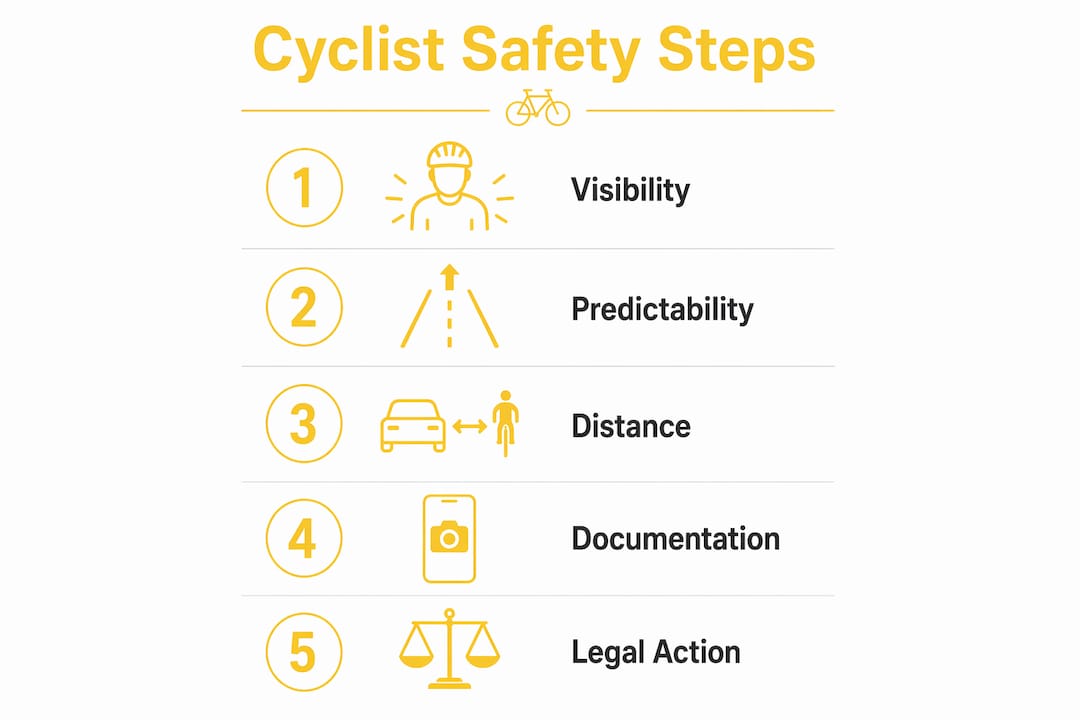
Visibility is the first line of defense in any cyclist safety guide, and it matters most around ride-share vehicles. A driver scanning for a passenger pickup is focused on the curb, not the bike lane. You need to be impossible to miss.
Daytime running lights, especially flashing rear lights, reduce cyclist collision risk by up to 33%. That single number makes a strong case for running lights at all hours, not just at night. Pair a rear flasher with a front white light and you create a visual signature that cuts through urban visual noise.
Clothing choice reinforces what lights start. Bright jerseys, reflective ankle bands, and high-visibility vests all catch a driver’s peripheral vision before they consciously register you. Reflective ankle bands are particularly effective because they move with your pedaling, drawing the eye in a way that a static reflective strip does not.
Predictability is the other half of this equation. Unpredictable cyclist movements are the most dangerous behavior on the road because they break the mental model drivers use to calculate safe passing distances. Ride a straight line. Signal every turn with a clear arm gesture. Brake gradually when possible so the driver behind you has time to react.
Key visibility and predictability habits:
- Run a flashing rear light during every ride, day or night
- Wear at least one high-visibility or reflective item on your body
- Signal turns and stops with clear, early arm signals
- Ride in a straight, consistent line rather than weaving between parked cars and traffic
- Take the lane in narrow streets or ride-share heavy zones to prevent unsafe overtaking
Pro Tip: Ride about one meter away from parked cars at all times. This keeps you out of the door zone, the strip of road where a suddenly opened car door can knock you off your bike with no warning.
Lane positioning is a tactic most cyclists underestimate. Riding too close to the curb puts you directly in the door zone, where passengers exit ride-share vehicles without checking for bikes. Moving one meter out forces drivers to treat you as a lane occupant rather than an obstacle to squeeze past.
What specific risks do ride-share vehicles pose to cyclists?
Ride-share vehicles create a distinct risk profile compared to regular traffic. Distracted driving from app interaction leads to frequent unsignaled stops and unpredictable maneuvers that standard defensive cycling does not fully account for. A driver confirming a pickup on their phone while moving at 25 mph is a genuine threat.
The most common ride-share hazards cyclists face:
- Sudden curb stops: Drivers pull over with little or no signal when a passenger appears
- Dooring by passengers: Riders exit quickly without checking for cyclists
- Right-hook turns: Drivers cut across the bike lane to reach a pickup point
- U-turns in traffic: Drivers reverse course mid-block when they miss a passenger
- App-distracted driving: Drivers glance repeatedly at their phone while moving
Understanding the difference between an active and an idle ride-share vehicle changes how you respond. An idle vehicle with the app open is searching for a match and may move suddenly in any direction. An active vehicle with a passenger on board is more predictable but still prone to abrupt stops at the destination.
Reading vehicle cues is a skill that experienced cyclists develop over time. Observing active indicators like a driver glancing at a phone, a passenger leaning forward to check the street, or a vehicle slowing near a building entrance all signal an imminent stop. When you spot these cues, slow down and increase your following distance immediately.
A practical response sequence when you spot a ride-share vehicle ahead:
- Identify the Uber or Lyft decal on the windshield
- Check whether the vehicle is slowing or drifting toward the curb
- Look for passenger movement inside the car
- Reduce speed and move slightly left to increase your buffer
- Watch both the driver’s door and the rear passenger door as you pass
Ride-share multitasking produces irregular stops and unpredictable movements that challenge even experienced cyclists. The best response is to never assume a ride-share vehicle will behave like a regular car.
What legal and insurance considerations should cyclists know?
Insurance coverage for ride-share incidents operates in tiers, and knowing which tier applies to your situation directly affects how much compensation you can pursue. Ride-share drivers carry a $1 million commercial liability policy during an active ride with a passenger on board. When the driver is online but waiting for a match, coverage drops to $50,000 per person and $100,000 per incident.
| Ride-share driver status | Liability coverage available |
|---|---|
| App off, personal use | Driver’s personal auto insurance only |
| App on, waiting for ride | $50,000 per person / $100,000 per incident |
| Active ride in progress | $1 million commercial liability policy |
| Passenger exiting vehicle | Typically covered under active ride policy |
That gap between active and waiting coverage is significant. A cyclist hit by a driver who just accepted a ride but has not yet picked up the passenger may face a harder claims process than one hit mid-trip.
In some states, Personal Injury Protection adds another layer. In Utah, PIP coverage of at least $3,000 may be accessible to cyclists injured by ride-share drivers. PIP rules vary by state, so checking your local requirements before an incident is worth the time.
Cyclists hold one legal advantage that passengers do not. You are not bound by the arbitration agreements that Uber and Lyft require their passengers to accept. That means you retain the right to pursue a lawsuit rather than being forced into private dispute resolution.
Strong accident documentation including vehicle signage, ride-share app activity, and passenger presence is the key to accessing higher commercial insurance coverage. Document everything at the scene: photograph the vehicle’s ride-share decal, note whether a passenger was present, and capture the driver’s phone screen if safely possible.
Pro Tip: Seek medical care first after any collision. Once you are stable, document the scene thoroughly: photos of the vehicle, the road position, any visible app activity, and contact details for witnesses.
How to apply cyclist ride sharing tips in everyday urban commutes
Daily preparation separates cyclists who get through ride-share heavy streets safely from those who do not. A commuter cycling safety routine takes less than five minutes and covers the gear checks that matter most.
Before every ride, confirm:
- Front and rear lights are charged and set to flash mode
- Helmet is properly fitted and fastened
- Reflective gear or a high-visibility layer is on your body
- Tires are properly inflated for responsive braking
- Your route includes awareness of known ride-share pickup zones (airports, hotels, bars, transit hubs)
Defensive riding in urban traffic means scanning ahead constantly, not just watching the vehicle directly in front of you. Look two or three cars ahead for vehicles drifting toward the curb. Check for passengers standing on the sidewalk looking at their phones, a reliable signal that a pickup is imminent.
At intersections, position yourself where drivers can see you clearly. Avoid stopping in a driver’s blind spot. If a ride-share vehicle is turning right from the lane beside you, hold back rather than advancing into the turn. Right-hook collisions are preventable when you give the vehicle space to complete the turn before you proceed.
Communication with drivers and passengers reduces friction. Make eye contact with a driver before passing a stopped vehicle. A brief nod or hand signal confirms they see you. When passing a stopped ride-share car, watch both doors simultaneously and be ready to brake.
An urban cycling safety checklist is a practical tool for building these habits into a consistent routine. Cyclists who follow a structured pre-ride and on-road protocol make fewer reactive decisions and more proactive ones.
Key takeaways
Ride sharing safety for cyclists depends on three non-negotiable pillars: maximum visibility, consistent predictability, and knowing your legal rights before an incident occurs.
| Point | Details |
|---|---|
| Run lights in all conditions | Flashing rear lights reduce collision risk by up to 33%, day or night. |
| Stay out of the door zone | Ride one meter from parked cars to avoid being hit by opening passenger doors. |
| Read vehicle cues early | Slow approach to curb, driver phone glances, and passenger movement all signal an imminent stop. |
| Know the insurance tiers | Active ride coverage reaches $1 million; waiting-period coverage drops sharply to $50,000 per person. |
| Document everything after a crash | Photograph the ride-share decal, app status, and passenger presence to support your insurance claim. |
What urban cycling taught me about sharing roads with ride-share drivers
The first time a Lyft driver cut across my path to reach a pickup, I had no idea it was coming. The car drifted right with no signal, the passenger door swung open before the vehicle fully stopped, and I had about half a second to brake hard and swerve left. I was lucky. The rider who came up behind me was not paying attention and nearly went into the back of the stopped car.
That incident changed how I read traffic. I stopped treating ride-share vehicles like regular cars and started treating them like unpredictable obstacles with a specific behavioral pattern. Once you learn to spot the cues, the near-misses drop dramatically.
What most cyclist safety guides miss is the psychological shift required. You cannot ride reactively in a city with heavy ride-share traffic. You have to ride predictively, constantly asking yourself what the vehicle two blocks ahead is about to do. That mental model takes time to build, but it becomes automatic.
Le site urban cycling security improvements that matter most are not always gear-based. Positioning, timing, and reading driver behavior are skills that no reflector can replace. Gear amplifies your safety margin. Awareness creates it.
My honest recommendation: ride with other cyclists when you can. Group rides in ride-share heavy areas are genuinely safer, and experienced riders share cues and positioning instincts that take years to develop alone. A local cycling group is one of the most underrated safety resources available to urban cyclists.
— Sophie
Gear that supports safer cycling in ride-share traffic
Behavioral tactics work best when backed by the right equipment. Visibility gear closes the gap between being seen and being missed, especially in the low-light conditions of early morning and evening commutes.
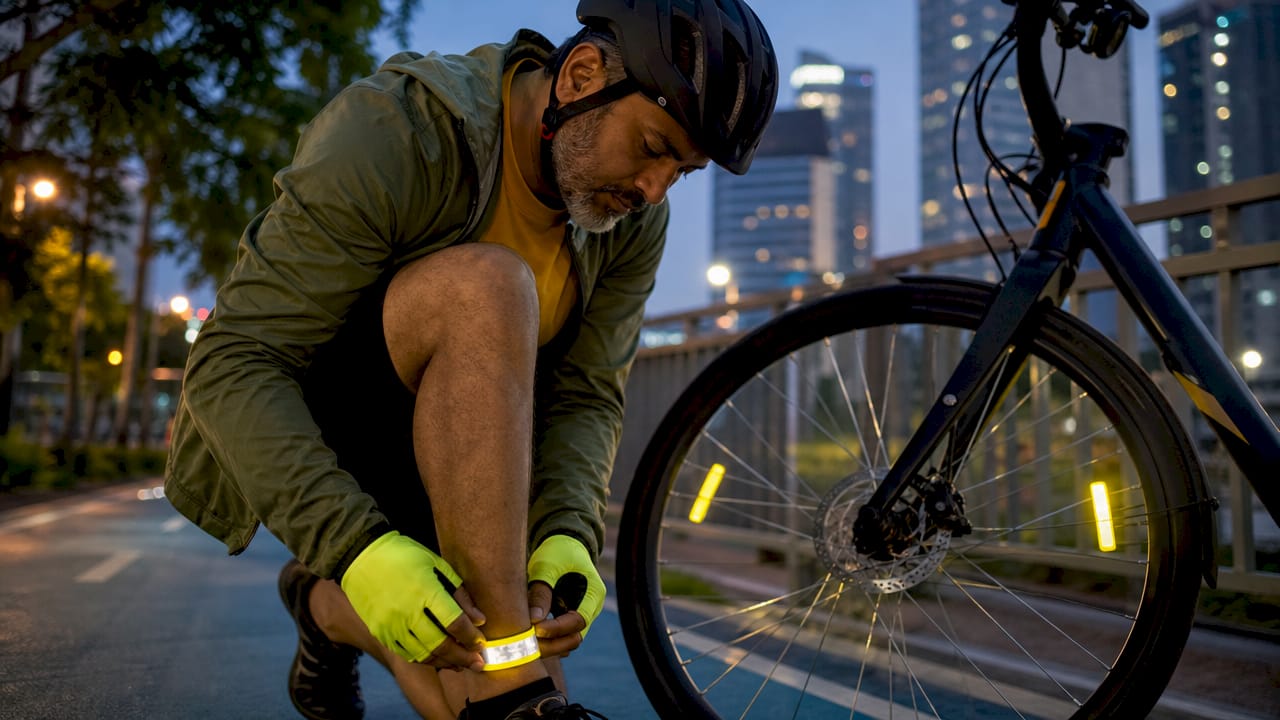
Thebeamofficial’s FRAME FLASH bike reflectors are built for exactly this kind of urban environment. They attach directly to your frame and create a high-visibility profile that ride-share drivers spot before they reach you. The minimalist design fits road, gravel, and urban bikes without adding bulk. For cyclists who want to build a complete safety setup, Thebeamofficial also runs an ultracycling safety event that covers gear selection, urban riding tactics, and real-world safety strategies in one place.
FAQ
What is the biggest risk ride-share vehicles pose to cyclists?
The biggest risk is the sudden, unsignaled stop. Ride-share drivers pull to the curb without warning when a passenger appears, giving cyclists almost no time to react.
How far should cyclists ride from parked cars?
Cyclists should ride at least one meter from parked cars. This distance keeps you outside the door zone, where passengers exit ride-share vehicles without checking for bikes.
Does ride-share insurance cover cyclists hit by Uber or Lyft drivers?
Yes, but coverage depends on the driver’s status. During an active ride, commercial liability coverage reaches $1 million. When the driver is waiting for a match, coverage drops to $50,000 per person.
What should cyclists document after a ride-share collision?
Photograph the vehicle’s ride-share decal, note whether a passenger was present, capture the driver’s app screen if safely possible, and collect witness contact details. This documentation determines which insurance tier applies to your claim.
Do cyclists have the right to sue a ride-share company after an accident?
Cyclists are not bound by the arbitration agreements that Uber and Lyft impose on passengers. You retain the right to pursue a lawsuit directly against the driver or the company.


