

TL;DR:
- Modern helmet research emphasizes protecting against rotational forces involved in many cycling injuries. Upgrading with certified rotational impact protection systems like MIPS, WaveCel, or SPIN significantly enhances safety, especially if your helmet meets the latest standards. Proper fit and verified safety ratings are essential, regardless of helmet cost, to ensure optimal protection during impacts.
Most cyclists assume that any certified helmet is good enough. Strap it on, head out, and you’re protected. But crash science has moved well beyond that assumption. Modern research shows that a significant number of cycling head injuries involve rotational forces that older helmet designs were never built to address. New technologies, updated standards, and smarter accessories now make it possible to dramatically increase your real-world protection. This guide walks you through exactly what those upgrades are, how to select them, and how to verify that they actually work.
Table of Contents
- Understand what makes a helmet truly safe
- Essential helmet safety upgrades: step-by-step
- Stay compliant with new US and EU helmet standards
- Measure real-world helmet safety: lab results and star ratings
- Common mistakes and expert shortcuts when upgrading
- Why the most expensive helmet isn’t always the safest bet
- Explore cutting-edge helmet safety solutions
- Frequently asked questions
Key Takeaways
| Point | Details |
|---|---|
| Prioritize rotational protection | Switching to a helmet with certified rotational impact safety is the most impactful upgrade. |
| Verify new 2026 standards | Check that your helmet meets updated US/EU standards for rotational impacts. |
| Fit is a critical factor | A helmet’s protection is only as good as its fit and retention adjustment. |
| Use independent lab ratings | Consult third-party lab scores to choose helmets with proven, real-world effectiveness. |
| Avoid common upgrade mistakes | Don’t depend only on price or marketing—focus on proper fit, standards, and real performance. |
Understand what makes a helmet truly safe
Before you spend a dollar on any upgrade, it helps to understand what you’re actually protecting against. Most people think of a helmet as something that prevents your skull from cracking on asphalt. That’s true, but it’s only part of the story.
Linear vs. rotational impacts: why the difference matters
A linear impact is a straight-on force, like your head hitting the road directly. Traditional helmet foam (EPS, or expanded polystyrene) does a solid job managing that. But most real-world crashes involve an angled hit, where your head strikes a surface and simultaneously twists. That twisting motion creates rotational acceleration inside the skull, and the brain, which floats in fluid, gets sheared against the skull wall. This is one of the primary mechanisms behind concussions and diffuse axonal injury.
Rotational impacts are a frequent cause of concussions, and updated safety standards are now specifically designed to address them. This wasn’t always the case. Older standards only tested for linear force absorption, which left a critical gap. Understanding this distinction completely changes how you should evaluate and shop for headgear.
Safety standards: what’s actually changed
For decades, the CPSC standard in the US and EN 1078 in Europe set the baseline for helmet certification. Both focused almost entirely on linear impact tests. The fact that the road doesn’t always hit you straight was, frankly, ignored. That has started to change with updated helmet certifications, which now incorporate angled impact testing protocols in the newest versions.
Fit and retention: the underrated safety factor
Here’s something that gets overlooked constantly. Even a state-of-the-art helmet with every rotational protection system imaginable won’t do its job if it moves on your head during a crash. Proper fit means the helmet sits level, covers the forehead down to about two finger widths above the eyebrows, and the retention system (that dial at the back) holds the shell firmly without pinching. The chin strap should be snug, with no more than two fingers fitting under it.
“A loose helmet is essentially a broken helmet. The technology inside is irrelevant if the shell shifts on impact.”
Essential helmet safety upgrades: step-by-step
Defining safety is one thing; upgrading is another. Here’s how to make it happen systematically.
Step 1: Audit your current helmet
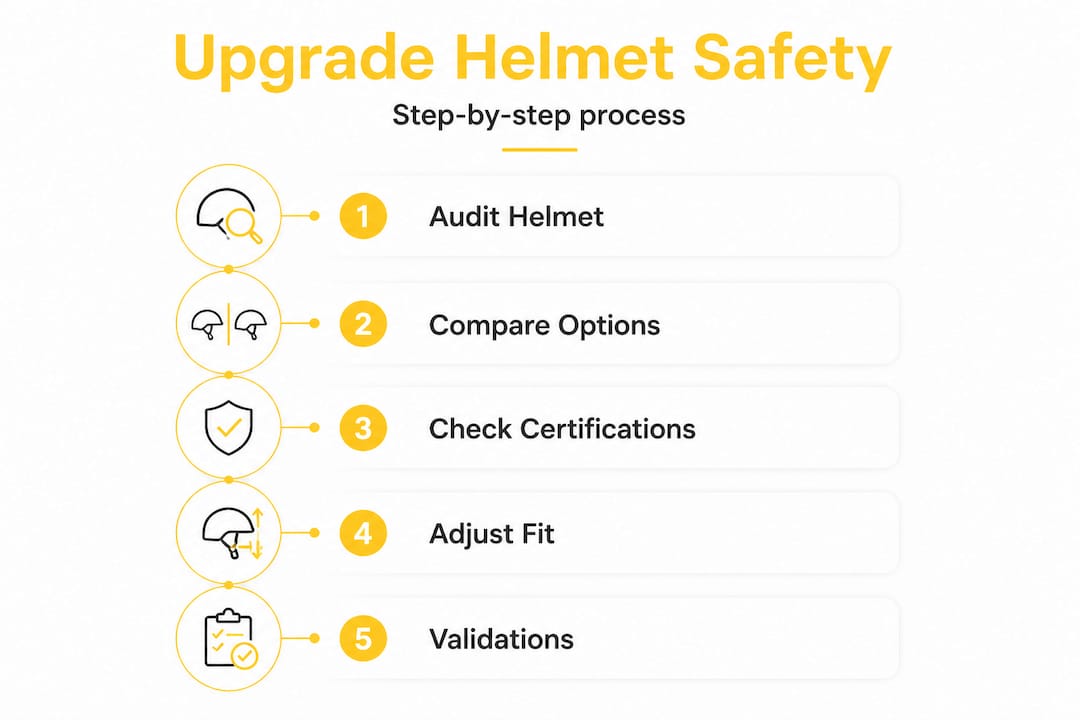
Start by checking whether your current helmet includes any form of rotational energy management. Look inside the shell for a low-friction liner (a thin, often yellow layer that moves slightly when pressed), or check the manufacturer’s website for mentions of MIPS, WaveCel, or SPIN technology. If your helmet is more than five years old, it almost certainly lacks any of these features regardless of the price you paid.
Step 2: Compare your upgrade options
| Technology | How it works | Best for | Typical price increase |
|---|---|---|---|
| MIPS | Slip-plane liner reduces rotational force transfer | All cycling disciplines | $20–$50 more |
| WaveCel | Collapsible cell structure absorbs rotational energy | Road and urban | $30–$80 more |
| SPIN | Silicone pads allow multi-directional movement | Road, mountain | $20–$60 more |
| Aftermarket liner | Add-on slip-plane for older helmets | Budget upgrade | $15–$30 |
Helmets with rotational energy management systems such as MIPS, WaveCel, or SPIN offer measurably superior protection over helmets without these features, according to independent laboratory testing. The difference isn’t marginal; in some test scenarios, rotational acceleration transmitted to the brain is reduced by 40% or more.
Step 3: Use certifications and star ratings to decide
Don’t rely solely on marketing language. Look for third-party validation. The Virginia Tech STAR rating system is one of the most respected independent benchmarks for cycling helmets. A five-star rating means the helmet reduces concussion risk better than its competitors in standardized testing. Cross-reference that rating with the certifications printed on the helmet label.
Step 4: Install and adjust everything correctly
Once you’ve selected a helmet with the right technology, adjustment matters more than most riders realize. Spend five minutes setting the retention dial so the helmet feels firmly anchored without pressure points. Adjust the side straps so they form a V-shape just below each ear. Check your setup before every ride, not just the first one.
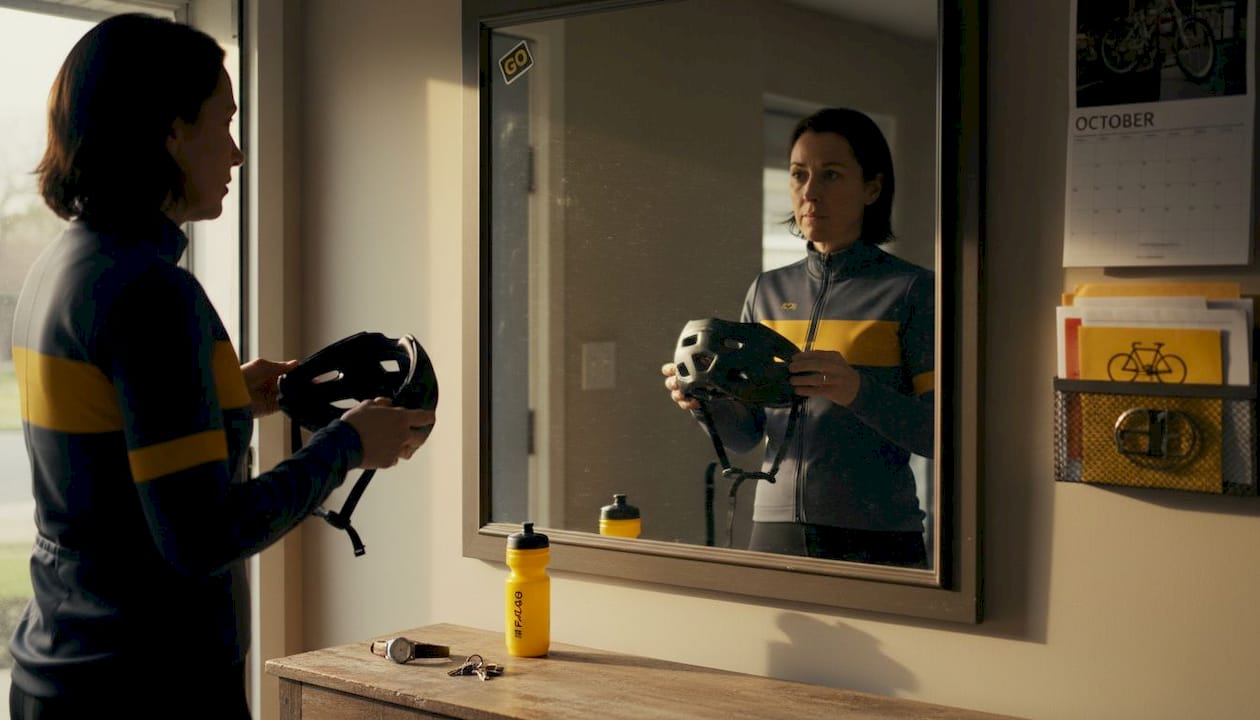
Pro Tip: When trying on helmets in a store or checking your current fit, shake your head firmly from side to side and up and down while the strap is unclipped. If the helmet moves independently of your skull, the fit is wrong and no internal technology will fully compensate.
For a deeper look at what’s inside today’s safest helmets, the MIPS technology overview breaks down exactly how the slip-plane system functions, and the smart helmet features guide covers how connectivity and sensors are changing urban cycling safety.
Stay compliant with new US and EU helmet standards
Once you’ve upgraded, you’ll also want to ensure your helmet matches the newest rules. In 2026, both American and European cyclists are navigating a genuine shift in regulatory requirements.
What’s new in 2026
The European standard EN 17950 represents the most significant update to cycling helmet regulation in the continent’s history. It introduces mandatory oblique (angled) impact testing, which directly measures a helmet’s ability to manage rotational forces. The updated CPSC standards in the US are moving in the same direction. New 2026 standards make rotational impact protection a formal requirement, meaning helmets that only passed older linear-only tests may no longer be compliant.
This isn’t just a paperwork issue. A helmet that carries only the older EN 1078 certification and was manufactured before 2025 likely hasn’t been tested under the new protocol at all.
Not everything on shelves is current
Retailers often sell through old inventory, and a certification sticker that looked valid two years ago may now represent an outdated standard. This is especially important for cyclists who shop on general marketplaces rather than specialty cycling or safety stores.
What to look for on the label
- EN 17950 (Europe) or updated CPSC marking (United States)
- A manufacturing date within the last two years
- A brand website that lists the specific standards the helmet meets
- Any mention of oblique or rotational impact testing in the product description
For a full breakdown of what the 2026 changes mean for your riding category, the 2026 helmet standards guide covers road, urban, and e-bike applications in detail.
Measure real-world helmet safety: lab results and star ratings
Compliance is vital, but real performance is ultimately measured by independent testing. Certification tells you a helmet passed a minimum threshold. Lab ratings tell you how well it performs relative to everything else on the market.
How to read lab reports and star ratings
The Virginia Tech Helmet Lab publishes ratings for dozens of cycling helmets based on standardized drop tests at multiple angles and impact speeds. Each helmet receives a STAR score and a star rating from one to five. The lower the STAR score, the better the protection. A five-star rating means the helmet is among the best at reducing concussion risk.
However, context matters significantly. The STAR rating threshold was updated in 2025, meaning that a helmet which earned five stars under the old threshold may now only qualify for four. This doesn’t mean the helmet got worse. It means the benchmark improved, and you should always check when a rating was published.
Not all top-rated helmets are equal
| Rating category | What it means | What to check further |
|---|---|---|
| 5-star (current threshold) | Top-tier concussion risk reduction | Manufacturing date, fit range |
| 4-star (current threshold) | Strong performance, minor gaps | Which impact types were tested |
| 5-star (old threshold) | Good, but may not meet 2026 bar | Cross-check with new standard |
| No rating listed | Not tested or results withheld | Look for reasons, be cautious |
“A rating published before mid-2025 should be treated as a useful reference, not a definitive score, since the threshold that defines top performance has shifted.”
How to use ratings to validate your upgrade decision
Before finalizing any helmet purchase, search the Virginia Tech database for the specific model you’re considering. If it’s rated, note the score and when the test was conducted. If it’s not listed, that’s worth investigating. Many budget helmets from lesser-known brands simply haven’t submitted for independent testing, which tells you something important.
Common mistakes and expert shortcuts when upgrading
Even with the right gear, common mistakes can undercut all your upgrades.
Mistakes cyclists make most often
- Buying a helmet based on looks or brand name alone, without checking for rotational protection features
- Ignoring compatibility between helmet shape and head geometry, which creates pressure points and discourages consistent wear
- Assuming that the most expensive helmet in a lineup is automatically the safest
- Failing to replace a helmet after any significant impact, even when no visible damage appears
- Over-relying on marketing copy like “advanced protection system” without verifying what that actually means in a test environment
Expert shortcuts that actually work
Start with fit. Seriously. Before you evaluate any technology, make sure the helmet you’re considering fits your specific head shape and circumference correctly. A perfectly fitting helmet with a MIPS liner outperforms an ill-fitting helmet with multiple safety systems every single time. Fit and retention remain the foundation of helmet protection regardless of the technology layered on top.
After fit, focus on verified upgrades. That means MIPS, WaveCel, or SPIN for rotational protection, combined with a five-star Virginia Tech rating and a current EN 17950 or updated CPSC certification. Those three data points tell you more than any marketing video.
Pro Tip: If you can’t replace your helmet right now but want to improve safety immediately, purchase an aftermarket retention upgrade kit. These kits replace or supplement the existing dial system with a more precise fit mechanism, often for under $25. Combine that with a proper strap adjustment and you’ll meaningfully improve protection from your existing gear.
Why the most expensive helmet isn’t always the safest bet
Here’s a perspective that runs against the grain of most cycling gear marketing: spending more doesn’t guarantee you’re safer. We’ve seen riders show up to urban commutes in $350 road helmets that fit poorly and lacked current certifications, while other riders wore a $90 helmet that earned five stars in the Virginia Tech database and met EN 17950.
The cycling industry has a pattern of marketing innovation as protection. New ventilation systems, premium shell materials, and distinctive styling command higher prices. But none of those features appear in a lab drop test. The question that actually matters is: how much rotational energy does this helmet transfer to the brain during an oblique impact at 6 meters per second?
That answer comes from independent testing, not from the price tag or the brand’s heritage. Some rotational technologies are marketed as clearly superior to others, but honest, unbiased comparisons show nuanced, context-dependent results. MIPS outperforms in some test scenarios; WaveCel performs differently depending on impact angle and speed. The MIPS definition and the mechanics behind it are worth understanding before you take any manufacturer’s comparison claims at face value.
Our view, shaped by paying close attention to what the labs actually publish, is this: prioritize a correct fit, verify the 2026 standard compliance, check the Virginia Tech rating from the current threshold, and only then consider which specific rotational technology fits your budget. If you follow that sequence, you’ll almost certainly end up with a safer helmet than the cyclist who spent twice as much without asking the right questions.
Explore cutting-edge helmet safety solutions
Ready to put your safety plan into action? The right upgrades are just a click away.
At THE BEAM, we’ve built our entire catalog around exactly the principles covered in this guide: fit, certified protection, rotational impact technology, and real-world usability for commuters and urban riders. Whether you’re looking for a primary helmet upgrade or want to extend the performance of what you already own, our adult helmets collection includes options tested to current standards, with MIPS technology integrated where it matters most. For cyclists who want to add protection layers without replacing their helmet entirely, our helmet accessories and dedicated helmet add-ons bring visibility, retention, and connectivity upgrades designed specifically for urban and commuting environments. Every product we offer is built around one question: does it make you measurably safer?
Frequently asked questions
What is the single biggest helmet safety upgrade for 2026?
Switching to a helmet with certified rotational impact protection such as MIPS, WaveCel, or SPIN is the most impactful single upgrade you can make, since older helmets were never designed to address the angled impacts that cause most concussions.
Do I need to replace my helmet to meet new standards?
In many cases, yes. 2026 standards in both the US and EU now require rotational impact testing, and helmets certified only under older linear-only protocols like EN 1078 may no longer meet the regulatory baseline.
How can I quickly check if my helmet passes the latest safety requirements?
Look inside and on the box for EN 17950 (Europe) or updated CPSC markings, then cross-reference the model against the Virginia Tech ratings database to confirm it meets the current 2025/2026 threshold.
Should I trust expensive helmets more than budget ones?
Not automatically. Fit, certification, and independent star ratings predict protection far better than price, and several mid-range helmets outperform premium models in objective lab tests.
What’s the fastest safety boost if I can’t buy a new helmet?
Correcting your fit adjustment and adding an aftermarket retention system are the fastest, most affordable improvements available, since fit and retention remain the most critical factors in crash protection regardless of which helmet you’re wearing.


