

TL;DR:
- Connected cycling gear, like radar taillights and smart helmets, provides real-time vehicle detection and alerts.
- These devices significantly improve rider safety by reducing reaction time to approaching vehicles.
- Building a connected safety system enhances urban and high-speed cycling security and compliance with future regulations.
Most cyclists ride with lights and assume that’s enough. It isn’t. The Garmin RearVue 820 detects approaching vehicles up to 175 meters away, giving you real-time radar alerts before you can even hear a car behind you. Traditional taillights, no matter how bright, can only be seen. They cannot warn you. That gap between passive visibility and active threat detection is where connected cycling equipment changes everything. This guide breaks down exactly what connected gear does, which devices lead in 2026, how to build your own safety ecosystem, and what it all means for riders who take road safety seriously.
Table of Contents
- What is connected cycling equipment?
- Top connected cycling safety devices compared
- How connected radars and lights boost cyclist safety
- Integrating connected gear for a seamless ride
- Why connected cycling safety is entering a new era
- Get equipped for next-level cycling safety
- Frequently asked questions
Key Takeaways
| Point | Details |
|---|---|
| Radar detection advantage | Connected rear radars can alert you to cars over 150 meters away, often seconds before you would otherwise notice them. |
| Smart helmet benefits | Modern helmets add lights, turn signals, and crash alerts, directly enhancing visibility for both e-bikes and road cyclists. |
| Integration boosts safety | Using connected gear together, like radar and head unit computers, creates layered protection by combining alerts, lighting, and route data. |
| Regulatory compliance matters | EU and US cyclists should choose gear with USB-C charging and replaceable batteries to ensure legality and easier maintenance. |
What is connected cycling equipment?
Connected cycling equipment refers to electronic devices that go beyond simply lighting up your bike. These tools share data in real time, automate safety responses, and integrate with other devices to give you a more complete picture of what’s happening around you while you ride.
The main categories include:
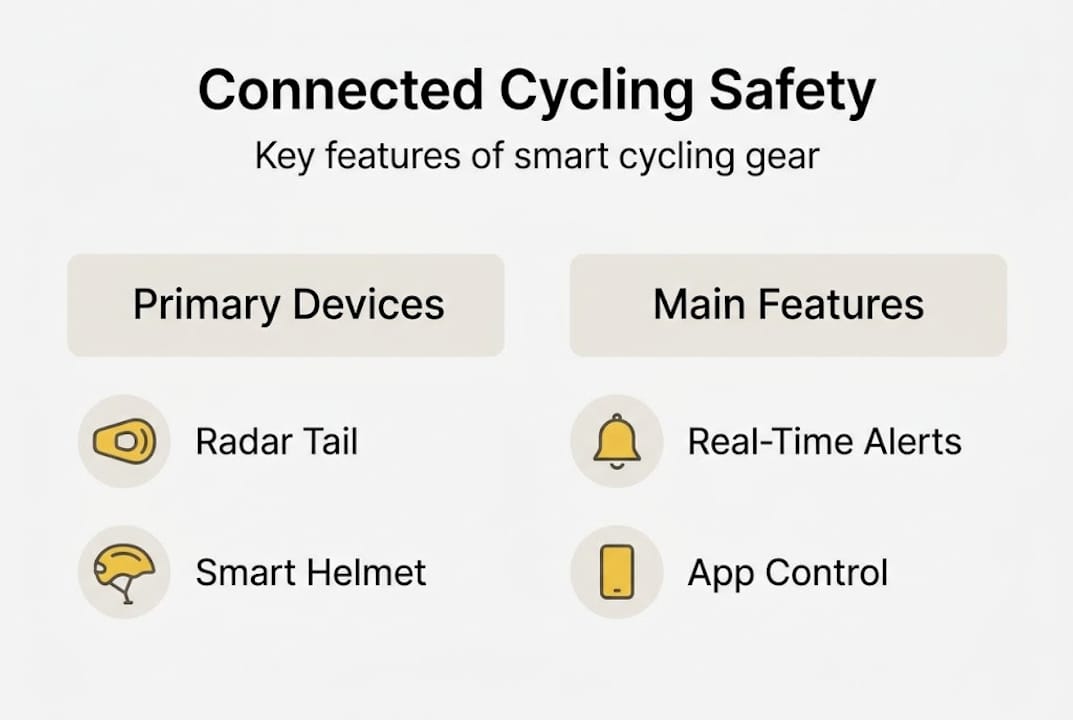
- Smart radar taillights: Detect approaching vehicles using radio waves and send alerts to your head unit or smartphone
- Connected helmets: Feature integrated lighting, turn signals, and crash detection that notifies emergency contacts
- Integrated lighting systems: Auto-adjust brightness based on ambient light or speed
- GPS head units: Display real-time radar data, routes, and sensor feeds from multiple connected devices
These devices communicate using ANT+ and Bluetooth protocols, often linking through dedicated smartphone apps or directly device to device.
The safety benefits are measurable. Earlier threat detection, automated brake light responses when you decelerate, and live vehicle-approach alerts all reduce the reaction gap between danger and response. This is the core value of connected gear: buying you time when seconds matter.
For anyone focused on improving rider safety on busy roads or urban commutes, starting with a connected device pays off faster than almost any other upgrade.
Pro Tip: If you’re new to connected gear, start with a smart radar taillight or a connected helmet. Both offer an immediate, tangible upgrade in how aware you are of approaching traffic without requiring a complex multi-device setup.
Top connected cycling safety devices compared
With dozens of products on the market, it helps to know how the leading devices actually stack up. Here’s a direct comparison of the most relevant specs for safety-focused cyclists.
| Device | Detection range | FOV | Battery life | Price |
|---|---|---|---|---|
| Garmin RearVue 820 | 175m | 60° | 24h (day flash) | $299.99 |
| Wahoo Trackr Radar | 150m | 35° | 7.5h (real-world) | ~$99 |
| Exposure Zenith MK11 | N/A (no radar) | Wide beam | 5h (max) | ~$200 |
The Garmin RearVue 820 uses dual-frequency radar with a 60-degree field of view and a 24-hour battery in day flash mode, making it the clear leader for long-distance and sportive riders. Independent testing shows it detects vehicles roughly 3 seconds earlier than competing devices at typical road speeds. That margin sounds small until you’re descending at 45 km/h.
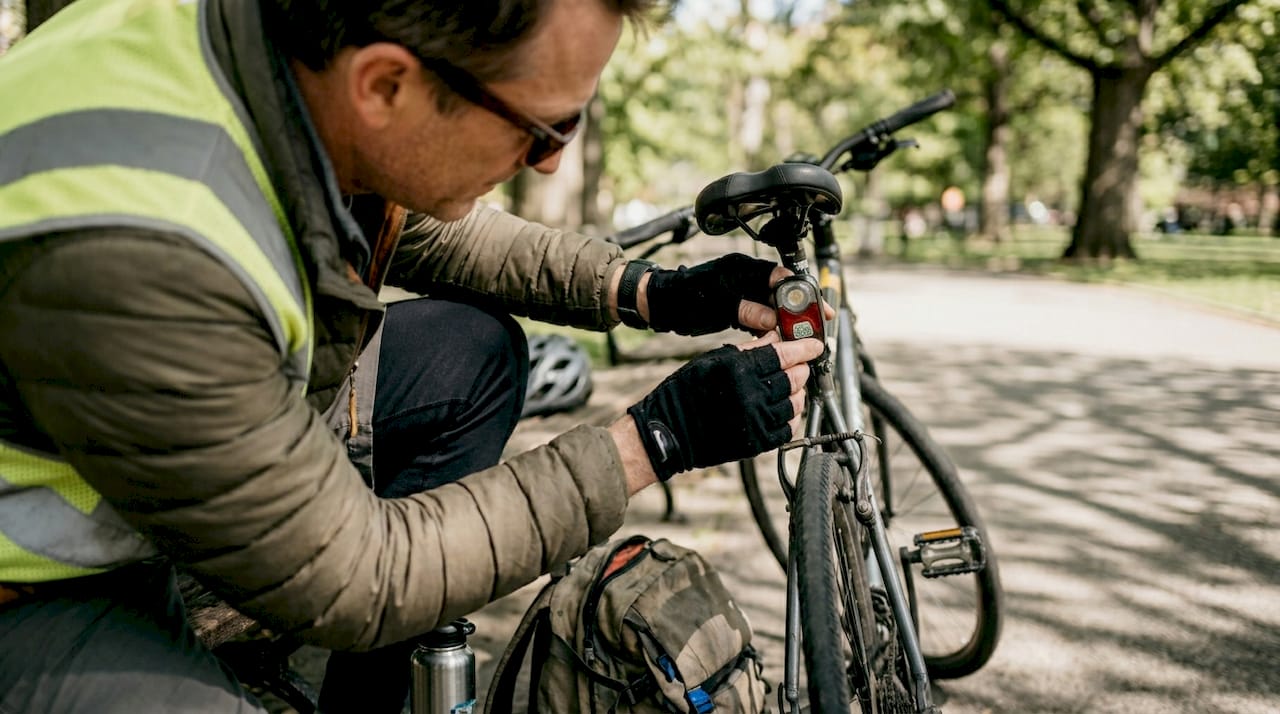
The Wahoo Trackr Radar delivers solid 150-meter detection at a much lower price point, though its 35-degree field of view leaves more of the peripheral approach zone uncovered. For riders on a budget or those just starting with radar, it’s a practical first step.
For pure brightness without radar, the Exposure Zenith leads on raw lumens and wide-beam output, making it ideal as a front light pairing for low-visibility commutes.
Key device limitations worth knowing:
- Narrow FOV on Wahoo Trackr: May miss vehicles approaching from wide angles on curved roads
- Proprietary mounts: Some devices lock you into specific brand ecosystems
- Rain accuracy: Heavy rain can reduce radar reliability on some units
- Battery trade-offs: Maximum brightness modes drain batteries significantly faster than spec sheets suggest
For a broader look at what to carry on every ride, the visibility accessory essentials guide covers the full picture beyond radar alone.
How connected radars and lights boost cyclist safety
Radar taillights work on the Doppler effect. The device emits a radio signal behind you, and when a vehicle reflects that signal back at a shifted frequency, the radar calculates its relative speed and distance. Doppler shift detection is what allows these devices to distinguish a fast-approaching car from a stationary object or a slow-moving cyclist in your group.
The practical value is real. In controlled testing, devices like the RearVue 820 produced zero false negatives at highway-adjacent speeds, meaning every vehicle that posed a genuine threat was flagged. That said, performance drops in heavy rain and in tight group ride situations where multiple moving objects confuse the signal.
Lights add a separate layer of protection. Day flash modes pulse at irregular intervals shown to attract driver attention more effectively than steady beams. Wide field-of-view lights cover more lateral angle, which matters most in urban intersections where cars approach from the side. For long rides, battery compliance standards now require USB-C charging and replaceable batteries under EU rules, so checking compatibility before buying protects your investment.
“No device is perfect. Radars increase your odds by adding precious seconds for reaction. Those seconds are what the best safety setups are built around.”
For context on broader risk, e-bike accident data consistently shows that rear-end incidents are among the most severe for cyclists, reinforcing exactly why rear detection matters. Cyclists focused on improving urban cycling security benefit most from combining radar with a wide-angle rear light running simultaneously.
Pro Tip: If you use a GPS head unit, set it to display the radar threat screen during high-traffic segments. Seeing vehicle approach zones visually rather than only hearing a beep gives you a much faster, more intuitive read on when to take action.
Integrating connected gear for a seamless ride
Building a connected safety ecosystem is simpler than it sounds, but the order of setup matters. Here’s how to get everything working together reliably:
- Start with your head unit: Power it on first and open the sensor pairing menu before turning on any peripheral devices
- Pair your radar taillight: Most devices auto-discover via ANT+; confirm the radar display is active on your unit before mounting the device
- Add your heart rate monitor or power meter: These pair independently and won’t interfere with radar data
- Sync your smartphone app: Apps like Garmin Connect or the Wahoo companion app enable firmware updates and allow you to configure alert sensitivity
- Test the full system before your ride: Ride past a parked car slowly to confirm the radar triggers correctly on your display
Here’s how the major brands line up for cross-device compatibility:
| Brand | Head unit required | App support | ANT+ radar support | Ecosystem lock-in |
|---|---|---|---|---|
| Garmin | Garmin Edge | Garmin Connect | Yes | Moderate |
| Wahoo | Wahoo ELEMNT | Wahoo app | Yes | Low |
| Bryton | Bryton Rider | Bryton Active | Partial | Low |
The Garmin Edge 840 supports up to 30 simultaneous sensors and displays live radar data alongside your speed, power, and navigation, creating a genuinely holistic safety and performance picture on one screen.
Common mistakes to avoid: mounting your radar taillight behind a saddlebag that blocks the beam, skipping firmware updates that often improve detection accuracy, and mixing ANT+ devices from brands that haven’t confirmed mutual compatibility. Check the helmet and lighting setup guide for a step-by-step installation walkthrough that applies to most connected safety systems.
Why connected cycling safety is entering a new era
Most buying guides treat connected gear as a luxury upgrade. We think that framing is outdated, and the data backs us up.
The real shift isn’t in the technology itself. It’s in what cyclists now expect from safety equipment. A few years ago, a blinking red light was considered adequate rear visibility. Today, riders who’ve used radar for even one season describe going back to basic lights as genuinely uncomfortable. The awareness gap is that stark. Once you know a car is approaching at 80 km/h from 140 meters back, riding without that information feels like riding with your eyes half closed.
The legislative landscape is catching up too. EU 2026 battery regulations are pushing manufacturers toward standardized charging and replaceable cells, which means the best connected gear is now also the most future-proof gear. Early adopters who chose compliant devices won’t face costly replacements.
Our experience working with cyclists across road, gravel, urban, and e-bike contexts confirms one consistent lesson: invest in gear that matches your actual scenario. Fast group rides need wide-FOV radar and a reliable head unit display. Urban commuters benefit most from combined radar and a bright wide-beam rear light. E-bike riders, traveling faster and heavier, gain the most from maximum detection range.
If you’re serious about safety and want to understand the full performance spectrum, exploring the ultracycling experience shows just how far connected equipment has come for riders who push their limits.
Get equipped for next-level cycling safety
Understanding connected gear is the first step. Acting on it is what actually keeps you safer on the road.
At THE BEAM, we design high-end helmets and visibility accessories built specifically for cyclists who won’t compromise on protection or performance. Our adults’ helmets are engineered with MIPS technology and real-world usability in mind, meeting the standards that matter in both Europe and the US. Pair your helmet with the right cycling accessories to build a visibility setup that’s regulation-ready and genuinely effective. Whether you ride road, gravel, or urban routes, we have the gear to complete your connected safety system.
Frequently asked questions
What makes connected cycling equipment safer than regular lights?
Connected devices use Doppler-based detection to identify approaching vehicles earlier and send real-time alerts, giving cyclists more time to respond compared to passive lights that only improve how visible you are.
Do smart helmets work if my phone is off or out of signal?
Built-in lights and turn signals on smart helmets function independently of your phone, but crash detection alerts require an active phone connection and cellular signal to notify emergency contacts.
Are all connected bicycle devices legal in Europe and the US?
Most connected cycling gear is legal in both regions, but EU USB-C mandates now require USB-C charging ports and replaceable batteries for applicable devices sold in Europe as of 2026.
Do connected radars prevent close passing by cars?
Radars alone cannot physically prevent close passes, but they increase your situational awareness significantly, giving you more time to move, signal, or brake before a dangerous encounter develops.


