

TL;DR:
- Urban cycling protection prioritizes impact mitigation, visibility, and comfort tailored to city risks.
- Helmets with MIPS, integrated lights, and visors are ideal for safety and practical use.
- Complementary accessories like reflective gear and high-lumen lights enhance overall safety and visibility.
Choosing the right protection gear for urban cycling feels overwhelming. The market is packed with options, standards differ between Europe and the U.S., and every brand claims to offer the safest ride. City commuting introduces specific risks that trail or road riding simply does not: car doors swinging open, low-speed falls on wet pavement, and poor visibility at dawn or dusk. This guide cuts through the noise. We compare the best high-end helmets and safety accessories for urban and commuting cyclists on both sides of the Atlantic, using real criteria and practical insights to help you make a confident, informed choice.
Table of Contents
- What makes great protection gear for urban cyclists?
- Top helmet options for urban and commuting cyclists
- Essential safety accessories for commuter cyclists
- Protection gear head-to-head: Table comparison and recommendations
- What most cyclists miss about urban protection gear
- Get the best protection gear for your commute
- Frequently asked questions
Key Takeaways
| Point | Details |
|---|---|
| Prioritize urban safety | Choose gear with high visibility and padding to stay safe in city environments. |
| Compare features, not just price | Focus on protection ratings, accessory compatibility, and comfort rather than simply choosing the cheapest option. |
| Layer your protection | Combine helmet, reflective gear, and lights for the most effective commuter safety setup. |
| Regularly inspect and upgrade | Replace helmets and key accessories as needed to ensure ongoing protection. |
What makes great protection gear for urban cyclists?
Urban cycling is not the same as weekend trail riding. The risks are different, the distances are shorter, and the environment is far less predictable. Great protection gear for city commuters needs to address these specific conditions rather than just checking a general safety box.
Here are the core features to evaluate when selecting urban cycling protection:
- Impact protection: Look for helmets with multi-directional impact protection systems like MIPS, which reduce rotational forces during angled impacts, the most common type in urban falls.
- Visibility aids: Reflective panels, integrated rear lights, and high-visibility colors are critical for low-light commuting. Reflective gear and visibility are prioritized in Europe, where many cities have legal or strongly recommended standards for night riding.
- Comfort and fit: Padding quality, ventilation, and adjustable retention systems determine whether you actually wear your helmet every day.
- Accessory compatibility: Can your helmet mount a light or camera? Does it work with your glasses or a visor?
- Padded gloves: Often overlooked, padded gloves protect your palms and reduce nerve compression during long urban commutes.
European and U.S. standards diverge in meaningful ways. European markets tend to emphasize reflectivity and lighting as part of a broader road safety culture. U.S. standards focus more on helmet impact certification. Our urban cycling safety checklist breaks this down further if you want a full rundown.
The urban cycling protection guide also notes that practical features like integrated visors, easy-fit adjustments, and quick-release systems matter as much as raw protection ratings in daily use.
Pro Tip: When comparing options, prioritize visibility features for European commutes and padding quality for managing the door zone risk common in U.S. cities.
Top helmet options for urban and commuting cyclists
With clear criteria in mind, let’s look at some of the best helmet choices for city commuters. The market has matured significantly, and a few models stand out for combining protection, design, and usability.
Urban helmets with built-in visors and lights offer superior protection for low-speed incidents, which are the most common type of crash in city environments. Here is how the leading options compare:
| Feature | THE BEAM VIRGO | Giro Fixture II | Bontrager Charge | Proviz Apex |
|---|---|---|---|---|
| Impact tech | MIPS | Standard EPS | Standard EPS | Standard EPS |
| Integrated light | Yes | No | Rear light | No |
| Visor | Yes | Yes | No | No |
| Reflectivity | High | Low | Medium | Very high |
| Fit system | Dial adjust | Dial adjust | Dial adjust | Dial adjust |
| Ventilation | Moderate | High | High | Moderate |
| Best for | All-weather urban | Budget commuter | Daily commuter | Night visibility |
The VIRGO from THE BEAM stands out for integrating MIPS technology with a built-in light system and high-reflectivity panels, making it a strong all-around choice for both European and U.S. commuters. The Giro Fixture II is a solid budget option but lacks the visibility features that matter most in dense urban traffic. The Bontrager Charge adds a rear light but skips the visor, which limits its versatility in variable weather.
The Proviz Apex consistently earns top marks for reflective visibility in urban settings, making it a favorite among night riders. However, it lacks MIPS protection, which is a real tradeoff for safety-conscious commuters.
Key things to look for when shortlisting helmets:
- MIPS or equivalent rotational protection
- Integrated or compatible rear light system
- Adjustable visor for sun and rain
- Retention dial for a consistent, secure fit
Essential safety accessories for commuter cyclists
Helmets matter, but top-level safety depends on well-chosen accessories that complement them. A great helmet worn with poor visibility gear still leaves you exposed in the most dangerous urban scenarios.
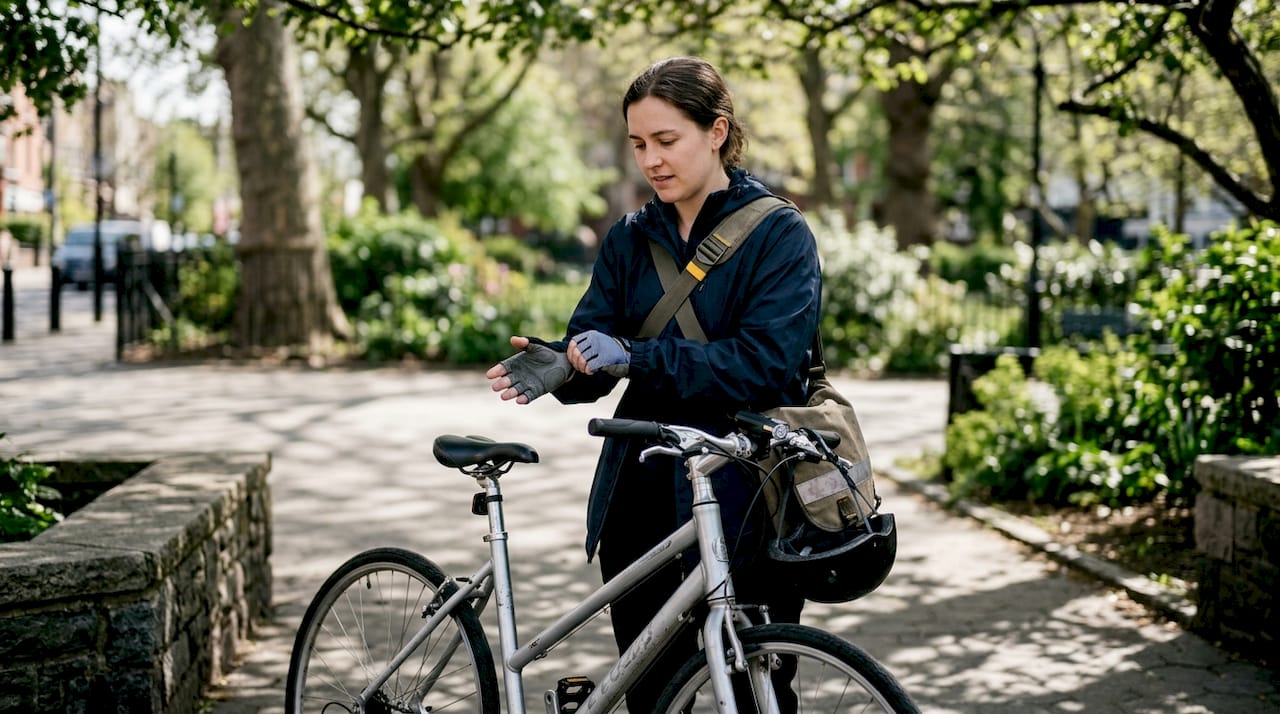
Visibility accessories like reflective jackets and high-lumen lights are prioritized for European city cyclists, while padded gloves and visors protect in the low-speed falls that are common everywhere.
Here are the must-have accessories for urban commuters:
- Reflective jacket: The Proviz Apex jacket is nearly fully reflective, making you visible from hundreds of meters away at night.
- Front and rear lights: Aim for at least 100 lumens front and 50 lumens rear for daytime visibility in traffic.
- Minimalist bike reflectors: Lightweight spoke and frame reflectors add passive visibility without adding bulk.
- Padded gloves: Essential for absorbing vibration on rough urban roads and protecting your palms in a fall.
Here is how to layer your accessories for maximum urban safety:
- Start with a certified helmet that includes or accepts a rear light.
- Add a high-reflectivity jacket or vest for low-light conditions.
- Mount front and rear lights with at least one USB-rechargeable option for reliability.
- Fit spoke reflectors for 360-degree passive visibility at intersections.
- Wear padded gloves on every ride, not just long ones.
One often-missed detail is backup power. Lights that die mid-commute are worse than no lights at all, because you may not notice until it is dark. Choose lights with USB-C charging and a visible battery indicator. For tips on improving cycling security on your daily route, we have a full breakdown worth reading.
Pro Tip: Choose accessories that transition quickly from day to night use. A jacket with passive reflectivity works around the clock without any extra steps.
Protection gear head-to-head: Table comparison and recommendations
With core gear and accessories explored, here is how the top choices stack up against each other for real-world commuters.
| Gear | Protection level | Visibility | Price range | Best for |
|---|---|---|---|---|
| THE BEAM VIRGO | Very high (MIPS) | High | Premium | All-weather urban commuters |
| Giro Fixture II | Medium | Low | Budget | Short, daytime trips |
| Bontrager Charge | Medium | Medium | Mid-range | Daily riders, mixed conditions |
| Proviz Apex jacket | N/A | Very high | Mid-range | Night and low-light commuters |
| Padded commuter gloves | Medium | Low | Budget | All urban riders |
| High-lumen light set | N/A | Very high | Budget-mid | Night riders, heavy traffic |
Edge cases like dooring and low-speed falls require both padding and visibility. Commuter helmets with integrated lights and visors are the top choice for riders who face these scenarios daily.
Here is how to match gear to your commuter profile:
- Short daytime trips: A mid-range helmet with a visor and basic lights is enough.
- All-weather commuting: Prioritize MIPS protection, a waterproof jacket with reflectivity, and sealed lights.
- Night riders: Go maximum visibility. Fully reflective jacket, high-lumen lights front and rear, and a helmet with an integrated rear light.
- Heavy-traffic commuters: Combine MIPS protection with 360-degree visibility using reflectors, lights, and a bright jacket.
Use our checklist of safety essentials to audit your current setup before investing in new gear.
“The smartest commuters do not just buy the most expensive gear. They buy gear that fits their actual route, their actual light conditions, and their actual habits. Comfort drives consistency, and consistency is what keeps you safe.”
What most cyclists miss about urban protection gear
Most gear comparisons stop at specs and price. That is useful, but it misses the bigger picture. At THE BEAM, we have seen cyclists invest in premium helmets and then wear them slightly loose every single day because the fit system is fiddly. A loose helmet in a dooring incident is not much better than no helmet at all.
The habit of inspecting your gear matters as much as the gear itself. Urban riders tend to underestimate how quickly helmets degrade. EPS foam, the material that absorbs impact, compresses slightly with every bump and sweat session. Most manufacturers recommend replacing helmets every three to five years, but many riders push well beyond that.
Our expert urban safety guide makes a point that resonates with us: visible, adaptable gear worn consistently outperforms expensive gear worn occasionally. The best helmet is the one you actually put on every morning without thinking about it. Choose gear that fits your routine, not just your budget or your aspirations.
Get the best protection gear for your commute
Ready to upgrade your urban cycling protection? Everything covered in this guide, from MIPS helmets to high-visibility accessories, reflects the principles we built THE BEAM around: protection that works in the real world, not just in lab tests.
Explore our range of men’s helmets designed for urban and commuting use, or browse our full selection of all accessories including reflectors, mirrors, and connected safety gear. Whether you are a daily commuter in Paris or a weekend urban rider in New York, The Beam collection has gear matched to your specific needs and environment. Your next ride should be your safest one.
Frequently asked questions
What’s the most important protection gear for city cyclists?
A certified helmet paired with high-visibility accessories like reflective gear and lights are the foundation of urban cycling safety, especially for low-light commuting in European cities.
How often should I replace my cycling helmet?
Replace your helmet every 3 to 5 years, or immediately after any significant impact, since EPS foam degrades even when damage is not visible to the naked eye.
Are padded gloves necessary for every commute?
Padded gloves reduce nerve issues and road rash risk, making them a smart daily addition for urban riders who face rough pavement and repeated vibration.
What’s the difference between European and US protection gear standards?
European urban cyclists face stronger expectations around reflectivity and lighting, while U.S. standards place greater emphasis on helmet impact certification and construction.


