

TL;DR:
- Connected cycling gear uses wireless protocols to share real-time data through sensors, displays, and apps. It enhances safety with crash detection, navigation, and vehicle warnings while improving performance through tire pressure and biometric monitoring. Adopting safety devices first and adding one device at a time maximizes usability and minimizes distraction.
Connected cycling gear is defined as equipment and accessories that communicate with each other and the rider through wireless technology to deliver real-time safety alerts, performance data, and ride insights. The category covers everything from sensor-equipped helmets and smart displays to connected clothing and integrated cycling apps. Standardized protocols like ANT+ and Bluetooth enable data sharing across all components, creating a unified system rather than a collection of isolated gadgets. For both casual commuters and serious road cyclists, understanding what is connected cycling gear means understanding how technology can make every ride safer and more informed.
What is connected cycling gear made of?
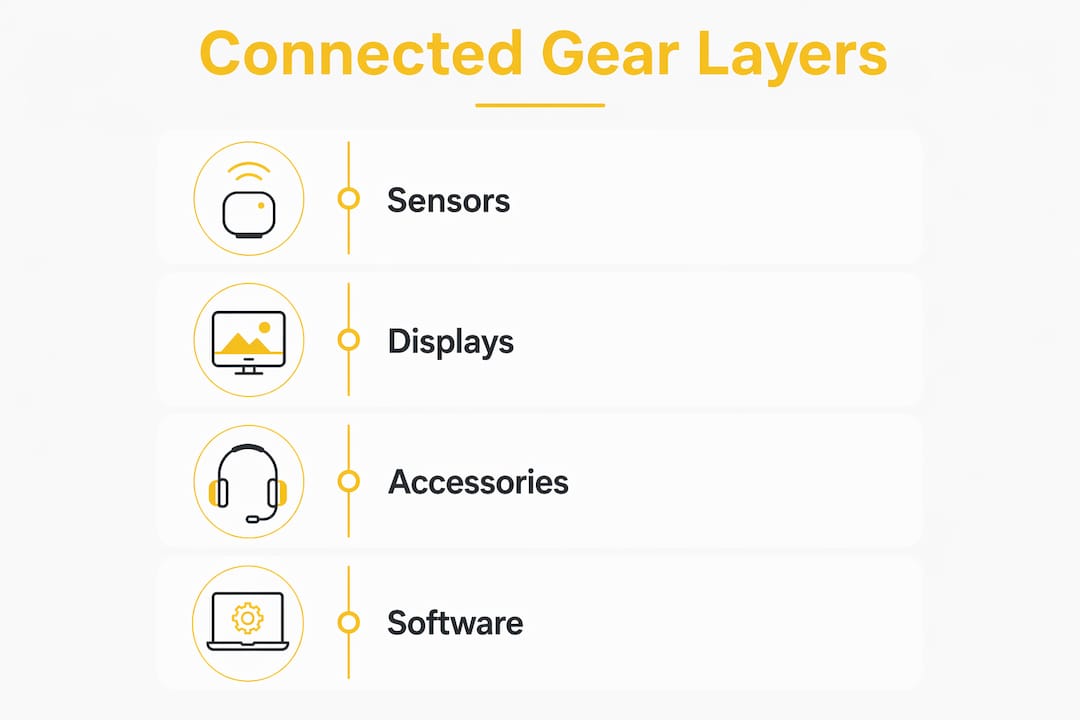
Connected cycling gear is built from four core layers: sensors, displays, smart accessories, and software. Each layer serves a specific role, and the system only works when all four communicate reliably.
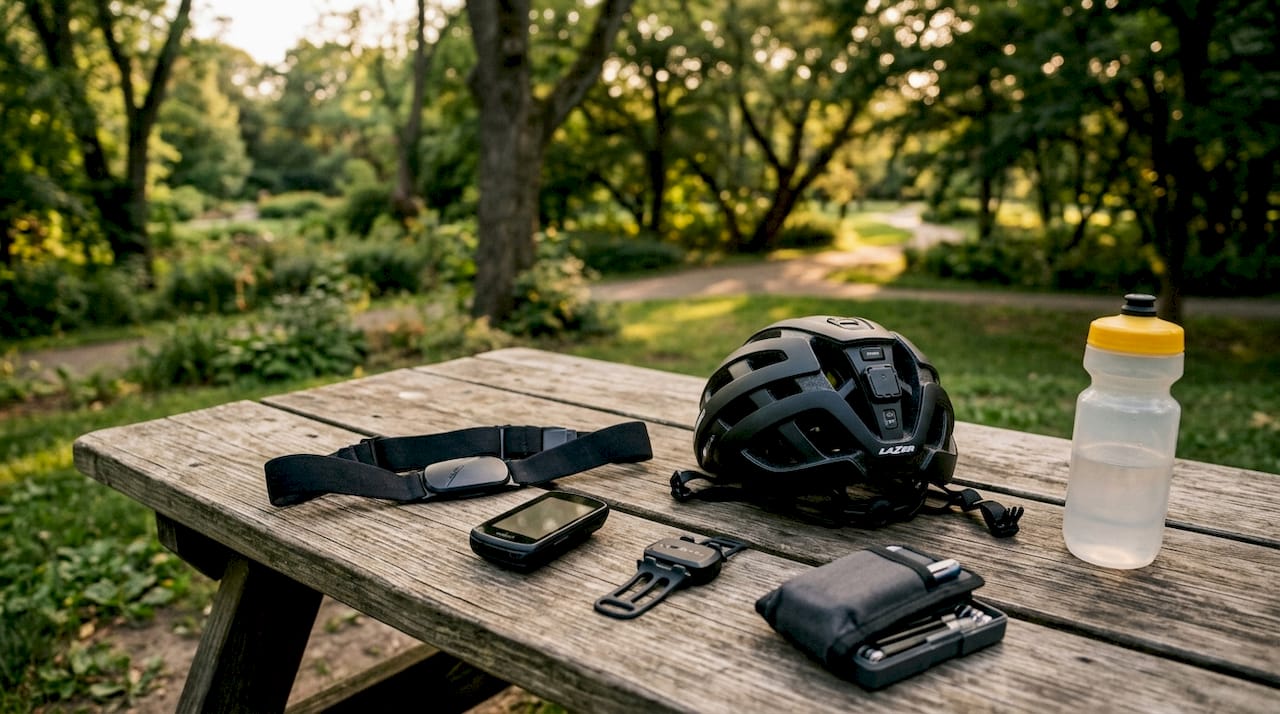
Sensors are the foundation. Cadence sensors measure pedal speed. Heart rate monitors track exertion. Tire pressure sensors feed real-time data to your display. Biometric sensors in clothing go further, guiding pacing, hydration timing, and temperature management based on your body’s actual state during a ride.
Smart displays act as the central hub. On e-bikes, smart displays control motor assist, show live performance data, and connect to mobile devices simultaneously. On standard bikes, head units from cycling computers serve the same coordination role, pulling data from every connected sensor into one screen.
Smart accessories extend the system beyond the handlebars. Connected helmets detect crashes and alert emergency contacts instantly. Connected glasses project navigation and speed data into the rider’s peripheral vision. Rear-view radar systems warn of approaching vehicles with audio or visual alerts.
Software ties everything together. Cycling apps handle data analysis, route planning, and firmware updates for connected devices. The table below shows how common components fit into the overall system.
| Component | Primary function |
|---|---|
| Cadence and speed sensors | Track pedal rate and velocity in real time |
| Tire pressure monitors | Alert rider to pressure drops before a puncture occurs |
| Connected helmet | Crash detection, emergency alerts, integrated lighting |
| Smart display or head unit | Central data hub connecting all sensors and apps |
| Biometric clothing sensors | Monitor heart rate, hydration cues, and body temperature |
| Cycling app | Data analysis, route management, device customization |
What are the advantages of connected cycling gear for safety and performance?
The safety benefits of connected bike equipment are direct and measurable. Heads-up displays project data into the rider’s peripheral vision, keeping eyes on the road instead of a handlebar screen. Connected helmets with crash detection send automatic alerts to emergency contacts the moment an impact is registered. Rear-view radar systems give audible or visual warnings before a vehicle reaches the rider, which is a critical advantage on narrow roads with fast traffic.
Performance gains are equally concrete. Tire pressure monitoring improves efficiency by up to 15% and reduces puncture frequency. That single metric alone justifies the investment for riders who log serious miles. Biometric data from connected clothing tells you when to ease off the pace or drink water before fatigue sets in, not after.
The design goal of connected gear is to reduce cognitive load, not add to it. Context-relevant information delivered unobtrusively keeps the rider focused on the road rather than managing multiple devices. Bone conduction speakers in connected glasses deliver audio cues without blocking environmental sounds, so you hear a car horn while still receiving a navigation prompt.
Pro Tip: When evaluating connected bike accessories, prioritize gear that surfaces information passively. If a device requires you to look away from the road or press buttons while moving, it adds risk rather than reducing it.
Key safety and performance advantages at a glance:
- Crash detection with automatic emergency contact alerts
- Heads-up display navigation keeping eyes forward
- Rear-view radar warnings for approaching vehicles
- Tire pressure alerts preventing mid-ride punctures
- Biometric pacing guidance reducing overexertion
- Bone conduction audio cues maintaining environmental awareness
- Real-time heart rate data for training zone management
How do connected cycling ecosystems improve the overall ride?
A connected cycling ecosystem is more than the sum of its parts. When sensors, displays, apps, and cloud services communicate together, the rider gains insights that no single device could provide alone. A cycling app connected to your gear delivers real-time analytics, route planning, and firmware updates from one interface, removing the need to manage each device separately.
Predictive maintenance is one of the most underappreciated benefits of connected bike technology. Smart cycling ecosystems analyze component wear patterns and flag issues before they cause a breakdown. Predictive maintenance reduces breakdown rates by over 60% compared to traditional scheduled maintenance. For a commuter who depends on their bike daily, that difference is significant.
Cloud syncing adds a long-term dimension to connected cycling. Your ride history, training load, and performance trends accumulate over time, giving you a data-backed picture of your progress. Many platforms also support community features, letting you compare routes and efforts with other riders. This social layer turns raw data into motivation.
The practical result is a ride that feels less like managing technology and more like having a knowledgeable co-pilot. The ecosystem handles the background work while you focus on the road. For cyclists who want to explore how advanced connected safety fits into this picture, the integration between hardware and software is where the real value lives.
What should cyclists consider when choosing connected gear?
Compatibility is the first question to answer before buying any connected bike equipment. Not all sensors and displays speak the same language. Gear built on ANT+ communicates with ANT+ receivers. Bluetooth devices pair with smartphones and most modern head units. Some devices support both protocols, which gives the most flexibility. Check your existing bike computer or display before purchasing new sensors.
Battery life shapes how you use connected gear in practice. A crash detection helmet that dies mid-ride provides no protection. A tire pressure monitor that needs daily charging becomes a burden. Prioritize devices with battery life that matches your typical ride length, with a reasonable buffer.
Ease of setup matters more than most buyers expect. Complex pairing processes and confusing app interfaces cause riders to abandon connected gear entirely. The best connected bike accessories configure quickly and then disappear into the background of your ride.
| Challenge | Mitigation strategy |
|---|---|
| Protocol incompatibility | Choose gear supporting both ANT+ and Bluetooth |
| Short battery life | Match device battery to typical ride duration plus 30% buffer |
| App complexity | Test the app before purchase using a free trial or demo mode |
| Cognitive overload | Start with one or two devices before adding more |
| Data privacy concerns | Review app data-sharing policies before connecting accounts |
Pro Tip: Add connected gear one device at a time. Start with a single sensor or display, ride with it for two to three weeks, and only add the next device once the first feels natural. Stacking too many new inputs at once creates distraction, not clarity.
For cyclists focused on safety first, connected helmets are the highest-impact starting point. They combine crash detection, lighting, and situational awareness in one piece of gear you already wear on every ride.
Key Takeaways
Connected cycling gear delivers the greatest value when safety-focused devices are adopted first, followed by performance tools that integrate into a unified ecosystem.
| Point | Details |
|---|---|
| Core definition | Connected cycling gear links sensors, displays, and apps via ANT+ or Bluetooth for real-time data. |
| Top safety benefit | Crash-detecting helmets alert emergency contacts instantly, making every ride safer. |
| Top performance benefit | Tire pressure monitoring improves efficiency by up to 15% and reduces punctures. |
| Ecosystem advantage | Predictive maintenance cuts breakdown rates by over 60% versus traditional maintenance schedules. |
| Best adoption approach | Add one device at a time to avoid cognitive overload and build familiarity gradually. |
Connected gear is changing cycling, but not in the way most riders expect
Most cyclists assume connected gear is about data. More numbers, more charts, more metrics to analyze after the ride. After spending years covering cycling safety and equipment, I’ve come to believe the opposite is true. The best connected gear makes you think less, not more.
The real shift is in situational awareness. A heads-up display that shows your speed without requiring a glance down. A helmet that calls for help if you crash on a remote road. A tire pressure alert that fires before you feel the flat. None of these features demand your attention. They work in the background and only surface when something matters.
What concerns me about the current market is the race toward feature density. More sensors, more screens, more notifications. That direction runs counter to what actually makes riding safer. The goal of connected bike technology should be to give you one clear signal at the right moment, not ten signals competing for your focus.
The brands getting this right are the ones designing around the rider’s attention, not around a spec sheet. Thebeamofficial’s approach, building safety-first gear with clean integration, reflects that philosophy. The VIRGO helmet with MIPS technology is a good example: protection and connectivity without unnecessary complexity.
My advice is to treat connected gear as a safety layer first and a performance tool second. Start with what protects you. Build from there.
— Sophie
Thebeamofficial’s connected gear for safer, smarter rides
Thebeamofficial designs high-end cycling safety equipment built around real-world usability. The product range includes connected helmets with crash detection, integrated lighting systems, rear-view mirrors, and high-visibility reflectors, all developed for road, gravel, urban, and e-bike cyclists.
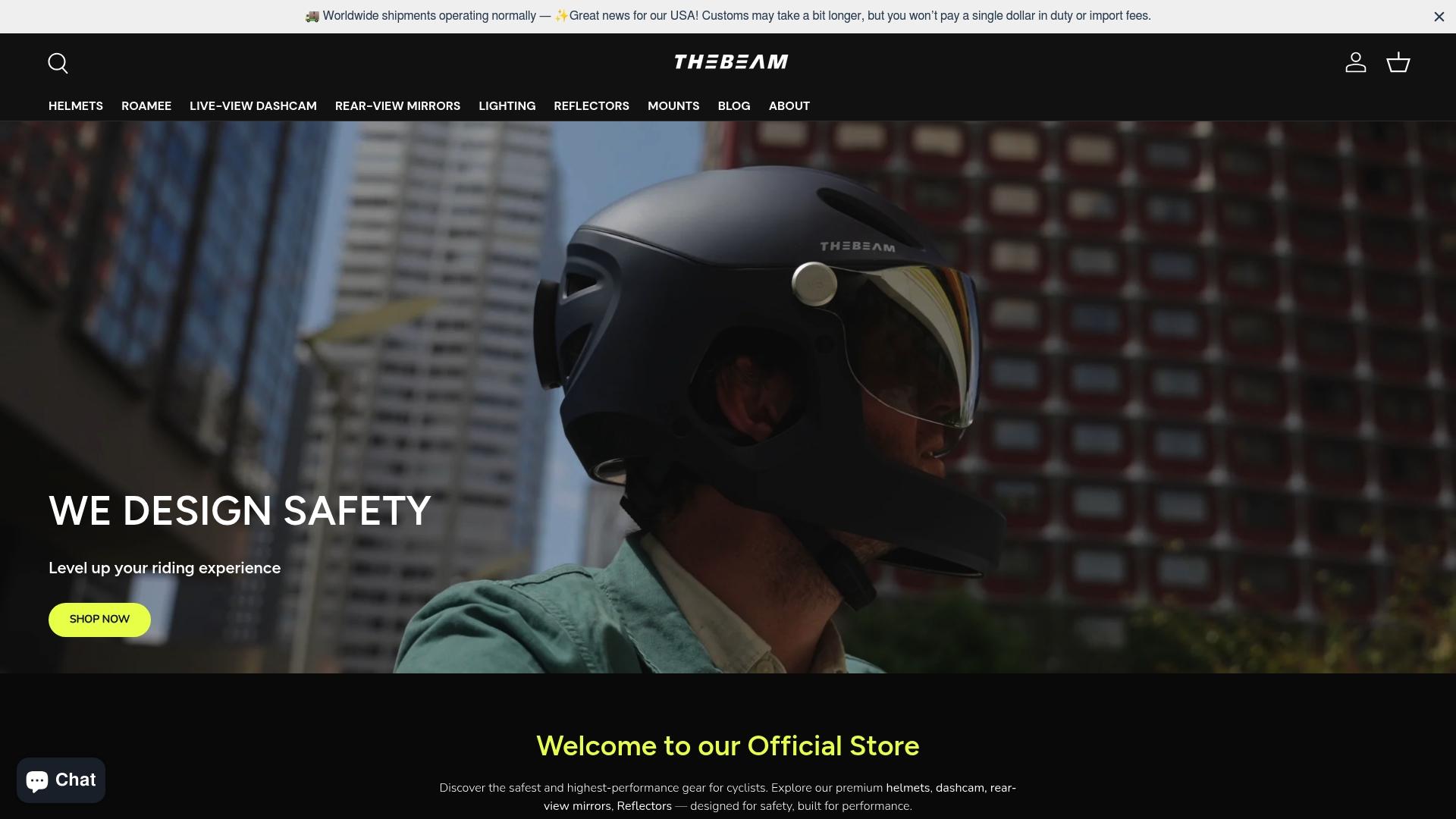
Every product in the Thebeamofficial lineup is built to improve visibility and security without adding complexity to your ride. The VIRGO integral helmet with MIPS technology combines certified protection with connected features that work from the moment you put it on. Explore the full range of connected cycling products to find the gear that fits your riding style and safety priorities.
FAQ
What is connected cycling gear?
Connected cycling gear is equipment that uses wireless protocols like ANT+ and Bluetooth to share data between sensors, displays, and apps in real time. It includes smart helmets, tire pressure monitors, biometric clothing, and cycling computers.
How does connected cycling gear improve safety?
Connected helmets detect crashes and alert emergency contacts automatically. Heads-up displays keep data in the rider’s peripheral vision, and rear-view radar systems warn of approaching vehicles without requiring the rider to look back.
What wireless protocols do connected cycling devices use?
Most connected cycling devices use ANT+, Bluetooth, or both. ANT+ is common for dedicated cycling sensors, while Bluetooth pairs devices with smartphones and cycling apps.
Does connected cycling gear work for casual riders?
Connected gear benefits casual riders as much as serious athletes. Crash detection, tire pressure alerts, and navigation assistance are safety features that apply regardless of ride distance or intensity.
What is the best first connected cycling device to buy?
A connected helmet with crash detection is the highest-impact first purchase. It combines protection, emergency alerting, and often integrated lighting in one device you wear on every ride.


