

TL;DR:
- High visibility gear combines fluorescent materials for daytime visibility with retroreflective materials for nighttime detection, helping cyclists be seen from 500 to 1,000 feet away. Layered gear such as jackets, vests, LED accessories, and decals adhere to safety standards like ANSI/ISEA 107-2020 Class 3, ensuring protection across all riding conditions. Regular inspection and maintenance of reflective gear are essential, as washing and UV exposure degrade performance, requiring replacements every one to two seasons for optimal safety.
High visibility gear is defined as apparel and accessories that combine fluorescent materials for daytime conspicuity with retroreflective materials for nighttime detection, making cyclists visible to drivers at distances of 500 to 1,000 feet. That distance gives a driver traveling at 40 mph roughly four seconds of reaction time. Four seconds is the difference between a close call and a collision. The best examples of high visibility gear layer both material types across jackets, vests, armbands, and reflective decals, following the ANSI/ISEA 107-2020 standard that classifies gear by coverage area and traffic exposure. This guide breaks down each gear type, explains the classifications, and tells you exactly what to wear for every riding condition.
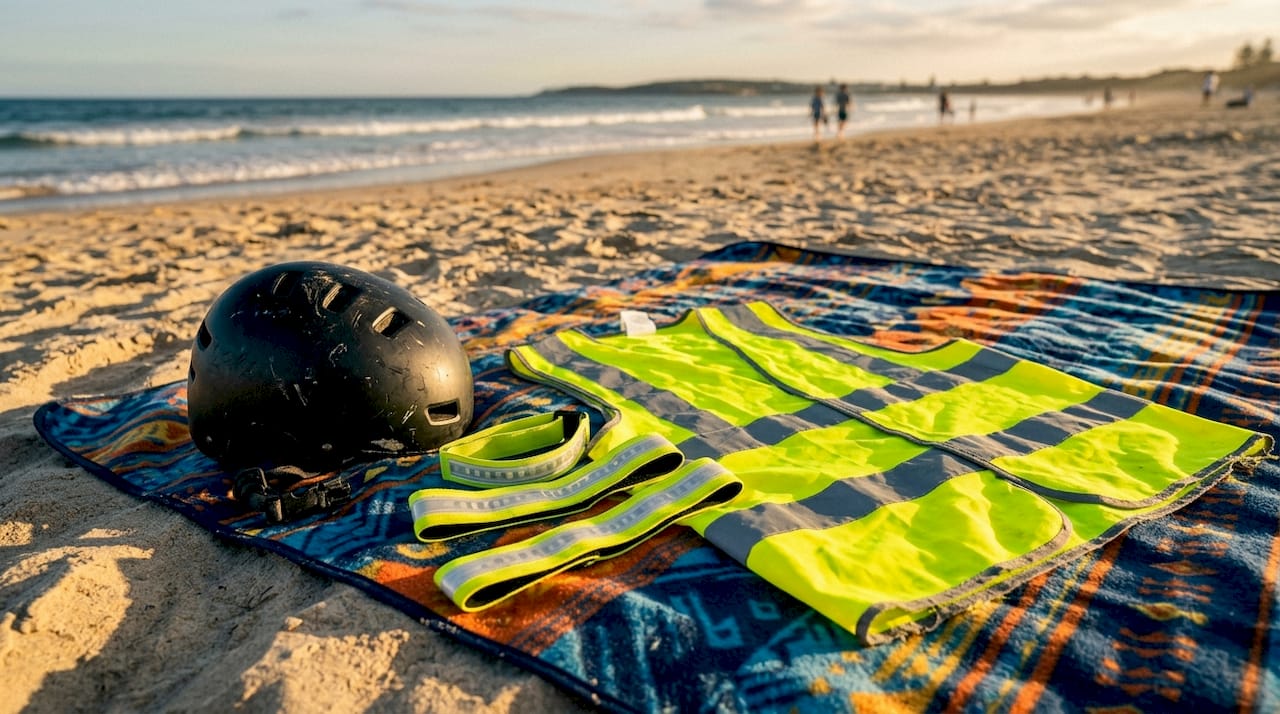
1. Examples of high visibility gear: jackets and vests
Fluorescent jackets and vests are the foundation of any cyclist’s visibility setup. A Class 3 jacket under ANSI/ISEA 107-2020 covers the torso and sleeves with retroreflective tape, delivering 360-degree coverage that remains visible whether your arms are extended or tucked. Class 3 is the highest classification and the right choice for road cyclists sharing lanes with fast-moving traffic.
Fluorescent yellow-green and fluorescent orange-red are the two colors approved under ANSI/ISEA 107 for daytime use. Fluorescent materials react to UV light, making them appear brighter than their surroundings even on overcast days. That optical effect does not work at night, which is why retroreflective tape on the same jacket becomes the critical safety feature after dark.
Key features to look for in high visibility jackets and vests:
- 360-degree retroreflective tape running across the chest, back, and sleeves
- Fluorescent yellow-green or orange-red fabric for maximum daytime contrast
- Waterproof or water-resistant shell for wet-weather riding
- Mesh or breathable panels for warm-weather comfort without sacrificing coverage
- Insulated lining options for cold-weather commutes
Weather-adapted gear like insulated Class 3 jackets or lightweight breathable fabrics lets you maintain safety standards across seasons without choosing between comfort and protection.
Pro Tip: Look for jackets with reinforced stitching at the reflective tape seams. Fluorescent dyes and retroreflective materials degrade with repeated washing, so colorfast dyes and durable bonding extend the life of your gear significantly.
2. Reflective vests for layering over existing kit
A reflective vest is the most accessible entry point into high visibility clothing. You wear it over any jersey or jacket, which means you do not need to replace your existing cycling wardrobe. Vests designed for cyclists typically feature an aerodynamic cut that does not catch wind at speed, plus side adjusters for a close fit over a bulky winter jacket.
The best cycling vests use a combination of fluorescent mesh panels and retroreflective tape in an X or H pattern across the back. That pattern maximizes the surface area visible to drivers approaching from behind, which is the most critical angle for road cyclists. A vest with only a single horizontal strip across the shoulders provides far less coverage than one with diagonal crossing bands.
Lightweight vests fold into a jersey pocket, making them ideal for rides that start in daylight and end after dark. Pack one on every ride where sunset is possible.
3. High visibility accessories: LED armbands and ankle bands
LED armbands and ankle bands add active lighting to your visibility setup. Unlike passive reflective materials, active lights emit their own light and are visible even when no headlight is aimed at you. That matters most in urban environments where streetlights and building lights create complex backgrounds that can mask a static reflective patch.
Ankle bands deliver a specific advantage: moving reflective markers on pedals and ankles create kinetic visibility that grabs driver attention far more effectively than a static patch on your torso. The rotating motion of your legs produces a biological motion pattern that the human eye is wired to detect. Drivers notice it faster than a stationary light source.
Key accessories to add to your kit:
- LED armbands with steady and flash modes for wrist and upper arm placement
- Reflective ankle bands that double as pant-leg clips to keep fabric clear of the chain
- LED clip lights for helmet attachment at the rear
- Reflective spoke clips that create a spinning ring of light visible from the side
Pro Tip: Combine active LED accessories with your base reflective clothing for a dual-layer visibility system. Passive reflective materials work when a driver’s headlights are aimed at you. Active lights work regardless of the light source. You need both.
4. Reflective decals for bikes and helmets
Reflective decals are the lowest-cost, highest-impact upgrade available to any cyclist. A set of retroreflective stickers applied to a bike frame, fork, helmet, and pedals adds multiple points of light that remain visible from multiple angles. Decals on the chainstay and seatstay make your bike visible from the side, an angle that a rear light alone does not cover.
Helmet decals deserve special attention. Your helmet sits at the highest point of your profile and moves with your head. Retroreflective tape or sticker strips on the sides and rear of a helmet create a moving light signature that drivers can track. Thebeamofficial designs its helmets with integrated reflective elements precisely because the helmet position maximizes visibility return per square inch of reflective material.
Apply decals to clean, dry surfaces and press firmly at the edges. Replace them annually or whenever you notice the reflective surface has dulled.
5. High visibility gear classifications: Class 1, 2, and 3
The ANSI/ISEA 107 standard organizes high visibility gear into three classes based on the amount of fluorescent background material and retroreflective tape required. Understanding the classes helps you choose the right gear for your specific riding environment.
| Class | Background Material | Retroreflective Tape | Recommended Use |
|---|---|---|---|
| Class 1 | Minimum coverage | Narrow strips | Low-speed, low-traffic environments |
| Class 2 | Moderate coverage | Wider strips, torso focus | Mixed traffic, moderate speeds |
| Class 3 | Maximum coverage, includes sleeves | Full torso and sleeve coverage | High-speed roads, low-light conditions |
Class 3 gear is the standard recommendation for road cyclists and commuters who share lanes with vehicles traveling above 25 mph. The sleeve coverage is the defining feature. When you signal a turn, your arm becomes visible to approaching traffic.
ANSI/ISEA 107 also defines gear by Type. Type R is designed for roadway environments and is the correct classification for cyclists riding on public roads. Type O covers off-road use and carries lower material requirements. If you ride on streets, Type R or Type P gear meets the appropriate safety threshold.
6. Situational guide: matching gear to conditions
The right gear depends on when and where you ride. Fluorescent materials perform best during daylight, dawn, and dusk when UV light is present. After dark, retroreflective materials become the primary safety feature because they reflect headlights directly back to the driver. Active lighting fills the gap when no headlight is aimed at you.
| Condition | Primary Gear | Supporting Accessories |
|---|---|---|
| Daytime | Fluorescent jacket or vest | Reflective decals on bike |
| Dawn/Dusk | Fluorescent jacket with retroreflective tape | LED armbands, ankle bands |
| Night | Class 3 retroreflective jacket | Front and rear lights, LED accessories |
| Rain | Waterproof hi-vis jacket | Reflective ankle bands |
| Cold weather | Insulated Class 3 jacket | LED clip lights on helmet |
Selecting gear means matching the environment and confirming 360-degree coverage with no gaps when you move or bend. A jacket that rides up and exposes an unprotected lower back creates a blind spot that drivers will not see until it is too late. Check coverage while seated on your bike, not just standing in front of a mirror.
For a full checklist of what to carry on every ride, the visibility checklist for cyclists from Thebeamofficial covers every condition in one reference.
7. Maintaining your high visibility gear
Reflective gear has a lifespan, and most cyclists do not track it. Fluorescent dyes and retroreflective materials degrade with washing and UV exposure. A jacket that looked bright when new may have lost a significant portion of its reflective performance after two seasons of regular use.
Wash hi-vis gear inside out in cold water on a gentle cycle. Avoid fabric softeners, which coat retroreflective beads and reduce their ability to reflect light. Hang dry instead of using a dryer. Inspect reflective tape after every fifth wash by shining a flashlight at it in a dark room. If the tape does not return a sharp, bright reflection, replace the garment or the tape.
Store hi-vis gear away from direct sunlight when not in use. UV exposure between rides accelerates dye fading even when the jacket is hanging in a garage window.
Key takeaways
High visibility gear works best when it combines fluorescent daytime materials with retroreflective nighttime components and active lighting, following ANSI/ISEA 107-2020 Class 3 and Type R standards for road cyclists.
| Point | Details |
|---|---|
| Layer active and passive visibility | Combine retroreflective clothing with LED accessories for detection in all lighting conditions. |
| Choose Class 3 for road riding | Class 3 gear covers torso and sleeves, providing 360-degree visibility at high-traffic speeds. |
| Add motion-based reflectors | Ankle bands and pedal decals create kinetic visibility that drivers detect faster than static patches. |
| Inspect and replace worn gear | Reflective materials degrade with washing and UV exposure; check performance regularly and replace when dull. |
| Match gear to conditions | Use fluorescent materials by day and retroreflective gear with active lights at night or in rain. |
What I’ve learned from years of watching cyclists get visibility wrong
The most common mistake I see is cyclists wearing a bright yellow jersey and calling it done. Light-colored clothing without retroreflective material blends into backgrounds at night and offers almost no protection after dark. A neon jersey is a daytime tool. At night, it disappears.
The second mistake is placing all reflective material on the torso and ignoring the legs. Your legs move constantly while you ride. That motion creates a biological signal that the human brain is specifically wired to detect. Reflective markers on moving parts like ankles and pedals outperform a large static patch on your back because the motion draws the eye before the driver consciously processes what they are seeing.
I also see riders skip gear maintenance entirely. They buy a good jacket, wash it a dozen times without checking the tape, and assume it still performs. It does not. Inspect your gear in a dark room with a flashlight twice a season. If the reflection looks dim, the gear is not doing its job.
The riders I trust on the road at night wear a Class 3 jacket, LED ankle bands, and at least one active rear light. That combination covers passive reflection, active emission, and kinetic motion. No single piece does all three. You need the full system.
— Sophie
Gear built for cyclists who take visibility seriously
Thebeamofficial designs high visibility equipment specifically for cyclists, not adapted from construction workwear. The collection includes hi-vis jackets and vests with integrated retroreflective tape, LED accessories, and reflective add-ons built to work together as a layered system.
Every product in the Thebeamofficial lineup is built around real riding conditions: aerodynamic cuts that do not catch wind, reflective placement optimized for the seated cycling position, and materials rated for durability across seasons. Whether you commute daily or ride long-distance events, the full product collection covers every visibility need from dawn to midnight. Thebeamofficial also supports the cycling community through events like the Ultracycling event, where visibility gear is tested in the most demanding real-world conditions.
FAQ
What is high visibility gear?
High visibility gear is apparel and accessories that use fluorescent materials for daytime conspicuity and retroreflective materials for nighttime detection. Together, they make cyclists visible to drivers at distances of 500 to 1,000 feet.
What are the best examples of high visibility gear for cyclists?
The best examples include Class 3 retroreflective jackets, fluorescent vests, LED armbands, reflective ankle bands, and retroreflective decals for bikes and helmets. Using all of these together creates a dual-layer visibility system that works in all lighting conditions.
What does ANSI/ISEA 107 Class 3 mean?
Class 3 is the highest classification under the ANSI/ISEA 107-2020 standard. It requires retroreflective tape on both the torso and sleeves, delivering 360-degree coverage for use in high-speed or low-light traffic environments.
Do bright colors work for night visibility?
Bright colors alone do not provide night visibility. Fluorescent materials require UV light to activate, so they are ineffective after dark. Retroreflective materials and active LED lights are the correct tools for nighttime riding.
How often should I replace my high visibility gear?
Inspect reflective tape and fluorescent fabric after every five washes by testing reflectivity in a dark room with a flashlight. Replace gear when the reflection appears dim or the color has faded noticeably, typically every one to two seasons for frequent riders.


