

Yes, cold cuts battery output and can shut a light down mid-ride, but the bigger risk is what happens when you get home. Never charge a lithium e-bike pack until it’s above freezing (0°C) again. If your light or battery has gone cold, move it indoors or against your body, drop to a lower power mode or swap in a spare, and hold off on charging until it’s warmed through.
TL;DR:
- Charging lithium batteries below 0°C risks permanent capacity loss from lithium plating, so always warm the pack before charging.
- Cold electrolyte increases internal resistance, causing temporary voltage drops and dimmer lights, but most of this effect reverses with warming.
- Store batteries at 40 to 60 percent charge in a cool, dry place and avoid long-term storage at full or empty capacity during winter.
- Using insulated housings and keeping spares close to the body can help preserve runtime and improve visibility during cold rides.
- Many chargers and Battery Management Systems do not detect cold, so do not rely on indicator lights as safety signals for cold pack charging.
Table of Contents
- Bike Light Battery Cold Checklist: Before, During, and After
- Why Cold Weather Drains Bike Light Batteries
- The Hard Rule for Charging E-Bike Batteries in Cold Weather
- How to Preserve Bike Light Runtime in Cold Weather
- Storing Bike Light Batteries Over Winter
- Troubleshooting a Bike Light That Died in the Cold
- What Thebeamofficial Knows About Winter Visibility
- A Small Winter Routine That Actually Works
- Gear That Backs Up Good Battery Habits
- Sources
- FAQ
Bike Light Battery Cold Checklist: Before, During, and After
A little prep beats a dead headlight on a dark road. Here’s a stepwise routine that covers the whole ride.
- Before you leave: Charge your battery at room temperature, never straight from an unheated garage. Pack a charged powerbank or a spare removable battery, and check that port covers and mounts are sealed against slush and grit.
- During the ride: Run medium or eco mode instead of max output, and keep spares in an inner jacket pocket where your body heat helps. Save high mode for short bursts on descents or real hazards, since sustained high output drains a cold pack fastest.
- After you’re back: Bring batteries and lights indoors right away. Let them warm for the recommended interval before charging, then dry housings and check seals for moisture before storing everything for the next ride.
Why Cold Weather Drains Bike Light Batteries
Cold thickens the electrolyte inside a lithium-ion cell, and that thicker chemical soup raises internal resistance. More resistance means the battery struggles to push current out fast enough, so voltage sags and your light dims or flickers even though there’s plenty of stored energy left. This is usually temporary. Warm the cell back up and most of that lost output returns.
Charging is a different story. Pushing current into a cold pack, especially one near or below freezing, can cause lithium plating on the anode. That’s a one-way process. Once it happens, you’ve lost usable capacity permanently, and in bad cases it raises real safety risk.
- Cold electrolyte raises internal resistance, causing voltage sag during use (temporary).
- Charging below 0°C risks lithium plating, which is permanent (not reversible by warming).
- Battery Management Systems and chargers vary widely in whether they actually block a cold charge.
A charger’s green or blinking light only confirms current is flowing. It says nothing about pack temperature. Many chargers and even some Battery Management Systems aren’t built to sense cold and will happily apply current to a frozen pack, so don’t treat an indicator light as a safety check. Electrolyte crystallization at very low temperatures is the same mechanism behind the 20 to 50 percent range loss riders report in severe cold.
The Hard Rule for Charging E-Bike Batteries in Cold Weather
There’s one rule that matters more than any other in this whole guide: do not charge a lithium e-bike battery below 0°C (32°F). For best results when it’s practical, aim to charge above roughly 10°C (50°F) rather than right at the freezing line.
- Below 0°C: do not charge, full stop.
- 0 to 10°C: charging is possible but not ideal. Warm the pack further if you can.
- Above 10°C: normal charging conditions.
After bringing a cold pack indoors, give it time before plugging in. Roughly 2 hours for moderate cold exposure, and 3 to 4 hours after a hard freeze is a reasonable warm-up window, since large packs hold cold longer than their casing suggests. If your battery has a temperature readout through its app or display, use it instead of guessing by feel.
Pro Tip: Some premium packs include Battery Management Systems that block charging below freezing automatically, but that behavior isn’t standard across brands. Never assume your battery will protect itself unless the manufacturer says so explicitly.
How to Preserve Bike Light Runtime in Cold Weather
Expect a moderate range loss between 0 and 10°C, and a more significant range loss below freezing. That loss is typically reversible once the cell warms back up, so a dim light isn’t necessarily a dying one.
A few habits stretch what runtime you do have:
- Insulate battery packs and light housings with a neoprene sleeve or padded mount, and tape any exposed cable seams against wind chill.
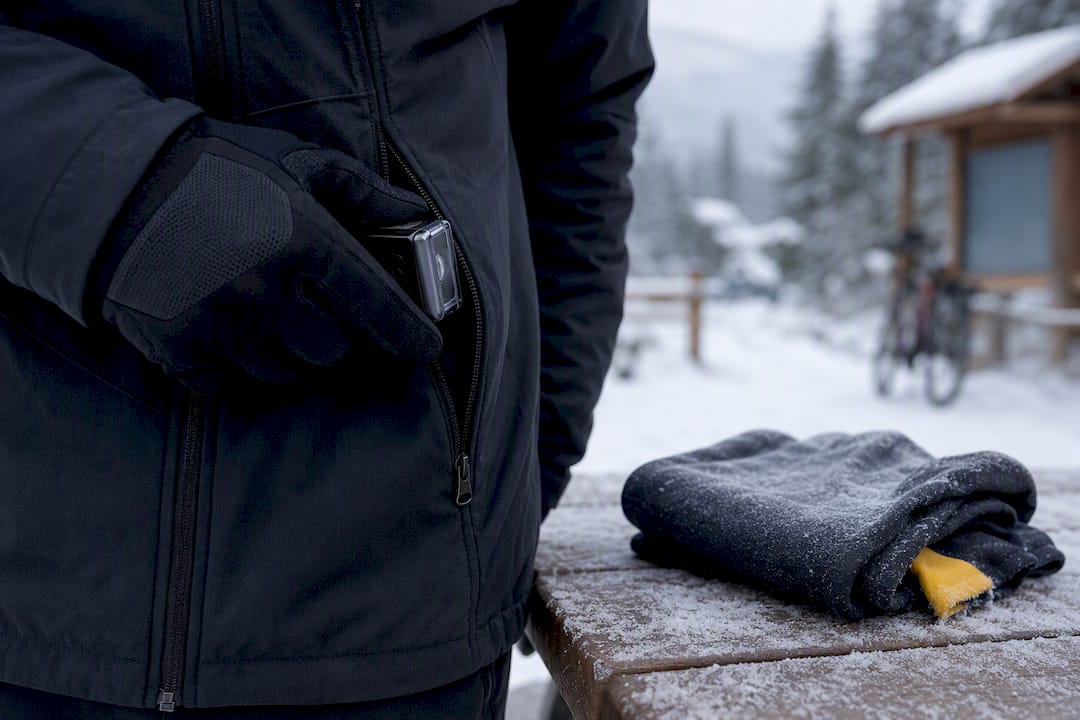
- Keep spares against your body. Body heat maintains voltage and can restore output within minutes for a battery that’s gone sluggish in the cold.
- Stick to medium or eco mode for steady visibility, save flash for daytime conspicuity, and reserve high output for actual hazards or descents.
- Running a light briefly at max brightness generates internal heat and can revive a struggling cell, but it burns through charge fast, so use it as an emergency trick, not a habit.
- Choose lights rated at least IPX4, with IPX6 or IPX7 preferred for genuine winter riding, since freeze-thaw cycling stresses seals as much as the cold stresses cells.
Storing Bike Light Batteries Over Winter
A battery sitting in an unheated garage all winter degrades faster than one you actually ride. The fix is simple: store lithium cells at roughly 40 to 60 percent charge, in a cool, dry space between about 5 and 20°C.
- Never store a pack fully charged or fully depleted for weeks at a time.
- Pull batteries off the bike entirely if it’s going to sit unused for more than a couple of weeks.
- If garage storage is your only option, use an insulated bag and bring the pack inside during hard freezes.
- Check state-of-charge and look for corrosion on contacts about once a month.
Housings get brittle in the cold too, and freeze-thaw cycling raises the risk of seal failure and moisture ingress, so a quick monthly glance at gaskets and contacts saves you from a nasty surprise in spring.
Troubleshooting a Bike Light That Died in the Cold
- Check connectors and the battery contacts for frost or condensation, and look at whether the indicator light is even responding.
- Move the whole unit indoors and let it sit before you touch the charger. Cold plastic and cold cells both need time.
- Once it’s warmed through, test it briefly at low output rather than jumping straight to a charge cycle.
- If it still won’t hold charge or power on after a proper warm-up, that’s a sign of real damage. Dry the housing and inspect gaskets first, then contact the manufacturer rather than forcing repeated charge attempts.
What Thebeamofficial Knows About Winter Visibility
Cold-weather commuting is where lighting choice actually matters, not just battery care. Picking the right lumen output for your route, as covered in our lumens guide, makes the difference between a light that survives a dark winter commute and one that dims out halfway home.
Riders overestimate how much brightness they need and underestimate how much cold will take away. A light rated for 800 lumens in a warm test bay can behave like a 500-lumen unit at 0°C once voltage sag sets in.
For unlit rural roads, pair a strong front light with good daytime lux targets so visibility holds up whether you’re riding at dawn or dusk.
A Small Winter Routine That Actually Works
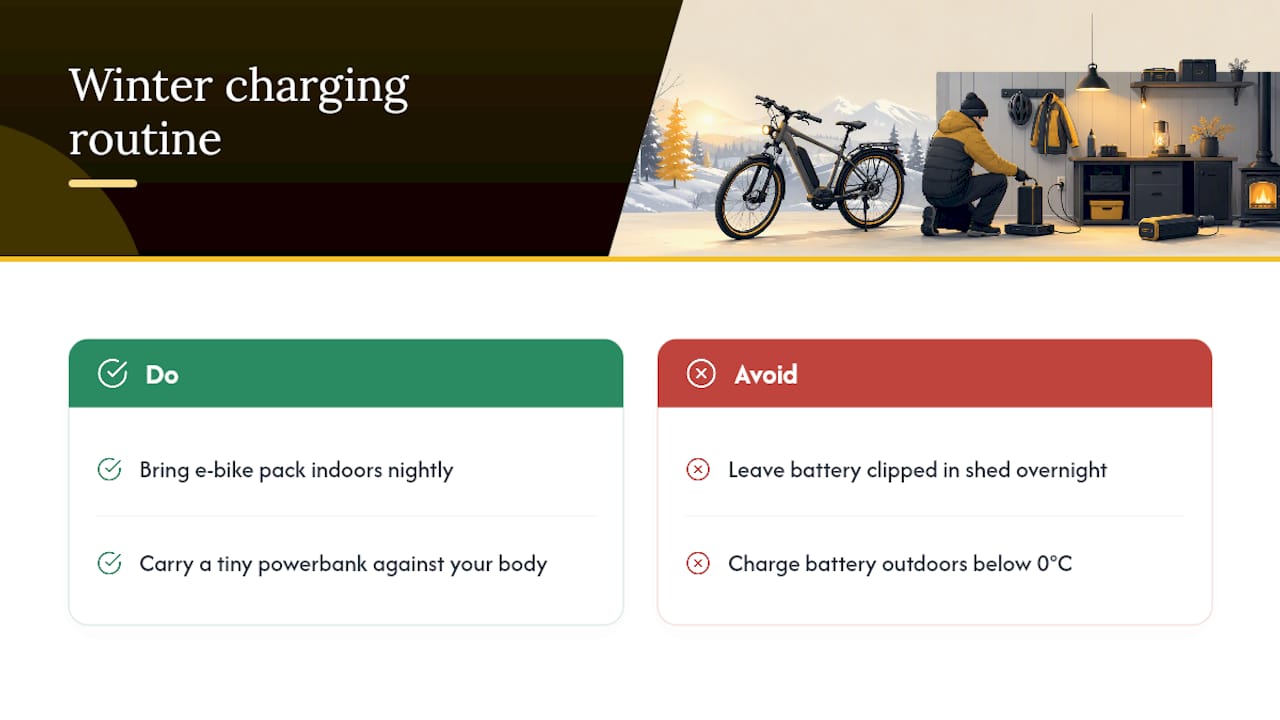
Two winters ago, I started bringing my e-bike pack inside every night instead of leaving it clipped to the frame in the shed. It sounds trivial. It cut my morning dread almost completely, because the battery was always warm enough to charge properly and ready by the time I needed it.
The second habit was smaller: a tiny powerbank in my jersey pocket, riding against my back the whole commute. Adopt both tonight. Charge indoors, and carry one spare close to your body.
— Sophie
Gear That Backs Up Good Battery Habits
Good habits only go so far without gear that survives the conditions you’re riding in. Some manufacturers offer lighting, mounts, and reflective accessories designed for winter conditions, featuring sealed housings, secure mounts resistant to cold loosening, and connected lighting options for monitoring output and mode.

None of this replaces the charging rules above. A better mount or a brighter reflector won’t stop lithium plating if you charge a frozen pack, and it won’t add back capacity lost to a bad storage winter. What it does is make sure the light itself, the physical unit sitting on your bars or helmet, holds up to freeze-thaw cycles and keeps working while your battery habits do the rest. Browse the full accessory lineup to see what fits your commute before the next cold snap hits.
Sources
- Can You Safely Charge an E-Bike Battery in Freezing Temperatures? (2026 Guide)
- Can Lithium Batteries Freeze? Cold Weather Guide & Storage
- Preventing Battery Drain in Headlamps During Sub-Zero Temperatures – Ride Gear Lab
- How Weather Affects Bike Light Performance: Complete Guide
FAQ
How Cold Is Too Cold for a Lithium Battery?
Charging becomes unsafe below 0°C (32°F), risking permanent capacity loss from lithium plating, as detailed in this пълно ръководство за зимна употреба на електрически скутер. Discharging in the cold just causes temporary voltage sag, which recovers once the cell warms.
How Cold Is Too Cold for an E-Bike Battery?
The same 0°C charging threshold applies to e-bike packs. Riding in colder conditions is fine, though expect noticeably reduced range until the pack warms back up.
How Do I Keep an E-Bike Battery Warm in Winter?
Store spares close to your body, insulate the pack with a neoprene sleeve, and bring it indoors between rides rather than leaving it on the bike overnight.
What Does Cold Weather Do to Lithium Batteries?
Cold thickens the electrolyte and raises internal resistance, which temporarily reduces available power. Riders typically see a moderate range loss between 0 and 10°C, and a more significant range loss below freezing, and most of that loss reverses once the battery warms up.


