

A low profile bike helmet trims shell height and rear coverage for a sleeker, more streamlined look, and yes, it can be just as safe as a bulkier design when it carries proper certification, a working retention system, and rotation-damping technology like MIPS. The catch is fit: a slim shell with sloppy sizing protects nobody. For road and urban riders who want both discretion and real protection, THE BEAM’s VIRGO integral helmet with MIPS is worth putting at the top of your shortlist.
TL;DR:
- A low profile helmet’s safety depends on certification, proper fit, and impact management technology like MIPS, not its silhouette.
- Red flags include missing certifications, loose retention systems, shell flex, thin padding, or absence of rotation-damping features.
- Proper fit testing involves accurate measurements, correct positioning, snug retention, and head-shake stability before purchase.
- Compatibility with sunglasses and communication devices should be verified during fitting, especially for slim shells with limited padding.
- Prioritize certified impact protection and secure fit over appearance, as performance varies widely among similarly styled helmets.
Table of Contents
- What Does “Low Profile” Actually Mean on a Bike Helmet?
- Are Low Profile Helmets as Safe as Bulkier Designs?
- Which Features Matter Most in a Compact Helmet?
- How Do You Test a Low Profile Helmet’s Fit Before You Buy?
- Road, Urban, or E-Bike: Matching the Helmet to the Ride
- Keeping a Low Profile Helmet in Good Shape
- Does a Low Profile Helmet Work With Sunglasses and Bluetooth Kits?
- What the Beam’s Engineering Approach Gets Right About Low Profile Design
- Your Low Profile Helmet Buying Checklist
- What Actually Matters When You’re Choosing One
- Ready to Ride in a Helmet That Doesn’t Ask You to Choose
- Sources
What Does “Low Profile” Actually Mean on a Bike Helmet?
“Low profile” describes a helmet’s silhouette, not a safety rating. It refers to reduced crown height, a shorter shell that stops closer to the ears, and rear coverage that tapers instead of wrapping deep down the skull. The result sits closer to your head and reads visually as smaller, even when the internal EPS foam volume is comparable to a standard helmet.
Shell length and vent placement drive most of that visual effect. Manufacturers achieve a compact shape by moving vents closer together, using a shallower foam core at the crown, and shaping the rear exit points to hug the head rather than flare outward. None of that inherently weakens the helmet. It just changes where the material sits.
It helps to know what a low profile helmet is not. Aero helmets minimize drag with smoother, often fully-shelled surfaces and fewer vents, prioritizing speed over airflow. Full-coverage or enduro-style helmets extend down the back of the skull and over the temples for maximum surface protection, common in gravel and mountain biking. Urban commuter helmets often add visors, higher rear coverage for stop-and-go traffic, and integrated accessory mounts. A low profile design borrows a bit from each category while keeping the visual footprint small, which is why it’s become the default choice for road cyclists and style-conscious commuters who don’t want to look like they’re wearing a bucket.
Three construction approaches make the compact shape possible without cutting corners on protection:
- Thin-shell polycarbonate construction distributes impact force across a wider surface area even with reduced shell thickness.
- Multi-density EPS foam layers softer foam near the head with firmer foam near the shell, absorbing a broader range of impact speeds in less vertical space.
- Integrated padding systems that route sweat channels and comfort padding into the foam itself rather than adding bulk on top of it.
Picture a helmet that stops just above your ears with a shell that tapers gently rather than squaring off. That’s the profile road racers and commuters increasingly favor, and it’s precisely the shape category The Beam explains in its breakdown of helmet types for riders trying to tell the categories apart.
Are Low Profile Helmets as Safe as Bulkier Designs?
Shell shape and safety are two separate questions, and conflating them is the single most common mistake buyers make. A helmet’s protective performance comes down to how it manages impact energy, not how much surface area it covers.
In Europe, the relevant benchmark is EN 1078, the CEN standard covering helmets for cyclists and users of skateboards and roller skates. It tests impact absorption at defined drop heights, retention system strength, and field of vision, among other criteria. A helmet that passes EN 1078 has demonstrated it can absorb a specific impact energy and keep the shell intact enough to spread that force, regardless of whether its silhouette is slim or bulky. In the US, the equivalent benchmark is the CPSC bicycle helmet standard, and reputable low profile helmets carry both certifications rather than one.
Energy management is a function of foam density, shell rigidity, and how the two bond together, not how far the shell extends down your skull. A well-engineered low profile shell with quality multi-density EPS can outperform a poorly built, deeper-coverage helmet in raw impact tests. Editorial buyer’s guides consistently rank helmets on ventilation, weight, and certification rather than shell size alone, and that’s the right framework for evaluating a compact design.
Rotational impact matters as much as direct impact. Most falls aren’t straight-down hits. They come in at an angle, and an angled impact creates rotational force on the brain even when the shell absorbs the linear energy just fine. MIPS technology addresses this with a low-friction layer inside the shell that lets the helmet slide slightly relative to your head on impact, reducing rotational force transfer. It’s a genuinely important addition in a compact shell, where there’s less foam depth to begin with.
Watch for these red flags when you’re evaluating a slim-looking helmet:
- No visible certification sticker or documentation referencing EN 1078, CEN, or CPSC.
- A retention system that feels loose, doesn’t lock at multiple points, or lacks a rear dial adjuster.
- A shell that flexes noticeably when you squeeze it gently with both hands.
- Padding so thin the shell sits away from your skull rather than cradling it.
- No mention of rotation-mitigation technology anywhere in the product description, especially on a helmet priced like it should have one.
None of these red flags are about how much helmet you can see in the mirror. They’re about whether the engineering underneath that silhouette was done properly, which is exactly what helmet standards have evolved to test for over the past several decades.
Which Features Matter Most in a Compact Helmet?
Once certification is confirmed, the features that separate a genuinely good low profile helmet from a merely good-looking one come down to four categories: retention, rotation protection, airflow, and accessory compatibility.
Fit systems and retention deserve the first look. A quality retention cradle uses a rear dial adjuster with fine-grained clicks, not a single elastic band, and it should tighten evenly around the back of your skull rather than pinching one spot. Micro-adjustment matters more on compact shells because there’s less shell surface to compensate for a loose fit. If the cradle slips or the helmet rocks side to side when you shake your head, no amount of foam quality fixes that.
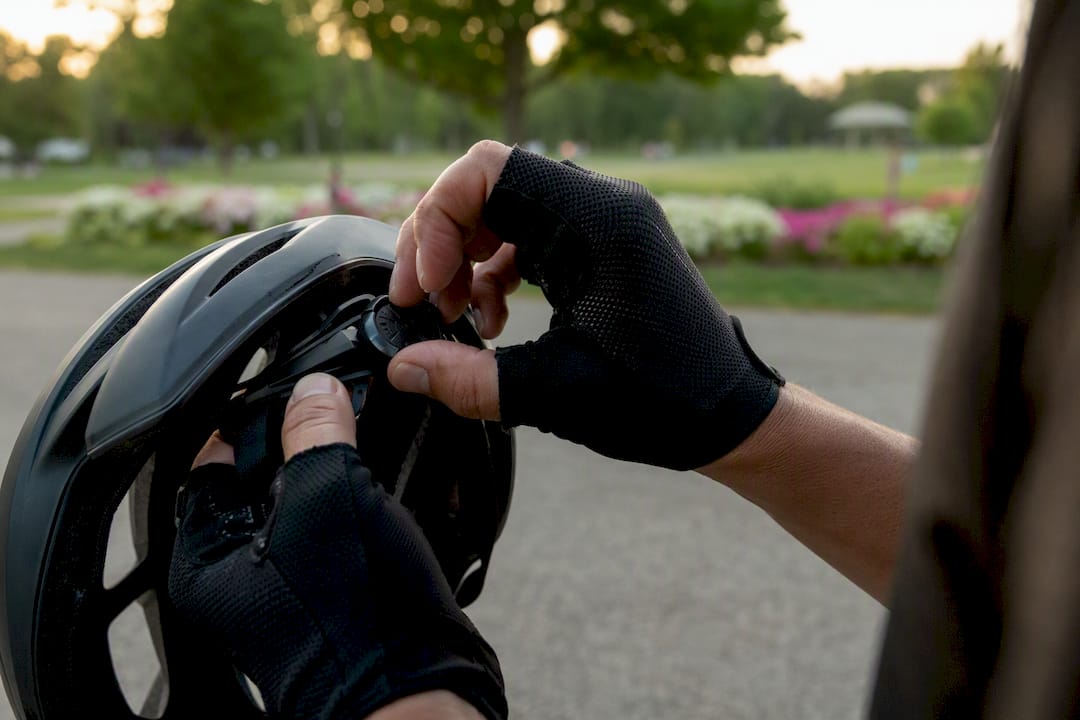
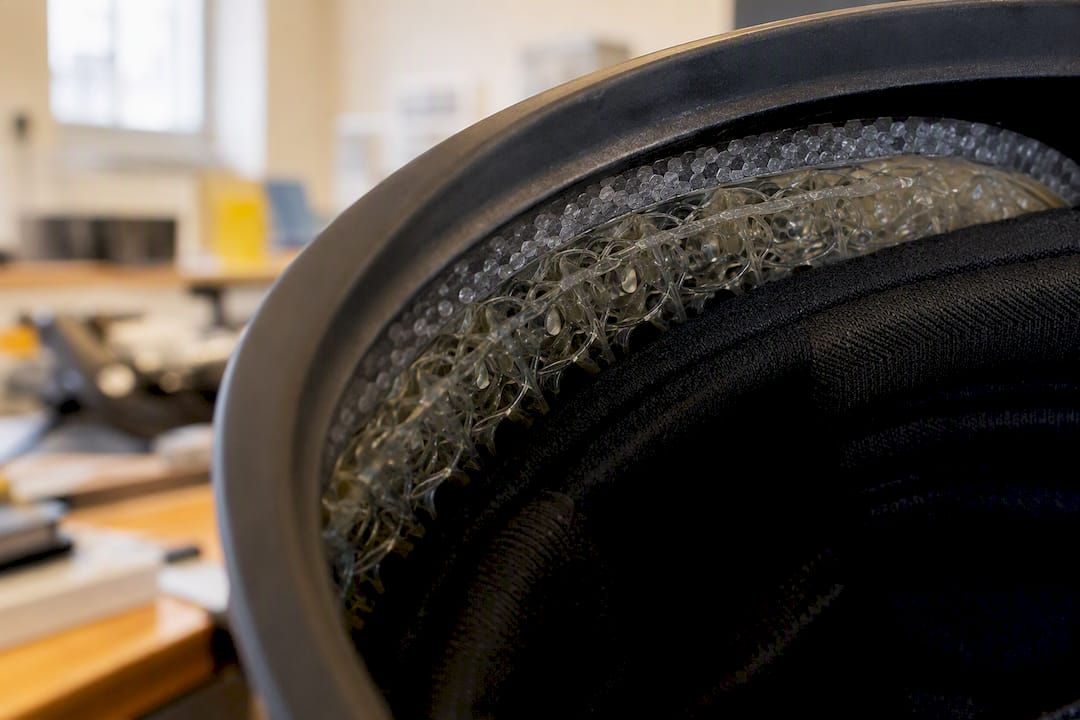
Rotation-damping technology is where MIPS and similar systems earn their keep. In a full-coverage helmet, there’s more foam depth to absorb angled forces before they reach your skull. In a low profile shell, that buffer is thinner, so a rotation-damping layer does proportionally more work. Look for it explicitly named in the spec sheet rather than a vague “advanced safety system” claim.
Ventilation and weight trade off against each other, and low profile shells handle this differently depending on intent. Road-focused compact helmets tend to run more, smaller vents for airflow at speed. Urban compact helmets sometimes reduce vent count slightly to preserve structural rigidity for lower-speed, higher-frequency impacts like curb clips and pothole falls. Lightweight helmet guides note that well-engineered compact shells can preserve strong airflow without adding shell bulk, so weight and ventilation aren’t strictly a trade against slimness. A quality road-oriented low profile helmet is generally lightweight; anything noticeably heavier is probably compensating for thin foam with sheer material volume.
Accessory integration rounds out the checklist:
- Rear light mounts built into the shell rather than requiring an adhesive pad that ruins the sleek line.
- Reflective strips embedded into the shell surface, not just stickers that peel.
- Compatible visor or eyewear channels that don’t create pressure points at the temple.
- Enough shell clearance at the ears for a Bluetooth helmet kit or bone-conduction headset without pinching.
Pro Tip: Try the helmet on with your sunglasses and, if you use one, your Bluetooth kit before buying. A helmet that fits perfectly bare-headed can pinch or lift once you add eyewear arms and a speaker unit, especially on the slimmer shells where there’s less padding depth to absorb that extra bulk.
How Do You Test a Low Profile Helmet’s Fit Before You Buy?
Fit is where low profile helmets punish shortcuts the most. Because the shell doesn’t extend as far, small sizing errors have a bigger relative effect on coverage than they would on a deeper helmet.
Start with an accurate head measurement. Wrap a soft tape measure around your head roughly one inch above your eyebrows, keeping it level all the way around, and check that number against the manufacturer’s size chart rather than guessing based on hat size, which runs on a different scale entirely.
Once you have a helmet in hand, run through this sequence:
- Place it level. The front edge should sit about one to two finger-widths above your eyebrows. Tilted back, it exposes your forehead in a fall; tilted forward, it blocks your vision.
- Check crown coverage. On a low profile shell, confirm the padding actually contacts your scalp evenly rather than resting mostly on the sides, which signals the wrong size or shape category for your head.
- Tighten the retention dial until the helmet feels snug without pressure points, then do the roll-off test: push the helmet forward and backward with your hand. It shouldn’t shift more than about half an inch in either direction.
- Buckle the chinstrap and adjust until you can fit one finger between the strap and your chin, no more.
- Do the head-shake test. Shake your head side to side and up and down. A properly fitted helmet moves with your skull, not independently of it.
Head shape matters more with compact shells than deeper ones, since there’s less foam margin to mask a mismatch. Riders with rounder head shapes often do better sizing slightly down for a snugger cradle fit, while riders with longer oval heads may need to size up or look for a brand whose internal shape runs oval rather than round; European brands frequently run rounder, so cross-checking a size chart against your actual head shape, not just circumference, pays off. Expert-tested group reviews consistently flag fit as the deciding factor between otherwise similar helmets, which tracks with what any fitting session at a shop will show you firsthand.
One more rule that has nothing to do with sizing: replace a helmet after any impact, even one that looks cosmetically fine. EPS foam compresses to absorb energy once, and that compression doesn’t reverse. Beyond crash replacement, plan on a new helmet every three to five years depending on how often you ride and how it’s stored, since UV exposure and sweat degrade foam and straps over time even without a crash.
Road, Urban, or E-Bike: Matching the Helmet to the Ride
The right low profile helmet changes depending on what you’re actually riding, and treating all compact helmets as interchangeable is where a lot of buyers go wrong.
Road riders should prioritize ventilation, low weight, and aerodynamic shaping alongside certification, since sustained effort at higher speeds makes airflow and grams-on-your-head matter more over a three-hour ride than they do on a fifteen-minute commute. A road-focused compact helmet typically favors more vents and a shape tuned to reduce drag at 20+ mph.
Urban commuters face a different risk profile: lower speeds but more frequent close encounters with curbs, car doors, and stop-and-go traffic. Visibility matters as much as impact protection here, and accessory mounting for lights and reflectors becomes a real priority rather than a nice-to-have. A commuter-oriented low profile helmet often trades a couple of vents for slightly more rear coverage, since low-speed rear impacts from a sudden stop are a real commuting scenario. The Beam’s guide to commuter helmet features walks through this trade-off in more detail.
E-bike riders need to think differently again. Pedal-assist and throttle-based e-bikes routinely hit higher average speeds than a standard bicycle, which means impact energy in a fall can be meaningfully higher. Several European jurisdictions already treat faster e-bikes under moped-adjacent helmet rules for that reason. If you’re commuting on an e-bike regularly, look for a low profile helmet explicitly rated for higher-speed impacts, with a full retention system and rotation-damping tech as a baseline requirement rather than an upgrade.
A quick decision framework:
- Primarily road riding, long distances: prioritize weight and ventilation, confirm certification, treat MIPS as standard.
- Primarily urban commuting, mixed traffic: prioritize visibility features and accessory mounts, accept a slightly heavier shell if it buys more low-speed coverage.
- E-bike or mixed high-speed use: prioritize the highest available impact rating and rotation protection first, aesthetics second.
If your riding mixes categories, which describes most commuters who also do weekend road rides, buy for the higher-risk scenario. A helmet built for e-bike speeds handles a casual road ride fine; the reverse isn’t true. For broader context on matching gear to riding style, this cycling and urban sports guide covers how endurance athletes think about equipment trade-offs across disciplines.
Keeping a Low Profile Helmet in Good Shape
A slim helmet still needs the same care routine as any other, and a few habits protect both the safety margin and the sleek look you paid for.
Clean the shell and pads with mild soap and water, never solvents or petroleum-based cleaners, which can degrade the EPS foam or the shell’s bonding adhesive. Let it air dry away from direct heat or sunlight; a hot car dashboard is one of the fastest ways to warp a thin shell. Straps can be hand-washed the same way and should be checked periodically for fraying, since a frayed strap defeats the entire retention system regardless of how well the shell fits.
Because low profile shells have less surface area to begin with, accessory placement takes a bit more care. Mount lights and reflectors on the designated attachment points rather than drilling or adhering directly to the EPS foam, which can create weak points that compromise impact absorption exactly where you don’t want them.
A few accessory additions offset the reduced visual bulk of a compact helmet without ruining its look:
- Slim rear reflectors like FRAME FLASH, designed to add high-visibility surface area without the bulk of a traditional reflector strip.
- A compact rear light mounted at seat height or on the helmet’s designated mount for a second point of visibility beyond your bike.
- A handlebar mirror to reduce the need to twist and check over your shoulder, which is a real advantage in urban traffic regardless of helmet type.
None of these add meaningful bulk to a low profile silhouette, and together they close the visibility gap that a smaller shell can create in low-light urban conditions.
Does a Low Profile Helmet Work With Sunglasses and Bluetooth Kits?
Compatibility with eyewear and communication devices is worth checking before you commit to a specific low profile helmet, since compact shells sit closer to your temples and ears than deeper designs.
Sunglasses are usually the easier fit. Most modern low profile helmets are shaped with a slight channel or recess near the temple specifically to accommodate glasses arms, and you should feel for that clearance during a fitting rather than assuming it’s there. Push the sunglasses arms in while the helmet is buckled and check for pressure points; a well-designed compact shell shouldn’t create a pinch even with wraparound cycling glasses.
Bluetooth helmet kits and bone-conduction headsets are a bit more variable. Because there’s less padding depth in a low profile design, some ear-adjacent hardware sits closer to your skull than it would in a bulkier helmet. Look for helmets with slightly recessed ear channels or confirm the manufacturer explicitly states compatibility with communication accessories. If you already own a Bluetooth kit, bring it to a fitting rather than guessing; a five-minute test avoids returning a helmet that pinches once the unit is clipped in.
What the Beam’s Engineering Approach Gets Right About Low Profile Design
Building a helmet that looks slim and performs like a full-coverage design isn’t a styling exercise. It’s a materials and construction problem, and it’s the one THE BEAM has spent its engineering effort on rather than treating “low profile” as a marketing label slapped on a standard shell.
A helmet’s silhouette should be the last thing engineers compromise on protection to achieve. The shell shape follows the safety requirements, not the other way around.
The VIRGO integral helmet is THE BEAM’s clearest expression of that priority. It integrates MIPS technology directly into a compact shell rather than treating rotation protection as an add-on layer bolted onto a repurposed design, which is a meaningfully different engineering approach than adapting an existing shell after the fact. The retention system uses a multi-point cradle with fine-grain rear adjustment, addressing the exact slippage risk that undermines cheaper compact helmets under real impact conditions. For readers who want the mechanical detail behind why that matters, THE BEAM’s retention systems guide breaks down how cradle design affects real-world crash performance, not just showroom comfort.
That combination, low visual bulk plus certified, tested internal engineering, is exactly the standard this guide has argued for throughout: a slim helmet is only as good as what’s under the shell. THE BEAM designs from that principle first and lets the aesthetic follow, which is a different starting point than working backward from a marketing silhouette toward whatever protection can be squeezed in afterward.
Your Low Profile Helmet Buying Checklist
Three things are non-negotiable regardless of style, budget, or how good the helmet looks on the rack: a certified shell (EN 1078, CEN, or the equivalent standard in your market), a retention system that locks down snugly without slipping, and rotation-mitigation technology like MIPS built into the shell, not offered as an afterthought accessory.
Beyond those baselines, run through this shortlist before you buy:
- Confirm the certification sticker is present and matches your region’s standard, and check that the retention dial holds tension through a full head-shake test.
- Match the helmet to your primary riding context, road ventilation and weight if you’re logging long distances, urban visibility and accessory mounts if you’re commuting through traffic.
- Test accessory compatibility with your actual sunglasses and any Bluetooth kit you own before finalizing the size, not after.
If you’re weighing options, THE BEAM’s VIRGO integral helmet checks every box on that list: certified protection, integrated MIPS, a low profile silhouette that doesn’t sacrifice coverage, and accessory-ready mounting for lights and reflectors. For riders who’ve been putting off a helmet upgrade because everything compact on the market felt like a compromise, VIRGO is built specifically to remove that trade-off.
What Actually Matters When You’re Choosing One
Most low profile helmet advice online spends too much time on looks and not enough on the two things that actually determine whether the helmet does its job: retention and rotation protection. A helmet can look identical to a competitor on a store shelf and perform completely differently in a fall, and the difference almost never shows up in a glance.
The conventional wisdom that “low profile means less protection” is backward. It’s not the profile that determines protection, it’s whether the manufacturer bothered to engineer proper energy management into a smaller footprint, which takes more skill than just making a helmet bigger and calling it safe. Cheap compact helmets cut corners on foam density and skip rotation tech entirely because both cost money and neither shows up in a five-second visual comparison.
If you take one thing from this guide, prioritize fit and certification over every other spec. A helmet with mediocre styling that fits perfectly and passes EN 1078 with MIPS beats a gorgeous helmet that rocks on your head every single time.
— Sophie
Ready to Ride in a Helmet That Doesn’t Ask You to Choose
THE BEAM built the VIRGO integral helmet specifically for riders who refuse to trade protection for a bulky look. It pairs a certified low profile shell with integrated MIPS technology and a retention cradle designed to hold its fit through a full ride, not just a showroom test.

Pair it with FRAME FLASH reflectors for urban commuting, since a slim helmet loses nothing by adding a bit of rear conspicuity after dark. If you’re the type who plans routes and races rather than just commutes, THE BEAM’s ultracycling event page is worth a look for what serious mixed-terrain riding demands from your gear. Head to THE BEAM’s shop to check VIRGO’s current sizing options and pick the fit that matches your head shape before your next ride.
Sources
- The best road bike helmets 2026, from entry-level to high-end
- The best lightweight road cycling helmets — invest in a bike lid that balances protection, comfort, and ventilation
- Best road bike helmets 2026: 9 expert-rated and tested


