

TL;DR:
- Many current helmet standards are based on outdated crash data, mainly testing linear impacts and ignoring rotational forces that cause most brain injuries. Advances like MIPS and WaveCel improve protection against angled impacts, but many helmets still lack independent ratings and optimal fit, limiting real-world safety. To maximize safety, choose helmets with modern technologies, higher ratings, and proper fit, beyond merely relying on standard certification labels.
Buying a certified cycling helmet and assuming you’re covered by the best available science is a surprisingly common mistake. Helmet standards evolved from early 1970s Snell benchmarks designed for motorcycle-like impacts all the way to the CPSC mandate of 1999, each step targeting the injuries scientists understood at the time. But the science keeps moving. Real-world crash data, biomechanics research, and independent testing labs continue to expose gaps that previous rules simply didn’t anticipate. This article breaks down how standards have progressed, what they still miss, and what that means for your next helmet purchase.
Table of Contents
- How helmet safety standards began
- Why linear impact tests fell short
- Modern helmet standards and the impact of independent ratings
- Are today’s standards enough? Ongoing limits and future directions
- Why the standard you trust matters more than you think
- Want smarter, safer helmet choices?
- Frequently asked questions
Key Takeaways
| Point | Details |
|---|---|
| Standards evolve with science | Helmet requirements adapt as new research and real-world data reveal risks older tests missed. |
| Rotational protection is key | Modern standards now target both straight and twisting forces, reducing concussion risk for cyclists. |
| Independent labs drive quality | Labs like Virginia Tech push helmet makers beyond regulations through rigorous, evolving testing. |
| Not all helmets are equal | Some advanced helmets already exceed standards, so check ratings and features before buying. |
How helmet safety standards began
The story of cycling helmet standards is really a story of borrowed ideas. Early protection benchmarks were adapted almost directly from motorcycle helmet testing, which made sense at the time because no better framework existed. The Snell Memorial Foundation, active since the late 1950s, set demanding impact thresholds that required thick, heavy foam liners. Comfort was essentially irrelevant. The goal was simple: keep the skull intact during a severe, direct collision.
The ANSI Z80.4 standard arrived in 1984 and brought cycling-specific language into the conversation for the first time. Then the U.S. Consumer Product Safety Commission (CPSC) standard in 1999 became mandatory for helmets sold in the United States, focusing on linear peak acceleration below 300g using EPS (expanded polystyrene) foam as the primary energy-absorbing material.
| Standard | Year | Key requirement | Limitation |
|---|---|---|---|
| Snell | 1970s | Severe impact attenuation | Heavy, uncomfortable, borrowed from motorcycle design |
| ANSI Z80.4 | 1984 | Cycling-specific linear drop tests | Still ignored rotational forces |
| CPSC | 1999 | Peak linear acceleration below 300g | Missed angled impacts and real-world crash geometry |
“The early standards saved lives by establishing a baseline, but they were designed around the crashes scientists could measure most easily, not necessarily the crashes that happen most often.”
These advances were genuinely meaningful. Helmet use rates climbed, and head injury fatality rates among cyclists dropped considerably over the following decade. But the approach had a built-in blind spot. All three frameworks evaluated what happens when a helmet drops straight down onto a flat anvil. Real crashes almost never look like that.
With that background on how standards first set a baseline for safety, let’s see what drove changes in the real world.
Why linear impact tests fell short
When researchers began analyzing real cycling crash data more carefully in the early 2000s, a troubling pattern emerged. The majority of cycling accidents involve angled impacts, where a rider’s head glances off pavement or a car hood at an oblique angle rather than hitting straight on. That angled collision generates rotational forces, meaning the brain twists inside the skull. That twisting is the primary mechanism behind concussions and diffuse axonal injuries (injuries where nerve fibers are stretched or torn throughout the brain).
A helmet that excels at absorbing linear (straight-line) energy can still transmit dangerous rotational acceleration directly to the brain. Traditional lab tests never measured this. Passing the CPSC or ANSI drop test said nothing about how a helmet would behave in the most common type of cycling crash.
Key reasons the old testing model fell short:
- Flat anvil tests only simulate a very small percentage of real crashes
- Linear G-force measurements capture skull fracture risk but not concussion risk
- No oblique impact component meant rotational force was never considered in the certification process
- Pass or fail binary outcomes obscured massive differences in actual protection between helmets
“Standards failed to address rotational forces, the primary cause of concussions in angled real-world crashes, leading to calls for updates based on biomechanical research.”
Independent research and advocacy groups pushed back hard. Virginia Tech’s Helmet Lab, in particular, published ratings that evaluated helmets on criteria far beyond what any regulatory standard required at the time. Their work made it clear that two helmets could both carry a CPSC sticker while offering dramatically different levels of real-world protection.
This is also where technologies like MIPS (Multi-directional Impact Protection System) entered the picture. MIPS introduced a low-friction slip plane inside the helmet shell, allowing the outer shell to rotate slightly relative to the head during an angled impact. This reduces the rotational acceleration transmitted to the brain. For cyclists thinking carefully about choosing a helmet, the presence or absence of rotational protection technology became a critical decision point.
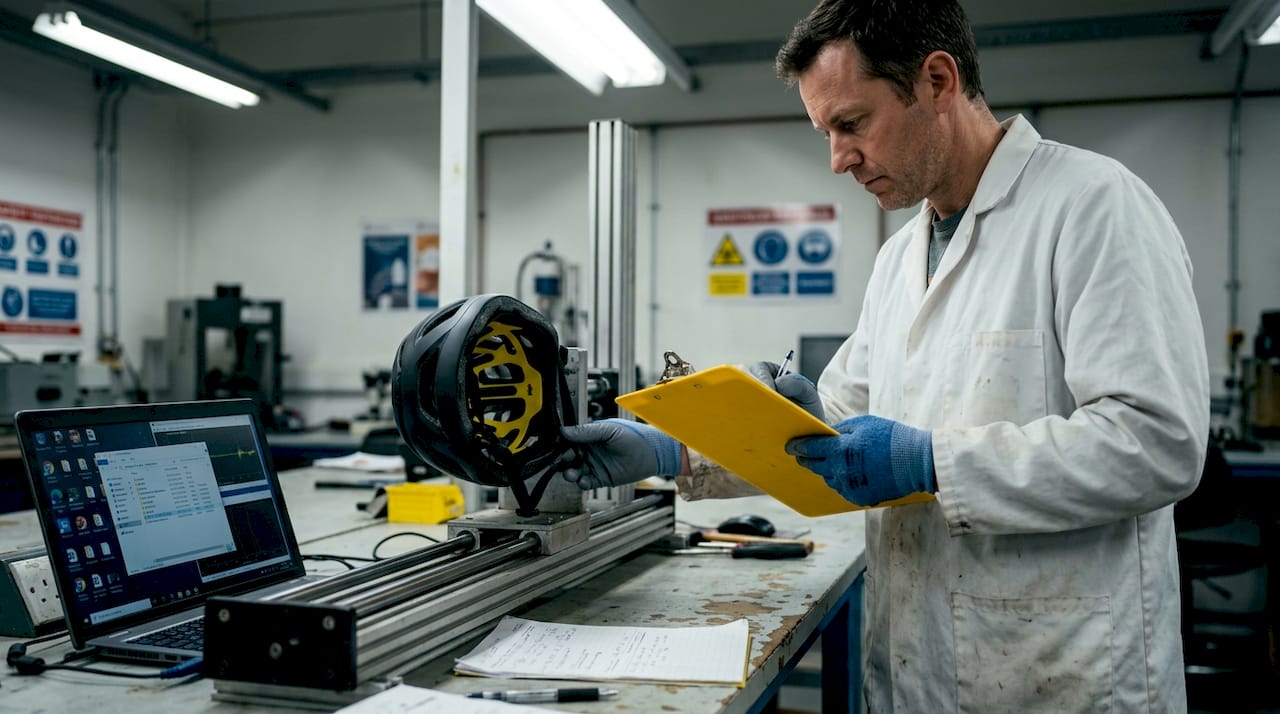
Pro Tip: Don’t stop at the certification sticker. Ask whether a helmet includes rotational protection technology and whether it has earned an independent star rating from Virginia Tech or a comparable lab.
Acknowledging these shortfalls explains the push for new testing protocols and technologies.
Modern helmet standards and the impact of independent ratings
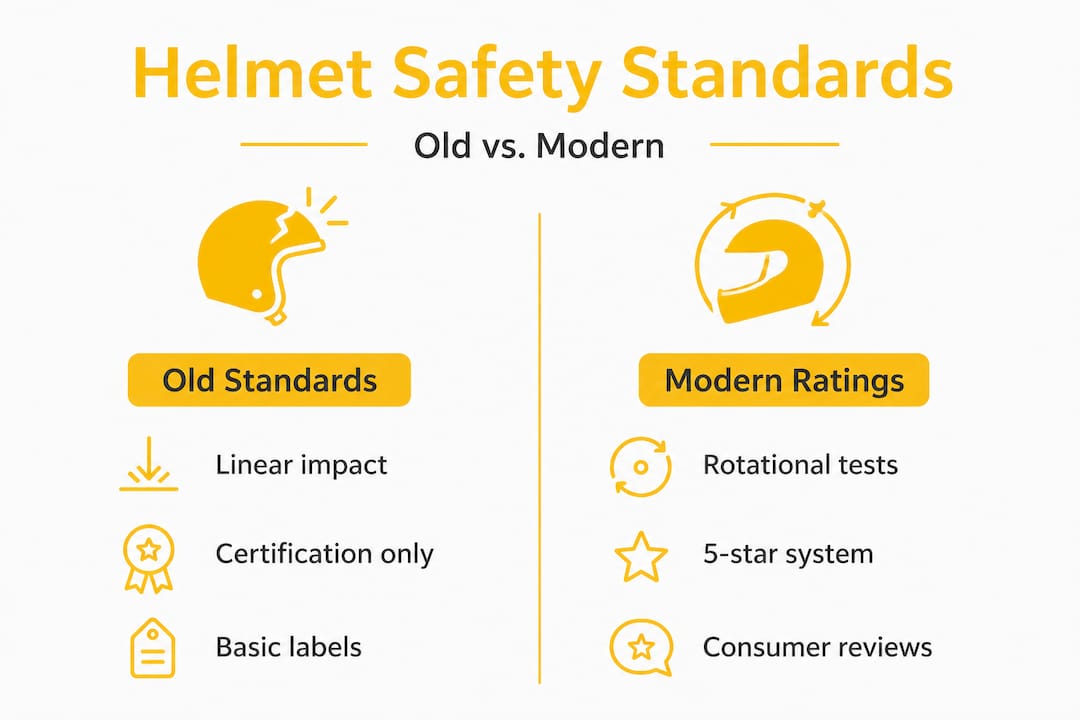
The Virginia Tech STAR (Summation of Tests for the Assessment of Risk) rating system changed the conversation in a concrete way. Instead of a simple pass or fail, STAR assigns a numerical score based on a combination of linear and rotational impact tests. Lower scores indicate better protection. Helmets are then ranked and assigned a star category, giving consumers a real comparison tool rather than a uniform “certified” label.
The threshold for earning a 5-star rating has become progressively harder to meet. In a notable 2025 update, 5-star ratings now go to the top 14% of tested helmets, down from a much more permissive 61% in earlier versions of the rating scale. That shift is significant: it means the bar has risen sharply as helmet technology has improved, and helmets that once earned top marks may no longer qualify.
How STAR ratings compare to basic certification:
| Evaluation type | Tests linear impact | Tests rotational impact | Ranks helmets against each other | Consumer facing |
|---|---|---|---|---|
| CPSC certification | Yes | No | No | Sticker on helmet |
| EN 1078 (Europe) | Yes | No | No | CE marking |
| Virginia Tech STAR | Yes | Yes | Yes | 1 to 5 star public rating |
Technologies like MIPS and WaveCel have responded directly to these new expectations. MIPS reduces rotational injury risk by up to 40% compared to helmets without the technology. WaveCel, a cellular liner structure developed by Trek, absorbs both linear and rotational energy through a collapse-and-flex mechanism. Both systems now appear in mid-range to premium helmets across every major category.
What this means for the market:
- Regulatory standards increasingly reference oblique impact testing, moving closer to what independent labs already measure
- Manufacturers producing helmets for serious cyclists or safety-aware consumers now design to STAR benchmarks, not just minimum legal thresholds
- Budget helmets may still legally comply with CPSC or EN 1078 while offering significantly inferior real-world protection
- The definition of MIPS and its role in safety has moved from a niche spec into mainstream purchasing criteria
- Understanding why MIPS helmets matter is no longer just for professionals
The practical implication is that the certified-vs-not-certified binary is no longer enough. The question is now: certified to what, tested how, and ranked where?
This shift toward realistic testing and new technology sets the stage for future challenges.
Are today’s standards enough? Ongoing limits and future directions
Even the most modern certification frameworks leave meaningful gaps. Understanding those gaps helps you make smarter choices, regardless of where you are in your cycling journey.
The most significant current limitations:
- Multi-impact performance: Most standards test a single significant impact. In a real crash, a helmet might absorb two or three hits in sequence. EPS foam permanently deforms after the first major impact, offering much less protection on the second. Standards don’t require helmets to survive multiple events.
- Fit and retention: A poorly fitted helmet dramatically reduces the protection it can offer, but no standard currently measures or mandates real-world fit performance. Straps that are too loose, a shell that sits too high on the forehead, or dial systems that slip under load all create vulnerabilities that no drop test captures.
- Speed thresholds for e-bikes: A standard cycling helmet certified under CPSC or EN 1078 is tested at impact speeds appropriate for a rider traveling at 12 to 15 miles per hour. E-bikes routinely reach 20 to 28 mph. The NTA 8776 standard addresses this by requiring higher velocity impact tests specifically for e-bike helmets, but compliance is not universal or mandatory in all markets.
- Extreme terrain: Gravel and off-road riders face different crash geometries, speeds, and surface types that standard tests don’t model.
- Head shape diversity: Test headforms used in certification labs represent a narrow range of head shapes. Helmets that fit the test headform well may fit many real riders poorly, reducing real-world protection.
“Standards improve the baseline but don’t cover all scenarios: multi-hit performance, precise fit, and speed-specific needs like e-bikes require separate consideration beyond any single certification label.”
The e-bike gap deserves special attention. E-bike helmet technology has evolved rapidly, but rider awareness often lags. Many commuters or recreational e-bike users ride with a standard road helmet, unaware that their helmet was never designed to protect them at the speeds their bike can reach. The NTA 8776 standard, developed in the Netherlands, is currently the most robust framework for e-bike-specific protection, though it has not yet been adopted globally.
For premium helmet buyers, the good news is that the market is already moving ahead of regulations. Brands investing in MIPS, WaveCel, and multi-impact liner materials are voluntarily exceeding what any current standard requires. Using a quality helmet selection guide can help you navigate these distinctions and match a helmet’s performance to your specific riding conditions.
Pro Tip: If you ride an e-bike at speeds above 20 mph, look specifically for helmets certified to NTA 8776 or those with a documented high-speed impact test result, not just a standard CPSC or EN 1078 mark.
These limitations show why staying informed, and choosing based on up-to-date science, matters for every cyclist.
Why the standard you trust matters more than you think
Here’s a perspective that doesn’t get enough airtime in typical helmet discussions: regulations are inherently reactive. A standard cannot be written until researchers understand the problem, injuries accumulate, and there is enough political and institutional momentum to update the rules. That process takes years. Sometimes decades. The CPSC standard that most U.S. helmets still comply with is over 25 years old.
By contrast, independent testing labs, biomechanics researchers, and premium manufacturers move quickly. Virginia Tech published its first bicycle helmet ratings years before any regulatory body incorporated rotational impact testing into mandatory standards. MIPS technology was commercially available before it appeared in any certification requirement. The market, when pushed by transparent data and informed consumers, moves faster than regulation.
This creates a practical reality: a helmet that meets the minimum legal standard may protect you the way 1999 science understood crash mechanics. A helmet that earns a 5-star Virginia Tech STAR rating, uses advanced helmet safety features like MIPS, and is certified for your specific riding category offers protection built on 2025 science.
The other underrated factor is fit. A 5-star helmet worn loosely or sitting an inch too high on your head provides worse protection than a properly fitted 4-star helmet. No certification system currently guarantees real-world fit. That responsibility stays with the rider. Take sizing seriously, adjust your retention system before every ride, and replace any helmet after a significant impact even if it looks intact.
The cyclists who get the most out of modern helmet science are the ones who treat the certification label as a starting point, not a final answer. They cross-reference independent ratings, understand the technology inside the liner, and choose a helmet matched to the real demands of their riding environment. That habit, more than any single standard or sticker, is what keeps you safest on the road.
Want smarter, safer helmet choices?
Understanding how standards evolve is only half the equation. The other half is finding a helmet that actually reflects where the science stands today.
At THE BEAM, we design head protection around current science, not just minimum compliance. Our flagship VIRGO integral helmet integrates MIPS technology and meets the demands of road, gravel, urban, and e-bike riders who want genuine protection without sacrificing design. Every helmet in our full selection of helmets is built to go beyond the baseline, whether that means rotational impact technology, materials that hold up through multiple impacts, or independent performance ratings. If your current helmet was certified years ago and you’ve never looked at what’s changed since, now is the right moment to explore what modern head protection actually looks like.
Frequently asked questions
What is the single biggest improvement in recent helmet standards?
The addition of rotational impact testing is the most significant advancement. Research confirmed that rotational forces cause the majority of cycling-related concussions and serious brain injuries, and independent labs like Virginia Tech now rank helmets on this criterion.
How much safer are helmets with MIPS or WaveCel?
Helmets using MIPS technology reduce rotational injury risk by up to 40% compared to helmets without it, a meaningful real-world difference especially in angled crashes.
Do current standards apply to e-bike helmets?
Standard road or urban cycling certifications were tested at lower impact speeds and don’t cover e-bike crash scenarios. The NTA 8776 standard specifically tests at the higher velocities relevant to e-bike riding.
Why are some expensive helmets better than certified cheap ones?
Premium helmets incorporate technologies and multi-impact materials that already exceed current certification requirements. Basic certification sets a legal floor, not a performance ceiling, so higher-end models typically offer substantially better real-world protection.


