

TL;DR:
- Rotational force occurs during angled impacts and causes brain shearing injuries that foam helmets cannot prevent. Helmets with MIPS, WaveCel, or SPIN technologies offer documented protection by reducing rotational acceleration. Choosing a helmet with proven mitigation features and correct fit improves safety against such brain injuries.
Rotational force in helmets is defined as the twisting motion transmitted to the skull and brain during angled impacts, and it is the leading biomechanical cause of concussions and diffuse axonal injury in cycling crashes. Unlike a straight-on hit, most real crashes strike the head at an angle. That angle creates rotation. The brain, suspended in fluid inside the skull, cannot keep up with the skull’s sudden twist. The result is shearing and stretching of brain tissue that a standard foam helmet does nothing to prevent. Understanding what is rotational force in helmets is no longer optional for serious cyclists. It is the difference between a helmet that protects your skull and one that protects your brain.
What is rotational force in helmets and why does it injure the brain?
Rotational force occurs when an angled impact causes the skull to rotate rapidly while the brain lags behind due to inertia. The brain is not rigidly attached to the skull. It floats in cerebrospinal fluid, which means any sudden rotation of the skull drags the brain along a fraction of a second too late. That delay creates a twisting, shearing motion inside the head.
The consequences are serious. Shearing and stretching of connective tissues and nerve cells causes far more internal damage than a straight linear impact. Linear force compresses the skull and brain together. Rotational force tears them apart at the cellular level. Concussions, diffuse axonal injury, and subdural hematomas are all linked to this mechanism.
The brain is more vulnerable to rotation than to pure compression. Even a relatively slow angled impact can generate enough rotational acceleration to cause a concussion. Speed alone does not determine injury severity. Angle does.
Pro Tip: If you have ever felt dizzy or disoriented after a low-speed fall, rotational force is the likely cause, even if your helmet showed no visible damage.
Diffuse axonal injury, one of the most severe outcomes of rotational trauma, occurs when nerve fibers throughout the brain are stretched and torn simultaneously. It does not require a high-speed crash. A moderate fall onto a curb at the wrong angle can produce it. This is why rotational shear strain damages cells and blood vessels and raises the risk of long-term neurodegenerative effects, not just short-term symptoms.
What helmet technologies reduce rotational force?
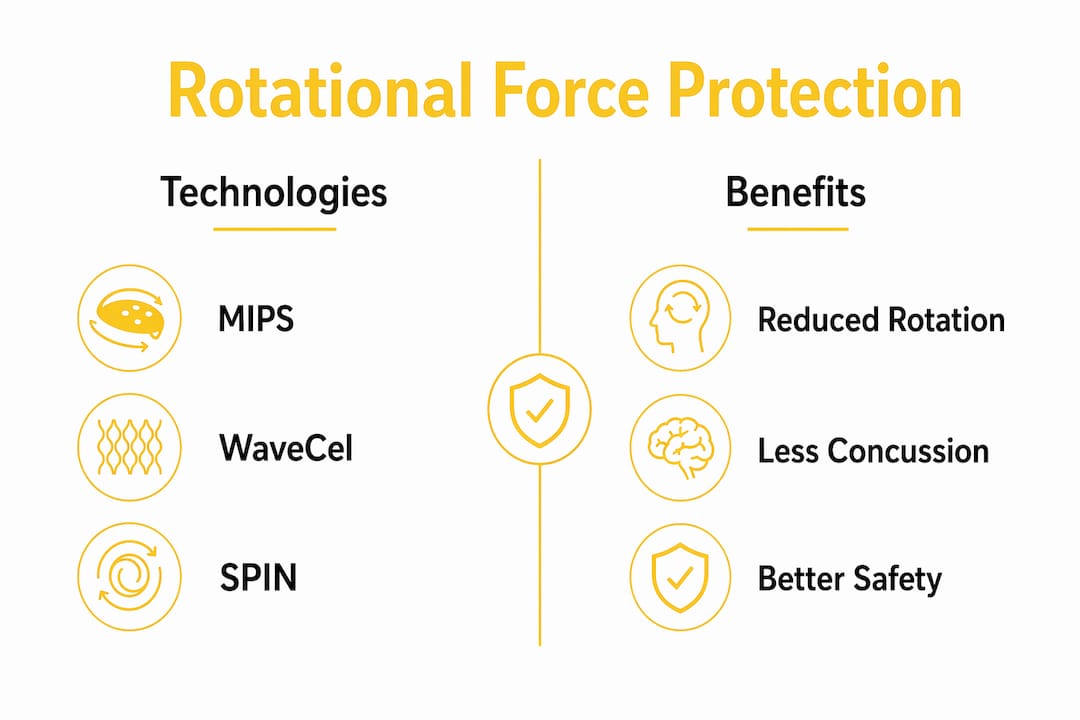
Three major systems currently address rotational force in helmet design: MIPS (Multi-directional Impact Protection System), WaveCel, and SPIN (Shearing Pad INside). Each takes a different mechanical approach to the same problem.
How MIPS works
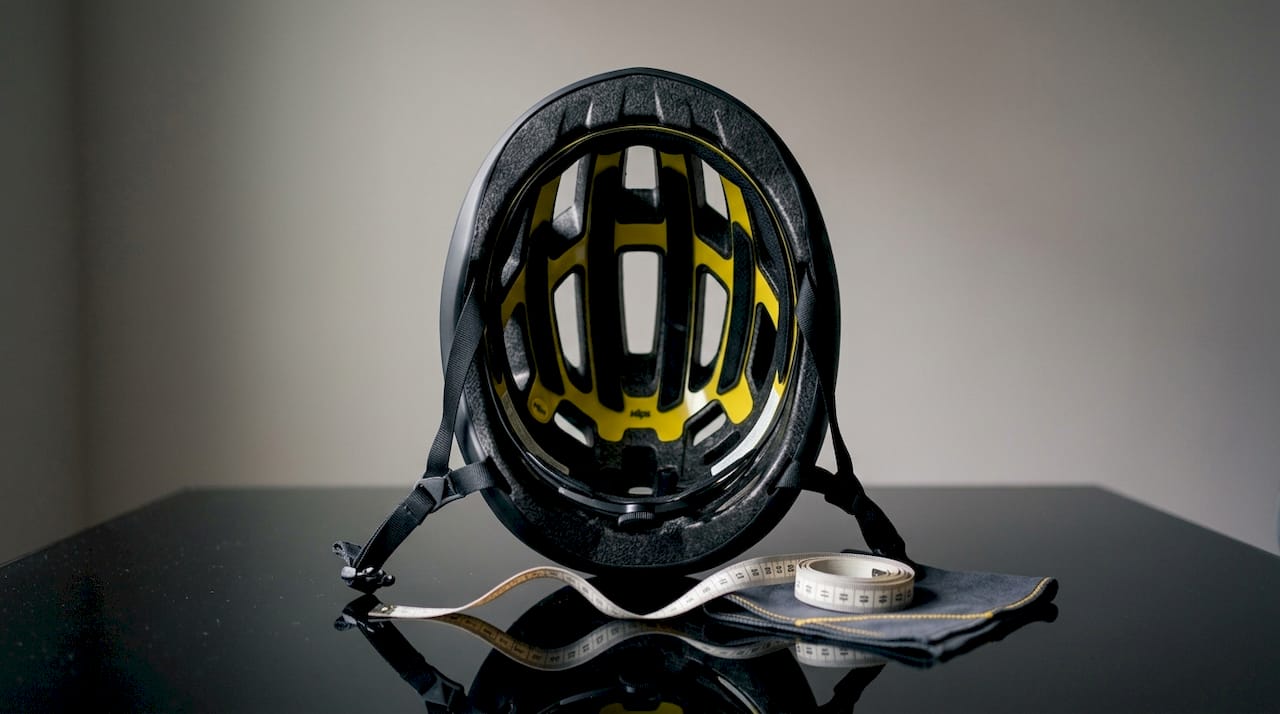
MIPS uses a slip plane between layers that allows the head to move slightly inside the helmet shell during an angled impact. That small relative motion, typically around 10–15 millimeters, absorbs rotational energy before it reaches the brain. The system is passive, meaning it activates automatically on impact without any rider input. MIPS is the most widely adopted rotational mitigation technology in cycling helmets today.
How WaveCel and SPIN work
WaveCel replaces traditional EPS foam with a collapsible cellular material that deforms in multiple directions on impact. It absorbs both linear and rotational energy through material deformation rather than a slip plane. SPIN uses small silicone pads inside the helmet that shear against the head during angled impacts, redistributing rotational forces across a larger surface area.
A peer-reviewed review confirms that MIPS and WaveCel show the strongest evidence for reducing rotational acceleration, while SPIN shows promise but has a smaller body of supporting research. All three outperform traditional foam-only designs in rotational protection.
Key differences between the three systems:
- MIPS: Slip plane between liner and shell; widely tested; effective across low and high velocity impacts
- WaveCel: Cellular foam replacement; absorbs both linear and rotational energy simultaneously
- SPIN: Silicone shearing pads; lower profile addition; less independent testing data available
Pro Tip: Look for helmets that list independent lab test results for rotational acceleration reduction, not just marketing language. A slip plane or cellular liner should come with measurable performance data.
Thebeamofficial’s flagship VIRGO integral helmet incorporates MIPS technology, placing it in the category of helmets with documented rotational force mitigation. For cyclists who ride road, gravel, or urban routes, that distinction matters every time the wheel hits an unexpected obstacle.
Helmet testing protocols for rotational force are still evolving. Current lab tests do not fully replicate the range of impact angles, speeds, and head geometries found in real crashes. That means two helmets with the same certification can perform very differently in an actual fall. Certification is a floor, not a ceiling.
Why are traditional helmets not enough?
Traditional cycling helmets are designed primarily to reduce linear acceleration. They do this well. A dense EPS foam liner compresses on impact, slowing the skull’s deceleration and reducing the force transmitted to the brain in a straight-on hit. That design has saved lives and reduced skull fractures for decades.
The problem is that most cycling crashes are not straight-on hits. Traditional foam-only helmets provide limited protection against rotational acceleration, leaving the brain exposed to shearing forces from angled impacts. The foam compresses, but it does not allow the head to rotate independently of the shell. That rigidity transfers rotational energy directly to the brain.
Common gaps in traditional helmet protection:
- No mechanism to absorb or redirect rotational energy
- Rigid connection between outer shell and inner liner transmits twist to the skull
- Certified to linear impact standards that do not measure rotational acceleration
- Effective for skull fracture prevention but not for concussion or diffuse axonal injury prevention
Experts caution against assuming that a certified helmet addresses rotational force. Certification under most current standards confirms linear impact performance only. The 2026 cycling helmet standards are beginning to close this gap, but the majority of helmets on the market today were designed and certified under older linear-only criteria.
Real-world crash variability compounds the problem. Impact angle, surface texture, rider speed, and head geometry all affect how much rotational force reaches the brain. A helmet that performs well in a lab test at one angle may perform poorly at a slightly different angle in an actual crash. This is not a flaw in any single product. It reflects the genuine complexity of how helmets protect against a wide range of impact scenarios.
How should cyclists choose helmets for rotational protection?
Choosing a helmet with genuine rotational force protection requires looking past the marketing and checking for specific design features and testing evidence.
-
Confirm the mitigation technology. Look for MIPS, WaveCel, or SPIN labeling. These are not marketing terms. They refer to specific mechanical systems with documented testing behind them. A helmet without one of these systems relies on foam alone.
-
Check for independent test data. Manufacturer claims are a starting point, not a conclusion. Look for helmets that reference independent lab results or third-party safety ratings that include rotational acceleration measurements.
-
Prioritize fit. Slip plane systems like MIPS depend on correct fit to function properly. A loose helmet shifts before impact, reducing the slip plane’s effectiveness. A helmet that fits snugly and sits level on the head performs better in both linear and rotational scenarios. Slip plane effectiveness is influenced by helmet shape, surface friction, and how the liner interacts with the scalp and hair.
-
Match the helmet to your riding style. Road cyclists, gravel riders, and urban commuters face different crash profiles. An integral helmet like the Thebeamofficial VIRGO provides full-face coverage, which changes the rotational force dynamics compared to an open-face road helmet. Choose a design built for your actual riding conditions.
-
Upgrade on a schedule. Helmet foam degrades over time even without visible damage. Most manufacturers recommend replacement every three to five years. If you have had any impact, replace the helmet immediately regardless of visible condition. The reasons to upgrade go beyond aesthetics. Older helmets predate current rotational mitigation standards entirely.
-
Watch for evolving certifications. Helmet safety standards are shifting to include rotational force metrics. Helmets certified under newer protocols offer a higher baseline of documented brain protection than those certified only under older linear standards.
Key Takeaways
Rotational force is the primary biomechanical cause of concussions in cycling, and helmets without a dedicated mitigation system do not adequately protect the brain from angled impacts.
| Point | Details |
|---|---|
| Rotational force defined | Angled impacts twist the skull while the brain lags, causing shearing of brain tissue. |
| Brain vulnerability | The brain is more susceptible to rotational motion than to linear compression, even at low speeds. |
| Leading mitigation systems | MIPS and WaveCel show the strongest evidence for reducing rotational acceleration in helmets. |
| Traditional helmet limits | Foam-only helmets reduce linear force but do not address rotational acceleration from angled impacts. |
| Buying criteria | Confirm MIPS, WaveCel, or SPIN technology, check independent test data, and prioritize correct fit. |
Why rotational force is the most underrated issue in helmet safety
I have spent years watching the cycling safety conversation focus almost entirely on visible damage: cracked shells, crushed foam, dramatic crash photos. Rotational force rarely gets the same attention, and that gap frustrates me. The injuries it causes are often invisible on the outside and devastating on the inside.
The industry is shifting. Rotational force management is becoming a standard expectation rather than a premium feature. That shift is long overdue. But the marketing has moved faster than the education. Riders see “MIPS” on a helmet tag and assume full protection. The reality is more nuanced. No system eliminates rotational risk entirely. Fit, impact angle, and speed all interact in ways that no single technology fully controls.
What I find genuinely encouraging is the direction of travel. Helmet engineers are now designing around brain strain reduction rather than skull fracture prevention. That is a fundamental change in how the problem is framed. Skull fractures are rare in cycling. Concussions are not. Designing for the actual injury pattern is the right move, and it is happening now.
My honest advice: do not buy a helmet based on price or aesthetics alone. Spend the extra money on a helmet with documented rotational mitigation. Your brain does not get a second chance. The technology exists. Use it.
— Sophie
Helmets built with rotational protection, from Thebeamofficial
Thebeamofficial designs helmets with real-world brain protection as the starting point, not an afterthought. The VIRGO integral helmet with MIPS technology is the brand’s flagship, built for cyclists who want documented rotational force mitigation alongside a design that works for road, gravel, and urban riding.
The full range of adult cycling helmets at Thebeamofficial covers multiple disciplines and riding styles, all with a focus on protection that goes beyond basic certification. For younger riders, the kids’ helmet collection applies the same safety-first approach to smaller heads with the same vulnerability to rotational injury. Browse the complete selection and find the helmet that matches your riding conditions and safety priorities.
FAQ
What is rotational force in a helmet?
Rotational force in a helmet is the twisting energy transmitted to the skull and brain during an angled impact. It causes the brain to move differently than the skull, producing shearing forces that lead to concussions and other brain injuries.
Does every cycling helmet protect against rotational force?
No. Traditional foam helmets are designed for linear impacts and do not reduce rotational acceleration. Only helmets with systems like MIPS, WaveCel, or SPIN provide documented rotational force mitigation.
How does MIPS reduce rotational force?
MIPS uses a slip plane between the helmet liner and shell that allows the head to rotate slightly inside the helmet during an angled impact. That small movement absorbs rotational energy before it reaches the brain.
Can a slow crash still cause rotational brain injury?
Yes. The brain is more vulnerable to rotational motion than to linear compression, meaning even a low-speed angled fall can generate enough shearing force to cause a concussion.
How often should I replace my helmet for rotational safety?
Replace your helmet every three to five years under normal use, or immediately after any impact. Older helmets predate current rotational mitigation technology and may not meet the brain protection standards now available.


