

Full-face (integral) bicycle helmets cut the odds of facial fractures and brain injury far more than classic open-face helmets, according to a 2022 meta-analysis of over 37,000 subjects. That protection matters most at higher speeds, on technical descents, and on fast e-bikes. Classic helmets still make sense for slow city rides and long, sweaty climbs where airflow and comfort keep you riding in the first place. Some brands build toward that first scenario with integral helmets engineered around the same forward-impact physics the research points to.
TL;DR:
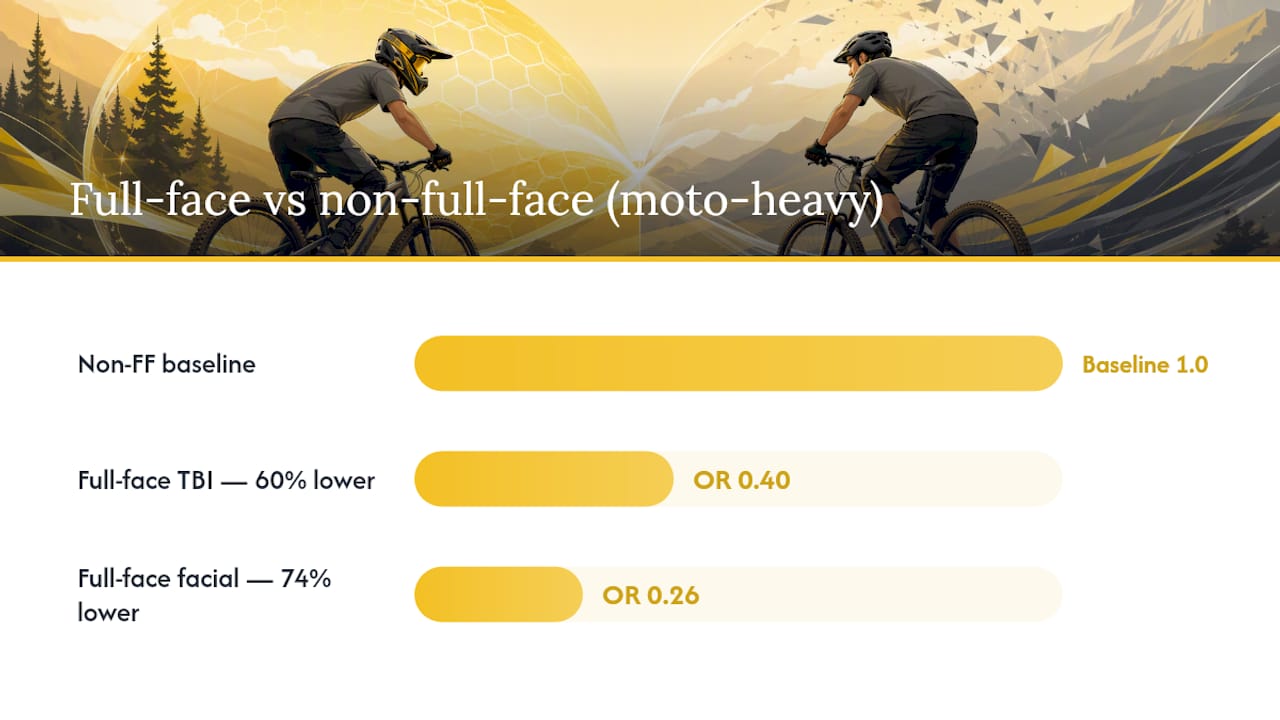
- Full-face helmets significantly reduce facial fractures by 74% and brain injury odds by 60% compared to traditional helmets, based on meta-analysis data, mainly from motorcycle crash studies.
- They are especially recommended for impacts at speeds over 20 mph or during technical descents, while traditional helmets are suitable for slower, urban riding below 15 mph.
- Choosing a helmet must prioritize proper fit and certification matched to your riding speed and terrain to ensure effectiveness and comfort.
- Full-face helmets generally weigh between 150 and 400 grams more and can reduce ventilation, hearing, and fogging performance, impacting daily comfort.
- Helmets should be replaced every three to five years or after any impact, with regular inspection for cracks, foam compression, straps, and buckles to maintain safety.
Table of Contents
- Casque Intégral vs Classique: What the Safety Data Actually Shows
- Which Helmet Fits Your Riding Style?
- How Do You Choose and Fit a Helmet Correctly?
- What Are the Trade-offs and Limits of Full-Face Protection?
- How Thebeamofficial Approaches Full-Face Protection
- Keeping Either Helmet Safe Over Time
- The One-Line Rule for Choosing Between Them
- Get Full-Face Protection Without Giving Up Daily Comfort
- Sources
- FAQ
Casque Intégral vs Classique: What the Safety Data Actually Shows
The gap between these two helmet styles comes down to one body part: your jaw and lower face. A classic helmet stops at your ears and eyebrows. A full-face helmet wraps a rigid chin bar around your mouth and jaw, and that piece of plastic and foam is doing far more work than it looks like.
The 2022 systematic review and meta-analysis found full-face helmets reduced the odds of traumatic brain injury by 60% (odds ratio of 0.40) and facial fractures by 74% (odds ratio of 0.26) compared to non-full-face helmets. A separate review of injury outcomes found a similar pattern, with full-face helmets tied to a substantial reduction in combined head and neck injuries against partial or open helmets. Neither study set is bicycle-only. Both draw heavily on motorcycle crash data, so treat the exact numbers as directional evidence for cycling rather than a bicycle-specific guarantee. The underlying mechanism, a chin bar spreading impact force away from bone and teeth, applies to any forward crash regardless of what’s between your legs.
A 2023 biofidelic THOR dummy study backs this up with lab evidence built for bike helmets specifically. It found full-face designs cut facial impact forces and predicted brain strain during lower-face impacts. That’s the upside. The trade-off shows up too, and it’s covered in detail further down.
What you give up for that protection is real and worth naming honestly:
- Ventilation: more shell coverage means less airflow across your face and scalp.
- Weight: chin bars and extra shell add mass, usually 150 to 400 grams over a classic lid.
- Hearing: wraparound designs can muffle traffic noise and conversation.
- Fogging: warm breath trapped near a visor or glasses is a real annoyance in cold weather.
- Eyewear fit: some full-face shapes crowd sunglasses arms against the padding.
None of that protection matters if the helmet stays in the closet. The single biggest predictor of whether a helmet works is whether you actually wear it, which is why comfort trade-offs deserve as much attention as impact data when you’re choosing.
Which Helmet Fits Your Riding Style?
Riding pattern should drive the decision more than brand loyalty or looks. Here’s how it breaks down by the way people actually ride.
- Casual city commuter, under 15 mph. A classic helmet with good ventilation is genuinely fine here. Crash speeds are low, traffic is slow, and you’ll wear a lighter helmet more consistently on a daily grind.
- Fast e-bike commuter, 20 to 28 mph. This is where a lot of riders under-protect themselves. At Class 3 e-bike speeds, a purpose-built higher-energy helmet matters more than a standard road lid rated for lower-speed impacts.
- Gravel with technical descents. A full-face or convertible helmet earns its weight once you’re regularly hitting loose corners and drop-offs at speed.
- Road or gravel racers. Most stick with classic helmets for weight and ventilation, since crash dynamics on open road tend toward sliding rather than direct facial impact.
- Downhill, bike park, and enduro riders. Full-face is close to mandatory here. Terrain and speed combine in a way that makes chin and facial impacts common.
Convertible helmets, with a removable chin bar, are a reasonable middle ground for mixed days that include both climbing and descending. Just confirm the chin-bar-attached configuration carries its own certification. A removable bar is often less rigid than a one-piece full-face shell in the worst impacts, so don’t assume the two configurations perform identically.
How Do You Choose and Fit a Helmet Correctly?
A helmet that doesn’t fit is a helmet that isn’t protecting you, no matter what the label says. Run through this before you buy, whether you’re standing in a shop or ordering online.
Fit checklist:
- Measure head circumference and match it against the brand’s size chart, not a generic “medium.”
- Use the dial-fit system to snug the rear cradle until the helmet doesn’t shift when you shake your head.
- Check that cheek pads (on full-face models) touch your face without pinching.
- Position the front strap edge just below your ear, forming a V shape.
- Do a stability test: grab the helmet and try to rock it forward and back. It shouldn’t move independent of your scalp.
- Sit on the bike in your normal position and check your sightline isn’t blocked by the brim or chin bar.
Modern integral helmets have closed much of the old ventilation gap through internal air channels, multiple intake and exhaust vents, and removable, washable liners. If a full-face helmet feels stuffy on the first ride, check that the visor is cracked open and the liner is seated correctly before writing off the design entirely. Our guide to helmet ventilation walks through what to expect from a well-vented full-face shell.
Pro Tip: Try on at least two adjacent sizes, even if the chart says you only need one. A helmet that’s a half-size too big will always feel “fine” for the first five minutes and start rocking by mile ten.
Certification tells you what speed and impact type a helmet was built for. EN 1078 is the baseline European bicycle helmet standard. NTA 8776 is aimed at e-bikes and speed pedelecs, testing for the higher impact energy that comes with faster average speeds. ASTM F1952 covers downhill-specific impacts, relevant if you’re spending real time in a bike park. Buying a helmet rated for one category and riding in another, such as wearing a basic EN 1078 lid on a 28 mph Class 3 e-bike, is a mismatch worth avoiding. For a deeper walkthrough of the fitting steps, our step-by-step helmet fitting guide covers the process in more detail.
What Are the Trade-offs and Limits of Full-Face Protection?
The evidence for full-face helmets is strong but not unlimited, and it’s worth knowing where the gaps are before you treat any helmet as bulletproof.
- The same biofidelic THOR dummy study that found reduced facial forces also measured a slight increase in upper-neck tensile forces, up to roughly 21.7% in some bike helmet models, during certain impact angles.
- Researchers flagged this as a trade-off worth more study, not a reason to avoid full-face helmets. The facial and brain-strain reduction was the larger effect.
- Many standard helmet lab tests, including well-known third-party testing programs, don’t simulate chin-bar or facial impacts at all, which means facial protection differences between models often go unmeasured in public test scores.
- Correct fit and choosing the certification that matches your riding speed and terrain does more to close these gaps than picking a specific helmet model.
Our breakdown of how cyclist head protection standards are evolving covers where facial-impact testing is headed next.
How Thebeamofficial Approaches Full-Face Protection
Some brands specialize in high-end cycling safety gear, with integral helmets that focus on full-face protection and impact technologies. It pairs full-face chin coverage with MIPS rotational-impact technology, aimed at riders who want facial protection without giving up the ability to wear the helmet every day.
Thebeamofficial’s own internal data points to a 39% reduction in facial trauma with integral helmet designs like VIRGO, a brand-reported figure worth noting alongside the independent studies above rather than in place of them. The helmet’s design uses a removable flip-down visor and targeted vent channels, built to address the exact ventilation and weight complaints that push riders back toward classic helmets. For commuters and e-bike riders weighing chin protection against daily comfort, some helmet combinations aim to solve this balance. Learn more about what separates integral designs from classic shells in our guide to integral helmets.
Keeping Either Helmet Safe Over Time
A helmet’s protection degrades whether you notice it or not, and both styles need the same basic inspection habits. Check the shell for cracks, dents, or stress lines after any crash, even a minor tip-over at a stoplight. Foam liners compress permanently on impact, so a helmet that’s taken a real hit needs replacing even if the outer shell looks fine.
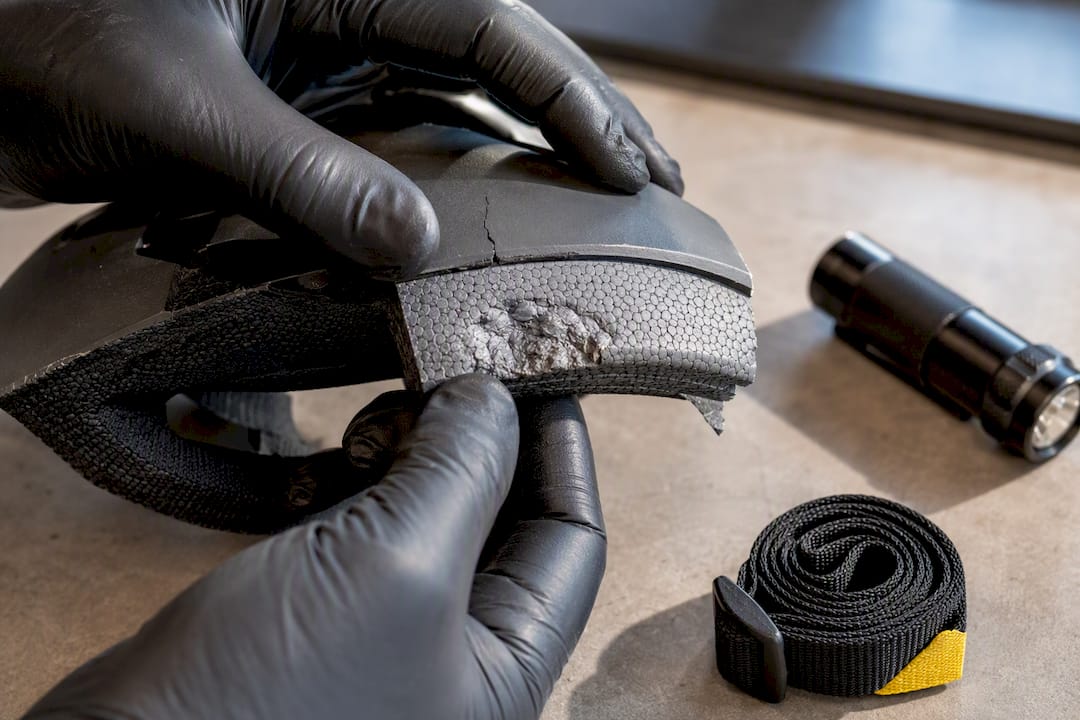
Straps and buckles wear out from sun exposure and sweat faster than most riders expect. Fraying webbing or a buckle that no longer clicks solidly is a replacement signal, not a “tighten it more” fix. For full-face helmets, check the chin bar’s mounting points on convertible designs. That’s the connection point most likely to loosen with repeated on and off use.
Most manufacturers recommend replacing any helmet every three to five years regardless of visible damage, since foam and shell materials degrade with UV exposure and temperature swings even in storage. If you ride in heavy sun or store your helmet in a hot car, lean toward the shorter end of that range.
Removable liners should get washed regularly, both for hygiene and because sweat and body oils break down foam adhesive over time. Never paint a helmet or apply stickers with strong solvent adhesives. Some chemicals can degrade the EPS foam underneath without any visible sign on the shell. A helmet that looks perfect on the outside can be structurally compromised if it’s been chemically altered or previously cracked.
The One-Line Rule for Choosing Between Them
If your ride regularly puts you above 20 mph or onto technical terrain, wear full-face. If you’re mostly under 15 mph on paved streets, a well-vented classic helmet is a legitimate choice.
Take a fast e-bike commuter cruising at 25 mph through mixed traffic: that’s squarely full-face territory, both for the speed and for the added mass of an e-bike in a crash. Now take a gravel rider who spends most of the ride climbing gently but hits one steep, rocky descent near the end: that descent is what should decide the helmet, not the average pace of the ride.
— Sophie
Get Full-Face Protection Without Giving Up Daily Comfort
Choosing between coverage and comfort doesn’t have to mean picking one. Some integral helmets pair a MIPS liner with a removable flip-down visor and channeled ventilation to provide chin-bar protection while enhancing comfort compared to older full-face designs.

A few things worth knowing before you buy:
- Rotational-impact layer built into the liner system
- Removable flip-down visor for changing light and weather conditions
- Multi-channel venting designed to reduce heat buildup on climbs and commutes
- Adjustable fit dial paired with cheek pads sized for daily wear, not just race day
Verify your size against the fit chart and confirm the certification matches your riding speed before checkout, whether that’s daily e-bike commuting or weekend gravel descents. Explore the VIRGO and Thebeamofficial’s visibility accessories, including the FRAME FLASH bike reflector, to round out your safety setup, or check upcoming rides and product showcases at the Thebeamofficial ultracycling event page.
Sources
- Systematic review/meta-analysis on helmet types and facial/brain injury outcomes
- Review comparing helmet types and injury outcomes
- How to pick a safer helmet, according to science
FAQ
Is a Full-Face Helmet Always Safer Than a Classic One?
For forward and lower-face impacts, yes: a 2022 meta-analysis found full-face helmets reduced facial fracture odds by 74%. For low-speed urban riding, the practical safety gap narrows and comfort becomes the deciding factor.
Do Full-Face Bike Helmets Increase Neck Injury Risk?
A 2023 THOR dummy study found some full-face bike helmets showed a modest increase in upper-neck tensile force alongside a larger reduction in facial impact force and brain strain. Researchers flagged it as a trade-off needing more study, not a reason to avoid full-face designs.
What Certification Should I Look for on an E-Bike Helmet?
Look for NTA 8776 on speed pedelecs and faster e-bikes, since it tests for higher impact energy than the standard EN 1078 bicycle rating. Downhill and bike park riders should check for ASTM F1952 instead.
Can I Use a Classic Helmet on My E-Bike?
Only if your e-bike stays in lower-speed Class 1 territory. Once you’re regularly hitting 20 mph or more, a helmet rated for higher-energy impacts is the safer call.
How Often Should I Replace My Bike Helmet?
Most manufacturers recommend every three to five years even without a crash, since foam and shell materials degrade with age and UV exposure. Replace it immediately after any impact, regardless of how new it is.


