

Urban cycling feels progressive, healthy, and efficient. But the numbers tell a more complicated story. Near misses peak during rush hours and on roads without dedicated infrastructure, meaning the exact moments most commuters are on their bikes are also the most dangerous. Whether you ride through Paris, New York, or Berlin, the risks are real and specific. This article breaks down the data behind urban cycling fatalities, explains what infrastructure actually does for your safety, reviews the gear innovations worth your money, and gives you practical strategies to make every commute safer.
Table of Contents
- Understanding the urban cycling safety landscape
- How infrastructure shapes cycling safety
- Innovative gear for safer urban commuting
- Everyday strategies to stay safe on your commute
- Rethinking cycling safety: Beyond conventional wisdom
- Explore advanced cycling gear for safer commutes
- Frequently asked questions
Key Takeaways
| Point | Details |
|---|---|
| Helmet use matters | Most urban cycling fatalities occur among riders not wearing helmets, so daily use is essential for safety. |
| Infrastructure saves lives | Protected lanes and segregated cycle paths sharply reduce accidents and boost rider confidence. |
| Gear protects commuters | Innovative lights, reflectors, and smart devices help make urban cyclists more visible and warn of traffic threats. |
| Timing and route selection | Avoiding peak rush hour and choosing routes with better infrastructure reduces risk and stress. |
Understanding the urban cycling safety landscape
Urban cycling deaths are not random. They follow patterns tied to time of day, road design, and gear choices. Understanding those patterns is the first step toward changing them.
In the United States, roughly 1,000 cyclists are killed every year. About 75% of those deaths happen in urban areas, 37% occur at intersections, and a striking 85% involve cyclists who were not wearing helmets. These are not fringe cases. They reflect the daily reality of riding in cities without adequate protection or infrastructure.
The European picture looks different on the surface. EU annual cycling deaths range between 1,900 and 2,100, compared to roughly 1,260 in the US in 2020. But raw numbers are misleading. Europeans cycle far more kilometers per year than Americans, so the per-kilometer fatality rate in some US cities is actually higher. The EU road safety report confirms this nuance, showing that exposure matters as much as absolute fatality counts.
Here is a quick comparison of key safety metrics:
| Metric | Vereinigte Staaten | European Union |
|---|---|---|
| Annual cycling deaths | ~1,260 | ~1,900 to 2,100 |
| Urban share of deaths | ~75% | ~60% |
| Helmet use among fatalities | ~15% wore helmets | Varies by country |
| Primary risk location | Intersections (37%) | Mixed traffic roads |
The top safety concerns for urban commuters are consistent across both regions:
- Unprotected intersections where cars and bikes share turning lanes
- Lack of segregated infrastructure forcing cyclists into fast-moving traffic
- Low helmet adoption, especially among casual commuters
- Poor visibility during early morning and evening rides
For a broader look at urban rider safety concepts, the principles are consistent: exposure, visibility, and protection are the three levers that matter most. Bookmark the urban safety checklist as a practical reference for your own rides.
How infrastructure shapes cycling safety
If you want to understand why some cities are dramatically safer for cyclists than others, look at the roads, not the culture. Infrastructure is the single most powerful variable in urban cycling safety.
Protected bike lanes do something that painted lines cannot: they physically separate cyclists from motor vehicles. The results are measurable. Protected lanes increase commuting by 1.8 times, and in New York City, bikeshare trips rose 18% after protected bike lanes were added along key corridors. That is not just a convenience statistic. More cyclists on protected routes means fewer cyclists in mixed traffic, which reduces overall risk for everyone.
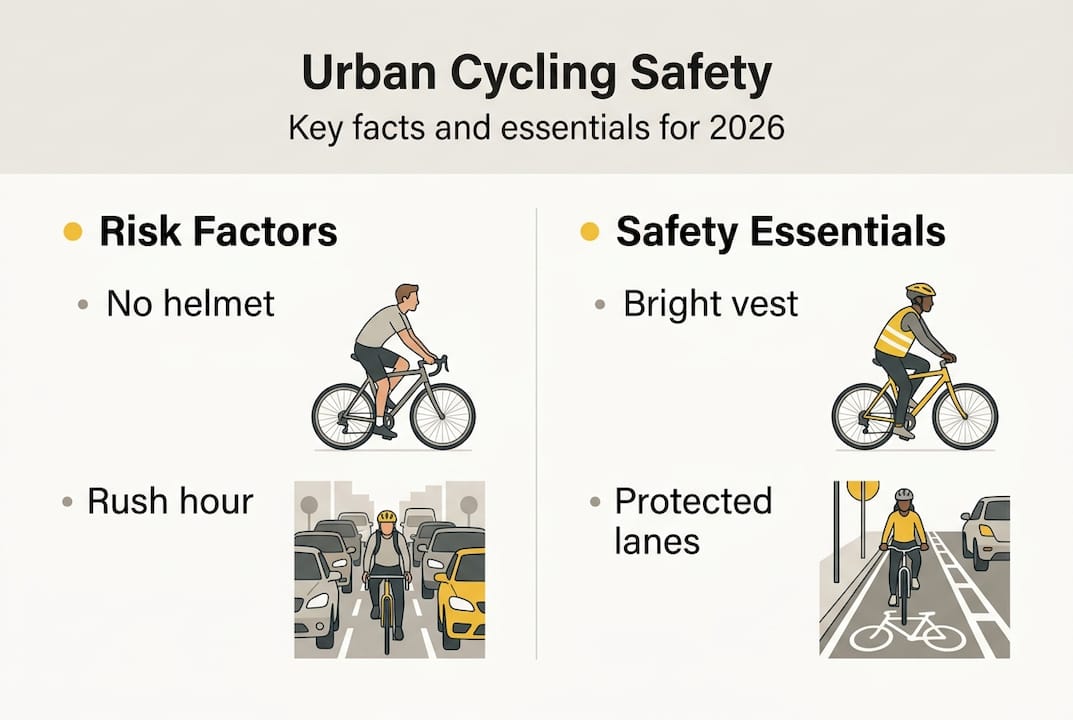
Here is how standard lanes compare to protected infrastructure:
| Feature | Standard bike lane | Protected bike lane |
|---|---|---|
| Physical separation from traffic | No | Yes |
| Conflict points at intersections | High | Reduced |
| Ridership impact | Minimal | Up to 1.8x increase |
| Injury rate | Higher | Significantly lower |
| Commuter confidence | Low | High |
The gap between what exists and what is needed is enormous. EU cities require approximately 97,000 additional kilometers of segregated cycling infrastructure to reach safe network coverage. That is not a small renovation project. It is a generational investment.
City-level examples make this concrete. NYC has invested heavily in protected lanes along major avenues, with measurable ridership gains following each expansion. London has pushed for Cycleways connecting outer boroughs to the center. Atlanta, by contrast, still struggles with fragmented infrastructure, leaving many commuters to navigate high-speed roads with minimal protection.
The lesson is clear: when cities build it, cyclists use it, and injuries drop. Until your city catches up, knowing the daily safety essentials and cycling security tips becomes even more critical.
Innovative gear for safer urban commuting
Infrastructure is the foundation, but your personal gear is your immediate defense. The good news is that cycling safety technology has advanced significantly in the past few years.
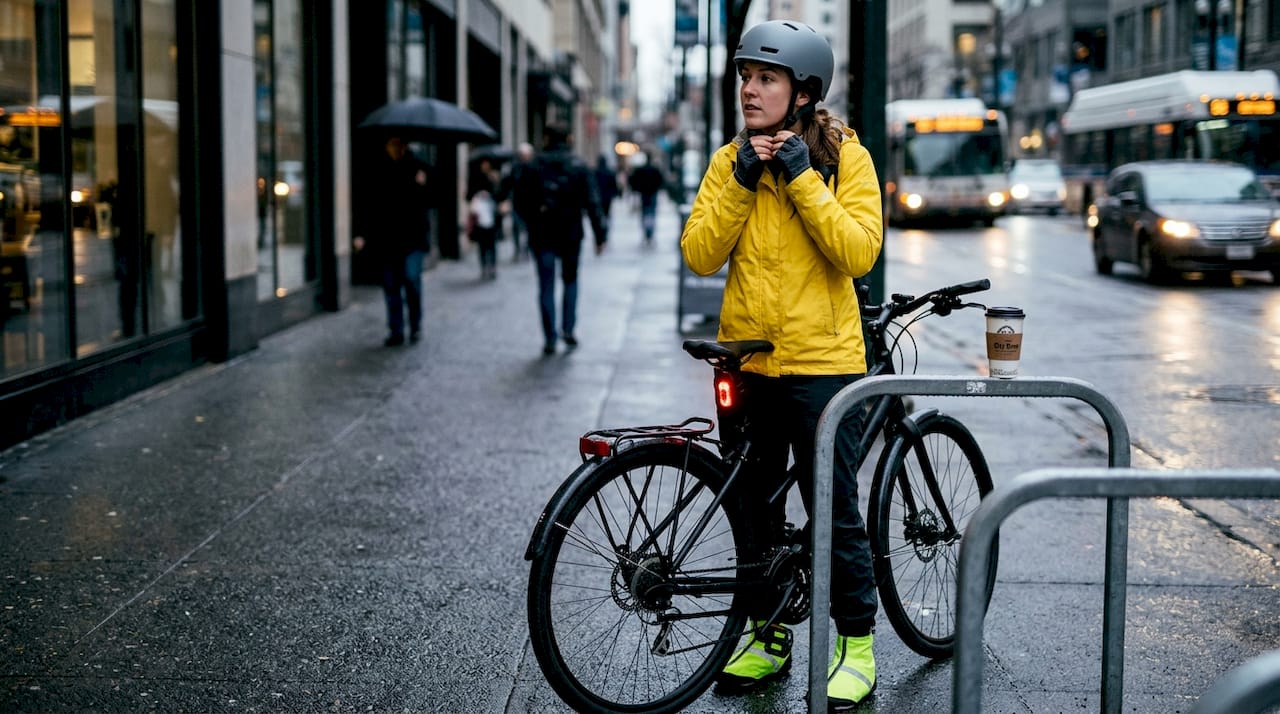
The standout innovation in 2026 is radar-assisted rear detection. The Garmin Varia RearVue 820 detects vehicles up to 175 meters behind you, remains visible from 2 kilometers away, activates a brake light when you slow down, and runs for up to 24 hours on a single charge. That is not a gadget. That is a meaningful safety layer for any urban commuter.
Beyond radar, here is a practical numbered guide for building your gear setup:
- Start with your helmet. A certified helmet with MIPS technology reduces rotational impact forces. No other piece of gear matters more.
- Add a radar tail light. Knowing a car is approaching 175 meters back gives you time to react before the driver even sees you.
- Layer with high-visibility reflectors. Passive reflectors work even when your battery dies. Place them on your frame, wheels, and bag.
- Use front and rear lights. Even in daylight, flashing lights increase your visibility to drivers significantly.
- Protect your eyes. Windproof cycling sunglasses reduce eye fatigue and improve your ability to spot hazards quickly.
- Wear reflective clothing or a vest. Especially during low-light commutes in fall and winter.
The cyclist gear checklist covers each of these categories in detail, with recommendations for different budgets and riding conditions.
Pro Tip: Layer your safety gear intentionally. A radar tail light alerts you to approaching vehicles, a high-visibility reflector makes you passively visible, and a MIPS helmet protects you if everything else fails. These three layers work together, not independently.
Everyday strategies to stay safe on your commute
Gear and infrastructure set the stage. Your daily habits determine how safely you actually ride.
The data is clear on timing. Near misses in London spike during rush hours, particularly on roads without dedicated cycling infrastructure. If you can shift your commute by even 30 minutes in either direction, you reduce your exposure to the most dangerous traffic conditions significantly.
Here is a daily safety routine worth building:
- Check your lights before every ride. Dead batteries are a leading cause of preventable visibility failures.
- Plan your route around infrastructure. A longer route on a protected lane is almost always safer than a shorter route on a busy road.
- Signal every turn. Predictability is one of the most underrated safety tools a cyclist has.
- Approach intersections slowly. Most urban cycling fatalities happen at intersections. Treat every one as a potential conflict point.
- Stay out of blind spots. Especially near trucks and buses. If you cannot see the driver’s mirror, they cannot see you.
- Wear bright or reflective clothing. Visibility is not just about lights. Your clothing matters too.
Pro Tip: Use a local cycling app or map layer that shows protected infrastructure coverage in your city. Routing yourself through protected lanes, even if it adds a few minutes, dramatically reduces your risk exposure on every ride. Apps like Komoot and Strava now include infrastructure filters in several European and US cities.
For a full breakdown of what to carry and check, the commuter safety essentials guide is a solid starting point.
Rethinking cycling safety: Beyond conventional wisdom
Here is something most cycling safety guides will not tell you: culture is overrated as a safety factor. The conversation around European cycling safety often defaults to cultural explanations. Europeans are more respectful of cyclists. Drivers are better trained. Cycling is part of the identity. These things may be true, but they are not the primary driver of safety outcomes.
The real safety gap between regions comes down to infrastructure investment, not cultural attitudes. Cities that build protected lanes see fewer deaths. Cities that do not, regardless of how “bike-friendly” their reputation is, see more.
What most guides also miss is the compounding effect of gear layering. A single piece of safety equipment reduces one type of risk. But a radar tail light combined with a MIPS helmet and high-visibility reflectors creates overlapping protection that addresses multiple failure points simultaneously. That is a different kind of safety thinking.
Our perspective at THE BEAM is this: stop waiting for your city to catch up. Advocate for better infrastructure, absolutely. But in the meantime, improving your cycling security through evidence-based gear choices and route planning is the most actionable thing you can do right now.
Explore advanced cycling gear for safer commutes
If this article has made one thing clear, it is that layered protection is the smartest approach to urban cycling safety. Gear alone cannot replace infrastructure, but it can meaningfully close the gap while cities catch up.

At THE BEAM, we design safety equipment built specifically for urban commuters who refuse to compromise on protection or style. Our minimalist bike reflectors are engineered for maximum visibility without cluttering your setup. And if you want to push your riding further, explore our ultracycling events for community rides focused on safety and performance. Your next commute can be safer. Start with the right gear.
Frequently asked questions
What are the most common risks faced by urban cyclists?
Rush hour riding on roads without dedicated infrastructure generates the highest near-miss rates, while intersections account for 37% of urban cycling fatalities in the US.
Does wearing a helmet significantly reduce injury risk for urban commuters?
Yes. Helmets cut head injury risk by approximately 60%, and 85% of cyclists killed in US crashes were not wearing one at the time.
How do protected bike lanes impact cyclist safety and ride numbers?
Protected lanes increase commuting by up to 1.8 times and have driven 18% bikeshare trip increases in cities like New York, while reducing conflict points with motor vehicles.
What new cycling safety gear should urban commuters consider?
The Garmin Varia RearVue 820 radar tail light, high-visibility reflectors, and windproof sunglasses are among the most impactful additions to a modern urban commuter’s setup.


