

Choosing the right cycling helmet can feel overwhelming with so many options claiming superior safety. Between confusing certifications, fit challenges, and new technologies, how do you know which helmet truly protects your brain? Wearing a properly fitted cycling helmet can reduce risk of severe brain injury by up to 88%, making your choice critical. This guide cuts through the noise to help you confidently select a helmet that fits perfectly, meets rigorous safety standards, and suits your urban or e-bike riding style.
Table of Contents
- Why Helmet Certification And Safety Matter
- How To Measure Your Head And Fit Your Helmet Correctly
- Advanced Protective Technologies: MIPS And More
- How To Evaluate And Choose The Best Helmet
- Common Helmet Fit Mistakes And How To Avoid Them
- Helmet Lifespan And Replacement Guidelines
- Design And Comfort Features For Urban And E-bike Riders
- Expected Outcomes And Success Metrics
- Explore Premium Helmets And Safety Gear At The Beam
- Frequently Asked Questions
Key Takeaways
| Point | Details |
|---|---|
| Certified helmets reduce head injury risk | Helmets reduce risk of head, brain, and severe brain injury by between 63% and 88% when properly fitted. |
| Proper fit is non-negotiable | Helmet sits 1 to 2 finger widths above eyebrows with snug straps forming a Y under each ear. |
| MIPS technology matters | MIPS helps reduce rotational forces on the brain during angled impacts, adding crucial protection. |
| Replace every 5 years or after crashes | Foam degrades over time and helmets should be replaced every five years to maintain optimal protection. |
| Ventilation and weight boost comfort | Urban and e-bike riders benefit from enhanced ventilation and lighter weight in stop-and-go city riding. |
Why Helmet Certification and Safety Matter
Certified helmets are your first line of defense against traumatic brain injury. The Consumer Product Safety Commission (CPSC) sets mandatory safety standards for helmets sold in the United States, while Europe uses EN 1078 standards. Additional certifications like Snell and ASTM provide further assurance of rigorous impact testing.
These standards aren’t just bureaucratic paperwork. Helmets reduce risk of head, brain, and severe brain injury by between 63% and 88% when worn correctly. Consider this sobering fact: in 2021, nearly 600,000 bicyclists visited emergency departments for traumatic brain injuries in the US. A certified helmet drastically lowers your chances of joining that statistic.
Different countries mandate different certifications:
- United States: CPSC certification is mandatory for all bicycle helmets
- Europe: EN 1078 certification ensures compliance with European safety regulations
- Voluntary upgrades: Snell and ASTM certifications indicate helmets exceeding minimum requirements
- International riders: Check which standards apply in your country before purchasing
Always verify certification labels inside the helmet before buying. Uncertified helmets may look stylish but provide inadequate protection during crashes. You can explore comprehensive helmet certifications explained to understand what each standard means for your safety.
The science is clear on why wearing cycling helmets saves lives. Certified models undergo standardized drop tests simulating real-world impacts. This testing ensures the foam liner absorbs shock effectively, protecting your skull and brain from catastrophic injury. Never compromise on certification when selecting your helmet.
How to Measure Your Head and Fit Your Helmet Correctly
Proper fit transforms a certified helmet from adequate to life-saving. Start by measuring your head circumference with a soft tape measure positioned just above your eyebrows and ears, wrapping around the widest part of your head. Record this measurement in centimeters or inches, then compare it against manufacturer sizing charts.
Most adult helmets fall into these ranges:
- Small: 51 to 55 cm
- Medium: 55 to 59 cm
- Large: 59 to 63 cm
- Extra Large: 63 cm and above
Once you have your helmet, follow these steps for perfect placement:
- Position the helmet level on your head, not tilted back or forward.
- Adjust so it sits 1 to 2 finger widths above your eyebrows.
- Tighten the rear dial or fit system until the helmet feels snug but not painfully tight.
- Adjust side straps to form a Y just below each earlobe.
- Buckle the chin strap, leaving space for 1 to 2 fingers between strap and chin.
Perform the shake test: move your head vigorously side to side and up and down. The helmet should stay firmly in place without shifting. If it moves more than an inch in any direction, readjust the straps and internal padding.
Pro Tip: Try on multiple helmet models even within your size range. Head shapes vary dramatically, and a helmet that fits your friend perfectly might feel unstable on you. Spend 10 minutes wearing the helmet in the store to identify pressure points before committing.
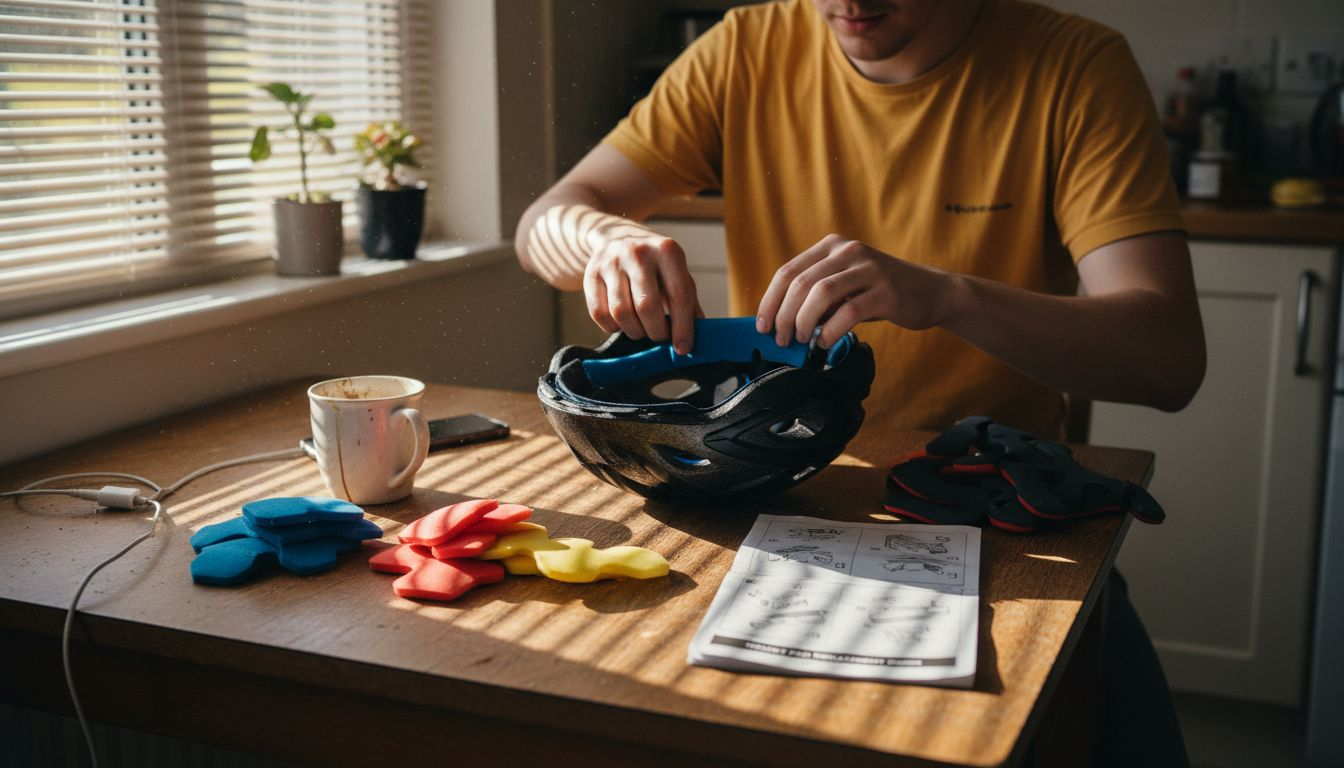
Internal padding can be adjusted or replaced to fine-tune fit. Many helmets include extra foam pads in different thicknesses. You can find detailed guidance in our bike helmet fit guide covering common fit challenges and solutions specific to different head shapes.
Advanced Protective Technologies: MIPS and More
Standard helmets excel at absorbing linear impacts when you hit the ground straight on. But many cycling crashes involve angled impacts that generate rotational forces twisting your brain inside your skull. This rotation causes diffuse axonal injury, a severe form of traumatic brain damage.
MIPS (Multi-directional Impact Protection System) addresses this vulnerability. MIPS technology helps reduce rotational forces on the brain by allowing the helmet shell to slide relative to the head during angled impacts. A low-friction liner sits between the helmet shell and your head, mimicking your brain’s natural protective cerebrospinal fluid layer.
Here’s how MIPS compares to standard helmet protection:
| Feature | Standard Helmet | MIPS Helmet |
|---|---|---|
| Linear impact protection | Excellent foam absorption | Excellent foam absorption |
| Rotational impact protection | Limited | Significantly enhanced |
| Weight addition | Baseline | Adds 25 to 45 grams |
| Price premium | Baseline | Typically $20 to $40 more |
| Brain injury risk reduction | High | Higher for angled crashes |
MIPS isn’t the only rotational protection system. WaveCel, SPIN, and Koroyd offer alternative approaches to the same problem. As of 2026, laboratory studies continue refining these technologies, with each system showing measurable benefits in reducing concussion risk during oblique impacts.
For urban and e-bike riders, rotational protection matters even more. City crashes often involve sideswipes, dooring incidents, or collisions at intersections where impact angles vary unpredictably. The varied crash directions make MIPS or equivalent systems especially valuable for your daily commute.
Pro Tip: If your budget allows, prioritize helmets with MIPS or comparable rotational protection technology. The modest weight increase is barely noticeable, but the added brain protection could prevent permanent injury. Learn more about MIPS technology benefits and how it works in real-world crash scenarios.
How to Evaluate and Choose the Best Helmet
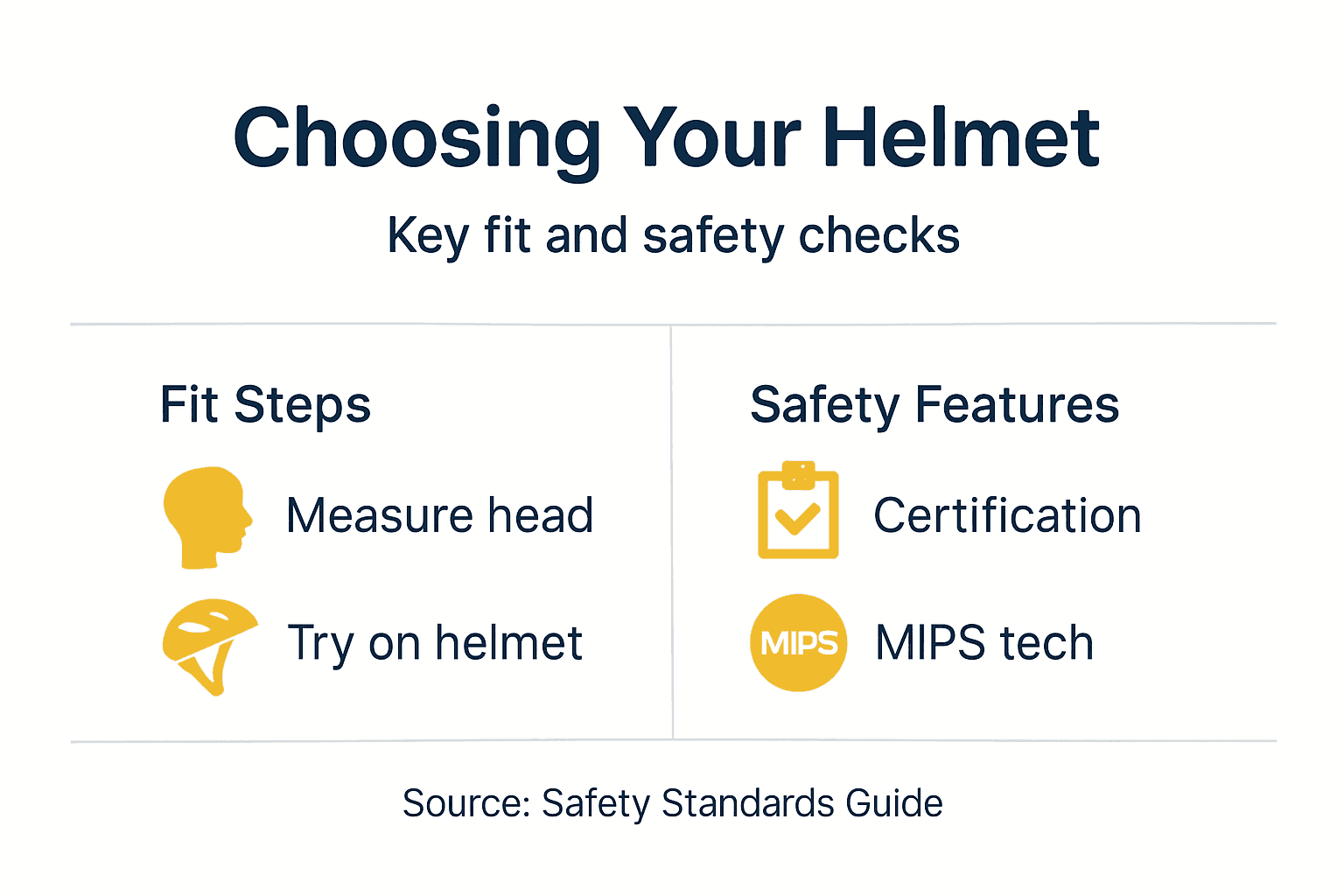
Certification labels tell you a helmet meets minimum safety standards, but how do you identify exceptional protection? Virginia Tech’s STAR rating system assesses linear and rotational impacts, assigning helmets 1 to 5 stars based on concussion risk reduction. Helmets rated 4 or 5 stars significantly outperform lower-rated models in real-world crash simulations.
Price doesn’t automatically equal safety. Helmets costing as low as $40 can meet stringent safety standards and perform well in impact tests. Budget helmets from reputable manufacturers often match or exceed expensive models in protection, though they may lack premium comfort features or advanced ventilation systems.
When evaluating helmets, prioritize these factors:
- Certification compliance: CPSC, EN 1078, or higher standards clearly labeled
- STAR rating: 4 or 5 stars if available in Virginia Tech database
- Personal fit: Snug, stable, comfortable for your specific head shape
- Protective technology: MIPS or equivalent rotational protection if budget permits
- Usage match: Ventilation and weight appropriate for your riding style
Here’s a comparison of typical helmet price ranges and what you get:
| Price Range | Certifications | Typical Features | Safety Rating Potential |
|---|---|---|---|
| $40 to $70 | CPSC, EN 1078 | Basic ventilation, standard foam | 3 to 5 stars |
| $70 to $120 | CPSC, EN 1078, often MIPS | Enhanced vents, lighter weight, MIPS | 4 to 5 stars |
| $120 to $200+ | Multiple certifications, MIPS | Premium comfort, aerodynamics, advanced tech | 4 to 5 stars |
Try multiple models within your budget range. A $60 helmet that fits your head perfectly protects better than a $150 model that shifts during rides. Visit stores where you can test real helmets rather than relying solely on online purchases for your first helmet.
Review detailed helmet certifications guide to understand which standards matter most for your needs. Check Virginia Tech STAR helmet ratings to compare specific models you’re considering. Independent testing removes marketing hype, giving you objective safety data.
Common Helmet Fit Mistakes and How to Avoid Them
Even certified helmets fail to protect when worn incorrectly. Common helmet fit mistakes include wearing the helmet too high, loose straps, and using helmets past their intended lifespan, all of which diminish protective effectiveness during crashes.
The most frequent errors:
- Helmet perched too high: Forehead exposed leaves your frontal lobe vulnerable to direct impact
- Loose chin straps: Allow helmet to shift or fly off during crashes
- Side straps misaligned: Y junction not under earlobe means unstable helmet position
- Outdated helmets: Using helmets beyond 5 years or after previous crashes
- Ignoring fit changes: Hair length, hats, or head shape changes over time affect fit
Loose chin straps represent the most dangerous mistake. If your helmet can shift more than one centimeter in any direction, it won’t stay positioned correctly during impact. The foam must align precisely with your skull to absorb shock effectively.
Pro Tip: Perform monthly helmet fit tests by vigorously shaking your head. If the helmet moves independently from your skull, readjust retention systems and add padding where needed. Check strap wear regularly, as frayed webbing reduces crash effectiveness.
“A helmet that shifts during a crash cannot protect your brain effectively. Proper fit isn’t optional; it’s the difference between walking away from an accident and suffering permanent injury.”
Replace your helmet immediately after any crash, even if damage isn’t visible. Internal foam compression occurs during impacts, destroying the helmet’s ability to absorb a second shock. Similarly, replace helmets every five years regardless of visible condition, as foam degrades from UV exposure, temperature cycles, and normal aging.
Review correct helmet fit guidance for troubleshooting specific fit issues. Understanding helmet fit safety risks helps you recognize warning signs before they compromise your protection.
Helmet Lifespan and Replacement Guidelines
Your helmet’s protective foam degrades invisibly over time. UV radiation, temperature swings, sweat, and normal handling break down the expanded polystyrene (EPS) foam that absorbs impact energy. Helmets should be replaced every five years or immediately after a crash to maintain optimal protective performance.
Manufacturers design helmet foam for single-impact protection. Once compressed during a crash, the foam cannot regain its original structure. Even minor crashes that seem insignificant can cause internal damage invisible from outside inspection. The helmet shell might look perfect while internal foam shows permanent compression.
Follow these replacement guidelines:
- Every 5 years minimum: Even with careful storage and no crashes
- Immediately after any crash: Regardless of visible damage
- After dropping from height: Falls onto hard surfaces can compress foam
- When straps fray or buckles crack: Retention system failure prevents proper fit
- If foam shows visible compression: Dents, cracks, or permanent indentations
Regular inspection catches deterioration early. Check your helmet every few months for cracks in the shell, compressed areas in the foam liner, or degraded retention straps. Don’t rely solely on external appearance, as internal damage often remains hidden until catastrophic failure during a crash.
Write the purchase date inside your helmet with permanent marker. This simple step removes guesswork about replacement timing. Set a phone reminder for four years from purchase to begin shopping for a replacement, ensuring you’re never caught with an expired helmet.
Understand the helmet replacement importance for maintaining continuous protection throughout your cycling life. Detailed helmet replacement guidelines explain the science behind foam degradation and why visual inspection alone cannot determine helmet safety.
Design and Comfort Features for Urban and E-bike Riders
Protection matters most, but comfort determines whether you actually wear your helmet consistently. Urban and e-bike riders should prioritize helmets with enhanced ventilation and lighter weight to improve comfort in stop-and-go city riding. Multiple vents channel airflow across your scalp, preventing the sweat buildup that makes helmets feel oppressive during summer commutes.
Ventilation becomes critical during low-speed urban riding. Unlike road cyclists who generate consistent airflow at 25+ km/h, city riders face frequent stops at traffic lights and intersections. Look for helmets with at least 12 to 18 vents positioned to maximize airflow even at walking speeds.
Weight directly impacts neck strain during long commutes. Helmets under 300 grams feel almost unnoticeable after 30 minutes, while heavier models cause fatigue and headaches. Premium materials like in-mold polycarbonate construction reduce weight without sacrificing protection.
Key comfort and safety features for urban riders:
- Reflective elements: Rear patches or side strips increase visibility in low-light conditions
- Bright color options: Yellow, white, or neon colors help drivers spot you earlier
- Integrated visors: Shade eyes from sun and deflect rain without obstructing vision
- Magnetic buckles: Quick-release systems simplify helmet removal with gloves
- Adjustable ventilation: Closeable vents for cold weather riding
Visibility features save lives in urban environments where driver awareness prevents most crashes. Reflective patches catch headlight beams from hundreds of meters away, while bright colors stand out against gray city backgrounds during daytime.
Balancing aesthetics with safety encourages consistent helmet use. If you love your helmet’s appearance, you’ll wear it every ride. Many modern urban helmets feature sleek profiles and stylish colorways that look professional arriving at work, removing the excuse that helmets look uncool.
Consider helmet design for urban riders specifically optimized for city commuting and e-bike speeds. Understanding helmet comfort features helps you identify which design elements matter most for your daily riding conditions.
Expected Outcomes and Success Metrics
How do you know you’ve chosen the right helmet? Success shows up in measurable ways that confirm your selection provides maximum protection and comfort for every ride.
Your helmet choice succeeds when:
- Fit stability passes shake test: Helmet remains motionless during vigorous head movement
- Certification labels are clearly visible: CPSC, EN 1078, or equivalent standards marked inside
- Zero pressure points after 20 minutes: Comfort continues through long rides without headaches
- Ventilation prevents overheating: Adequate airflow during summer commutes at low speeds
- MIPS or equivalent technology present: If your budget allowed advanced protection
- Weight feels unnoticeable: Under 300 grams doesn’t strain neck during hour-plus rides
Verify proper fit weekly for the first month as foam padding compresses slightly with regular use. Your helmet should feel snug initially, settling into perfect comfort after break-in. If fit loosens beyond adjustment range, exchange for a smaller size before the return window closes.
Track your wearing consistency. The right helmet gets worn every single ride because it’s comfortable and looks good. If you find excuses to skip helmet use, something about your choice isn’t working. Reevaluate whether fit, weight, or ventilation needs improvement.
Remember that wearing a certified, well-fitted helmet cuts injury risk by up to 88%. This dramatic protection only works when your helmet stays properly positioned throughout your ride. Success means arriving home safely from every commute, with your brain fully protected against the unpredictable hazards of urban cycling.
Explore Premium Helmets and Safety Gear at The Beam
Now that you understand helmet safety fundamentals, put your knowledge into action. Shop helmets at The Beam to find models meeting all key certifications including MIPS technology for rotational impact protection. Our collection features helmets specifically designed for urban and e-bike riders, balancing safety with the comfort and style you need for daily commutes.
Every helmet in our lineup undergoes rigorous testing and includes detailed sizing information to ensure proper fit. Access expert product descriptions that help you apply what you’ve learned today about certifications, fit requirements, and protective technologies. Beyond helmets, enhance your safety with accessories featured in our comprehensive cycling safety gear guide. Explore MIPS helmets to understand how advanced protection integrates into comfortable, everyday designs that match your riding needs.
Frequently Asked Questions
What certifications guarantee helmet safety?
In the United States, CPSC certification is mandatory and ensures helmets pass standardized impact testing. European riders should look for EN 1078 compliance, while Snell and ASTM certifications indicate helmets exceeding minimum requirements. Always verify certification labels inside the helmet before purchase, as these markings confirm the helmet underwent rigorous third-party testing for crash protection.
How do I know if the helmet fits properly?
A properly fitted helmet sits level on your head, positioned 1 to 2 finger widths above your eyebrows with straps forming a Y shape just below each ear. The chin strap should allow 1 to 2 fingers of space when buckled. Perform the shake test by moving your head vigorously; the helmet should remain stable without any independent movement exceeding one centimeter.
When should I replace my cycling helmet?
Replace your helmet every five years from the purchase date, even without visible damage, as foam degrades from UV exposure and temperature cycles. Immediate replacement is required after any crash, regardless of whether damage is visible, because internal foam compression destroys single-impact protection. Regular inspection for cracks, dents, or frayed straps helps identify helmets needing early replacement.
Are more expensive helmets always safer?
Price does not directly correlate with safety, as helmets costing as low as $40 can meet stringent CPSC standards and earn high STAR ratings. Focus on certification compliance, independent safety ratings, proper fit for your head shape, and protective technologies like MIPS rather than price alone. A perfectly fitted budget helmet protects better than an expensive model that shifts during rides.
Do I need MIPS technology for city riding?
MIPS provides crucial protection against rotational brain injuries during angled impacts common in urban crashes like doorings, sideswipes, and intersection collisions. While standard helmets offer excellent linear impact protection, city riders face unpredictable crash angles that make rotational protection especially valuable. If your budget allows, MIPS or equivalent technology significantly reduces concussion risk for modest added cost and weight.


