

Every urban cyclist knows the unpredictable reality of daily rides in French and German cities. Whether crossing crowded intersections or weaving through busy streets, head protection becomes a top priority. Research shows that wearing a cycling helmet can decrease serious head injuries by 60 percent and lower traumatic brain injuries by 53 percent. Get a clear understanding of how modern helmets, including MIPS technology and enhanced visibility features, directly address the real risks facing city riders.
Table of Contents
- Cycling Helmets: Purpose And Core Protection
- Helmet Categories For Urban And Commuter Riders
- Key Features Including MIPS And Visibility Tech
- Safety Standards And Certification Differences
- Risks, Common Mistakes, And Picking The Right Helmet
Key Takeaways
| Point | Details |
|---|---|
| Helmet Purpose | Helmets absorb impact energy during falls, protecting the skull and brain from injury. They are most effective in low-speed collisions common in urban commuting. |
| Protection Statistics | Cycling helmets significantly reduce head injuries, serious injuries by 60%, and deaths by 34% during typical commuter accidents. |
| Design Considerations | Modern commuter helmets focus on visibility, comfort, and ventilation while balancing protection features. MIPS technology enhances safety by reducing rotational forces. |
| Certification Awareness | Always choose helmets with recognized safety certifications like CPSC or CEN to ensure effective protection and avoid untested models. |
Cycling helmets: purpose and core protection
Your helmet’s main job is simple: absorb impact energy when your head strikes something during a fall or collision. That absorbed energy reduces the force reaching your skull and brain. This protection matters most during everyday commutes where low-speed falls happen unpredictably.
Helmets work by using foam liners that compress on impact. Think of it like a sponge that crumples to soften a blow. The outer shell keeps the foam in place and spreads the impact across a wider area.
What helmets actually protect against
Research shows cycling helmets reduce head injuries significantly. Studies document specific protection rates:
- Decrease serious head injuries by 60%
- Reduce traumatic brain injuries by 53%
- Lower cyclist deaths or serious injuries by 34%
These numbers matter for daily commuters in busy German and French cities where minor crashes happen frequently on urban streets.
The limitations you should know
Helmets have real boundaries. They protect best against low-speed impacts under 12 mph and falls from stationary positions. High-speed collisions with vehicles exceed what any helmet can handle safely.
Your helmet protects against typical commuting accidents, not catastrophic collisions with cars at speed.
Helmet effectiveness also depends on proper fit and correct positioning. A helmet sitting too high or loose won’t absorb impact effectively.
Why design matters for urban safety
Urban commuting requires visibility and comfort alongside protection. Modern helmet design balances:
- Impact absorption through foam construction
- Visibility through bright colors and reflective surfaces
- Ventilation for all-weather commuting
- Light weight for daily wearability
Technology like MIPS technology reduces rotational impacts from angled collisions common in urban traffic.
Proper cycling helmet certifications verify that helmets meet safety standards before reaching your hands.
Pro tip: Check your helmet fit before every ride by securing the chin strap snugly and ensuring the helmet sits level on your head, not tilted forward or backward.
Helmet categories for urban and commuter riders
Not all helmets are created equal. Different riding environments demand different designs. Urban commuting requires a helmet that balances protection with practicality for daily city riding.
Commuter helmet design
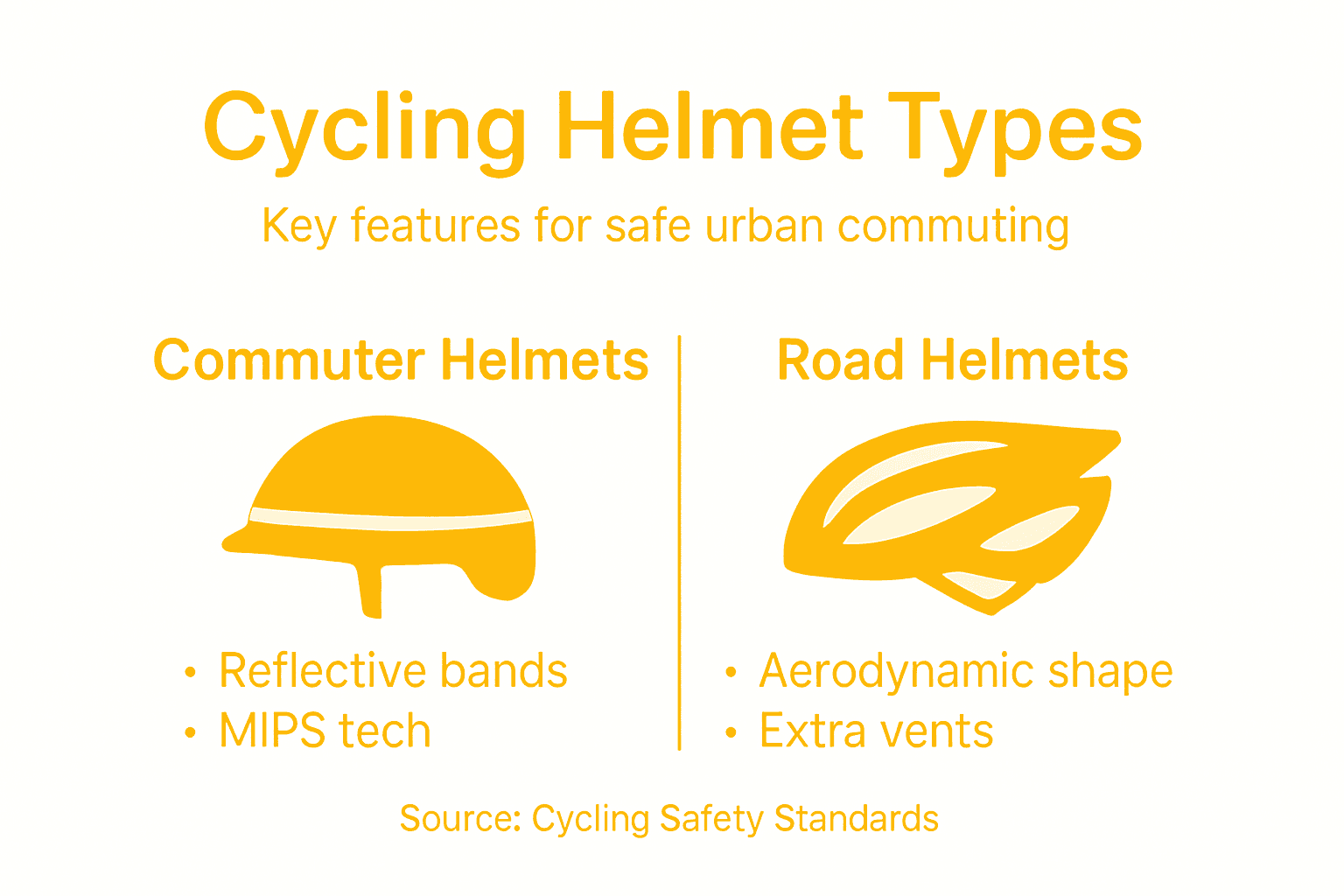
Commuter helmets are purpose-built for city cycling. They feature a rounded shape that provides full coverage while maintaining comfort during longer rides. This design differs from sleek road helmets because urban riders need different priorities.
Commuter helmets typically include:
- Adequate ventilation for varied weather conditions
- Reflective surfaces or mounting points for lights and mirrors
- Durable construction for daily use
- Integrated safety accessories like rear blinkers or mirror mounts
These features make commuter helmets stand out in traffic-heavy environments where visibility matters as much as impact protection.
Road helmets versus commuter helmets
Road helmets have an elongated shape optimized for speed and aerodynamics. They’re lighter and more ventilated, designed for cyclists prioritizing performance over daily practicality. Commuters riding in stop-and-go traffic need something different.
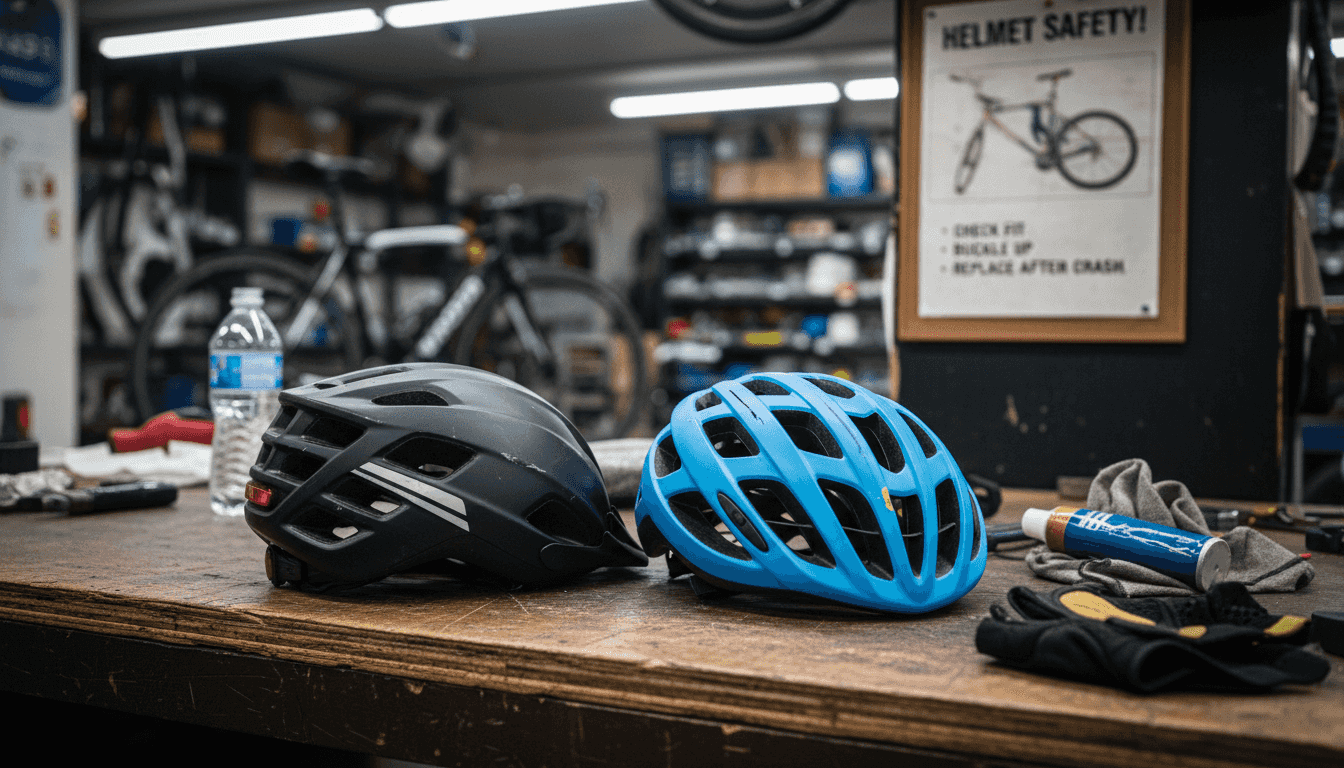
Commuter helmets balance protection with functionality in ways road helmets don’t. Choosing the correct helmet type for your riding environment improves protection effectiveness.
Here’s an at-a-glance summary of commuter vs. road helmet priorities:
| Helmet Type | Primary Focus | Typical Features | Ideal Rider |
|---|---|---|---|
| Commuter | Visibility and comfort | Reflective surfaces, light mounts, ventilation | Urban daily cyclist |
| Road | Aerodynamics and weight | Streamlined shape, lightweight build, maximal airflow | Speed-focused cyclist |
This table helps clarify which helmet style suits your riding environment and daily priorities.
Your helmet choice should match your actual riding environment, not just your aspirations as a cyclist.
Urban-specific features
Cities like Berlin and Paris demand helmets designed for their reality. Urban riders face frequent braking, low-speed impacts, and constant visibility challenges. Modern commuter helmets address these specific conditions.
Key urban features include:
- Reflective surfaces for visibility in morning and evening commutes
- Integrated light mounts for rear safety lighting
- Mirror attachment points for better rear awareness
- Rounded rear coverage protecting the lower back of your head
The 7 essential types of cycling helmets include specific commuter designs developed for urban safety. Selecting a helmet engineered for your city environment significantly improves daily safety.
Comfort for daily commuting
You’ll wear your commuter helmet multiple times per week. Comfort becomes essential for consistent use. Poor ventilation or excessive weight encourages riders to skip helmet use on warm days.
Look for helmets with adjustable fit systems and breathable liners. Your commute might include hills, traffic jams, or sudden weather changes. A quality commuter helmet handles these variations without causing fatigue.
Pro tip: Try on helmets in the afternoon when your head is slightly swollen from daily activity, ensuring your chosen helmet remains comfortable during peak commute times.
Key features including MIPS and visibility tech
Modern commuter helmets pack advanced technology beyond basic foam protection. Two features stand out for urban safety: MIPS technology and visibility enhancements. Both address real hazards you face daily in city cycling.
Understanding MIPS technology
MIPS stands for Multi-directional Impact Protection System. It works differently than traditional helmet foam. MIPS technology provides a low-friction layer that allows your helmet to slide slightly during angled impacts, reducing rotational forces transmitted to your brain.
Think of it like this: your brain naturally rotates inside your skull during side impacts. MIPS mimics that protective movement. Instead of your helmet staying fixed to your head, it moves independently to absorb rotational energy.
The technology was developed in Sweden in 1996 to address a specific vulnerability. Standard helmets protect well against straight-on impacts. But real-world crashes rarely happen head-on. Urban collisions with cars, parked bikes, or ground obstacles come from angles.
MIPS helmets specifically protect against the angular impacts most common in urban cycling.
Why rotational protection matters
Rotational forces cause the most severe brain injuries. A helmet that only stops linear motion misses this danger. Your brain can handle some forward and backward movement. Twisting motion is far more damaging.
Urban commuting exposes you to rotational impacts constantly:
- Side swipes from car mirrors or doors
- Falls where your head strikes pavement at angles
- Collisions with obstacles while turning
- Impacts during swerving maneuvers
MIPS technology directly addresses these scenarios by allowing controlled sliding motion between helmet layers.
Visibility technology for urban safety
Being seen matters as much as being protected. Visibility technology includes:
- Reflective surfaces covering the helmet exterior
- Integrated light mounts for front and rear lighting
- Bright color options that stand out in traffic
- Rear blinker connectivity for connected safety systems
Many German and French urban riders combine helmets with connected safety accessories like rear-view mirrors and visibility reflectors. These work together to keep you visible during commute hours when lighting is poor.
Balancing protection features
Features add weight and complexity. Quality commuter helmets balance advanced technology with everyday wearability. You won’t use protection that feels uncomfortable.
Look for helmets that integrate MIPS and visibility without excessive bulk. The best designs feel like natural extensions of your commute gear.
Pro tip: Test MIPS helmets in bright sunlight to verify visibility features actually stand out, and wear them for at least 30 minutes to confirm comfort during your typical commute duration.
Safety standards and certification differences
Not every helmet claiming safety actually meets rigorous testing standards. Different regions enforce different requirements. Understanding these distinctions helps you choose helmets that genuinely protect your head.
Why standards matter
Safety standards exist because helmet failures can cause serious injury. Organizations like the U.S. Consumer Product Safety Commission (CPSC), ASTM, ANSI, and Snell Foundation test helmets using standardized methods. These tests verify that helmets actually absorb impact and protect your brain.
Without standards, manufacturers could sell helmets that look protective but fail during crashes. Standards ensure minimum performance across all models.
Major certification organizations
Different organizations certify helmets in different regions. Each has specific testing requirements:
- CPSC (United States): Mandatory standard for helmets sold in America
- CEN (European Union): Standards for helmets sold across European markets
- ASTM (International): Widely recognized testing standards across multiple countries
- Snell Foundation (United States): Voluntary but rigorous independent certification
Helmet certifications specify testing methods for impact attenuation and strap strength. European helmets meeting CEN standards work differently than CPSC-certified American helmets.
Here’s a comparison of helmet certifications and their key differences:
| Certification | Region | Testing Focus | Typical Usage |
|---|---|---|---|
| CPSC | United States | Impact absorption, strap strength | Commuter and road helmets |
| CEN | Europe | Multi-directional impact, retention | Urban commuting, city helmets |
| ASTM | International | Broad sports helmet standards | Multisport helmets |
| Snell | United States | Rigorous independent testing | Premium, specialty helmets |
This overview makes it easier to identify which certification matters based on your location and cycling needs.
What testing actually measures
Certification bodies test helmets by dropping them onto concrete from specific heights. They measure energy absorption, check that straps don’t break, and verify helmets stay secured during impacts.
Key testing criteria include:
- Impact attenuation (how well helmets absorb force)
- Retention system strength (strap durability)
- Peripheral vision requirements (visibility around your head)
- Penetration resistance (preventing objects from piercing the helmet)
All standards prioritize impact protection, but regional differences affect which helmets work best for your location.
European versus American standards
German and French cyclists need to understand European CEN standards. These helmets meet different requirements than American CPSC helmets. CEN standards emphasize different impact scenarios and testing methods.
If you’re purchasing helmets in Germany or France, look for CEN certification. If ordering from American websites, verify CPSC or ASTM compliance. Many premium helmets meet multiple standards simultaneously, offering protection across different regions.
Checking certification on your helmet
Look inside your helmet’s interior shell. You’ll find stickers or printed labels listing certifications. These verify the helmet actually passed testing rather than just claiming safety.
Quality helmet manufacturers proudly display these certifications because rigorous testing increases production costs. Budget helmets sometimes lack visible certification marks.
Pro tip: Always purchase helmets from established retailers that provide certification documentation, and avoid unmarked or uncertified helmets regardless of price savings.
Risks, common mistakes, and picking the right helmet
Choosing the wrong helmet leaves you exposed. Many cyclists make preventable mistakes that reduce protection during crashes. Understanding these risks helps you avoid them.
The biggest selection mistakes
Most helmet failures happen before you ever ride. Common mistakes undermine protection significantly:
- Buying non-certified helmets that skip safety testing
- Choosing helmets designed for other sports (skateboarding, climbing)
- Purchasing helmets without trying them on first
- Selecting based on style rather than fit and protection
- Ignoring the specific demands of urban commuting
Non-certified helmets might look identical to certified ones. Only testing reveals whether they actually protect. Urban commuting demands helmets engineered for city conditions, not recreational cycling.
Getting the fit right
A perfect helmet design fails completely if it doesn’t fit. Proper fit means a snug helmet that doesn’t move when fastened, sits level, and has straps forming a “V” shape around your ears.
Measure your head size accurately before purchasing. Try helmets on with your usual hairstyle. A helmet that moves around your head won’t absorb impact effectively during crashes.
The chin strap should fit snugly underneath. You should barely be able to fit one finger between the strap and your chin. Loose straps allow the helmet to shift during impacts.
A helmet that doesn’t fit properly offers almost no protection, regardless of its certification.
Damage and replacement timing
Helmets have limited lifespans. Using helmets past their recommended lifespan reduces protection because foam degrades from UV exposure and age.
Replace your helmet:
- After any significant impact or crash
- Every 3 to 5 years even without crashes
- If straps are damaged or torn
- If the foam shell shows cracks or compression
- If padding is worn or compressed
Damaged helmets should be discarded immediately. The damage might not be visible externally. Internal foam compression invisible to the eye reduces impact absorption dramatically.
Matching helmet to activity
Urban commuting requires specific features that recreational helmets lack. German and French cyclists face dense traffic, rapid speed changes, and poor visibility conditions.
Choose helmets that include:
- Reflective surfaces and mounting points for lights
- Ventilation balanced for all-weather riding
- Visibility-focused design and bright colors
- Connected safety features for urban riders
Road helmets optimize for aerodynamics. Trail helmets prioritize chin protection. Commuter helmets balance protection, visibility, and comfort for daily city riding.
Pro tip: Visit a local bike shop and try on multiple helmets with your commuting clothes and typical hairstyle, then wear your top choice around the store for 10 minutes before purchasing to verify comfort.
Elevate Your Urban Cycling Safety with THE BEAM Helmets
Urban commuters face unique challenges that demand helmets designed for real-world protection and visibility. As the article highlights, proper fit, MIPS technology, and visibility features are crucial to reduce the risk of head injuries from angled impacts and low-speed collisions common in city cycling. Ignoring these details can leave riders vulnerable to serious injury even in everyday rides.
At THE BEAM, we understand these specific pain points and present solutions crafted for your daily urban commute. Our Adults’ Helmets – The Beam collection offers high-end helmets with integrated MIPS technology and reflective designs to maximize your safety and comfort. Designed with commuters in mind, these helmets balance protection, ventilation, and visibility so you never compromise when riding through busy streets.
Take the next step in securing your headgear by exploring our full range of products at THE BEAM official website. Don’t wait for an accident to rethink your helmet safety. Visit All Products – The Beam now and find the perfect helmet built to protect you during every commute. Your urban rides deserve advanced protection and confident visibility today.
Frequently Asked Questions
What are the main purposes of cycling helmets?
Cycling helmets primarily absorb impact energy during falls or collisions to reduce the force that reaches your skull and brain, providing essential protection during commutes.
How do I know if my helmet fits properly?
A helmet should fit snugly, sit level on your head, and have straps that form a ‘V’ shape around your ears. You should only be able to fit one finger between the chin strap and your chin.
What are the differences between commuter helmets and road helmets?
Commuter helmets prioritize comfort, visibility, and practicality, featuring reflective surfaces and ventilation, while road helmets are optimized for aerodynamics, being lighter and more streamlined for speed-focused cyclists.
What is MIPS technology, and why is it important in helmets?
MIPS stands for Multi-directional Impact Protection System, which reduces rotational forces during angled impacts by allowing the helmet to slide slightly. This technology is crucial for protecting against brain injuries in urban cycling accidents.


