

TL;DR:
- A high-end cycling gear list prioritizes safety essentials such as MIPS-certified helmets and radar lights before performance upgrades. These safety tools are vital and provide protection against common cycling hazards, forming a strong foundation for any kit. Once safety is secured, riders can focus on performance data devices, premium apparel, and convenience features to enhance riding experience and sustainability.
A high-end cycling accessory list is defined as a curated selection of premium, technologically advanced gear that measurably improves rider safety, performance, and comfort across road, gravel, urban, and e-bike disciplines. The best lists follow a clear hierarchy: safety essentials first, performance upgrades second, and comfort or convenience items third. Industry experts confirm that safety gear comes first before any investment in power meters or aerodynamic wheelsets. Thebeamofficial, a French brand specializing in premium cycling safety equipment, builds its entire product philosophy around that same principle.
1. What are the must-have safety accessories in a premium cycling gear list?
Safety gear is the non-negotiable foundation of any premium bike gear collection. No performance upgrade delivers value if a rider is not protected on the road.
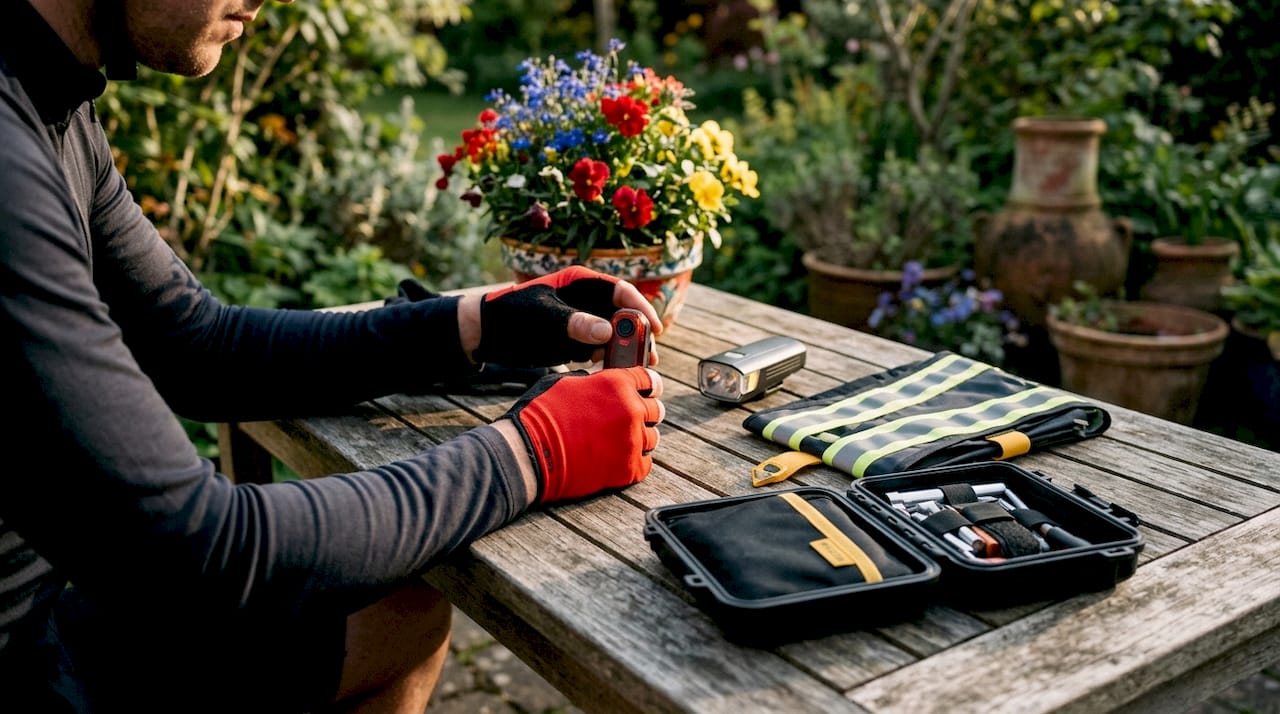
MIPS-certified helmets
MIPS (Multi-directional Impact Protection System) technology reduces rotational force on the brain during angled impacts. MIPS helmet technology works by allowing the helmet’s inner liner to rotate independently from the outer shell, absorbing energy that a rigid helmet cannot redirect. Thebeamofficial’s VIRGO integral helmet uses MIPS technology and is designed for road, gravel, and urban cyclists who want certified protection without sacrificing design.
Radar-enabled rear lights
The Garmin Varia RTL515 detects vehicles up to 140 meters behind a rider and sends real-time alerts to a paired GPS computer. That 140-meter detection window gives a rider roughly four seconds of warning at typical road speeds, which is enough time to move toward the shoulder or signal a group. Radar tail lights represent the clearest example of connected safety devices closing the gap between awareness and reaction.
High-visibility reflectors and front lighting
Passive reflectors and active front lights work together to make a rider visible from multiple angles. Thebeamofficial’s FRAME FLASH 2.0 reflectors are motion-powered, meaning they activate through the movement of the bike rather than a battery. That design removes the single most common failure point in cycling safety gear: a dead battery at the wrong moment.
Pro Tip: Combine a radar rear light with motion-powered reflectors on the frame for 360-degree visibility without managing multiple charging schedules.
Repair and preparedness kit
- A quality multi-tool with at least 15 functions covers most roadside mechanical issues
- A portable CO2 inflator or mini pump handles flat tires in under three minutes
- Tubeless plug kits seal most punctures without removing the wheel
- A compact first-aid kit adds less than 200 grams and covers road rash and minor cuts
Every cycling safety essential in this category costs far less than a single hospital visit. The math strongly favors preparation.
2. Which premium performance accessories enhance cycling training and navigation?
Performance accessories give riders measurable data and mechanical advantages. The best ones pay for themselves in training efficiency and race-day results.
Advanced GPS cycling computers
High-end GPS computers do far more than display speed and distance. The Garmin Edge 1040 Solar, priced around $692, offers solar charging, ClimbPro gradient analysis, and real-time weather overlays. That price reflects a device that functions as a full training platform, not just a speedometer. Riders who train with structured workouts recover the cost quickly through reduced coaching software subscriptions.
Pro Tip: Pair a GPS computer with a heart rate monitor and a power meter to get the full training triangle: effort, output, and recovery in one dashboard.
Power meters
Power meters measure output in watts, giving riders an objective measure of effort that heart rate alone cannot provide. Crank-based power meters are the most accurate because they measure force at the point of application. Pedal-based options offer portability between bikes, which matters for riders who train on multiple setups.
Clipless pedals
Clipless pedals improve power transfer by connecting the foot directly to the crank through a rigid interface. The efficiency gain over flat pedals is most noticeable on climbs and during sprint efforts. Road-specific systems like SPD-SL and LOOK KEO use a three-bolt cleat that maximizes the contact area between shoe and pedal.
Aerodynamic carbon wheelsets
Aerodynamic wheels reduce drag at speeds above 25 mph, where air resistance becomes the dominant force against a rider. The HUNT 5AM Limitless wheelset uses aerospace-grade Mitsubishi Pyrofil HR4012M carbon fiber for lateral stiffness and sidewall strength at race speeds. That material choice reflects a broader trend in elite cycling: borrowing from aerospace engineering to solve weight and durability problems simultaneously.
Proprietary bike components often require custom accessory adapters for fit issues, making off-the-shelf solutions difficult. Riders investing in luxury wheelsets should confirm hub and axle compatibility before purchasing.
| Feature category | Entry-level option | Elite option |
|---|---|---|
| Navigation | Basic GPS speed/distance | Solar GPS with gradient analysis |
| Power measurement | Estimated power (virtual) | Crank-based direct power meter |
| Wheels | Aluminum alloy clincher | Aerospace carbon disc wheelset |
| Pedal system | Flat platform pedals | Road clipless with carbon body |
3. What are the top-tier apparel and comfort accessories in a luxury cycling equipment list?
Premium apparel is not about brand logos. It is about material science that directly affects how long a rider can sustain effort before fatigue sets in.
High-performance jerseys
Premium cycling jerseys use stretch-woven fabrics that are nearly 30% lighter than standard prosumer jerseys, with visibility features effective up to 100 meters in low-light conditions. A men’s medium in this category weighs around 98 grams. That weight reduction matters most on long climbs and multi-hour rides where every gram of clothing becomes noticeable. Premium cycling apparel innovation focuses heavily on material science for aerodynamic advantage and rider comfort during competitive events.
Bib shorts with chamois padding
Bib shorts eliminate the waistband pressure that standard shorts create, which matters enormously on rides longer than two hours. High-end chamois padding uses multi-density foam that matches the pressure map of a rider’s sit bones. The best options also include antibacterial treatments that reduce saddle sore risk on multi-day events.
Cycling gloves and ergonomic grips
- Padded gloves absorb road vibration at the contact point between hand and handlebar
- Gel inserts in the palm target the ulnar nerve, which is the most common source of hand numbness on long rides
- Full-finger options add warmth and abrasion protection for gravel and commuting disciplines
- Ergonomic lock-on grips with flared ends reduce wrist fatigue on technical terrain
Padded saddles and seat covers
A saddle that fits a rider’s anatomy reduces soft tissue pressure by distributing weight across the sit bones rather than concentrating it on soft tissue. Width matters more than padding thickness. Most premium saddle brands offer free fit services that measure sit bone width and recommend a specific saddle width within two millimeters.
4. How do convenience and sustainability features factor into a premium accessory list?
The best connected cycling accessories list includes gear that solves real problems without adding complexity or environmental cost.
-
Frame-mounted storage adapters. The Tailfin HydroMount expands bottle cage mounts on frames with limited attachment points, which is a common issue on gravel and bikepacking builds. One adapter can turn a single mount into a dual-bottle or bottle-plus-bag configuration.
-
Saddle bags and top-tube pouches. Aerodynamic saddle bags keep weight low and centered while storing tools, nutrition, and emergency gear. Top-tube pouches give riders access to food without reaching into jersey pockets at speed.
-
Motion-powered reflectors. Thebeamofficial’s FRAME FLASH 2.0 uses kinetic energy from the bike’s movement to power its reflective output. No charging, no batteries, no maintenance. That design philosophy aligns with a broader shift toward passive safety systems that work without rider intervention.
-
Reusable and biodegradable chain lubricants. Wax-based chain lubricants last longer than wet lubes, attract less dirt, and are available in biodegradable formulas. A clean drivetrain also extends the life of the chain, cassette, and chainrings, reducing long-term replacement costs.
-
Smart lighting systems with automatic modes. Connected front and rear lights that adjust brightness based on ambient light and speed remove one more decision from a rider’s mental load. Some systems also log lighting data to a GPS computer, creating a complete safety record for each ride.
Key Takeaways
The most effective high-end cycling accessory list starts with MIPS-certified helmets and radar lighting, then adds performance data tools, premium apparel, and convenience gear in that order.
| Point | Details |
|---|---|
| Safety gear comes first | Invest in MIPS helmets and radar lights before any performance upgrade. |
| Data tools multiply training value | GPS computers and power meters give objective feedback that improves fitness faster. |
| Apparel weight and fit matter | Fabrics 30% lighter than standard options reduce fatigue on long rides. |
| Sustainability reduces long-term cost | Motion-powered reflectors and wax lubes cut maintenance time and replacement frequency. |
| Compatibility planning prevents waste | Custom adapters are often required on high-end bikes; confirm fit before buying. |
Why I always tell riders to start with safety, not speed
Most cyclists I talk to want to jump straight to the performance gear. They ask about carbon wheels and power meters before they have a reliable helmet or a working rear light. That instinct is understandable. Speed is exciting. Safety feels like homework.
The problem is that a $700 GPS computer does nothing for a rider who gets hit from behind on a dark road. I have seen experienced cyclists skip radar lights because they felt “too cautious,” then spend months off the bike after a collision. The road cycling protection methods that matter most are also the least glamorous ones.
My honest advice: spend the first $300 of your premium gear budget on a MIPS helmet and a radar tail light. Then build upward. Performance gear compounds in value once the safety foundation is solid. Comfort gear compounds further once performance is dialed in. Riders who follow that sequence end up with kits that actually work together, rather than expensive collections of mismatched upgrades.
— Sophie
Thebeamofficial’s safety gear for your premium cycling kit
Thebeamofficial designs helmets and accessories specifically for cyclists who take both safety and aesthetics seriously. The VIRGO integral helmet with MIPS technology is the brand’s flagship, built for road, gravel, urban, and e-bike riders who want certified protection in a design that does not look like an afterthought.
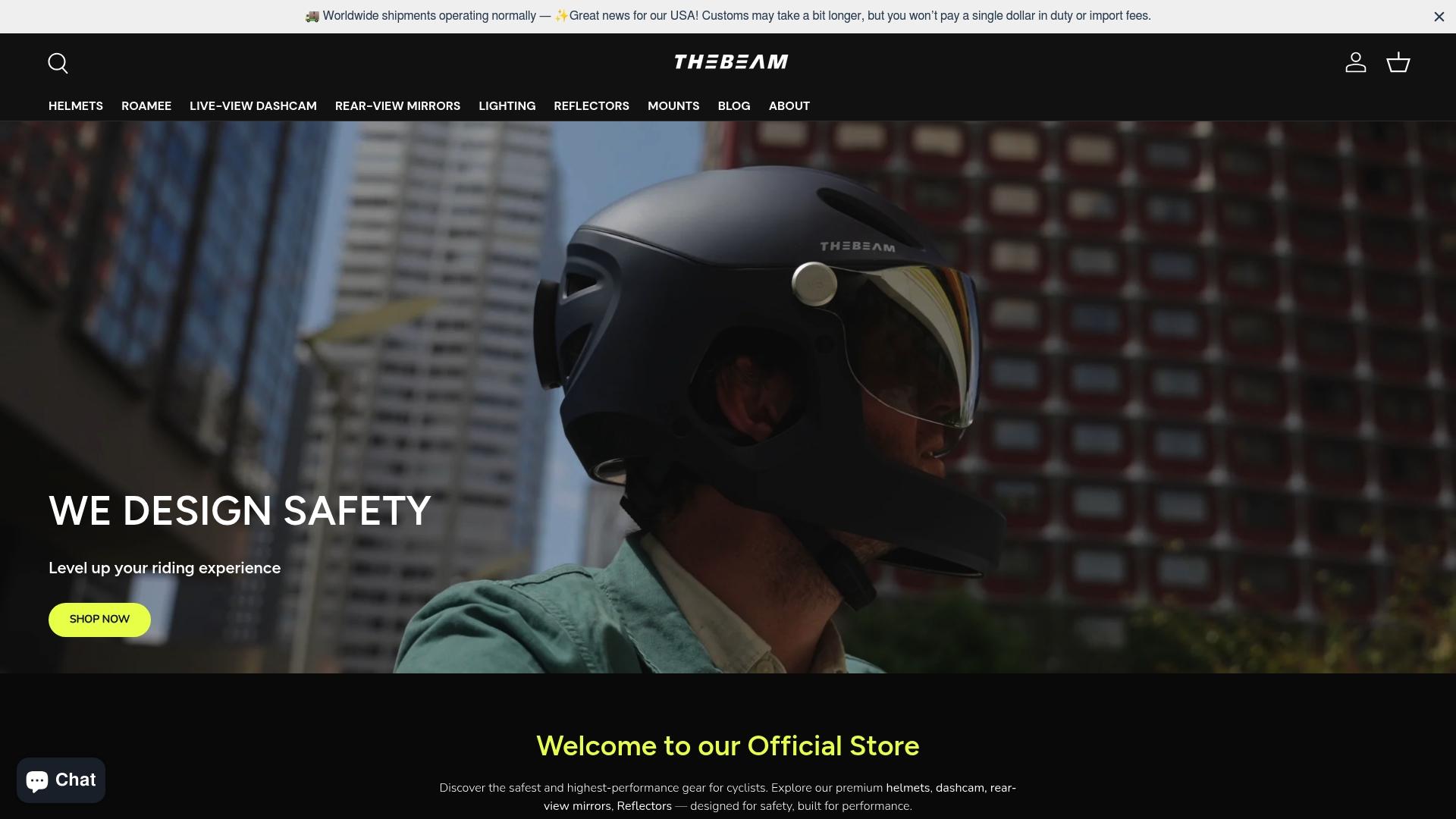
Beyond helmets, Thebeamofficial’s premium cycling accessories include the FRAME FLASH 2.0 motion-powered reflectors, which add passive visibility without any charging requirement. For riders building or refining a premium kit, the full range of MIPS-certified helmets and safety accessories is available directly through the Thebeamofficial e-commerce platform, with shipping across Europe and the United States.
FAQ
What makes a cycling accessory “high-end”?
A high-end cycling accessory uses advanced materials, certified safety standards like MIPS, or precision engineering that measurably improves performance, protection, or durability compared to standard options.
Is a MIPS helmet worth the extra cost?
MIPS technology reduces rotational brain injury risk during angled impacts, which are the most common type in cycling crashes. The added cost over a non-MIPS helmet is typically $30–$80, making it one of the highest-value safety upgrades available.
How does a radar tail light improve safety?
The Garmin Varia RTL515 detects approaching vehicles up to 140 meters away and alerts the rider through a paired device, giving critical reaction time before a vehicle reaches the cyclist’s position.
Do I need a power meter if I already have a GPS computer?
A GPS computer tracks location and speed, while a power meter measures actual mechanical output in watts. Both tools serve different purposes, and combining them gives a complete picture of training load and efficiency.
What is the best order to build a premium cycling kit?
Build your gear kit starting with safety essentials like a certified helmet and rear lighting, then add performance tools like a GPS computer and power meter, and finish with premium apparel and convenience accessories.


